Lightweight composite materials have become essential in modern high-performance automotive design. A carbon fiber hood (carbon bonnet) is one of the most effective upgrades for the Toyota Supra platform — whether you drive a GR Supra A90/A91, a MK5, or a JZA80 with a legendary 2JZ engine. Many owners upgrading their hoods also explore broader oglekļa šķiedras automašīnas options to optimize exterior performance.
Unlike many articles that focus only on appearance, this guide provides a complete engineering deep dive, covering:
Structural behavior of CFRP Airflow & heat extraction Fitment for A90/A91 and JZA80 Dry vs wet vs double-sided carbon Venting styles (TS / TSII / TSIII / TV / VS / TR / KB) Safety, hood pins, latch load, and gas strut compatibility Thermal behavior (engine bay temperatures, resin performance) Crash behavior of composite hoods Road-legal compliance Shipping, packaging, maintenance, and FAQ This is the most comprehensive Supra carbon fiber hood guide available — written from a composite engineering perspective.
What Is a Supra Carbon Fiber Hood?
A Supra carbon fiber hood (also called a carbon bonnet) replaces the OEM steel or aluminum hood with a lightweight carbon fiber reinforced polymer (CFRP) structure. These hoods are widely used in:
- Toyota GR Supra A90/A91 (2020–2026)
- Toyota Supra MK5 (same platform)
- Toyota Supra JZA80 (1993–1998)
Depending on construction method, carbon hoods come in several types (more on manufacturing in our guide to How to Make a Carbon Fiber Hood):
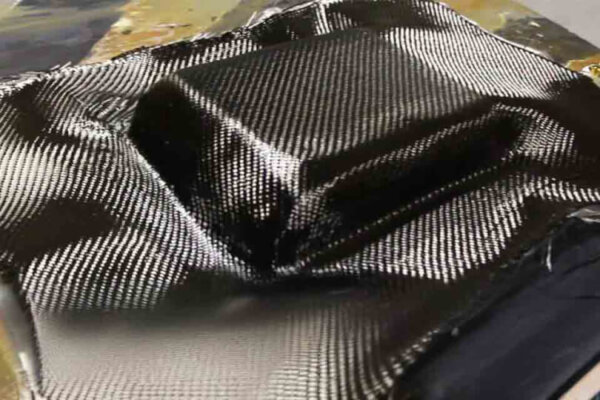
Dry carbon (prepreg + autoclave cured) Wet carbon (resin-infused / vacuum bagged) Double-sided carbon (inside & outside CFRP) Forged carbon (random-fiber aesthetic) Carbon-Kevlar hybrid (impact-resistant)
Each differs in stiffness, heat resistance, weight, and durability.
Benefits of Carbon Fiber for Toyota Supra (A90 / A91 / MK5 / JZA80)
Weight Reduction & Lightweighting Efficiency
OEM Supra hoods typically weigh:
| Hood Material | Approx. Weight |
|---|
| OEM Steel | 12–14 kg |
| OEM Aluminum | 8–10 kg |
| Wet Carbon | 6–8 kg |
| Sausais ogleklis | 4.5–6.5 kg |
| Double-Sided Dry Carbon | 5–7 kg |
Reducing front-end mass improves:
- Turn-in response
- Steering precision
- Load transfer behavior
- Braking stability
- Overall chassis balance
(For deeper hood-specific cost insights, see How Much Are Carbon Fiber Hoods.)
Lightweight modifications on the front axle yield the highest handling benefits.
The Supra B58 engine produces substantial thermal load, making vented carbon fiber hoods extremely effective.
Benefits include:
- Faster removal of hot under-hood air
- Reduced intake-air temperatures (IAT)
- Lower turbo heat soak
- Better cooling efficiency during track sessions
- Prevention of hot-air recirculation around the strut towers
High-flow vented styles can reduce under-hood temperatures by 8–18°C depending on airflow speed. For broader exterior upgrade context, explore Oglekļa šķiedras kapuces.
Track vs Street Use — Safety, Rigidity & Testing
Carbon fiber behaves differently from metal:
- Higher specific stiffness
- Lower density
- Brittle failure mode under crash loads
- Directional (anisotropic) strength
For track driving, lightweight vented hoods should use hood pins to prevent uplift at high speed. For street use, properly reinforced latch points ensure safe operation if installed correctly.
Popular Supra Carbon Fiber Hood Styles
Different hood styles vary dramatically in airflow performance, structural behavior, and intended usage. Below is an engineering analysis of each category.
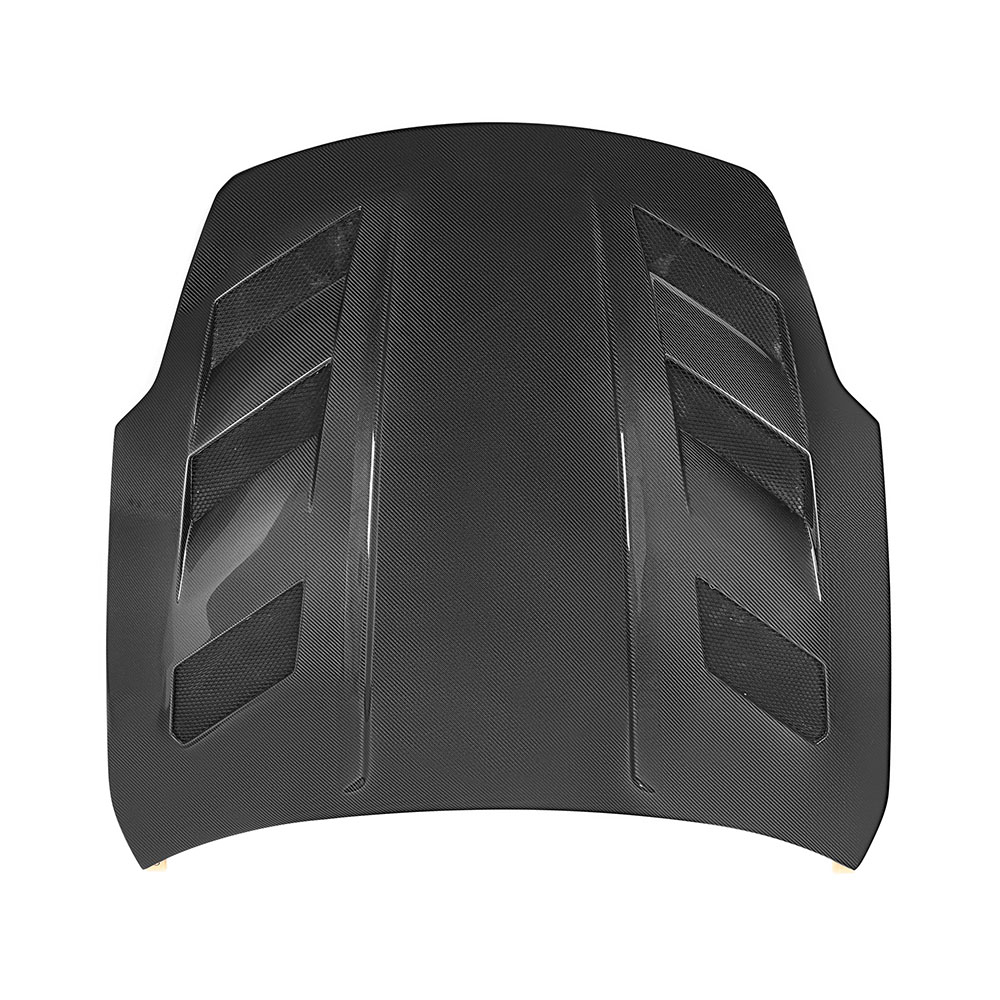
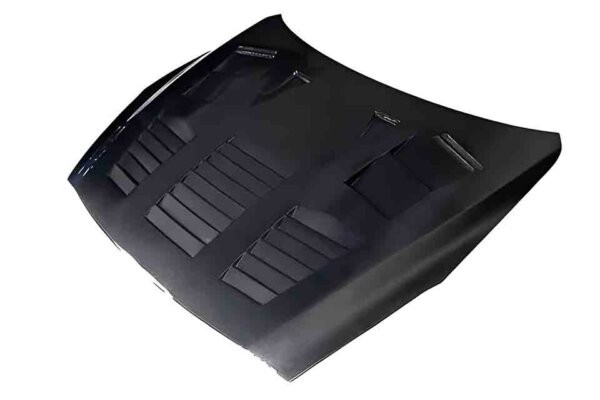
Designed for aggressive cooling and track environments, TS-style features:
- Large dual extraction vents
- Central low-pressure evacuation zone
- Strong airflow scavenging at speed
Ideal for:
High-boost B58 setups Track days / time attack Hot climate environments
TSII-Style Carbon Hood — Reinforced Structure & Expanded Venting
Upgrades over TS-style include:
- More structural reinforcement
- Larger louver surface area
- Improved pressure-zone vent design
Suitable for:
Higher horsepower builds Intensive cooling requirements Lightweight track-oriented Supra setups
TSIII-Style Carbon Hood — Deep-Cut Cooling Vents
TSIII-style incorporates:
- Expanded vent openings
- Deep-channel extraction ducts
- Increased thermal evacuation power
Recommended for heavily modified Supra builds.
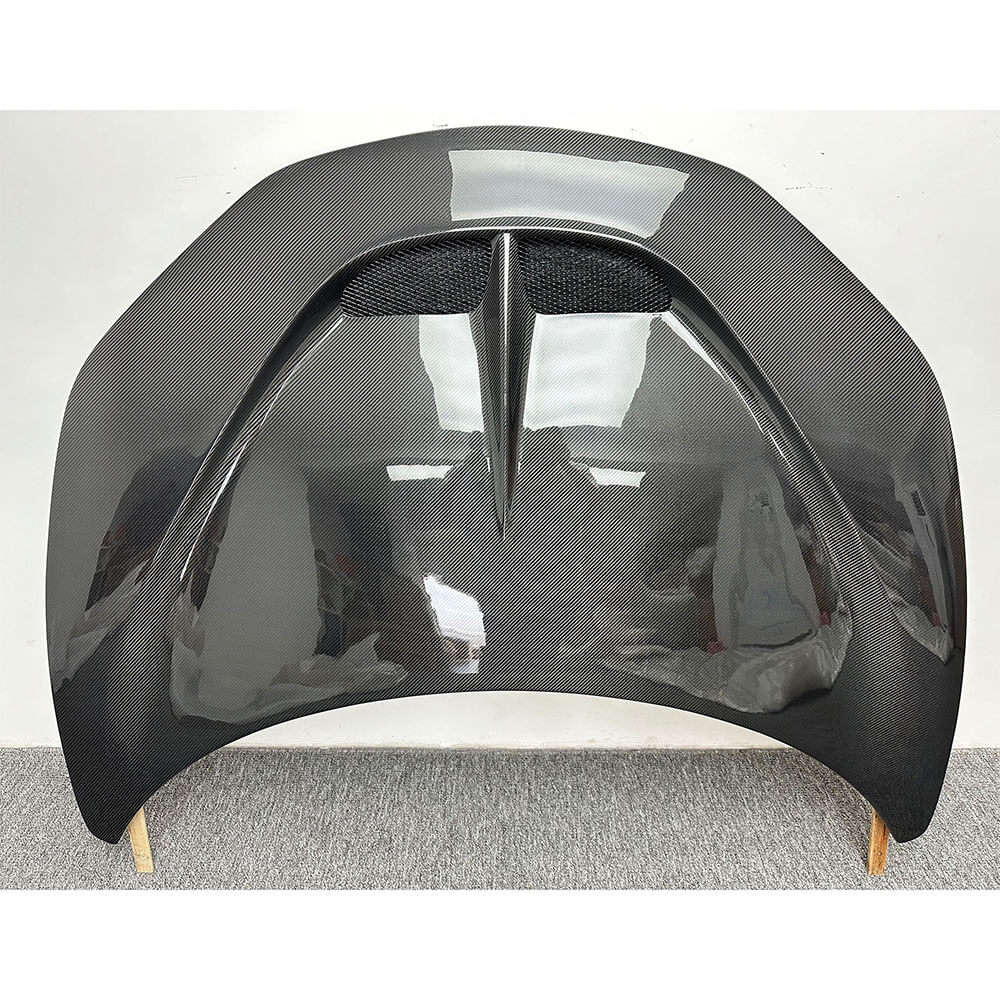
TV-Style Carbon Hood — Street + Track Balanced Design
TV-style provides a cleaner daily-usable design while maintaining proper venting.
Funkcijas:
- Large central vent
- Rain-friendly slat geometry
- Balanced airflow vs aesthetics
Perfect for daily-driven A90/A91.
VS-Style Carbon Hood — Aggressive Styling & Widebody Compatibility
VS-style is visually striking and pairs well with:
- Widebody kits
- Show builds
- Street performance cars
Cooling is moderate but adequate for non-track usage.
TR-Style Carbon Hood (Common for JZA80)
Designed around the 2JZ-GTE thermal layout:
- Symmetrical venting
- Vent placement near turbo heat source
Useful for classic MK4 builds. Good for both restoration and performance projects.
KB-Style Carbon Hood (JZA80)
Features aggressive lines with moderate venting. Popular for:
- Widebody MK4 builds
- Parādiet automašīnas
- Street performance applications
OEM-Style Carbon Hood — Subtle, Lightweight, Perfect Fitment
OEM-style hoods mimic the factory shape but offer:
- Substantial weight reduction
- Better rigidity (dry carbon)
- Ideāls piegulums
- Zero water intrusion
Ideal daily usability.
Double-Sided Dry Carbon Hoods — Structural-Grade CFRP
These represent the highest carbon fiber hood specification:
- Dry carbon exterior + dry carbon interior
- Internal rib-reinforcement grid
- Maximum torsional stiffness
- Minimum deformation under load & heat
Used for professional motorsport or high-power street builds. For more specialized non-automotive composites, some buyers explore pielāgota oglekļa šķiedra risinājumus.
Forged Carbon Fiber Hood — Aesthetic-Focused Composite
Forged carbon features randomly oriented short fibers:
- Visually unique
- Good for show cars
- Structural characteristics depend on fiber length and resin ratio
Carbon-Kevlar Hybrid Hood — Impact Resistance Upgrade
Kevlar fiber improves:
- Impact strength
- Stone-chip durability
- Off-road & rough-surface tolerance
Useful in harsh environments or long-distance driving conditions.
Fitment for A90 / A91 / MK5 (2020–2026)
Characteristics:
- Direct bolt-on fitment
- OEM latch compatible
- Tight gap tolerance requires professional alignment
- OEM gas struts sometimes too strong for lightweight dry carbon → Optional soft-rate struts recommended
Engineering notes:
- Lightweight hoods experience more upward lift at speed
- Vented hoods require precise water-flow management
- Dry carbon edges must be torqued correctly to avoid stress marks
Fitment for JZA80 / MK4 (1993–1998)
JZA80 uses a different engine bay heat map due to the 2JZ-GTE.
Important considerations:
- OEM gas struts often over-stress carbon hoods
- Many builds prefer mechanical prop rods
- Vent placement must align with turbo & manifold heat sources
- Significant weight reduction improves MK4’s front-end balance
Installation Engineering — What Most Owners Don’t Realize
Carbon Fiber Structural Behavior
CFRP is anisotropic, meaning:
- Strongest along fiber direction
- Weaker perpendicular to fibers
- Resin matrix determines heat resistance
Therefore:
- Hinge areas must be reinforced
- Latch zones require internal load-spread pads
- Vent cutouts must avoid load paths
Hood Latch, Hinges & Hood Pins
Why hood pins are recommended
At highway or track speeds, aerodynamic lift acts on the hood:
- Lightweight carbon increases lift effect
- Vented hoods generate additional pressure differential
- OEM latches were not designed for ultra-light materials
Result: Hood pins are strongly recommended for vented or lightweight hoods.
Heat Shielding / Thermal Protection
Engine bay temperatures:
- Turbo housing: 800–950°C
- Under-hood ambient: 110–140°C under hard load
Resin can degrade over time, so the underside should use:
- Aluminum heat shields
- Fiberglass thermal barriers
- Reflective insulation near turbo areas
Why Professional Installation Matters
A carbon hood installation is not “bolt-on only.” It includes:
- Panel gap alignment
- Latch tension tuning
- Strut compression behavior
- Hinge preload measurement
- Stress crack inspection
- Torque management
DIY installation risks:
- Hood vibration
- Misaligned latch
- Resin edge cracking
- Unsafe high-speed operation
Safety Considerations
Crash Behavior of Carbon Fiber Hoods
CFRP is brittle, not ductile:
| Materiāls | Failure Mode |
|---|
| Tērauds/alumīnijs | Bends, absorbs energy |
| Oglekļa šķiedra | Fractures, delaminates |
Thus:
- Low-speed impacts may crack CFRP
- High-speed impacts fragment the panel
This is normal composite behavior and not a defect.
Road-Legal Compliance
Some regions require:
- Secondary safety latches
- Radius-safe hood edges
- Restrictions on open vents
- Insurance declaration for carbon hoods
This varies by country.
Buying Guide — Choosing the Right Supra Carbon Fiber Hood
Dry Carbon vs Wet Carbon vs Double-Sided Carbon
| Tips | Svars | Stīvums | Trases izmantošana | Izmaksas |
|---|
| Sausais ogleklis | ★★★★★ | ★★★★★ | Labākais | Augsts |
| Wet Carbon | ★★★★ | ★★★ | Mērens | Vidēja |
| Double-Sided Dry | ★★★★★ | ★★★★★ | Labākais | Augstākā |
| Carbon-Kevlar | ★★★★ | ★★★★ | Harsh environments | Vidēja |
Surface Finish Options
Gloss finish → deep weave clarity Matte finish → motorsport aesthetic Forged finish → visual impact Colored carbon → decorative builds
Always ensure UV-resistant clear coat to prevent yellowing. For more industry background, see our oglekļa kompozītmateriālu ražotājs overview.
Shipping & Packaging
Premium suppliers ship using:
- Custom wooden crates
- Foam corner guards
- Full-coverage transit insurance
Shipping methods:
| Metode | Labākais priekš | Piezīmes |
|---|
| Express Courier | Samples | Highest cost |
| Air Freight | Retail orders | Fast, reliable |
| Sea Freight | Bulk shipments | Lētākais |
| Rail Freight | EU region | Balanced cost/time |
Warranty & After-Sales Support
Good manufacturers provide:
- Structural warranty
- Surface finish warranty
- Fitment accuracy guarantee
- Real-time support for installation
Avoid:
- Unknown material sources
- Non-reinforced hinge areas
- No after-sales support
Recommended Product Categories (Brand-Neutral)
Instead of naming specific companies, here are the product categories typically offered by premium carbon fiber manufacturers:
- Performance vented hoods
- Lightweight dry carbon hoods
- Forged carbon hoods
- OEM-style replacement hoods
- Double-sided track-grade hoods
- Carbon-Kevlar hybrid hoods
These categories exist across global, non-branded carbon fiber specialists. If you need custom-made solutions, visit our pasūtījuma kompozītmateriālu rūpnīca.
Common matching upgrades include:
- Oglekļa šķiedras spoguļu vāciņi
- Carbon fiber fender vents
- Carbon fiber rear wings / GT wings
- Front splitters & canards
- Sānu svārki
- Aizmugurējie difuzori
- Window trim covers
- Carbon roof panels
Together, these create a unified aero package and reduce overall weight. For painting considerations, see Can You Paint Carbon Fiber Hoods.
Owners commonly report:
“The weight reduction is immediately noticeable.” “Vented carbon hoods dramatically reduce heat soak.” “Professional installation is mandatory.” “UV-protected clear coat prevents yellowing over years.”
Forums consistently emphasize hood pins, proper alignment, and shipping insurance.
Bieži uzdotie jautājumi (FAQ)
Is a carbon fiber hood safe for daily driving? Yes — if properly installed and reinforced. Lightweight or vented hoods should use hood pins.
Vai man ir vajadzīgas kapuces tapas? Recommended for all vented or lightweight hoods, especially above 120 km/h.
Can I drive in the rain with a vented hood? Yes. Quality vent designs channel water away from sensitive components.
Will OEM gas struts work with carbon hoods? Only sometimes. Lightweight dry carbon often requires soft-rate struts.
Can a carbon fiber hood be painted? Yes — with proper primer prep and heat-resistant paint systems.
How much does a Supra carbon hood cost? Approximate ranges:
- Wet carbon: $700–$1,200
- Dry carbon: $1,800–$3,500
- Double-sided dry carbon: $2,500–$4,500
Does a carbon hood improve performance? Yes. Reduced front-end weight improves handling, braking, and responsiveness.