

Have you ever wondered who invented the super-strong, lightweight material in race cars and airplanes? Oglekļa šķiedra is everywhere today. It’s in Formula 1 cars, Boeing jets, and even medical prosthetics. But who actually discovered it?
The answer isn’t simple. Carbon fiber invention happened over many years. Different scientists made breakthroughs at different times. Some worked on carbon filaments for lightbulbs. Others created the high-performance carbon fibers we use today.
This article tells the complete story. You’ll learn about the carbon fiber pioneers who made it possible. We’ll explore the oglekļa šķiedras vēsture from 1879 to today. Plus, you’ll see how this amazing material changed industries forever.
Sir Joseph Swan made the first carbon-based fibers in 1879. He was a British scientist working on lightbulbs. Swan took ordinary paper and heated it until it turned into carbon. These carbonized paper filaments glowed when electricity passed through them.
Around the same time, Tomass Edisons was doing similar work in America. In 1880, Edison patented his own version. He used carbonized bamboo fibers instead of paper. Edison’s filaments lasted longer than Swan’s. However, neither man created what we call oglekļa šķiedra šodien.
These early experiments were important, though. They showed that carbon could be turned into thin, strong threads. This carbon fiber origin story starts here, but the real breakthrough came much later.
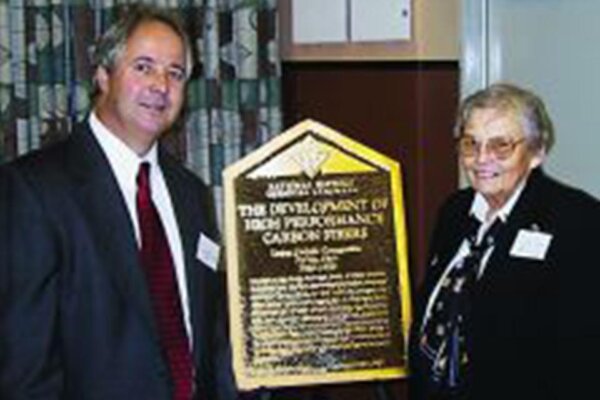
Roger Bacon changed everything in 1958. He worked at Union Carbide, a big chemical company. Bacon created the first true high-performance carbon fibers. His fibers were incredibly strong and stiff.
Bacon used a different process than Swan or Edison. He started with a material called poliakrilnitrils (PAN). When heated to extremely high temperatures, PAN turned into pure carbon threads. These threads had amazing structural properties.
Bacon’s carbon fiber breakthrough made modern applications possible. His work at Union Carbide led to patents that shaped the entire industry. Today, experts consider Bacon the father of modern oglekļa šķiedras tehnoloģija.
Japan took carbon fiber development to the next level. Akio Shindo created pitch-based carbon fibers in 1961. These fibers were even stiffer than Bacon’s PAN-based versija.
But the biggest player was Toray Industries. This Japanese company started commercial carbon fiber production in the 1970s. They developed the T300 fiber, which became the industry standard. By the 1980s, Toray controlled 70% of the global market.
Mitsubishi Chemical also jumped into the game. These companies turned oglekļa šķiedra from a lab curiosity into a commercial product. Today, modern oglekļa kompozītu ražotāji continue to build on their innovations.
Let’s go back to the beginning. Sir Joseph Swan needed a better filament for his lightbulbs. The materials he tried kept burning out too quickly.
Swan experimented with different substances. He discovered that heating paper in an oxygen-free environment created oglekļa pavedieni. These threads conducted electricity and produced light. However, they were fragile and didn’t last long.
Swan’s work was groundbreaking for its time. He showed that carbon synthesis was possible. His early carbon fiber experiments laid the foundation for future discoveries.
Tomass Edisons heard about Swan’s work. He wanted to make something better. Edison tried thousands of different materials. Finally, he found that carbonized bamboo worked best.
Edison’s carbon filament lasted 1,200 hours. That was much longer than Swan’s paper version. Edison patented his design and started selling lightbulbs commercially.
Like Swan, Edison wasn’t creating carbon fiber composite materials. But his research proved that carbon could be shaped into useful forms. This early carbon fiber research inspired scientists for decades.
Why did it take so long to go from lightbulb filaments to modern carbon fiber? The answer is technology.
Swan and Edison worked at low temperatures. Their carbon filaments were weak and brittle. They couldn’t handle much stress. Nobody knew how to make carbon strong enough for structural applications.
That changed when scientists learned about high-temperature processing. By heating carbon to 1,000-3,000 degrees Celsius, they could create much stronger fibers. This chemical process required new equipment and better understanding of materiālzinātne.
Roger Bacon figured out the right combination in 1958. His lab discovery plkst Union Carbide used advanced ovens and PAN precursor materials. This was the scientific breakthrough that made everything else possible.
Once Bacon created high-performance carbon fibers, governments got interested. The Royal Aircraft Establishment (RAE) in the UK started using oglekļa šķiedras kompozītmateriāli in military planes. The famous Harrier Jump Jet used these materials.
Why? Because oglekļa šķiedra is incredibly light. It’s also stronger than steel. For airplanes, less weight means better fuel efficiency and longer range. The aerospace history of carbon fiber started here.
NASA also began experimenting. They saw potential for space exploration. The viegls materiāls could help rockets carry more cargo. Early tests were promising.
Toray Industries changed the game in the 1970s. They figured out how to make oglekļa šķiedra cheaply enough to sell commercially. Their T300 fiber became famous worldwide.
Other companies joined in. Hexcel Corporation in America started making oglekļa šķiedra for airplanes. SGL Carbon in Germany focused on industrial uses. The carbon fiber manufacturing process became more efficient every year.
By the end of the 1970s, oglekļa šķiedra wasn’t just for military use anymore. Sports equipment makers started using it. Velosipēdu rāmji izgatavota no oglekļa šķiedra were lighter and faster than steel or aluminum versions.
Boeing un Airbus started using more oglekļa šķiedra in passenger planes. The material appeared in wings, tail sections, and other parts. NASA used it extensively in the Space Shuttle program.
Formula 1 racing saw a revolution. McLaren built the first carbon fiber chassis in 1981. The MP4/1 car was much safer than earlier designs. When drivers crashed, the oglekļa šķiedra absorbed impact better than metal. Crash fatalities dropped by 40%.
Sports equipment went crazy for oglekļa šķiedra. Tenisa raketes no Wilson un Babolat became lighter and more powerful. Golfa nūjas no Callaway un TaylorMade let players hit further. Bicycle manufacturers patīk Specializēts, Trek, un Pinarello made frames that professional riders loved.
Today, oglekļa šķiedra is everywhere. The Boeing 787 Dreamliner is 50% oglekļa šķiedra by weight. This saves fuel and reduces emissions. Airbus uses similar technology in the A350.
Luxury car makers love oglekļa šķiedra arī. BMW uses it in their electric i-series cars. Lamborghini makes entire bodies from oglekļa šķiedras kompozītmateriāli. You can even get a Lamborghini Urus carbon fiber kit to upgrade your SUV. Ferrari, Porsche, un Tesla all use the material in their high-end models.
The market keeps growing. In 2020, global production hit 180,000 metric tons per year. The industry is worth $25 billion and grows by 10% annually. Modern pasūtījuma kompozītu rūpnīcas produce everything from car parts to wind turbine blades.
Oglekļa šķiedra is about five times stronger than steel. But here’s the amazing part: it weighs only one-quarter as much. This lightweight strength changes everything.
Think about airplanes. Every pound of weight costs fuel. The Boeing 787 saves 20% on fuel compared to similar metal planes. That’s huge for airlines and the environment.
Race cars benefit too. A lighter car accelerates faster and handles better. That’s why every oglekļa šķiedras auto uz Formula 1 grid uses extensive oglekļa šķiedras kompozītmateriāli.
Oglekļa šķiedra has other advantages beyond strength. Let’s look at the key structural properties:
The carbon fiber discovery enabled entirely new technologies. Here are some examples:
Aviācija: Without oglekļa šķiedra, modern planes couldn’t fly as far or carry as much. NASA, SpaceX, un Blue Origin all rely on oglekļa šķiedras kompozītmateriāli for rockets and spacecraft.
Renewable Energy: Vēja turbīnu lāpstiņas izgatavota no oglekļa šķiedra are 15% more efficient than stikla šķiedra versions. They help generate more clean electricity.
Medicīniskās ierīces: Carbon fiber prosthetics are 30% lighter than traditional artificial limbs. They’re also stronger and more comfortable. Patients can move more naturally.
Automašīna: Oglekļa šķiedras automašīnas are becoming more common. Electric vehicles benefit especially, because lighter weight means longer battery range.
The carbon fiber industry employs hundreds of thousands of people worldwide. Companies like Toray, Hexcel, Mitsubishi Chemical, SGL Carbon, un Zoltek compete for market share.
Research institutions continue pushing boundaries. MIT, Stanford University, University of Tokyo, un Fraunhofer Institute all study carbon fiber innovations. They’re working on self-healing composites, graphene integration, un carbon fiber nanotechnology.
In our own composite manufacturing work, understanding this history is critical. Many customers assume carbon fiber is a ‘new material,’ but in practice, fiber grade selection, precursor type, and processing methods are deeply rooted in these historical developments.
Mūsdienu oglekļa šķiedras ražošana starts with precursor materials. The most common is PAN (polyacrylonitrile). About 90% of all oglekļa šķiedra nāk no PAN-based procesiem.
Some manufacturers use pitch-based precursors instead. These create stiffer fibers for specialized uses. A few still make rayon-based carbon fiber, though this is less common now.
Pagatavošana oglekļa šķiedra involves several steps. Each step is crucial to the final structural properties:
Spinning: The precursor material gets spun into thin threads. This spinning process creates fibers about 5-10 micrometers thick.
Stabilizācija: The fibers get heated to 200-300 degrees Celsius in air. This oxidation stage changes their chemical structure.
Karbonizācija: Next comes extreme heat: 1,000-1,800 degrees Celsius without oxygen. This pirolīze burns away everything except carbon atoms. The fibers turn black and become much stronger.
Graphitization: Some fibers get heated even more, to 2,000-3,000 degrees. This heat treatment aligns the carbon atoms into a crystal structure. It creates the strongest, stiffest oglekļa šķiedra iespējams.
Virsmas apstrāde: Finally, the fibers receive surface treatment un sizing. This helps them bond better with resins in kompozītmateriāli.
Raw oglekļa šķiedra isn’t useful by itself. It needs to be combined with resin to create ar oglekļa šķiedru pastiprināti polimēri (CFRP). Here’s how:
Weaving: Individual fibers get woven together. Woven fabric can be laid up in different directions for strength. Unidirectional tape has all fibers pointing the same way for maximum strength in one direction.
Prepreg: Many manufacturers use prepreg material. This is oglekļa šķiedra cloth pre-impregnated with resin. It’s easier to work with and produces consistent results.
Cilnis: Different manufacturing processes create different parts:
New technologies keep improving oglekļa šķiedras ražošana. 3D printing with carbon fiber lets designers create complex shapes impossible with traditional methods. Many pielāgota oglekļa šķiedra manufacturers now offer this service.
Carbon fiber recycling is becoming important too. As more products reach end-of-life, recycling helps with sustainability and reduces environmental impact. Companies are developing ways to recover and reuse oglekļa šķiedra from old parts.
Many people ask “who discovered carbon fiber?” expecting a single name. But carbon fiber invention wasn’t like that.
Sir Joseph Swan started the journey in 1879. Tomass Edisons improved on his work in 1880. But neither created modern oglekļa šķiedra. That honor goes to Roger Bacon in 1958. Then Akio Shindo un Toray Industries made it commercial in the 1960s-70s.
It’s like asking who invented the computer. Was it Charles Babbage? Alan Turing? Steve Jobs? The truth is, many people contributed. Carbon fiber history darbojas tāpat.
Some sources say Tomass Edisons invented oglekļa šķiedra. This isn’t quite right. Edison made carbon filaments for lightbulbs. These were thin and weak. They worked for producing light but couldn’t handle much stress.
Roger Bacon’s work was completely different. He created fibers strong enough for structural applications. Bacon’s oglekļa šķiedra could replace metal in some uses. That’s the pivotal breakthrough that matters.
Oglekļa šķiedra has amazing properties, but it’s not perfect for everything. Here’s the truth:
Advantages:
Disadvantages:
Smart designers choose materials based on the specific needs of each project. Sometimes metal is still the better choice.
Oglekļa šķiedra feels futuristic, so people assume it’s new. But remember, Roger Bacon created it in 1958. That’s over 65 years ago!
The Royal Aircraft Establishment used it in military planes in the 1960s. Formula 1 teams adopted it in 1981. The Boeing 787, while advanced, first flew in 2009. Carbon fiber technology has been around for a long time.
What’s actually new? Better manufacturing processes, lower carbon fiber costs, and wider adoption in consumer products. The basic material hasn’t changed much since the 1970s.
The carbon fiber industry is booming. Here are the numbers:
| Metric | Vērtība | Avots |
|---|---|---|
| Global production (2020) | 180,000 metric tons/year | Grand View Research |
| Market value (2023) | $25 billion | Grand View Research |
| Annual growth rate | 10% | Grand View Research |
| Largest producer | Toray Industries (Japan) | Toray Corporate History |
| Market leader share | 30-35% | Industry Analysis |
Apskatīsim, kā oglekļa šķiedra actually performs in different uses:
Aviācija (Boeing 787 Dreamliner):
Automašīna (Formula 1):
Renewable Energy (Wind Turbines):
Medicīnas (Prosthetics):
The carbon fiber industry includes many major players:
Manufacturers:
Major Users:
Research Institutions:
Scientists are working on exciting new carbon fiber innovations:
Gudri materiāli: Embedding sensors in oglekļa šķiedra to monitor stress and damage in real-time. Useful for airplane wings and bridges.
Self-Healing Composites: Materials that can repair small cracks automatically. This could dramatically extend the life of oglekļa šķiedra daļas.
Graphene Integration: Combining oglekļa šķiedra ar graphene (super-thin carbon sheets) to create even stronger materials.
Zemākas izmaksas: New manufacturing processes aim to cut production costs by 50%. This would make oglekļa šķiedra affordable for everyday products.
Labāka pārstrāde: Improved oglekļa šķiedras pārstrāde methods will reduce waste and environmental impact.
Sir Joseph Swan created the first carbon-based fibers in 1879 for lightbulb filaments. However, modern oglekļa šķiedra priekš structural applications started with Roger Bacon in 1958. Commercial use began in the 1960s-70s thanks to Toray Industries and other Japanese companies.
Yes, oglekļa šķiedra is about five times stronger than steel when comparing stiepes izturība. It also weighs only one-quarter as much. This incredible spēka un svara attiecība veido oglekļa šķiedra perfect for airplanes, race cars, and sports equipment.
However, oglekļa šķiedra can be more brittle under certain impacts. The best material depends on the specific use.
Many companies hold carbon fiber patents. Toray Industries, Mitsubishi Chemical, un Hexcel Corporation own patents covering manufacturing processes, precursor materials, and specific fiber types.
However, basic oglekļa šķiedras tehnoloģija is now public domain. The original Roger Bacon patents from Union Carbide expired long ago. Modern patents focus on improvements and new applications.
Oglekļa šķiedra prices vary widely. Basic PAN-based fiber costs $10-15 per pound in bulk. High-performance aerokosmiskās klases fiber can cost $50-100+ per pound.
Finished parts cost even more because of labor and manufacturing complexity. A oglekļa šķiedra bicycle frame might cost $500-3,000. Custom oglekļa šķiedra automotive parts can run thousands of dollars.
Prices keep dropping, though. Better carbon fiber production methods reduce costs every year.
Yes, but it’s challenging. Traditional oglekļa šķiedras pārstrāde involves burning off the resin in a special oven. This recovers the fibers, but they’re shorter and weaker than new fibers.
New recycling methods are improving. Chemical processes can dissolve resin without damaging fibers as much. Some companies now make pārstrādāta oglekļa šķiedra products that perform nearly as well as new materials.
As the industry focuses more on sustainability, expect better recycling solutions.
Both are kompozītmateriāli, but they use different fibers:
Oglekļa šķiedra:
Stikla šķiedra:
Oglekļa šķiedra usually replaces stikla šķiedra when performance matters more than cost. Think race cars versus regular boats.
The biggest users of oglekļa šķiedra ir:
Aviācija: Commercial and military aircraft use huge amounts. The Boeing 787 alone requires thousands of pounds per plane.
Automašīna: Oglekļa šķiedras automašīnas are growing fast. High-end sports cars and electric vehicles lead adoption.
Vēja enerģija: Modern wind turbine blades increasingly use oglekļa šķiedra for better efficiency.
Sporta aprīkojums: Velosipēdu rāmji, golf clubs, tennis rackets, and more all use oglekļa šķiedra.
Rūpnieciskais: Robotics, drones, construction, and manufacturing all find uses for oglekļa šķiedras kompozītmateriāli.
So who discovered oglekļa šķiedra? The answer includes Sir Joseph Swan, Tomass Edisons, Roger Bacon, Akio Shindo, and scientists at Toray Industries. Each made crucial contributions at different times.
Carbon fiber history shows how innovation works. One person’s breakthrough builds on previous discoveries. Swan’s carbonized paper led to Bacon’s strong fibers, which led to Toray’s commercial products. Today’s oglekļa kompozītu ražotāji continue that tradition of improvement.
The carbon fiber discovery changed our world. It made airplanes more efficient. It saved lives in race car crashes. It enables cleaner wind energy and more comfortable prosthetics.
Looking ahead, carbon fiber innovations promise even more. Cheaper production methods will bring this augstas veiktspējas materiāls to everyday products. New applications in robotics, celtniecība, un smart materials are just beginning.
From lightbulb filaments in 1879 to spacecraft in 2024, carbon fiber evolution continues. Who knows what the next breakthrough will be? One thing’s certain: this amazing material will keep shaping our future for decades to come.
Who Discovered Carbon Fiber? Invention History Explained Introduction: A Material That Changed Everything Have you ever wondered who invented the super-strong, lightweight material in race cars and airplanes? Carbon fiber is everywhere today. It’s in Formula 1 cars, Boeing jets, and even medical prosthetics. But who actually discovered it?
The answer isn’t simple. Carbon fiber invention happened over many years. Different scientists made breakthroughs at different times. Some worked on carbon filaments for lightbulbs. Others created the high-performance carbon fibers we use today.
This article tells the complete story. You’ll learn about the carbon fiber pioneers who made it possible. We’ll explore the carbon fiber history from 1879 to today. Plus, you’ll see how this amazing material changed industries forever.
Who Invented Carbon Fiber? The Early Pioneers (1879-1880) Sir Joseph Swan made the first carbon-based fibers in 1879. He was a British scientist working on lightbulbs. Swan took ordinary paper and heated it until it turned into carbon. These carbonized paper filaments glowed when electricity passed through them.

Around the same time, Thomas Edison was doing similar work in America. In 1880, Edison patented his own version. He used carbonized bamboo fibers instead of paper. Edison’s filaments lasted longer than Swan’s. However, neither man created what we call carbon fiber today.
These early experiments were important, though. They showed that carbon could be turned into thin, strong threads. This carbon fiber origin story starts here, but the real breakthrough came much later.
The Real Breakthrough (1958) Roger Bacon changed everything in 1958. He worked at Union Carbide, a big chemical company. Bacon created the first true high-performance carbon fibers. His fibers were incredibly strong and stiff.
Bacon used a different process than Swan or Edison. He started with a material called polyacrylonitrile (PAN). When heated to extremely high temperatures, PAN turned into pure carbon threads. These threads had amazing structural properties.
Bacon’s carbon fiber breakthrough made modern applications possible. His work at Union Carbide led to patents that shaped the entire industry. Today, experts consider Bacon the father of modern carbon fiber technology.
Japanese Innovation (1960s) Japan took carbon fiber development to the next level. Akio Shindo created pitch-based carbon fibers in 1961. These fibers were even stiffer than Bacon’s PAN-based version.
But the biggest player was Toray Industries. This Japanese company started commercial carbon fiber production in the 1970s. They developed the T300 fiber, which became the industry standard. By the 1980s, Toray controlled 70% of the global market.
Mitsubishi Chemical also jumped into the game. These companies turned carbon fiber from a lab curiosity into a commercial product. Today, modern carbon composite manufacturers continue to build on their innovations.
The First Carbon Fiber Experiments Swan’s Lightbulb Work (1879) Let’s go back to the beginning. Sir Joseph Swan needed a better filament for his lightbulbs. The materials he tried kept burning out too quickly.
Swan experimented with different substances. He discovered that heating paper in an oxygen-free environment created carbon threads. These threads conducted electricity and produced light. However, they were fragile and didn’t last long.
Swan’s work was groundbreaking for its time. He showed that carbon synthesis was possible. His early carbon fiber experiments laid the foundation for future discoveries.
Edison’s Improvements (1880) Thomas Edison heard about Swan’s work. He wanted to make something better. Edison tried thousands of different materials. Finally, he found that carbonized bamboo worked best.
Edison’s carbon filament lasted 1,200 hours. That was much longer than Swan’s paper version. Edison patented his design and started selling lightbulbs commercially.
Like Swan, Edison wasn’t creating carbon fiber composite materials. But his research proved that carbon could be shaped into useful forms. This early carbon fiber research inspired scientists for decades.
The Long Gap Why did it take so long to go from lightbulb filaments to modern carbon fiber? The answer is technology.
Swan and Edison worked at low temperatures. Their carbon filaments were weak and brittle. They couldn’t handle much stress. Nobody knew how to make carbon strong enough for structural applications.
That changed when scientists learned about high-temperature processing. By heating carbon to 1,000-3,000 degrees Celsius, they could create much stronger fibers. This chemical process required new equipment and better understanding of material science.
Roger Bacon figured out the right combination in 1958. His lab discovery at Union Carbide used advanced ovens and PAN precursor materials. This was the scientific breakthrough that made everything else possible.
Modern Carbon Fiber Development The 1960s: Military and Aerospace Once Bacon created high-performance carbon fibers, governments got interested. The Royal Aircraft Establishment (RAE) in the UK started using carbon fiber composites in military planes. The famous Harrier Jump Jet used these materials.
Why? Because carbon fiber is incredibly light. It’s also stronger than steel. For airplanes, less weight means better fuel efficiency and longer range. The aerospace history of carbon fiber started here.
NASA also began experimenting. They saw potential for space exploration. The lightweight material could help rockets carry more cargo. Early tests were promising.
The 1970s: Commercial Production Toray Industries changed the game in the 1970s. They figured out how to make carbon fiber cheaply enough to sell commercially. Their T300 fiber became famous worldwide.
Other companies joined in. Hexcel Corporation in America started making carbon fiber for airplanes. SGL Carbon in Germany focused on industrial uses. The carbon fiber manufacturing process became more efficient every year.
By the end of the 1970s, carbon fiber wasn’t just for military use anymore. Sports equipment makers started using it. Bicycle frames made from carbon fiber were lighter and faster than steel or aluminum versions.
The 1980s-1990s: Wider Adoption Boeing and Airbus started using more carbon fiber in passenger planes. The material appeared in wings, tail sections, and other parts. NASA used it extensively in the Space Shuttle program.
Formula 1 racing saw a revolution. McLaren built the first carbon fiber chassis in 1981. The MP4/1 car was much safer than earlier designs. When drivers crashed, the carbon fiber absorbed impact better than metal. Crash fatalities dropped by 40%.
Sports equipment went crazy for carbon fiber. Tennis rackets from Wilson and Babolat became lighter and more powerful. Golf clubs from Callaway and TaylorMade let players hit further. Bicycle manufacturers like Specialized, Trek, and Pinarello made frames that professional riders loved.
The 2000s-Today: Mass Market Today, carbon fiber is everywhere. The Boeing 787 Dreamliner is 50% carbon fiber by weight. This saves fuel and reduces emissions. Airbus uses similar technology in the A350.
Luxury car makers love carbon fiber too. BMW uses it in their electric i-series cars. Lamborghini makes entire bodies from carbon fiber composites. You can even get a Lamborghini Urus carbon fiber kit to upgrade your SUV. Ferrari, Porsche, and Tesla all use the material in their high-end models.
The market keeps growing. In 2020, global production hit 180,000 metric tons per year. The industry is worth $25 billion and grows by 10% annually. Modern custom composite factories produce everything from car parts to wind turbine blades.
Why Does the Discovery Matter? Incredible Strength-to-Weight Ratio Carbon fiber is about five times stronger than steel. But here’s the amazing part: it weighs only one-quarter as much. This lightweight strength changes everything.
Think about airplanes. Every pound of weight costs fuel. The Boeing 787 saves 20% on fuel compared to similar metal planes. That’s huge for airlines and the environment.
Race cars benefit too. A lighter car accelerates faster and handles better. That’s why every carbon fiber car on the Formula 1 grid uses extensive carbon fiber composites.
Superior Material Properties Carbon fiber has other advantages beyond strength. Let’s look at the key structural properties:
High stiffness: Carbon fiber doesn’t bend easily. This modulus makes it perfect for parts that need to stay rigid. Corrosion resistance: Unlike steel, carbon fiber doesn’t rust. It lasts longer in harsh environments. Thermal properties: Carbon fiber handles extreme temperatures well. It’s used in jet engines and spacecraft. Electrical conductivity: Some carbon fiber types conduct electricity. This makes them useful in electronics and batteries. Game-Changing Applications The carbon fiber discovery enabled entirely new technologies. Here are some examples:
Aerospace: Without carbon fiber, modern planes couldn’t fly as far or carry as much. NASA, SpaceX, and Blue Origin all rely on carbon fiber composites for rockets and spacecraft.
Renewable Energy: Wind turbine blades made from carbon fiber are 15% more efficient than fiberglass versions. They help generate more clean electricity.
Medical Devices: Carbon fiber prosthetics are 30% lighter than traditional artificial limbs. They’re also stronger and more comfortable. Patients can move more naturally.
Automotive: Carbon fiber cars are becoming more common. Electric vehicles benefit especially, because lighter weight means longer battery range.
Economic Impact The carbon fiber industry employs hundreds of thousands of people worldwide. Companies like Toray, Hexcel, Mitsubishi Chemical, SGL Carbon, and Zoltek compete for market share.
Research institutions continue pushing boundaries. MIT, Stanford University, University of Tokyo, and the Fraunhofer Institute all study carbon fiber innovations. They’re working on self-healing composites, graphene integration, and carbon fiber nanotechnology.
In our own composite manufacturing work, understanding this history is critical. Many customers assume carbon fiber is a ‘new material,’ but in practice, fiber grade selection, precursor type, and processing methods are deeply rooted in these historical developments.
Carbon Fiber Manufacturing: How It’s Made Starting Materials Modern carbon fiber production starts with precursor materials. The most common is PAN (polyacrylonitrile). About 90% of all carbon fiber comes from PAN-based processes.
Some manufacturers use pitch-based precursors instead. These create stiffer fibers for specialized uses. A few still make rayon-based carbon fiber, though this is less common now.
The Production Process Making carbon fiber involves several steps. Each step is crucial to the final structural properties:
Spinning: The precursor material gets spun into thin threads. This spinning process creates fibers about 5-10 micrometers thick.
Stabilization: The fibers get heated to 200-300 degrees Celsius in air. This oxidation stage changes their chemical structure.
Carbonization: Next comes extreme heat: 1,000-1,800 degrees Celsius without oxygen. This pyrolysis burns away everything except carbon atoms. The fibers turn black and become much stronger.
Graphitization: Some fibers get heated even more, to 2,000-3,000 degrees. This heat treatment aligns the carbon atoms into a crystal structure. It creates the strongest, stiffest carbon fiber possible.
Surface Treatment: Finally, the fibers receive surface treatment and sizing. This helps them bond better with resins in composite materials.
Making Composite Parts Raw carbon fiber isn’t useful by itself. It needs to be combined with resin to create carbon fiber reinforced polymers (CFRP). Here’s how:
Weaving: Individual fibers get woven together. Woven fabric can be laid up in different directions for strength. Unidirectional tape has all fibers pointing the same way for maximum strength in one direction.
Prepreg: Many manufacturers use prepreg material. This is carbon fiber cloth pre-impregnated with resin. It’s easier to work with and produces consistent results.
Molding: Different manufacturing processes create different parts:
Autoclave molding: Layers of prepreg get stacked in a mold, then heated under pressure Compression molding: Similar, but uses mechanical pressure instead of an autoclave Resin infusion: Dry carbon fiber fabric goes in a mold, then resin gets sucked through it Pultrusion: For long, straight parts like tubes Filament winding: For hollow cylinders like pipes or pressure vessels Modern Innovations New technologies keep improving carbon fiber manufacturing. 3D printing with carbon fiber lets designers create complex shapes impossible with traditional methods. Many custom carbon fiber manufacturers now offer this service.
Carbon fiber recycling is becoming important too. As more products reach end-of-life, recycling helps with sustainability and reduces environmental impact. Companies are developing ways to recover and reuse carbon fiber from old parts.
Common Misconceptions About Carbon Fiber Myth 1: One Person Invented It Many people ask “who discovered carbon fiber?” expecting a single name. But carbon fiber invention wasn’t like that.
Sir Joseph Swan started the journey in 1879. Thomas Edison improved on his work in 1880. But neither created modern carbon fiber. That honor goes to Roger Bacon in 1958. Then Akio Shindo and Toray Industries made it commercial in the 1960s-70s.
It’s like asking who invented the computer. Was it Charles Babbage? Alan Turing? Steve Jobs? The truth is, many people contributed. Carbon fiber history works the same way.
Myth 2: Edison’s Work Was Modern Carbon Fiber Some sources say Thomas Edison invented carbon fiber. This isn’t quite right. Edison made carbon filaments for lightbulbs. These were thin and weak. They worked for producing light but couldn’t handle much stress.
Roger Bacon’s work was completely different. He created fibers strong enough for structural applications. Bacon’s carbon fiber could replace metal in some uses. That’s the pivotal breakthrough that matters.
Myth 3: Carbon Fiber Is Always Better Than Metal Carbon fiber has amazing properties, but it’s not perfect for everything. Here’s the truth:
Advantages:
Much lighter than steel or aluminum Higher tensile strength in many applications Excellent corrosion resistance Good thermal properties Disadvantages:
More expensive than metals Can be brittle under certain impacts Harder to repair when damaged Manufacturing requires specialized equipment Smart designers choose materials based on the specific needs of each project. Sometimes metal is still the better choice.
Myth 4: Carbon Fiber Is Brand New Carbon fiber feels futuristic, so people assume it’s new. But remember, Roger Bacon created it in 1958. That’s over 65 years ago!
The Royal Aircraft Establishment used it in military planes in the 1960s. Formula 1 teams adopted it in 1981. The Boeing 787, while advanced, first flew in 2009. Carbon fiber technology has been around for a long time.
What’s actually new? Better manufacturing processes, lower carbon fiber costs, and wider adoption in consumer products. The basic material hasn’t changed much since the 1970s.
Carbon Fiber Today: Key Statistics and Facts Market Size and Growth The carbon fiber industry is booming. Here are the numbers:
Metric Value Source Global production (2020) 180,000 metric tons/year Grand View Research Market value (2023) $25 billion Grand View Research Annual growth rate 10% Grand View Research Largest producer Toray Industries (Japan) Toray Corporate History Market leader share 30-35% Industry Analysis Real-World Performance Let’s look at how carbon fiber actually performs in different uses:
Aerospace (Boeing 787 Dreamliner):
50% of aircraft weight is carbon fiber 20% better fuel efficiency than comparable planes Reduced maintenance costs Longer range capability Automotive (Formula 1):
Carbon fiber chassis standard since 1981 40% reduction in crash fatalities Weight savings of 100-150 kg per car Improved handling and acceleration Renewable Energy (Wind Turbines):
Carbon fiber blades increase energy output by 15% Longer blades possible due to lightweight strength Better durability in harsh weather Lower maintenance requirements Medical (Prosthetics):
30% lighter than traditional materials Better corrosion resistance (won’t rust) More comfortable for patients Enables more natural movement Leading Companies and Research The carbon fiber industry includes many major players:
Manufacturers:
Toray Industries (Japan) – Market leader Mitsubishi Chemical (Japan) – High-performance fibers Hexcel Corporation (USA) – Aerospace focus SGL Carbon (Germany) – Industrial applications Zoltek (USA) – Lower-cost fibers Teijin Limited (Japan) – Advanced composites Major Users:
Boeing and Airbus (commercial aircraft) Lockheed Martin and Northrop Grumman (military) BMW, Lamborghini, Ferrari, Porsche (automotive) NASA, SpaceX, Blue Origin (space) Various carbon composite manufacturers (custom parts) Research Institutions:
Massachusetts Institute of Technology (MIT) Stanford University University of Tokyo University of Manchester (graphene research) Fraunhofer Institute (Germany) National Institute of Standards and Technology (NIST) Future Innovations Scientists are working on exciting new carbon fiber innovations:
Smart Materials: Embedding sensors in carbon fiber to monitor stress and damage in real-time. Useful for airplane wings and bridges.
Self-Healing Composites: Materials that can repair small cracks automatically. This could dramatically extend the life of carbon fiber parts.
Graphene Integration: Combining carbon fiber with graphene (super-thin carbon sheets) to create even stronger materials.
Lower Costs: New manufacturing processes aim to cut production costs by 50%. This would make carbon fiber affordable for everyday products.
Better Recycling: Improved carbon fiber recycling methods will reduce waste and environmental impact.
Frequently Asked Questions When was carbon fiber first used? Sir Joseph Swan created the first carbon-based fibers in 1879 for lightbulb filaments. However, modern carbon fiber for structural applications started with Roger Bacon in 1958. Commercial use began in the 1960s-70s thanks to Toray Industries and other Japanese companies.
Is carbon fiber stronger than steel? Yes, carbon fiber is about five times stronger than steel when comparing tensile strength. It also weighs only one-quarter as much. This incredible strength-to-weight ratio makes carbon fiber perfect for airplanes, race cars, and sports equipment.
However, carbon fiber can be more brittle under certain impacts. The best material depends on the specific use.
Who owns carbon fiber patents today? Many companies hold carbon fiber patents. Toray Industries, Mitsubishi Chemical, and Hexcel Corporation own patents covering manufacturing processes, precursor materials, and specific fiber types.
However, basic carbon fiber technology is now public domain. The original Roger Bacon patents from Union Carbide expired long ago. Modern patents focus on improvements and new applications.
How much does carbon fiber cost? Carbon fiber prices vary widely. Basic PAN-based fiber costs $10-15 per pound in bulk. High-performance aerospace-grade fiber can cost $50-100+ per pound.
Finished parts cost even more because of labor and manufacturing complexity. A carbon fiber bicycle frame might cost $500-3,000. Custom carbon fiber automotive parts can run thousands of dollars.
Prices keep dropping, though. Better carbon fiber production methods reduce costs every year.
Can carbon fiber be recycled? Yes, but it’s challenging. Traditional carbon fiber recycling involves burning off the resin in a special oven. This recovers the fibers, but they’re shorter and weaker than new fibers.
New recycling methods are improving. Chemical processes can dissolve resin without damaging fibers as much. Some companies now make recycled carbon fiber products that perform nearly as well as new materials.
As the industry focuses more on sustainability, expect better recycling solutions.
What’s the difference between carbon fiber and fiberglass? Both are composite materials, but they use different fibers:
Oglekļa šķiedra:
Made from carbon atoms Much stronger and stiffer Lighter weight More expensive Better thermal properties Fiberglass:
Made from glass fibers Cheaper to produce Heavier than carbon fiber More flexible (can be good or bad) Easier to repair Carbon fiber usually replaces fiberglass when performance matters more than cost. Think race cars versus regular boats.
What industries use carbon fiber the most? The biggest users of carbon fiber are:
Aerospace: Commercial and military aircraft use huge amounts. The Boeing 787 alone requires thousands of pounds per plane.
Automotive: Carbon fiber cars are growing fast. High-end sports cars and electric vehicles lead adoption.
Wind Energy: Modern wind turbine blades increasingly use carbon fiber for better efficiency.
Sports Equipment: Bicycle frames, golf clubs, tennis rackets, and more all use carbon fiber.
Industrial: Robotics, drones, construction, and manufacturing all find uses for carbon fiber composites.
Conclusion: A Discovery That Shaped Our World So who discovered carbon fiber? The answer includes Sir Joseph Swan, Thomas Edison, Roger Bacon, Akio Shindo, and scientists at Toray Industries. Each made crucial contributions at different times.
Carbon fiber history shows how innovation works. One person’s breakthrough builds on previous discoveries. Swan’s carbonized paper led to Bacon’s strong fibers, which led to Toray’s commercial products. Today’s carbon composite manufacturers continue that tradition of improvement.
The carbon fiber discovery changed our world. It made airplanes more efficient. It saved lives in race car crashes. It enables cleaner wind energy and more comfortable prosthetics.
Looking ahead, carbon fiber innovations promise even more. Cheaper production methods will bring this high-performance material to everyday products. New applications in robotics, construction, and smart materials are just beginning.
From lightbulb filaments in 1879 to spacecraft in 2024, carbon fiber evolution continues. Who knows what the next breakthrough will be? One thing’s certain: this amazing material will keep shaping our future for decades to come.
This article was written by engineers and technical specialists from a custom carbon fiber manufacturing company, with hands-on experience in aerospace, automotive, and industrial composite applications. The team works directly with OEM clients on material selection, fiber grades, and composite processing methods.