Kort antwoord: Koolstofvezelversterkt polymeer (CFRP) heeft doorgaans een dichtheid van 1,4–1,9 g/cm³. Dat komt neer op ongeveer 70–80% lichter dan staal en 30–45% lichter dan aluminium bij hetzelfde volume. Een CFRP-paneel van 1 m² met een dikte van 1 mm weegt ongeveer 1,4–1,9 kg — vergeleken met 7,8 kg voor dezelfde staalplaat.
| Vraag | Typisch antwoord |
|---|---|
| Dichtheid van ruwe koolstofvezelfilamenten | ~1,80 g/cm³ |
| Dichtheid van afgewerkte CFRP-composietmaterialen | 1,4–1,9 g/cm³ |
| Dichtheid van prepreg-laminaat voor autoclaven | ~1.55–1.60 g/cm³ |
| CFRP-plaat van 1 mm | Ongeveer 1,4–1,9 kg/m² |
| In vergelijking met staal (bij gelijk volume) | Ongeveer 70–80% aansteker |
| In vergelijking met aluminium (bij gelijk volume) | Ongeveer 30–45% lichter |
| Algemene schatting voor berekeningen | Gebruik 1,6 g/cm³, tenzij in het materiaalinformatieblad anders is aangegeven |
Hoe zwaar is koolstofvezel?
Koolstofvezel is een lichtgewicht constructiemateriaal. Een afgewerkt CFRP-composiet weegt doorgaans tussen 1,4 en 1,9 gram per kubieke centimeter, waardoor het een hoge sterkte-gewichtsverhouding heeft in vergelijking met staal, aluminium en titanium.
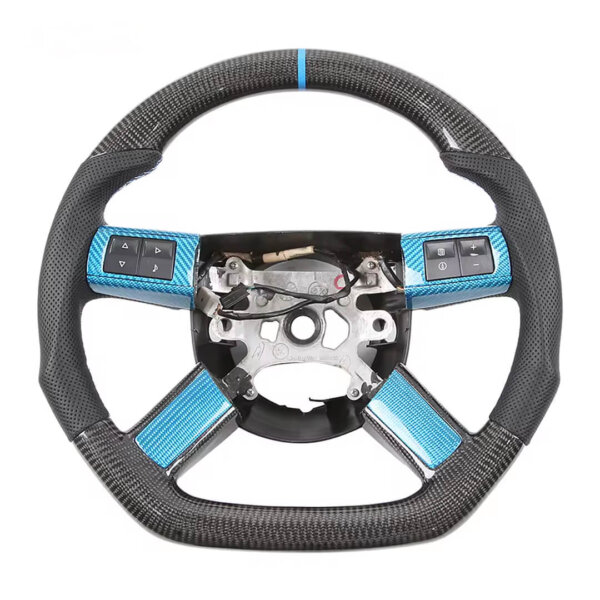
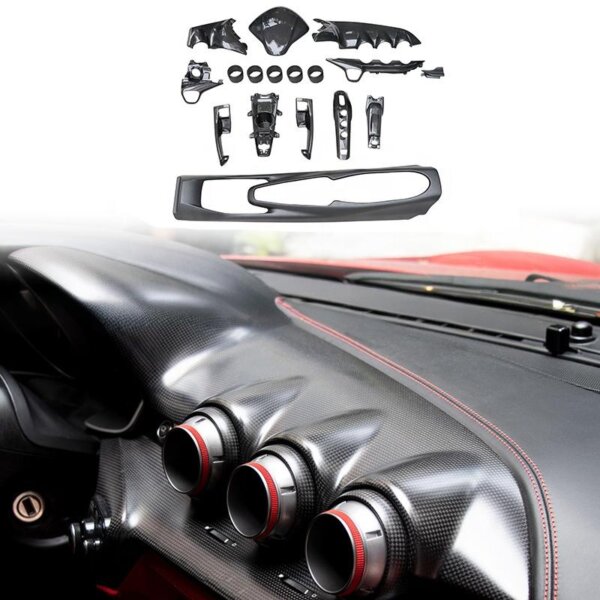
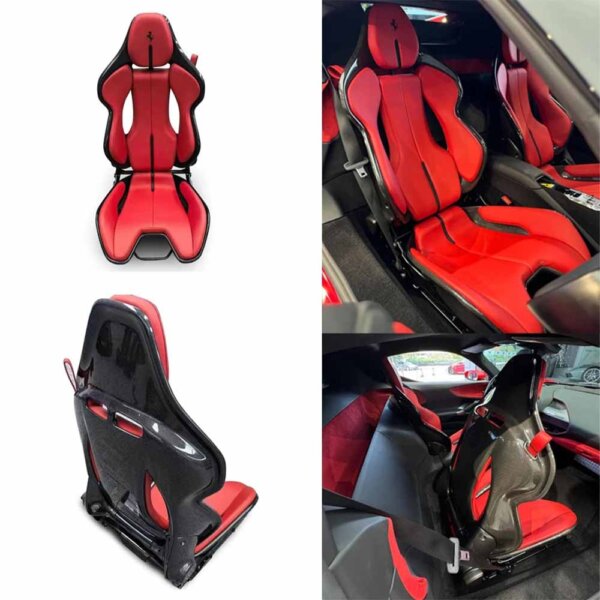
Gewicht speelt een belangrijke rol bij toepassingen in de auto- en motorfietsindustrie, omdat een lagere massa van onderdelen het rijgedrag, de acceleratie, de remrespons en de algehele efficiëntie van het voertuig kan verbeteren. Om deze reden wordt CFRP op grote schaal gebruikt voor motorkappen, spoilers, stroomlijnkappen, luchtkanalen, interieurafwerking en op maat gemaakte lichtgewicht panelen.
Onze koolstofvezel auto onderdelen en motorfiets van koolstofvezel De onderdelen worden vervaardigd volgens nauwe toleranties, waarbij het gewicht van het onderdeel vóór aanvang van de productie wordt geschat op basis van de dikte van het laminaat, het vezeltype en het harssysteem.
Koolstofvezeldichtheid uitgelegd
Dichtheid geeft aan hoeveel een materiaal weegt bij een bepaald volume. Bij koolstofvezelcomposiet zijn de volgende factoren van invloed op de uiteindelijke dichtheid:
- Type vezel: De verschillende kwaliteiten (T300, T700, hoge modulus) hebben een iets verschillende dichtheid
- Harssysteem: Epoxy komt het meest voor; de verhouding van de samenstelling heeft een directe invloed op het gewicht van het onderdeel
- Vezeloriëntatie: Het verschil tussen unidirectionele en geweven weefsels beïnvloedt de pakkingsdichtheid en de harsopname
- Productieproces: Bij autoclaaf-prepreg, harsinfusie en natte laminering ontstaan verschillende vezelvolumefracties
Dichtheid in andere eenheden
| Dichtheid | Gelijkwaardige waarde |
|---|---|
| 1,5 g/cm³ | 1.500 kg/m³ / ca. 0,054 lb/in³ / ca. 93,6 lb/ft³ |
| 1,6 g/cm³ | 1.600 kg/m³ / ca. 0,058 lb/in³ / ca. 99,9 lb/ft³ |
| 1,8 g/cm³ | 1.800 kg/m³ / ca. 0,065 lb/in³ / ca. 112,4 lb/ft³ |
Ruwe koolstofvezel versus CFRP-composiet: over welke dichtheid hebben we het?
Het is belangrijk om te weten dat de term “koolstofvezelgewicht” verschillende betekenissen kan hebben, afhankelijk van de vorm die je meet:
| Formulier | Typische dichtheid | Opmerkingen |
|---|---|---|
| Ruwe koolstofvezeldraad (bijv. Toray T700S) | ~1,80 g/cm³ | Alleen vezels, geen hars |
| Droog koolstofvezelweefsel / geweven stof | varieert naar gelang het oppervlaktegewicht | Gemeten in g/m², niet in g/cm³ |
| CFRP-composiet (vezel + epoxy, uitgehard) | 1,4–1,8 g/cm³ | De meeste afgewerkte onderdelen komen hier terecht |
| CFRP-prepreg-laminaat (autoclaaf) | ~1.55–1.60 g/cm³ | Hoger vezelvolumegehalte |
Als mensen vragen “hoeveel weegt koolstofvezel?”, bedoelen ze meestal CFRP-composiet — het eindproduct waarin de hars is uitgehard. Een enkel koolstofvezelfilament is in feite iets zwaarder dan het uiteindelijke composietmateriaal, omdat de epoxyhars lichter is dan de vezel zelf. Als je termen met elkaar wilt vergelijken, raadpleeg dan onze gids over CFRP versus koolstofvezel.
In onze fabriek regelen we de dichtheid van het laminaat door het harsgehalte, het vezelvolumegehalte en de uithardingscyclus te beheren. Voor structurele onderdelen en onderdelen die bepalend zijn voor het uiterlijk betekent een constante dichtheid een constant gewicht en een constante maatnauwkeurigheid over alle productieseries heen.
Weegt koolstofvezelweefsel van 200 GSM 200 gram per vierkante meter?
Ja — de droge stof zelf heeft een nominaal vezeloppervlaktegewicht van 200 g/m². Dat cijfer heeft uitsluitend betrekking op de vezels, voordat er hars aan wordt toegevoegd. Als eenvoudige schatting van de benodigde hoeveelheid materiaal zou een weefsel van 200 g/m², gecombineerd met een gelijke massa hars, vóór uitharding en verwerking uitkomen op ongeveer 400 g/m². Het uiteindelijke gewicht van de uitgeharde laag kan afwijken van dat uitgangscijfer vanwege harsuitloop, procesverliezen en de daadwerkelijke vezel-harsverhouding die tijdens het opbouwen wordt bereikt — 50:50 is een gangbaar referentiepunt voor de schatting van de benodigde hoeveelheden, niet een gegarandeerd eindresultaat.
Hoe bereken je het oppervlaktegewicht van prepreg?
Het oppervlaktegewicht van prepreg omvat zowel de vezels als de niet-uitgeharde hars:
Oppervlaktegewicht van prepreg = Oppervlaktegewicht van vezels ÷ (1 − Massafraactie van hars)
Voorbeeld: Een vezelweefsel van 200 g/m² geïmpregneerd tot een massafraactie van 40%-hars: 200 ÷ (1 − 0,40) ≈ 333 g/m² totaal oppervlaktegewicht van het prepreg.
In dit geval betekent 40% dat de hars 40% van de totale prepreg-massa uitmaakt, en niet 40% van de vezelmassa. Controleer altijd de werkelijke harsmassafractie in het gegevensblad van het materiaal, in plaats van uit te gaan van een vaste verhouding.
Koolstofvezel vs. metalen: Vergelijking van gewicht
Hieronder wordt weergegeven hoe CFRP-composiet zich qua dichtheid verhoudt tot gangbare technische materialen:
| Materiaal | Gewicht (g/cm³) | In vergelijking met CFRP |
|---|---|---|
| Koolstofvezel (CFRP) | 1.4 – 1.9 | — Uitgangssituatie |
| Staal | 7.8 | CFRP is 70–80% aansteker |
| Aluminium | 2.7 | CFRP is 30–45% aansteker |
| Titanium | 4.5 | CFRP is 50–65% aansteker |
| Glasvezel (GFRP) | 1.8 – 2.0 | CFRP is ~10–20% aansteker |
| ABS kunststof | 1.0 – 1.1 | CFRP is iets zwaarder, maar veel stijver |
Een praktisch voorbeeld: een stalen motorkap weegt ongeveer 18–20 kg. Een vergelijkbare aluminium motorkap weegt ongeveer 7–8 kg. Een CFRP-motorkap voor hetzelfde voertuig weegt doorgaans 4–6 kg, afhankelijk van de dikte van de panelen, het kernmateriaal en het ontwerp van het laminaat.
Het vervangen van stalen of aluminium constructiepanelen door CFRP draait niet alleen om het gewicht. De keuze hangt ook af van de vereisten op het gebied van stijfheid, belastingspaden, bevestigingspunten, oppervlakteafwerking en productievolume. CFRP is niet altijd de juiste keuze voor elk onderdeel — maar wanneer gewichtsvermindering een prioriteit is en de constructieve prestaties behouden moeten blijven, is er nauwelijks een beter alternatief. Zie voor een uitgebreidere vergelijking van materiaalkeuzes onze gids over koolstofvezel vs aluminium.
Is koolstofvezel lichter dan plastic?
Niet altijd alleen op basis van de dichtheid. Sommige kunststoffen, zoals ABS (~1,0–1,1 g/cm³) of polypropyleen, hebben een lagere dichtheid dan CFRP-composiet. Voor structurele en prestatiegerichte onderdelen biedt koolstofvezelcomposiet echter een veel hogere stijfheid en sterkte per gewichtseenheid. Een kunststof onderdeel dat is ontworpen om dezelfde belasting te dragen als een CFRP-onderdeel, zou aanzienlijk dikker en zwaarder moeten zijn. Daarom wordt CFRP gebruikt voor prestatiepanelen en structurele componenten, zelfs wanneer een standaard kunststof onderdeel op papier misschien lichter lijkt.
Hoeveel weegt koolstofvezel per vierkante meter?
Een van de meest praktische vragen is: Hoeveel weegt een koolstofvezelplaat of -paneel eigenlijk?
De berekening is eenvoudig:
Gewicht (kg/m²) = Dikte (mm) × Dichtheid (g/cm³)
Bijvoorbeeld: een CFRP-plaat van 1 m² met een dikte van 1 mm en een dichtheid van 1,6 g/cm³ weegt 1,6 kg/m².
Hieronder vindt u een overzichtstabel met gangbare CFRP-diktes:
| CFRP-dikte | Geschat gewicht per m² | Typische toepassing |
|---|---|---|
| 0,5 mm | 0,7 – 0,9 kg/m² | Dunne cosmetische huid of overlay |
| 1,0 mm | 1,4 – 1,8 kg/m² | Lichte sierpanelen, afdekkingen |
| 1,5 mm | 2,1 – 2,7 kg/m² | Kleine panelen, stroomlijnkappen |
| 2,0 mm | 2,8 – 3,6 kg/m² | Carrosseriepanelen, motorkappen |
| 3,0 mm | 4,2 – 5,4 kg/m² | Constructiebeugels, platen |
| 5,0 mm | 7,0 – 9,0 kg/m² | Dikke, machinaal bewerkte CFRP-plaat |
Ter vergelijking: een staalplaat van 1 mm dik weegt ongeveer 7,8 kg/m², en een aluminiumplaat van ongeveer 1 mm dik 2,7 kg/m².
In onze fabriek maken we vóór de productie een schatting van het gewicht van een onderdeel op basis van het 3D-model, de dikte van het laminaat, het harssysteem en de afwerking. Voor OEM- en ODM-projecten verstrekken we weegrapporten vóór verzending en vergelijken we het werkelijke gewicht van het monster met het streefgewicht nadat het eerste exemplaar is voltooid.
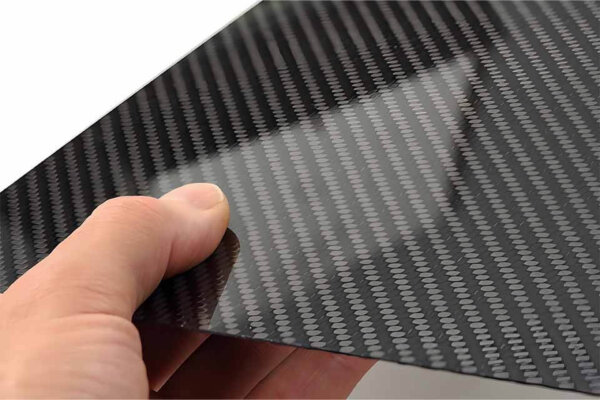
Gewichtsformules voor koolstofvezel: staven, buizen, gebogen panelen en sandwichconstructies
De bovenstaande tabel heeft betrekking op vlakke platen. Voor staven, buizen, gebogen panelen en sandwichconstructies gelden de volgende formules. Dit zijn theoretische schattingen voor het laminaat — het afgewerkte onderdeel kan zwaarder uitvallen zodra er coatings, lijm en bevestigingsmaterialen aan worden toegevoegd.
Massieve ronde staaf
Gewicht = π × (diameter ÷ 2)² × lengte × dichtheid
Voorbeeld: Een massieve staaf met een diameter van 10 mm, een lengte van 500 mm en een dichtheid van 1,6 g/cm³: π × (0,5 cm)² × 50 cm × 1,6 g/cm³ ≈ 63 g
Ronde buis
Een veelvoorkomende rekenfout is het weglaten van de factor π/4 bij de berekening van de dwarsdoorsnede van de buis — de juiste oppervlakte is π/4 × (OD² − ID²), en niet π × (OD² − ID²).
Gewicht (g) = (π ÷ 4) × (buitendiameter² − binnendiameter²) × lengte × ρ ÷ 1000
Waarbij OD en ID de buitendiameter en binnendiameter in mm zijn, L de lengte in mm en ρ de dichtheid in g/cm³. Als je alleen de wanddikte kent, bereken je de binnendiameter als volgt: ID = OD − 2 × wanddikte.
Voorbeeld: Een buis met een buitendiameter van 32 mm × een binnendiameter van 26 mm, 1000 mm lang, met een dichtheid van 1,6 g/cm³: (π ÷ 4) × (32² − 26²) × 1000 × 1,6 ÷ 1000 ≈ 437 g — of ongeveer 437 g per meter, aangezien L was ingesteld op 1000 mm.
Gebogen carrosserie (carrosseriepanelen, stroomlijnkappen)
Bij berekeningen op basis van een vlakke plaat wordt het gewicht van een gebogen paneel te laag geschat, omdat de ontwikkelde oppervlakte van een gebogen schaal groter is dan de vlakke projectie ervan. Schat het gewicht van het voltooide onderdeel op basis van de werkelijke CAD-oppervlakte:
Geschat gewicht van het afgewerkte onderdeel = CAD-oppervlakte × gemiddelde dikte van het laminaat × dichtheid
Als u de benodigde hoeveelheid materiaal voor de productie moet inschatten (niet het gewicht van het afgewerkte onderdeel zelf), pas dan een toeslagfactor van ongeveer 1,05–1,15 toe om rekening te houden met het afsnijden van randen, overlappingen en procesafval. Pas deze bijslag niet toe bij het schatten van het gewicht van het afgewerkte, bijgesneden onderdeel — het is een getal voor de materiaalaankoop, niet voor het gewicht van het onderdeel.
Sandwichpaneel (met schuim- of honingraatkern)
Totaalgewicht = Buitenlaag 1 + Kern + Buitenlaag 2 + Lijm
Een sandwichconstructie kan aanzienlijk lichter zijn dan een massief laminaat met dezelfde stijfheid, maar het totale gewicht hangt af van het kernmateriaal en de hoeveelheid lijm — en niet alleen van de dichtheid van het CFRP.
Wat maakt koolstofvezel licht?
Er zijn drie belangrijke redenen waarom koolstofvezelcomposiet een lage dichtheid heeft zonder dat dit ten koste gaat van de structurele prestaties:
1. De structuur van het koolstofatoom
Koolstofatomen in bewerkte vezels vormen lange ketens met een hoge bindingsenergie langs de vezelas. Deze gerichte rangschikking zorgt voor een hoge treksterkte en stijfheid langs de vezel, zonder dat dit ten koste gaat van de atomaire massa, zoals bij metaalkristallen het geval is.
2. Harsmatrix met lage dichtheid
De epoxyhars die wordt gebruikt om de vezels te binden, heeft een dichtheid van ongeveer 1,1–1,3 g/cm³ — veel lager dan die van welk constructiemetaal dan ook. De hars verdeelt de belasting over de vezels en beschermt tegen delaminatie, maar draagt relatief weinig bij aan het gewicht van het onderdeel wanneer het vezelvolume goed wordt geregeld.
3. Kunstmatig gestuurde vezeloriëntatie
Door de vezels in de richtingen te plaatsen waar de grootste belasting optreedt, voorkomen CFRP-laminaten dat er onnodige materiaaldikte wordt toegevoegd. Waar een metalen onderdeel een uniforme dikte moet hebben om in elke richting belasting te kunnen weerstaan, kan een gelamineerd CFRP-onderdeel laag voor laag worden geoptimaliseerd — en daarom zijn goed ontworpen CFRP-componenten vaak lichter dan metalen onderdelen met vergelijkbare prestaties.
Waarom onderdelen van koolstofvezel niet allemaal evenveel wegen
Twee koolstofvezelonderdelen met dezelfde buitenvorm kunnen een verschillend gewicht hebben. Dit is een van de meest verkeerd begrepen aspecten van het gewicht van koolstofvezel. Dit zijn de belangrijkste redenen:
- Type vezel: De T300-, T700-, T800- en hoogmodulusvarianten hebben licht verschillende dichtheden en prestatieniveaus
- Vezelformaat: Geweven 2×2-keperweefsel, unidirectionele (UD) prepreg, gesmeed koolstof of een mat van gehakte vezels leiden tot verschillende gewichten van de onderdelen
- Trekvermogen (3K, 6K, 12K): Het aantal strengen is vooral van invloed op de weefstructuur, het uiterlijk van het oppervlak, de soepelheid en de verwerkbaarheid. Een 12K-streng bevat ongeveer vier keer zoveel filamenten als een 3K-streng, maar dat betekent niet dat een 12K-laminaat vier keer zo zwaar is — het uiteindelijke gewicht hangt nog steeds af van het oppervlaktegewicht van het weefsel, het aantal lagen, het harsgehalte en de dikte
- Harsinhoud: Te veel hars zorgt voor extra gewicht zonder dat dit een noemenswaardige sterkteopbrengst oplevert. Een goed geregelde vezelvolumefractie (FVF) ligt doorgaans tussen 55 en 65%
- Schema voor de lay-up: Meer draden zorgen voor meer stijfheid en meer gewicht
- Kernmateriaal: Sandwichconstructies met een schuimkern of honingraatstructuur kunnen het gewicht van grotere vlakke panelen aanzienlijk verminderen
- Inzetstukken en verstevigingen: Ingebouwde aluminiumblokken, schroefdraadinzetstukken of verlijmingsflenzen zorgen voor extra gewicht dat niet altijd wordt meegenomen in een basisschatting van de dichtheid
- Afwerking: Grondverf, verf, blanke lak en UV-coating kunnen samen 100–300 g/m² toevoegen aan een afgewerkt paneel
Daarom geeft het vermelden van één dichtheidswaarde geen volledig beeld van het gewicht van een echt onderdeel. Ook het productieproces, het ontwerp van het laminaat en de afwerking spelen een rol.
Dry Carbon versus Wet Carbon: heeft het productieproces invloed op het gewicht?
Ja. Droge koolstof (prepreg + autoclaaf of in een pers uitgehard) leidt doorgaans tot een hoger vezelvolumegehalte en een lager harsgehalte dan natte lay-up. In de praktijk:
- Droge koolstofonderdelen wegen vaak 10–20% minder dan vergelijkbare onderdelen die volgens de natte-opbouwmethode zijn vervaardigd en dezelfde nominale dikte hebben
- Droge koolstof heeft een constantere dichtheid, meestal 1,55–1,60 g/cm³
- Bij natgelamineerde onderdelen kan het harsgehalte sterker variëren en kan het overal binnen het bereik van 1,4–1,7 g/cm³ liggen
Voor carrosseriepanelen van auto’s en kuipdelen van motorfietsen, waarbij een consistent gewicht en een goede oppervlakteafwerking van belang zijn, bieden prepreg- of harsoverdrachtsmethoden meer controle over het uiteindelijke gewicht en de maatnauwkeurigheid van het onderdeel. Lees voor een meer gedetailleerde vergelijking van de processen onze gids over droge koolstof vs natte koolstof.
Toepassingen waarbij het gewicht van koolstofvezel van belang is
Door de lage dichtheid van koolstofvezel in verhouding tot zijn structurele prestaties is het materiaal geschikt voor een breed scala aan toepassingen waarbij het gewicht een belangrijke rol speelt.
Ruimtevaart
Bij programma’s voor commerciële vliegtuigen wordt op grote schaal gebruikgemaakt van CFRP in rompdelen, vleugels en interieurconstructies. In vergelijking met vergelijkbare aluminiumconstructies kan CFRP het gewicht van onderdelen met 20–50% verminderen, afhankelijk van de toepassing. Dit heeft een directe invloed op het brandstofverbruik en het laadvermogen.
Automotive
CFRP-carrosseriepanelen, motorkappen, spoilers en structurele onderdelen worden zowel in de motorsport als in serievoertuigen gebruikt. Bij de vervanging van carrosseriepanelen door OEM’s leidt de overstap van staal naar CFRP doorgaans tot een gewichtsvermindering van 60–70%. Onze koolstofvezel auto De onderdelen worden zowel voor esthetische als voor constructieve doeleinden vervaardigd.
Motorfietsen en powersport
Stroomlijnkappen, spatborden, tankafdekkingen en zadelkappen van CFRP zijn lichter dan vergelijkbare producten van ABS-kunststof of glasvezel, en bieden tegelijkertijd een betere stijfheid en UV-bestendigheid voor toepassingen die aan de elementen worden blootgesteld. Bekijk ons motorfiets van koolstofvezel onderdelen voor standaard- en maatwerkoplossingen.
Toepassingen in de industrie en met UAV’s
Een lager gewicht van de onderdelen zorgt direct voor een langere gebruiksduur van de accu bij drones en UAV’s. Robotarmen en eindeffectoren profiteren van een lagere traagheid, waardoor de cyclustijd en de positioneringsnauwkeurigheid worden verbeterd. CFRP-buizen, -platen en op maat gemaakte profielen worden vaak gebruikt in deze toepassingen.
De Koolstofvezelproducten van onze Fabriek
In onze fabriek produceren we een reeks CFRP-onderdelen:
Auto-onderdelen
- Motorkappen, kofferdeksels en deurpanelen
- Interieurafwerking en dashboardonderdelen
- Spoilers, diffusers en aerodynamische hulpstukken
Motorfiets onderdelen
- Tankkappen en achterkuipen
- Voor- en achterspatborden
- Zadelkappen en kettingkasten
Maatwerkonderdelen en industriële onderdelen
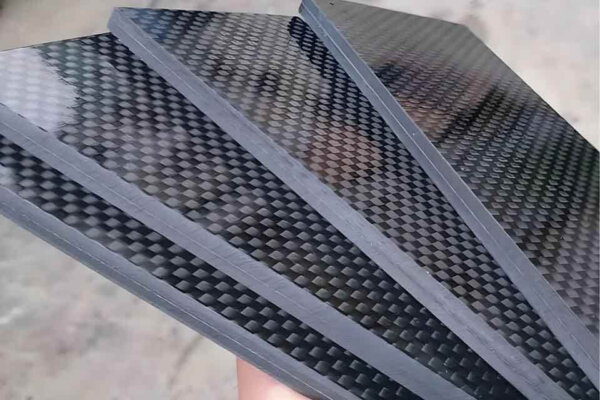
- Koolstofvezelplaten in standaard- en maatwerkformaten
- Buizen, profielen en constructieprofielen
- ODM/OEM-onderdelen volgens tekeningen en monsters van de klant
- Aangepaste koolstofvezel onderdelen voor raceauto’s, UAV’s en industriële toepassingen
Voor onderdelen waarbij het gewicht een specificatie-eis is, kunnen wij gewichtsrapporten voor het eerste exemplaar leveren, waarin het daadwerkelijk gemeten gewicht wordt vergeleken met de streefwaarde uit het ontwerpbestand.
Waarom onze koolstofvezel een betrouwbare keuze is
Materialen
- Wij gebruiken koolstofvezel van Toray en Hexcel in standaard- en hoogmodulusuitvoeringen
- Epoxyharssystemen afgestemd op de eisen van het onderdeel (autoclaaf, infusie, natte opbouw)
- Materiaalcertificaten beschikbaar voor traceerbaarheid
Proces
- Autoclaaf voor prepregs, bestemd voor onderdelen waarbij een nauwkeurige regeling van het vezelvolumefractie vereist is
- Harsoverdracht en -infusie voor complexe geometrieën
- Gecontroleerde uithardingscycli met temperatuurregistraties
Kwaliteit
- Controles van afmetingen en gewicht bij eerste exemplaren
- Visuele en structurele inspectie vóór verzending
- 1 jaar garantie op gefabriceerde onderdelen
Hoe u het gewicht van een koolstofvezelonderdeel kunt controleren voordat u het koopt
Voor kopers die op maat gemaakte of kant-en-klare CFRP-onderdelen aanschaffen, is het de moeite waard om de opgegeven gewichten rechtstreeks te controleren:
- Vraag het daadwerkelijk gemeten gewicht op, en niet alleen maar een theoretische schatting.
- Controleer of het onderdeel volledig uit koolstofvezel bestaat of een kern van glasvezel of een ander materiaal heeft met een cosmetische koolstoflaag eroverheen — dit is een veelvoorkomende reden waarom onderdelen van “koolstofvezel” uiteindelijk zwaarder uitvallen dan verwacht.
- Controleer de dikte van het laminaat en het opbouwschema, niet alleen het uiterlijk.
- Vraag naar de inzetstukken en het gewicht van de bevestigingsmaterialen los van het gewicht van het laminaat.
- Vraag een gewichtsrapport voor het eerste exemplaar aan voordat er tot een productieserie wordt overgegaan.
- Spreek een gewichtstolerantie af schriftelijk bij herhaalbestellingen.
Marktcontext voor koolstofvezel
De wereldwijde CFRP-markt is gestaag gegroeid naarmate de lucht- en ruimtevaart-, automobiel- en industriële sectoren steeds vaker gebruikmaken van dit materiaal. De eisen op het gebied van gewichtsvermindering, voortkomend uit regelgeving inzake brandstofefficiëntie en de optimalisatie van het rijbereik van elektrische voertuigen, blijven de vraag naar CFRP stimuleren voor carrosseriestructuren, accubehuizingen en chassisonderdelen. Onze productiecapaciteit is uitgebreid om zowel prototypen als serieproductievolumes te kunnen ondersteunen.
Veelgestelde vragen over koolstofvezelgewicht
Hoeveel weegt koolstofvezel?
Koolstofvezelversterkt polymeer (CFRP) weegt doorgaans tussen 1,4 en 1,9 g/cm³. Voor een afgewerkte plaat of paneel geldt de volgende formule: gewicht (kg/m²) = dikte (mm) × dichtheid (g/cm³). Een CFRP-plaat van 1 mm dik weegt ongeveer 1,4–1,9 kg per vierkante meter.
Is koolstofvezel zwaar of licht?
Koolstofvezelcomposiet is licht in verhouding tot zijn structurele prestaties. Met een dichtheid van 1,4–1,9 g/cm³ is het per volume ongeveer 70–80% lichter dan staal (7,8 g/cm³) en ongeveer 30–45% lichter dan aluminium (2,7 g/cm³).
Is koolstofvezel lichter dan aluminium?
Ja, in de meeste gevallen. CFRP-composiet met een dichtheid van 1,4–1,9 g/cm³ is bij hetzelfde volume ongeveer 30–45% lichter dan een aluminiumlegering met een dichtheid van 2,7 g/cm³. Voor constructieonderdelen die zijn ontworpen volgens dezelfde stijfheidsspecificatie is het gewichtsverschil vaak nog groter, omdat CFRP in bepaalde richtingen kan worden geoptimaliseerd, terwijl aluminium in alle richtingen belasting moet kunnen dragen.
Hoeveel lichter is koolstofvezel dan staal?
CFRP-composiet is doorgaans 70–80% lichter dan staal per volume. Staal heeft een dichtheid van ongeveer 7,8 g/cm³, terwijl die van CFRP tussen 1,4 en 1,9 g/cm³ ligt.
Wat is de dichtheid van koolstofvezel?
Ruwe koolstofvezel (zoals Toray T700S) heeft een dichtheid van ongeveer 1,80 g/cm³. Afgewerkt CFRP-composiet — vezels plus uitgeharde epoxy — ligt doorgaans in het bereik van 1,4–1,8 g/cm³. In een autoclaaf uitgeharde prepreg-laminaten met een hoger vezelvolumeaandeel liggen doorgaans rond de 1,55–1,60 g/cm³.
Wat is de dichtheid van CFRP-composiet?
De meeste afgewerkte CFRP-onderdelen hebben een dichtheid van 1,4–1,8 g/cm³. De exacte waarde hangt af van het vezeltype, het harssysteem, de volumeprocent van de vezels en het productieproces.
Hoeveel weegt een koolstofvezelplaat?
Een CFRP-plaat met een dikte van 1 mm weegt ongeveer 1.400–1.900 gram per vierkante meter (1,4–1,9 kg/m²). Bij een dikte van 0,5 mm ligt het gewicht tussen de 700 en 900 g/m². De exacte waarde hangt af van de dichtheid, die wordt beïnvloed door de vezelkwaliteit, het harsgehalte en het productieproces.
Hoe bereken je het gewicht van een koolstofvezelbuis?
Gebruik de formule: Gewicht (g) = (π ÷ 4) × (OD² − ID²) × L × ρ ÷ 1000, waarbij OD, ID en L in millimeters worden uitgedrukt en ρ in g/cm³. Zie het uitgewerkte voorbeeld in het gedeelte met formules hierboven.
Is koolstofvezel lichter dan plastic?
Dat hangt niet altijd af van de dichtheid. Sommige kunststoffen (ABS, PP) hebben een lagere dichtheid dan CFRP-composiet. Een kunststof onderdeel dat is ontworpen om dezelfde structurele belasting te dragen als een CFRP-onderdeel, zou echter doorgaans veel dikker en in totaal zwaarder zijn. CFRP wordt gekozen voor toepassingen waarbij stijfheid en sterkte per gewichtseenheid voorop staan.
Is koolstofvezel lichter dan titanium?
Ja. Een titaniumlegering heeft een dichtheid van ongeveer 4,4–4,5 g/cm³, waardoor het CFRP-composiet ongeveer 60–65% aansteker in volume. Titanium blijft in sommige toepassingen de voorkeur genieten vanwege zijn corrosiebestendigheid en prestaties bij hoge temperaturen, maar CFRP biedt een aanzienlijk gewichtsvoordeel.
Voegt hars veel gewicht toe?
Het harsgehalte bedraagt doorgaans 35–45% van het totale gewicht van het CFRP-composiet. Het regelen van het harsgehalte is een van de belangrijkste manieren om het gewicht van een onderdeel te beïnvloeden. Bij autoclaafverwerking en harsinfusiemethoden wordt over het algemeen een lager harsgehalte — en daarmee een lagere dichtheid van het onderdeel — bereikt dan bij natte handmatige laminering.
Waarom is koolstofvezel duur, ook al is het licht?
De productie van koolstofvezel omvat de verwerking van PAN-precursoren, oxidatie en carbonisatie bij hoge temperaturen, en oppervlaktebehandeling — waarbij elke stap gecontroleerde omstandigheden en aanzienlijke hoeveelheden energie vereist. Voor de fabricage van composietmaterialen zijn bovendien gereedschappen, cleanroomomstandigheden voor het werken met prepregs en uithardingsapparatuur nodig. De materiaal- en proceskosten weerspiegelen deze vereisten, maar de gewichtsbesparing en prestaties rechtvaardigen vaak de investering voor structurele en prestatiegerichte toepassingen.
Hoeveel gewicht bespaart koolstofvezel bij carrosseriepanelen?
Bij gangbare carrosseriepanelen kan het vervangen van zacht staal door CFRP-composiet het gewicht van het paneel verminderen met 60–70%. Een stalen kap met een gewicht van 18–20 kg kan worden vervangen door een CFRP-paneel van 5–7 kg. De exacte gewichtsbesparing hangt af van de afmetingen van het paneel, de vereiste stijfheid, het bevestigingsontwerp en de afwerkingsspecificaties.
Waarom is mijn onderdeel van koolstofvezel zwaarder dan verwacht?
Veelvoorkomende oorzaken zijn onder meer een te dikke of ongelijkmatige harslaag, een achterlaag van glasvezel, blanke lak of verf, hechtlijm, metalen inzetstukken en plaatselijke versterkingslagen. Vraag uw leverancier om het gemeten gewicht en de details van de opbouw om de oorzaak vast te stellen.
Conclusie
Koolstofvezelcomposiet (CFRP) weegt tussen 1,4 en 1,9 g/cm³, waardoor het bij hetzelfde structurele volume aanzienlijk lichter is dan staal, aluminium en titanium. Belangrijkste referentiepunten:
- 70–80% aansteker dan staal
- 30–45% aansteker dan aluminium
- 50–65% aansteker dan titanium
- ~10–20% aansteker dan glasvezelcomposiet
Het werkelijke gewicht van een afgewerkt onderdeel van koolstofvezel hangt niet alleen af van de materiaaldichtheid — ook het type vezel, het harsgehalte, het opbouwschema, het kernmateriaal, de inzetstukken en de oppervlakteafwerking dragen allemaal bij aan het uiteindelijk gemeten gewicht.
Voor op maat gemaakte CFRP-onderdelen voor toepassingen in de auto- en motorindustrie, voor UAV’s of voor industriële doeleinden kunnen wij vóór de productie gewichtsramingen opstellen op basis van 3D-bestanden en laminaatspecificaties, en na voltooiing van het eerste monster het gewicht van dat eerste exemplaar vastleggen.
Wij produceren koolstofvezel auto onderdelen, motorfiets van koolstofvezel onderdelen, en op maat gemaakte koolstofvezel onderdelen. Neem contact met ons op met uw tekening, monster of specificatie om uw project te bespreken.