

Kort svar: Kolfiberförstärkt polymer (CFRP) har vanligtvis en densitet på 1,4–1,9 g/cm³. Det innebär ungefär 70–80% är lättare än stål och 30–45% är lättare än aluminium vid samma volym. För en skiva på 1 m² med en tjocklek på 1 mm väger en CFRP-panel ungefär 1,4–1,9 kg — jämfört med 7,8 kg för samma stålplåt.
| Fråga | Ett typiskt svar |
|---|---|
| Densitet hos råa kolfiberfilament | ~1,80 g/cm³ |
| Densitet hos färdig CFRP-komposit | 1,4–1,9 g/cm³ |
| Densitet hos prepreg-laminat för autoklav | ~1.55–1.60 g/cm³ |
| 1 mm CFRP-plåt | Cirka 1,4–1,9 kg/m² |
| Jämfört med stål (samma volym) | Cirka 70–80% lättare |
| Jämfört med aluminium (samma volym) | Cirka 30–45% lättare |
| Vanlig uppskattning vid beräkningar | Använd 1,6 g/cm³ om inte annat anges i materialdatabladet |
Hur tung är kolfiber?
Kolfiber är ett lättviktsmaterial för konstruktionsändamål. Färdigbehandlad CFRP-komposit väger vanligtvis mellan 1,4 och 1,9 gram per kubikcentimeter, vilket ger materialet ett högt förhållande mellan hållfasthet och vikt jämfört med stål, aluminium och titan.
Vikten spelar en viktig roll inom bil- och motorcykelindustrin, eftersom en lägre komponentvikt kan förbättra köregenskaperna, accelerationen, bromsresponsen och fordonets totala effektivitet. Av denna anledning används CFRP i stor utsträckning till motorhuvar, spoilers, kåpor, luftkanaler, interiördetaljer och specialtillverkade lättviktspaneler.
Vår kolfiberbil delar och motorcykel i kolfiber Delarna tillverkas med snäva toleranser, och delarnas vikt beräknas utifrån laminatets tjocklek, fibertyp och hartssystem innan produktionen påbörjas.
Kolfiberdensitet förklaras
Täthet anger hur mycket ett material väger per given volym. För kolfiberkomposit påverkas den slutliga densiteten av följande faktorer:
- Fibertyp: Olika kvaliteter (T300, T700, högmodul) har något olika densiteter
- Resin-system: Epoxi är det vanligaste materialet; dess andel påverkar direkt komponentens vikt
- Fiberorientering: Enriktat tyg jämfört med vävt tyg påverkar packningsdensiteten och hartsupptaget
- Tillverkningsprocess: Autoklavprepreg, hartsinfusion och våtlaminering ger olika fibervolymfraktioner
Densitet i andra enheter
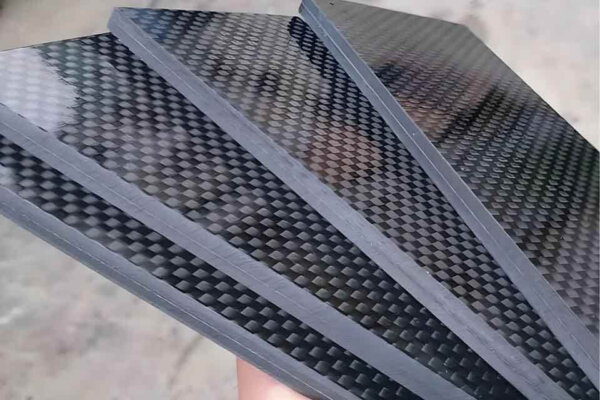
| Täthet | Motsvarande värde |
|---|---|
| 1,5 g/cm³ | 1 500 kg/m³ / ca 0,054 lb/in³ / ca 93,6 lb/ft³ |
| 1,6 g/cm³ | 1 600 kg/m³ / ca 0,058 lb/in³ / ca 99,9 lb/ft³ |
| 1,8 g/cm³ | 1 800 kg/m³ / ca 0,065 lb/in³ / ca 112,4 lb/ft³ |
Rå kolfiber jämfört med CFRP-komposit: Vilken densitet handlar det om?
Det är viktigt att veta att “kolfibervikt” kan ha olika betydelser beroende på vilken form man mäter:
| Form | Typisk densitet | Anteckningar |
|---|---|---|
| Rått kolfiberfilament (t.ex. Toray T700S) | ~1,80 g/cm³ | Endast fiber, inget harts |
| Torrt kolfiberväv / vävt tyg | varierar beroende på arealvikt | Mäts i g/m², inte i g/cm³ |
| CFRP-komposit (fiber + epoxi, härdad) | 1,4–1,8 g/cm³ | De flesta färdiga delarna hamnar här |
| CFRP-prepreg-laminat (autoklav) | ~1.55–1.60 g/cm³ | Högre volymandel av fibrer |
När folk frågar “hur mycket väger kolfiber?” menar de oftast CFRP-komposit — det färdiga materialet med härdat harts. Ett enskilt kolfiberfilament har faktiskt något högre densitet än det färdiga kompositmaterialet, eftersom epoxihartset är lättare än själva fibern. Om du vill jämföra olika termer kan du läsa vår guide om CFRP jämfört med kolfiber.
I vår fabrik reglerar vi laminatets densitet genom att styra hartsinnehållet, fibervolymfraktionen och härdningscykeln. För konstruktions- och utseendekomponenter innebär en jämn densitet att vikten och måttnoggrannheten förblir konstanta från produktionsserie till produktionsserie.
Väger ett kolfibervävt tyg med en viktenhet på 200 GSM 200 gram per kvadratmeter?
Ja – det torra tyget har i sig en nominell fibervikt på 200 g/m². Det värdet avser enbart fibrerna, innan något harts har tillsatts. Som en enkel uppskattning av materialåtgången skulle en väv på 200 g/m² i kombination med en lika stor massa harts utgå från cirka 400 g/m² före härdning och bearbetning. Det slutliga vikten på det härdade skiktet kan skilja sig från utgångsvärdet på grund av hartsutsläpp, processförluster och det faktiska fiber-till-harts-förhållandet som uppnås under uppläggningen – 50:50 är en vanlig referenspunkt för materialberäkningen, inte ett garanterat slutresultat.
Hur beräknar man prepregets ytvikt?
Prepregets ytvikt omfattar både fibrerna och det ohärdade hartset:
Prepregets ytvikt = Fiberns ytvikt ÷ (1 − Hartsets massandel)
Exempel: Ett fiberväv med en vikt på 200 g/m² som impregnerats med hartset 40% till en massandel på: 200 ÷ (1 − 0,40) ≈ 333 g/m² total ytvikt för prepreg.
Här betyder 40% att hartset utgör 40% av den totala prepregmassan, inte 40% av fibermassan. Kontrollera alltid den faktiska hartsandelen i materialets datablad istället för att utgå från ett fast förhållande.
Kolfiber vs. metaller: Viktjämförelse
Här visas hur CFRP-kompositmaterialet står sig i jämförelse med vanliga konstruktionsmaterial utifrån densitet:
| Material | Vikt (g/cm³) | Jämfört med CFRP |
|---|---|---|
| Kolfiber (CFRP) | 1.4 – 1.9 | — Utgångsläge |
| Stål | 7.8 | CFRP är 70–80% tändare |
| Aluminium | 2.7 | CFRP är 30–45% tändare |
| Titan | 4.5 | CFRP är 50–65% tändare |
| Glasfiber (GFRP) | 1.8 – 2.0 | CFRP är ~10–20% tändare |
| ABS-plast | 1.0 – 1.1 | CFRP är något tyngre, men betydligt styvare |
Som ett praktiskt exempel kan en motorhuv i stål väga omkring 18–20 kg. En motsvarande motorhuv i aluminium skulle väga omkring 7–8 kg. En motorhuv i CFRP till samma fordon väger vanligtvis 4–6 kg, beroende på panelens tjocklek, kärnmaterialet och laminatkonstruktionen.
Att ersätta konstruktionspaneler av stål eller aluminium med CFRP handlar inte bara om vikten. Valet beror också på styvhetskrav, belastningsvägar, fästpunkter, ytfinish och produktionsvolym. CFRP är inte alltid det rätta valet för alla komponenter – men när viktminskning är en prioritet och den strukturella prestandan måste bibehållas är det svårt att hitta något som kan mäta sig med det. För en mer ingående jämförelse av materialval, se vår guide om kolfiber vs aluminium.
Är kolfiber lättare än plast?
Det handlar inte alltid enbart om densitet. Vissa plaster, såsom ABS (~1,0–1,1 g/cm³) eller polypropen, har lägre densitet än CFRP-komposit. När det gäller konstruktions- och prestandadelar erbjuder dock kolfiberkomposit betydligt högre styvhet och hållfasthet per viktenhet. En plastdel som är konstruerad för att bära samma belastning som en CFRP-del skulle behöva vara betydligt tjockare och tyngre totalt sett. Det är därför CFRP används för prestandapaneler och konstruktionskomponenter, även när en enkel plastdel på papperet kan verka lättare.
Hur mycket väger kolfiber per kvadratmeter?
En av de mest praktiska frågorna är: Hur mycket väger egentligen en kolfiberplatta eller -panel?
Beräkningen är enkel:
Vikt (kg/m²) = Tjocklek (mm) × Densitet (g/cm³)
Till exempel: en CFRP-skiva på 1 m² med en tjocklek på 1 mm och en densitet på 1,6 g/cm³ väger 1,6 kg/m².
Här följer en referenstabell över vanliga CFRP-tjocklekar:
| CFRP-tjocklek | Ungefärlig vikt per m² | Typisk användning |
|---|---|---|
| 0,5 mm | 0,7–0,9 kg/m² | Tunt kosmetiskt skikt eller överdrag |
| 1,0 mm | 1,4–1,8 kg/m² | Lätta dekorpaneler, skydd |
| 1,5 mm | 2,1–2,7 kg/m² | Små paneler, kåpor |
| 2,0 mm | 2,8–3,6 kg/m² | Karossdelar, motorhuvar |
| 3,0 mm | 4,2–5,4 kg/m² | Konstruktionsfästen, plåtar |
| 5,0 mm | 7,0–9,0 kg/m² | Tjock, bearbetad CFRP-plåt |
Som jämförelse: en stålplåt på 1 mm väger ungefär 7,8 kg/m², och en 1 mm tjock aluminiumplåt på ungefär 2,7 kg/m².
I vår fabrik beräknar vi komponentens vikt utifrån 3D-modellen, laminatets tjocklek, hartssystemet och ytbehandlingen innan produktionen påbörjas. För OEM- och ODM-projekt tillhandahåller vi vägningsprotokoll före leverans och jämför det faktiska provets vikt med målvärdet efter att det första exemplaret har färdigställts.
Formler för beräkning av vikt hos kolfiber: Stänger, rör, böjda paneler och sandwichkonstruktioner
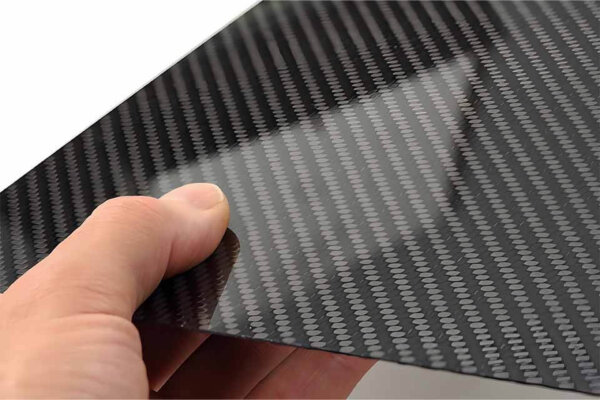
Tabellen ovan gäller platt material. För stänger, rör, böjda paneler och sandwichkonstruktioner ska följande formler användas. Det rör sig om teoretiska beräkningar för laminat – den färdiga delen kan väga mer när beläggningar, lim och beslag har lagts till.
Massiv rundstång
Vikt = π × (diameter ÷ 2)² × längd × densitet
Exempel: En massiv stav med en diameter på 10 mm, en längd på 500 mm och en densitet på 1,6 g/cm³: π × (0,5 cm)² × 50 cm × 1,6 g/cm³ ≈ 63 g
Rundrör
Ett vanligt beräkningsfel är att man utelämnar faktorn π/4 i rörens tvärsnittsarea – den korrekta arean är π/4 × (OD² − ID²), inte π × (OD² − ID²).
Vikt (g) = (π ÷ 4) × (ytterdiameter² − innerdiameter²) × L × ρ ÷ 1000
Där OD och ID är ytter- respektive innerdiameter i mm, L är längden i mm och ρ är densiteten i g/cm³. Om du endast känner till väggtjockleken beräknar du ID enligt följande: ID = OD − 2 × väggtjocklek.
Exempel: Ett rör med ytterdiameter 32 mm × innerdiameter 26 mm, 1000 mm långt, med en densitet på 1,6 g/cm³: (π ÷ 4) × (32² − 26²) × 1000 × 1,6 ÷ 1000 ≈ 437 g — eller ungefär 437 g per meter, eftersom L var inställt på 1000 mm.
Böjda karossdelar (karosspaneler, kåpor)
Beräkningar utifrån en platt yta underskattar vikten hos en krökt panel, eftersom den utvecklade ytan hos ett krökt skal är större än dess projicerade yta i platt form. Beräkna vikten på den färdiga delen med hjälp av den faktiska CAD-ytan:
Beräknad vikt för den färdiga delen = CAD-ytarea × genomsnittlig laminattjocklek × densitet
Om du behöver beräkna materialbehovet för produktionen (inte vikten på den färdiga delen i sig), ska du tillämpa en tilläggsfaktor på cirka 1,05–1,15 för att ta hänsyn till kantbeskärning, överlappningar och processavfall. Tillämpa inte denna tilläggsfaktor när du beräknar vikten på den färdiga, beskärda delen – det är ett värde för materialinköp, inte ett värde för delens vikt.
Sandwichpanel (med skum- eller bikakekärna)
Totalvikt = Ytskikt 1 + Kärna + Ytskikt 2 + Lim
Sandwichkonstruktioner kan vara betydligt lättare än ett massivt laminat med motsvarande styvhet, men den totala vikten beror på kärnmaterialet och limmängden – inte enbart på CFRP:s densitet.
Vad gör kolfiber lättviktigt?
Det finns tre huvudsakliga skäl till att kolfiberkomposit uppnår låg densitet utan att det går ut över den strukturella prestandan:
1. Kolatomens struktur
Kolatomer i bearbetad fiber bildar långa kedjor med hög bindningsenergi längs fiberaxeln. Denna riktade struktur ger hög draghållfasthet och styvhet längs fibern utan den ökade atommassan som kännetecknar metallkristaller.
2. Hartsmatris med låg densitet
Epoxihartset som används för att binda samman fibrerna har en densitet på cirka 1,1–1,3 g/cm³ – vilket är betydligt lägre än för vilken konstruktionsmetall som helst. Hartset överför belastningen mellan fibrerna och skyddar mot delaminering, men bidrar relativt lite till komponentens vikt när fibervolymandelen är väl kontrollerad.
3. Konstruerad fiberorientering
Genom att rikta in fibrerna i de riktningar som utsätts för störst belastning undviker man att lägga till onödig materialtjocklek i CFRP-laminat. Medan en metalldel måste ha en jämn tjocklek för att klara belastning i alla riktningar, kan en laminerad CFRP-del optimeras lager för lager – vilket är anledningen till att välkonstruerade CFRP-komponenter ofta är lättare än metalldelar med motsvarande prestanda.
Varför väger inte alla kolfiberdelar lika mycket?
Två kolfiberdelar med samma yttre form kan ha olika vikt. Detta är en av de mest missförstådda aspekterna när det gäller kolfiberns vikt. Här är de främsta orsakerna:
- Fibertyp: Modellerna T300, T700, T800 och högmodulvarianterna har något olika densiteter och prestandanivåer
- Fiberformat: Vävt 2×2-twilltyg, enkelriktad (UD) prepreg, smidd kolfiber eller matta av hackad fiber ger olika komponentvikter
- Dragkraft (3K, 6K, 12K): Antalet trådar påverkar främst vävningens skala, ytans utseende, fall och hanterbarhet. En 12K-tråd har ungefär fyra gånger så många filament som en 3K-tråd, men det innebär inte att ett 12K-laminat blir fyra gånger tyngre – den slutliga vikten beror fortfarande på tygets ytvikt, antalet lager, hartsinnehållet och tjockleken
- 30%–40% (standard: 35% ± 2%): För mycket harts ökar vikten utan att ge någon märkbar hållfasthet. En välreglerad fibervolymandel (FVF) ligger vanligtvis mellan 55–65%
- Schema för inlämning: Fler trådlager innebär större styvhet och högre vikt
- Kärnmaterial: Sandwichkonstruktioner med skumkärna eller bikakestruktur kan minska vikten avsevärt för större platta skärmar
- Insatser och förstärkningar: Inbyggda aluminiumblock, gängade insatser eller limflänsar bidrar till en vikt som inte alltid ingår i en grundläggande densitetsberäkning
- Avsluta: Grundfärg, färg, klarlack och UV-beläggning kan tillsammans öka vikten på en färdig panel med 100–300 g/m²
Det är därför som ett enda densitetsvärde inte fullt ut beskriver vikten hos en verklig komponent. Tillverkningsprocessen, laminatkonstruktionen och ytbehandlingen spelar alla en roll.
Torrkolfiber kontra våtkolfiber: Påverkar tillverkningsprocessen vikten?
Ja. Torrt kol (prepreg + autoklav eller presshärdad) ger vanligtvis en högre fibervolymandel och lägre hartshalt än våtuppläggning. I praktiken:
- Torrkolkomponenter väger ofta 10–20% mindre än motsvarande delar tillverkade med våtlaminering med samma nominella tjocklek
- Torrt kol har en mer jämn densitet, vanligtvis 1,55–1,60 g/cm³
- Delar tillverkade med våtlamineringsmetoden kan uppvisa större variationer i hartsinnehåll och kan ligga var som helst inom intervallet 1,4–1,7 g/cm³
När det gäller karossdelar till bilar och kåpor till motorcyklar, där jämn vikt och ytfinhet är avgörande, ger prepreg- eller resin transfer-metoderna bättre kontroll över den färdiga delens vikt och måttnoggrannhet. För en mer detaljerad jämförelse av processerna, läs vår guide om torrt kol vs vått kol.
Tillämpningar där kolfiberns vikt spelar roll
Kolfiberns låga densitet i förhållande till dess strukturella prestanda gör den lämplig för en rad olika tillämpningar där vikten spelar en viktig roll.
Flyg- och rymdindustrin
I program för kommersiella flygplan används CFRP i stor utsträckning i flygkroppspaneler, vingar och inre konstruktioner. Jämfört med motsvarande aluminiumkonstruktioner kan CFRP minska komponenternas vikt med 20–50%, beroende på tillämpningen. Detta påverkar direkt bränsleförbrukningen och lastkapaciteten.
Fordon
Karossdelar, motorhuvar, spoilers och bärande komponenter tillverkade av CFRP används både inom motorsport och i serietillverkade fordon. Vid utbyte av karossdelar hos originalutrustningstillverkare (OEM) leder övergången från stål till CFRP vanligtvis till en viktminskning på 60–70%. Vår kolfiberbil Delarna tillverkas både för utseendemässiga och konstruktionsmässiga ändamål.
Motorcyklar och motorsport
Kåpor, stänkskärmar, tanköverdrag och säteskåpor i CFRP är lättare än motsvarande produkter i ABS-plast eller glasfiber, samtidigt som de erbjuder bättre styvhet och UV-beständighet för utsatta användningsområden. Se vårt motorcykel i kolfiber delar för standard- och specialanpassade monteringar.
Industriella tillämpningar och tillämpningar inom drönarteknologi
En lägre komponentvikt förlänger direkt batteritiden i drönare och UAV-tillämpningar. Robotarmar och ändeffektorer drar nytta av minskad tröghet, vilket förbättrar cykeltiden och positioneringsnoggrannheten. CFRP-rör, -plåtar och specialanpassade profiler används ofta i dessa tillämpningar.
Vår fabriks kolfiberprodukter
Vi tillverkar en rad olika CFRP-komponenter vid vår anläggning:
Bildelar
- Motorhuvar, bagageluckor och dörrpaneler
- Inredningsdetaljer och instrumentpaneldelar
- Spoilers, diffusorer och aerodynamiska tillbehör
Delar till motorcyklar
- Tankkåpor och bakkåpor
- Fram- och bakskärmar
- Sitskåpor och kedjeskydd
Specialtillverkade och industriella komponenter
- Kolfiberplattor i standard- och specialstorlekar
- Rör, profiler och konstruktionsprofiler
- ODM/OEM-komponenter enligt kundens ritningar och prover
- Anpassad kolfiber komponenter för tävlingsbruk, drönare och industriella tillämpningar
För komponenter där vikten är ett specifikationskrav kan vi tillhandahålla viktrapporter för första exemplaret, där den faktiskt uppmätta vikten jämförs med målvärdet i konstruktionsunderlaget.
Varför vår kolfiber är ett pålitligt val
Material
- Vi använder kolfiber från Toray och Hexcel i standardkvaliteter och högmodulkvaliteter
- Epoxihartssystem anpassade efter komponenternas krav (autoklav, infusion, våtuppläggning)
- Materialcertifikat finns tillgängliga för spårbarhet
Process
- Autoklav för prepreg för komponenter som kräver noggrann kontroll av fibervolymfraktionen
- Hartsöverföring och infusion för komplexa geometrier
- Kontrollerade härdningscykler med temperaturövervakningsprotokoll
Kvalitet
- Mått- och viktkontroller av första artiklarna
- Visuell och strukturell besiktning före leverans
- 1 års garanti på tillverkade delar
Så här kontrollerar du vikten på en kolfiberdel innan du köper den
För köpare som beställer skräddarsydda eller färdiga CFRP-delar är det värt att direkt kontrollera de angivna vikterna:
- Begär den faktiska uppmätta vikten, inte bara en teoretisk uppskattning.
- Kontrollera om delen är helt tillverkad av kolfiber eller om den har en kärna av glasfiber eller annat material med ett ytbehandlat kolfiberlager på utsidan — detta är en vanlig orsak till att delar av “kolfiber” blir tyngre än väntat.
- Kontrollera laminatets tjocklek och uppbyggnadsplanen, inte bara det yttre utseendet.
- Fråga om inlägg och beslagens vikt skilt från laminatets vikt.
- Begär en viktrapport för första artikeln innan man beslutar sig för en produktionsserie.
- Enas om en vikttolerans skriftligen vid återbeställningar.
Marknadssituationen för kolfiber
Den globala marknaden för CFRP har vuxit stadigt i takt med att användningen ökar inom flyg-, fordons- och industrisektorerna. Kraven på viktminskning till följd av bränsleeffektivitetsbestämmelser och optimering av elbilars räckvidd fortsätter att driva efterfrågan på CFRP i karosserikonstruktioner, batterihöljen och chassikomponenter. Vår produktionskapacitet har utökats för att klara både prototyp- och serietillverkning.
Vanliga frågor om kolfibervikt
Hur mycket väger kolfiber?
Kolfiberförstärkt polymer (CFRP) väger vanligtvis mellan 1,4 och 1,9 g/cm³. För en färdig skiva eller panel gäller följande formel: vikt (kg/m²) = tjocklek (mm) × densitet (g/cm³). En 1 mm tjock CFRP-skiva väger ungefär 1,4–1,9 kg per kvadratmeter.
Är kolfiber tungt eller lätt?
Kolfiberkomposit är lätt i förhållande till sin strukturella prestanda. Med en densitet på 1,4–1,9 g/cm³ är det ungefär 70–80% lättare än stål (7,8 g/cm³) och cirka 30–45% lättare än aluminium (2,7 g/cm³) räknat per volym.
Är kolfiber lättare än aluminium?
Ja, i de flesta fall. CFRP-komposit med en densitet på 1,4–1,9 g/cm³ är ungefär 30–45% lättare än en aluminiumlegering med en densitet på 2,7 g/cm³ vid samma volym. För konstruktionsdelar som är konstruerade enligt samma styvhetsspecifikation är viktskillnaden ofta ännu större, eftersom CFRP kan optimeras riktningsvis medan aluminium måste bära belastning i alla riktningar.
Hur mycket lättare är kolfiber än stål?
CFRP-komposit är vanligtvis 70–80% är lättare än stål volymmässigt. Stål har en densitet på cirka 7,8 g/cm³, medan CFRP ligger på 1,4–1,9 g/cm³.
Vad är densiteten hos kolfiber?
Obehandlat kolfiberfilament (till exempel Toray T700S) har en densitet på ungefär 1,80 g/cm³. Färdig CFRP-komposit – fiber och härdad epoxi – ligger vanligtvis inom intervallet 1,4–1,8 g/cm³. Autoklavhärdade prepreg-laminat med högre fibervolymandel ligger vanligtvis runt 1,55–1,60 g/cm³.
Vad är densiteten hos CFRP-komposit?
De flesta färdigställda CFRP-delar har en densitet på 1,4–1,8 g/cm³. Det exakta värdet beror på fibertyp, hartssystem, fibervolymandel och tillverkningsprocess.
Hur mycket väger en kolfiberplåt?
En CFRP-plåt med en tjocklek på 1 mm väger ungefär 1 400–1 900 gram per kvadratmeter (1,4–1,9 kg/m²). Vid en tjocklek på 0,5 mm kan man räkna med cirka 700–900 g/m². Det exakta värdet beror på densiteten, som i sin tur påverkas av fiberkvalitet, hartshalt och tillverkningsprocess.
Hur beräknar man vikten på ett kolfiberrör?
Vikt (g) = (π ÷ 4) × (OD² − ID²) × L × ρ ÷ 1000, där OD, ID och L anges i millimeter och ρ i g/cm³. Se det uträknade exemplet i avsnittet om formler ovan.
Är kolfiber lättare än plast?
Det handlar inte alltid om densitet. Vissa plaster (ABS, PP) har lägre densitet än CFRP-komposit. En plastdel som är konstruerad för att klara samma strukturella belastning som en CFRP-del skulle dock vanligtvis vara betydligt tjockare och tyngre totalt sett. CFRP väljs för tillämpningar där styvhet och hållfasthet per viktenhet är avgörande.
Är kolfiber lättare än titan?
Ja. Titanlegering har en densitet på cirka 4,4–4,5 g/cm³, vilket innebär att CFRP-kompositen ungefär 60–65% tändare volymmässigt. Titan är fortfarande det föredragna materialet i vissa tillämpningar tack vare sin korrosionsbeständighet och prestanda vid höga temperaturer, men CFRP har en betydande viktfördel.
Tillför harts mycket vikt?
Hartsinnehållet utgör vanligtvis 35–45% av den totala vikten hos CFRP-kompositen. Att reglera hartsinnehållet är ett av de viktigaste sätten att styra komponentens vikt. Autoklavbearbetning och hartsinfusionsmetoder ger i allmänhet ett lägre hartsinnehåll – och därmed en lägre komponentdensitet – än våt manuell uppläggning.
Varför är kolfiber dyrt trots att det är lätt?
Tillverkningen av kolfiber kräver bearbetning av PAN-prekursorer, oxidation och karbonisering vid höga temperaturer samt ytbehandling – varje steg kräver kontrollerade förhållanden och betydande energiförbrukning. Tillverkningen av kompositmaterial kräver dessutom verktyg, renrumsförhållanden för arbetet med prepreg samt härdningsutrustning. Material- och processkostnaderna återspeglar dessa krav, men viktbesparingarna och prestandan motiverar ofta investeringen för strukturella tillämpningar och prestandatillämpningar.
Hur mycket vikt sparar man genom att använda kolfiber i karossdelar?
När det gäller vanliga karossdelar kan man genom att ersätta mjukt stål med CFRP-komposit minska delarnas vikt med 60–70%. En stålhuv som väger 18–20 kg kan ersättas med en CFRP-panel som väger 5–7 kg. Den exakta viktbesparingen beror på panelens storlek, erforderlig styvhet, monteringsutformning och ytbehandlingsspecifikation.
Varför är min kolfiberdel tyngre än väntat?
Vanliga orsaker är bland annat överskott av eller ojämnt fördelad harts, ett underlag av glasfiber, klarlack eller färg, lim, metallinsatser och lokala förstärkningslager. Begär uppgifter om uppmätt vikt och uppbyggnadsdetaljer från din leverantör för att fastställa orsaken.
Slutsats
Kolfiberkomposit (CFRP) väger mellan 1,4 och 1,9 g/cm³, vilket gör det betydligt lättare än stål, aluminium och titan vid samma konstruktionsvolym. Viktiga referenspunkter:
- 70–80% tändare än stål
- 30–45% tändare än aluminium
- 50–65% tändare än titan
- ~10–20% tändare än glasfiberkomposit
Den faktiska vikten hos en färdig kolfiberdel beror inte enbart på materialets densitet – fibertyp, hartshalt, uppläggningsschema, kärnmaterial, insatser och ytfinish bidrar alla till den slutliga uppmätta vikten.
När det gäller skräddarsydda CFRP-komponenter för bil-, motorcykel-, drönar- eller industriella tillämpningar kan vi tillhandahålla viktberäkningar utifrån 3D-filer och laminatspecifikationer före tillverkningen, samt viktdata för det första exemplaret efter att det första provet har färdigställts.
Vi tillverkar kolfiberbil delar, motorcykel i kolfiber delar, och anpassad kolfiber komponenter. Kontakta oss tillsammans med din ritning, ditt prov eller din specifikation för att diskutera ditt projekt.