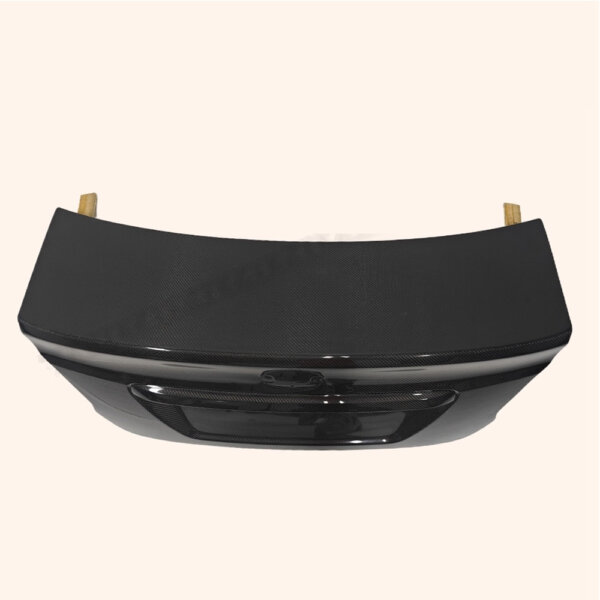
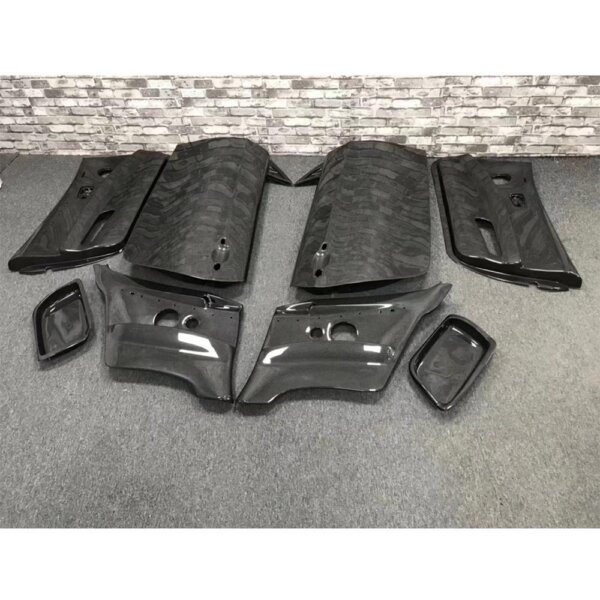
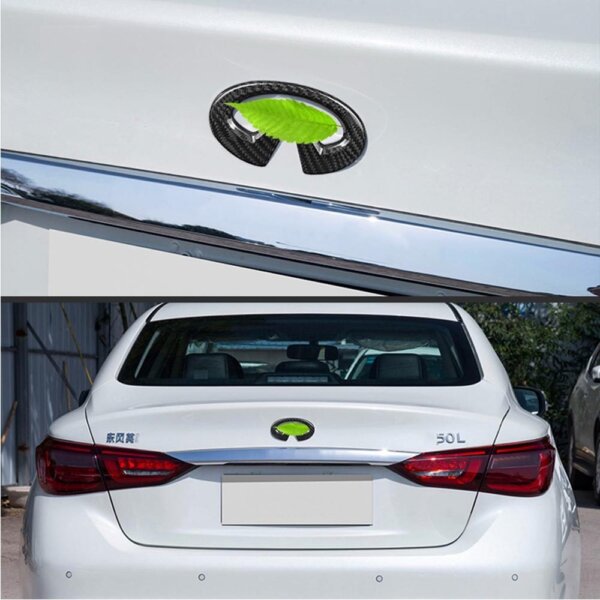
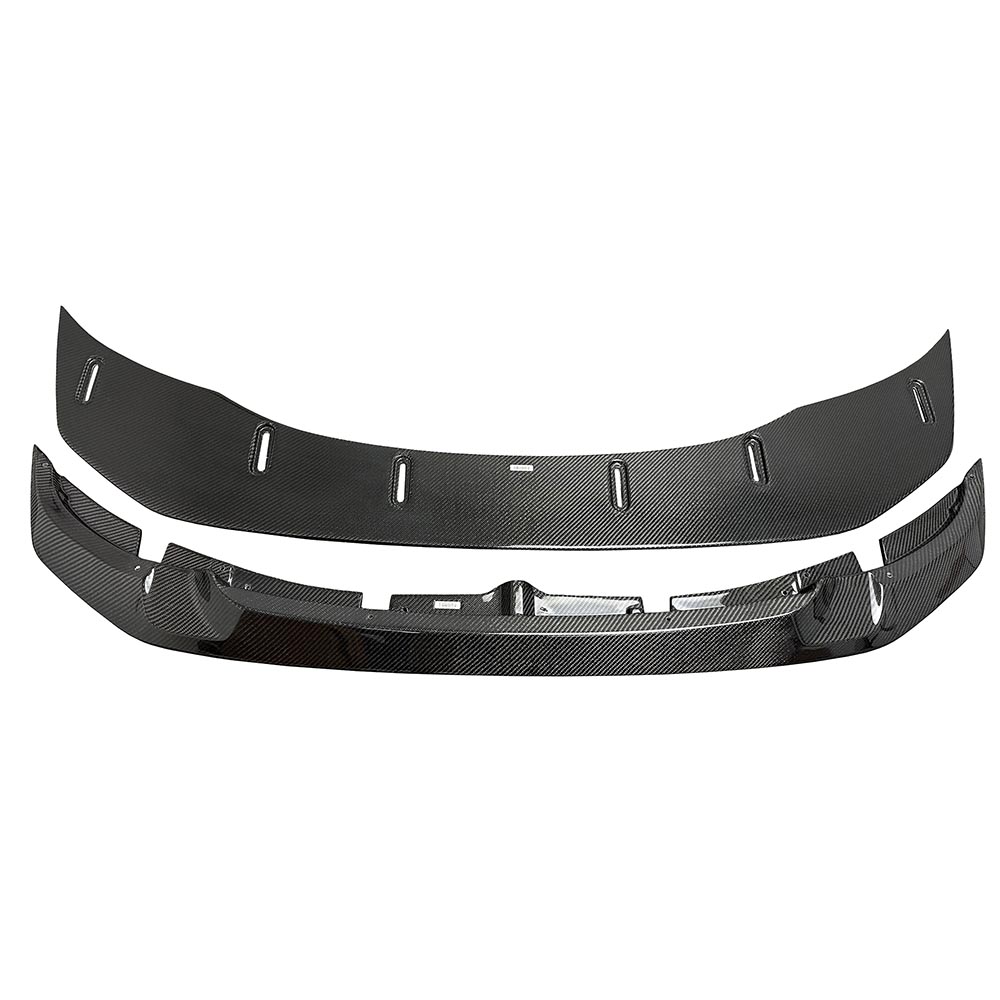

Le polymère renforcé en fibre de carbone (CFRP) est devenu l'un des matériaux les plus en vogue dans l'ingénierie automobile — et ce, à juste titre. Dans de nombreuses applications de panneaux de carrosserie, le PRFC permet de réduire le poids d'environ 40 à 60% par rapport à l'acier, en fonction de la conception du panneau, de son épaisseur, de la disposition des couches et du procédé de fabrication, tout en offrant une rigidité et une résistance à la fatigue supérieures.
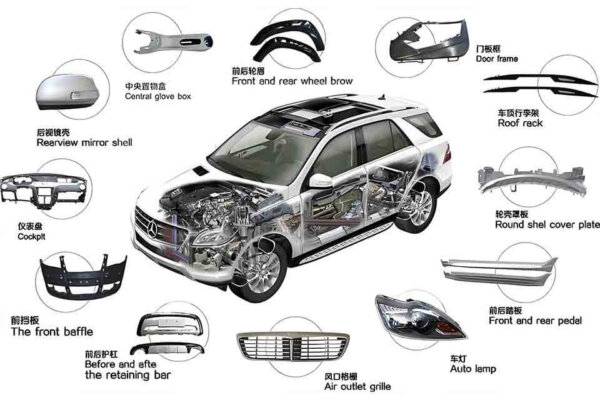
Mais le CFRP n'est pas une simple amélioration. Il est coûteux, difficile à réparer, sensible à la qualité de fabrication et ne constitue pas toujours le choix le plus adapté à toutes les applications. Ce guide couvre tout ce que les ingénieurs, les constructeurs et les acheteurs doivent savoir sur le CFRP pour les panneaux de carrosserie automobile, y compris les considérations pratiques du point de vue d'un constructeur. Vous pouvez également consulter notre Pièces automobiles en fibre de carbone pour découvrir comment ces matériaux sont utilisés dans la fabrication de pièces réelles.
CFRP signifie polymère renforcé de fibres de carbone (parfois appelé « plastique renforcé de fibres de carbone »). Il s'agit d'un matériau composite composé de deux éléments principaux :
Aucun de ces deux composants, pris isolément, n'atteint les performances que le CFRP permet d'obtenir lorsqu'ils sont associés. La fibre de carbone sans résine est cassante et difficile à façonner en pièces structurelles. La résine sans fibre de carbone est souple et peu résistante. Combinées selon une orientation et une fraction volumique appropriées, elles donnent naissance à un matériau présentant l'une des valeurs de résistance spécifique les plus élevées parmi tous les matériaux d'ingénierie.
Non. C'est l'un des points qui prêtent le plus souvent à confusion.
Fibre de carbone Ce terme désigne le filament brut, c'est-à-dire un brin d'atomes de carbone liés entre eux selon une structure cristalline, d'un diamètre d'environ 5 à 10 microns. La fibre de carbone à l'état brut est un matériau de renfort, et non un matériau structurel fini. Il n'est pas possible de mouler un capot de voiture à partir de fibre de carbone brute seule.
PRFC Il s'agit du matériau composite fini, obtenu en associant de la fibre de carbone à une matrice de résine, puis en le faisant durcir pour lui donner une forme solide. Ce que l'on voit sur une voiture — un capot, un panneau de toit, spoiler, ou une porte — est en CFRP, et non en fibre de carbone brute.
Une analogie simple : la fibre de carbone, c'est l'armature en acier ; le CFRP, c'est le béton armé. L'armature confère au béton sa résistance à la traction, mais seule la structure combinée est utile en tant que matériau de construction.
| Propriété | Fibre de carbone (brute) | CFRP (composite) |
|---|---|---|
| Formulaire | Filament / tissu tissé | Pièce structurelle moulée |
| Peut-on l'utiliser seul ? | Non | Oui |
| Matériau de la matrice | Aucun | Époxy, vinylester, polyester |
| Résistance à la traction | ~3 500–7 000 MPa (fibre seule) | ~600–1 500 MPa (composite) |
| Comportement en cas de choc | Fracture grave | Dommages progressifs, absorption d'énergie |
| flexibilité de conception | Limitée | Élevé — Formes 2D/3D, empilement variable |
| Réparabilité | N/A | Difficile, mais possible |
| Coût | Élevé (matériel) | Plus élevé (matériau + procédé) |
Le principal compromis à prendre en compte dans la conception des pièces en PRFC est le fraction volumique des fibres — généralement entre 50 et 65% en volume pour les matériaux destinés à l'aérospatiale, et entre 40 et 55% pour les pièces préimprégnées destinées à l'automobile. Une teneur en fibres plus élevée augmente la rigidité et la résistance, mais entraîne une hausse des coûts et nécessite un traitement plus précis.
Le CFRP n'est pas choisi pour les panneaux de carrosserie automobile simplement parce qu'il s'agit d'un matériau “ haut de gamme ”. Des raisons techniques et de performance spécifiques en font le matériau idéal pour certaines applications :
Les panneaux de carrosserie sont des structures de grande taille et de faible épaisseur. Leurs exigences mécaniques portent principalement sur rigidité en flexion — ils doivent résister au gauchissement, aux vibrations et aux chocs légers sans subir de déformation permanente.
Le CFRP offre une rigidité à la flexion équivalente à celle de l'acier pour un poids nettement inférieur — généralement compris entre 40 et 50% dans les applications de panneaux de carrosserie bien optimisées, bien que les gains de poids réels varient en fonction de la géométrie des panneaux, de la conception de l'empilement de fibres et du procédé de fabrication. Pour la structure complète d’une carrosserie, le remplacement des panneaux en acier par du CFRP peut permettre de réaliser des économies de poids significatives qui améliorent les performances, l’autonomie des véhicules électriques et la dynamique de conduite.
Une étude publiée dans Actes de l'Institution des ingénieurs mécaniciens confirme que les panneaux de carrosserie en CFRP peuvent offrir une rigidité équivalente à celle de leurs équivalents en acier tout en permettant une réduction de poids d'environ 40 à 50%, au prix d'un coût des matériaux plus élevé et d'un processus de fabrication plus complexe.
Le force spécifique (rapport résistance/poids) du CFRP dépasse 2 000 MPa/(g/cm³) — soit plusieurs fois plus que celui de l'acier ou de l'aluminium. C'est pourquoi le CFRP a été très tôt adopté dans les secteurs de l'aérospatiale, du sport automobile et de l'automobile haute performance, et c'est pourquoi il fait désormais son apparition sur des plateformes automobiles plus grand public.
Le CFRP peut être façonné pour obtenir des courbures complexes difficiles ou coûteuses à réaliser avec du métal. L'orientation des fibres peut être conçue pour offrir de la rigidité là où c'est nécessaire et de la souplesse là où c'est souhaité — ce qui est impossible avec des matériaux isotropes comme l'acier ou l'aluminium.
Le CFRP ne rouille pas. Pour les panneaux de carrosserie extérieurs exposés au sel, à l'humidité et aux rayons UV, cela constitue un véritable avantage en termes de durabilité à long terme par rapport à l'acier.
Économies de poids À l'unité, un capot en PRFC pèse généralement entre 5 et 8 kg, contre 12 à 18 kg pour un capot équivalent en acier. Un panneau de toit en PRFC peut peser entre 3 et 5 kg, contre 8 à 12 kg pour un panneau en acier. Ces réductions de poids abaissent le centre de gravité du véhicule et améliorent la dynamique de conduite.
Rapport rigidité/poids élevé Les panneaux en CFRP résistent mieux à la flexion et aux vibrations que les panneaux en aluminium de poids équivalent, ce qui contribue à une sensation de qualité supérieure et à une réduction de la transmission du bruit, des vibrations et de la rudesse (NVH).
Résistance à la fatigue Le CFRP ne souffre pas de fatigue métallique au même titre que l'aluminium ou l'acier. Soumis à des contraintes cycliques, le CFRP conserve sa résistance beaucoup plus longtemps, ce qui explique pourquoi il est plébiscité dans le sport automobile, où les pièces sont soumises à des milliers de cycles de forte contrainte.
Géométrie complexe Les séparateurs avant aérodynamiques, les conduits intégrés, les toits à courbures composées et les ailerons à plusieurs plans sont bien plus faciles à fabriquer en PRFC qu’en tôle emboutie.
Stabilité thermique Les panneaux en CFRP présentent un coefficient de dilatation thermique très faible, ce qui signifie qu'ils conservent leurs dimensions sur une large plage de températures. Cette caractéristique est particulièrement importante pour les panneaux situés à proximité des compartiments moteurs ou exposés à des températures élevées dans le cadre d'applications liées au sport automobile.
Options de finition de surface Les panneaux en CFRP peuvent être peints (comme n'importe quel panneau de carrosserie), recouverts d'un film adhésif ou recouverts d'une couche transparente sur le tissage apparent, ce qui offre aux constructeurs et aux préparateurs des possibilités tout simplement impossibles à obtenir avec des matériaux opaques.
Il est tout aussi important de comprendre les limites du CFRP que d'en appréhender les avantages. Les inconvénients suivants sont bien réels et souvent sous-estimés :
Coût élevé Les matières premières du CFRP (fibre de carbone + résine époxy) sont nettement plus chères que les tôles d’acier ou d’aluminium. Le prix de la fibre de carbone au kilogramme est plusieurs fois supérieur à celui de l’acier, et cet écart se creuse encore davantage avec les fibres de qualité supérieure et les systèmes préimprégnés — les prix réels varient considérablement en fonction de la qualité de la fibre, du fournisseur, de la quantité commandée et des conditions du marché. Si l'on ajoute à cela les coûts de moulage, la main-d'œuvre et des temps de cycle plus longs, les pièces en CFRP coûtent généralement beaucoup plus cher que les pièces équivalentes en acier pour des volumes de production faibles à moyens, la différence de coût pouvant souvent être plusieurs fois supérieure selon la complexité de la pièce et le procédé utilisé.
Réparation difficile Lorsqu'un panneau en acier est cabossé, il est souvent possible de le redresser. En revanche, lorsqu'un panneau en PRFC subit un choc, les dommages ne sont pas toujours visibles en surface ; or, un délaminage interne ou une rupture des fibres peut réduire considérablement son intégrité structurelle. Une réparation correcte du PRFC nécessite des compétences et un équipement spécialisés : des réparations mal effectuées peuvent créer des points de faiblesse dangereux.
Mode de rupture fragile Contrairement aux métaux, qui subissent une déformation plastique avant de se rompre, le CFRP présente un comportement plus fragile. En cas de choc violent, les panneaux en CFRP se fissurent et se brisent en éclats plutôt que de se déformer. En matière d'ingénierie de la sécurité en cas de collision, cela nécessite une conception minutieuse : le PRFC est bien adapté aux panneaux (qui ne constituent pas des structures primaires de résistance aux chocs), mais requiert une attention particulière de la part des ingénieurs dans les zones de sécurité structurelle.
Dégradation de la couche de finition par les rayons UV Le CFRP en lui-même ne subit pas de dégradation significative sous l'effet des UV. Cependant, la couche transparente qui protège le tissage visible de la fibre de carbone peut jaunir, se fissurer et s'écailler avec le temps si elle n'est pas correctement choisie. Une couche transparente résistante aux UV, de qualité automobile, ainsi qu'un entretien périodique sont nécessaires pour préserver l'aspect esthétique.
Cycles de maturation longs Le CFRP traditionnel durci en autoclave nécessite plusieurs heures à température et pression élevées. Même les cycles de moulage par transfert de résine (RTM) durent généralement entre 10 et 30 minutes par pièce, ce qui est bien plus long que les quelques secondes nécessaires pour l'acier embouti. Cela limite les volumes de production et augmente le coût unitaire à grande échelle.
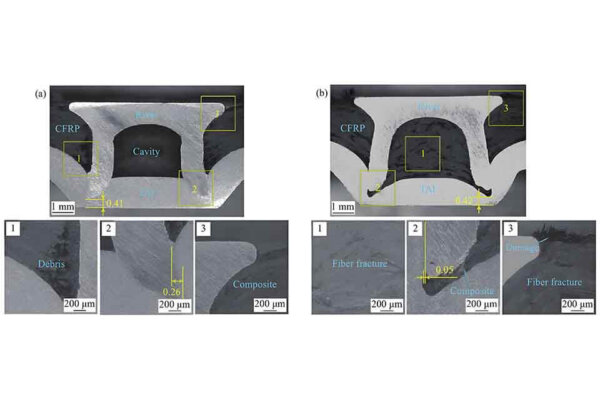
Risque de délamination Une fabrication défectueuse — placement incorrect des fibres, compactage insuffisant, infusion de résine inadéquate — peut entraîner des délaminations internes invisibles de l'extérieur, mais qui réduisent considérablement les performances de la pièce. Le contrôle qualité dans la fabrication de matériaux composites en fibre de carbone (CFRP) nécessite des méthodes d'essais non destructifs (END), telles que le balayage par ultrasons.
Recyclabilité limitée Les panneaux en CFRP en fin de vie sont difficiles à recycler. Les technologies de recyclage actuelles (pyrolyse, solvolyse) permettent de récupérer la fibre de carbone, mais s'accompagnent généralement d'une certaine diminution des propriétés mécaniques, ce qui limite l'utilisation de la fibre recyclée à des applications moins exigeantes. La recyclabilité fait l'objet de recherches actives et pourrait s'améliorer à mesure que la technologie gagne en maturité.
Les propriétés mécaniques du CFRP dépendent fortement du type de fibre, de l'orientation des fibres, de la fraction volumique et du procédé de fabrication. Les valeurs suivantes sont représentatives du CFRP de qualité automobile utilisant des fibres de carbone à module standard dans une résine époxy :
| Propriété | CFRP typique (quasi-isotrope) | Acier (doux) | Aluminium (6061-T6) |
|---|---|---|---|
| Densité (g/cm³) | 1.5–1.6 | 7.8 | 2.7 |
| Résistance à la traction (MPa) | 400–800 | 250–400 | 310 |
| Module d'élasticité (GPa) | 50–70 | 200 | 69 |
| Résistance spécifique (MPa·cm³/g) | 250–500 | 35–50 | 115 |
| Limite de fatigue | Élevé (> 60% UTS) | ~40% UTS | ~35% UTS |
| Dilatation thermique (×10⁻⁶/°C) | 2–5 | 12 | 23 |
Remarque concernant l'orientation des fibres : Les valeurs ci-dessus s'appliquent à des empilements quasi-isotropes (0°/45°/90°). Les empilements unidirectionnels dans le sens des fibres peuvent atteindre des résistances à la traction supérieures à 1 500 MPa, mais au prix d’une très faible résistance transversale. La conception des panneaux de carrosserie utilise généralement des empilements tissés ou quasi-isotropes afin d’obtenir des propriétés équilibrées dans le plan.
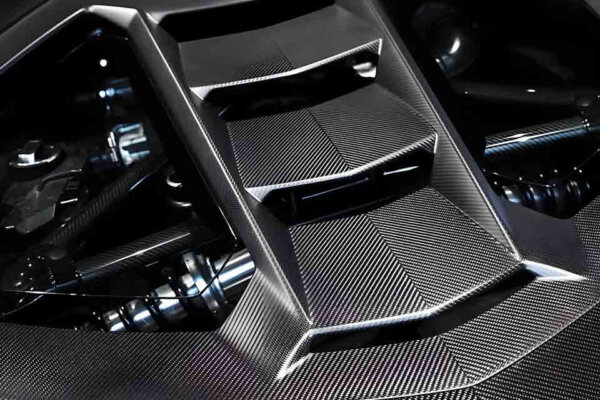
Pour éléments de carrosserie en fibre de carbone apparente (finition au vernis transparent), les tissus à armure sergée 2×2 ou à armure toile sont les plus couramment utilisés, car ils offrent à la fois de bonnes propriétés mécaniques et un aspect esthétique caractéristique.
Les gains de poids dépendent de la conception, de l'épaisseur et de la rigidité visée ; toutefois, les chiffres suivants sont représentatifs des panneaux de carrosserie automobiles classiques conçus pour offrir une rigidité à la flexion équivalente :
| Matériau | Poids relatif du panneau | Densité (g/cm³) | Rapport rigidité/poids |
|---|---|---|---|
| Acier doux | 100% (référence) | 7.8 | Faible |
| Acier à haute résistance | ~90% | 7.8 | Modéré |
| Aluminium | ~55–65% | 2.7 | Bon |
| Fibre de verre (GFRP) | ~60–70% | 1.8–2.0 | Modéré |
| Plastique ABS | ~40–50% | 1.05 | Faible |
| PRFC | ~40–55% | 1.5–1.6 | Excellent |
Le CFRP présente un poids similaire à celui de l'ABS ou inférieur à celui de l'aluminium, tout en offrant une rigidité comparable à celle de l'acier — une combinaison qu'aucun autre matériau de ce tableau ne parvient à atteindre simultanément. C'est précisément cette combinaison qui explique pourquoi le CFRP est utilisé dans les applications de haute performance et de sport automobile, où le poids et la rigidité sont tous deux des critères essentiels.
Concrètement, le ministère américain de l'Énergie souligne que les composites renforcés de fibre de carbone constituent l'une des voies les plus prometteuses pour la conception de structures automobiles légères, avec un potentiel de réduction de poids supérieur à 50% pour certains composants de carrosserie par rapport à l'acier — même si le coût et l'évolutivité de la production restent les principaux obstacles à leur adoption à grande échelle.
Le procédé de fabrication détermine la qualité, la précision dimensionnelle, la capacité de production et le coût. Tous les CFRP ne se valent pas : le procédé est tout aussi important que le matériau.
Le tissu en fibres est placé manuellement dans un moule, puis imprégné à la main de résine liquide. Le durcissement s'effectue à température ambiante ou à basse température (60 à 80 °C).
La préforme en fibre sèche est placée dans un moule, scellée dans un sac sous vide, puis la résine liquide est aspirée à travers la fibre sous vide. Le durcissement s'effectue à température ambiante ou à basse température.
Le tissu préimprégné (préimpregné) est disposé dans un moule, mis sous vide, puis durci dans un autoclave à température et pression élevées (120 à 180 °C, 5 à 7 bars).
Une préforme en fibres sèches est placée dans un moule fermé adapté ; la résine est injectée sous pression. Le tout est durci à température élevée. Pour une description détaillée de ce procédé, consultez notre guide sur Fabrication de fibre de carbone RTM.
Le composé de moulage en feuille ou le matériau préimprégné est moulé par compression entre des matrices en acier chauffées.
| Propriété | PRFC | Fibre de verre (GFRP) | Plastique ABS | Aluminium |
|---|---|---|---|---|
| Poids (relatif) | Très faible | Faible à moyen | Faible | Moyen |
| Rigidité | Très élevé | Modéré | Faible | Bon |
| Coût | Élevé | Faible à moyen | Faible | Moyen |
| Finition de la surface | Excellent | Bon (peint) | Bon (peint) | Excellent |
| Difficulté de réparation | Difficile | Moyen | Facile (de remplissage) | Moyen |
| Résistance à la corrosion | Excellent | Excellent | Excellent | Bon (anodisé) |
| Résistance aux chocs | Modéré (cassant) | Bon | Bon | Bon |
| Volume de production | Faible à moyen | Faible à moyen | Élevé | Élevé |
| Applications courantes | Capots, toits, ailerons et éléments aérodynamiques de haute performance | Kits de carrosserie et pare-chocs de rechange | Éléments de finition intérieure, non structurels | Capots, portes et ailes d'origine |
Quand privilégier la fibre de verre plutôt que le CFRP : Pour les kits carrosserie du marché de la pièce de rechange, où la priorité absolue est un coût réduit et un poids acceptable, la fibre de verre suffit souvent. Les panneaux en fibre de verre peuvent être réparés facilement à l'aide d'un mastic, peints sans difficulté, et coûtent 3 à 5 fois moins cher que des panneaux équivalents en CFRP. Leurs propriétés mécaniques sont inférieures, mais cela est souvent acceptable pour des panneaux esthétiques non structurels.
Quand privilégier l'aluminium plutôt que le CFRP : Pour la production OEM à grand volume, où la qualité constante, la recyclabilité et la réparabilité sont des critères essentiels, on privilégie généralement la tôle d'aluminium. L'aluminium peut être embouti, soudé et réparé dans des ateliers de carrosserie classiques, ce qui n'est pas le cas du CFRP.
Quand le CFRP s'impose clairement comme le choix idéal :
Toutes les pièces d'une voiture ne tirent pas le même avantage du CFRP. La ventilation suivante met en évidence les cas où les panneaux de carrosserie en CFRP apportent une réelle valeur ajoutée sur le plan technique, par opposition à ceux où le surcoût est difficile à justifier :
Applications à forte valeur ajoutée
Valeur modérée
Valeur moindre (il existe souvent de meilleures alternatives)
Le principe des panneaux de carrosserie en PRFC s'applique également à d'autres domaines que l'automobile. Bon nombre de ces mêmes avantages — réduction du poids, rigidité, géométrie complexe — font du PRFC un matériau très prisé pour Pièces de moto en fibre de carbone, où la réduction du poids de chaque pièce a un effet encore plus direct sur la maniabilité et les performances.
C'est la partie que la plupart des articles généraux négligent — et où l'expérience concrète en matière de fabrication fait toute la différence. Découvrez qui nous sommes et ce que nous faisons.
Après avoir fabriqué des panneaux de carrosserie automobile en PRFC destinés à diverses applications et pour différents volumes de production, les facteurs suivants déterminent systématiquement si un panneau en PRFC répond aux attentes ou présente des défaillances sur le terrain :
Données 3D et qualité des moules La précision d'un panneau en CFRP dépend entièrement de celle de son moule. Nous vérifions systématiquement les données 3D ou nous nous référons à un échantillon OEM d'origine avant de commencer le développement du moule. Même de petites erreurs sur la surface du moule se répercutent directement sur la géométrie de la pièce. Pour les panneaux devant s'ajuster parfaitement aux lignes adjacentes de la carrosserie, un contrôle dimensionnel rigoureux du moule est nécessaire, et les tolérances cibles peuvent devoir être discutées en fonction de la taille de la pièce, de la structure de montage et de l'échantillon de référence OEM.
Orientation des fibres et conception de la structure Pour les panneaux structurels, la configuration de l’orientation des fibres (empilement) doit être conçue pour répondre au cas de charge, et non choisie pour des raisons esthétiques. Un tissage en sergé 2×2 apparent est certes esthétique, mais ne constitue pas toujours la disposition structurelle optimale. Pour les applications exigeant des performances élevées, nous concevons la disposition structurelle indépendamment du tissage de surface : une disposition structurelle non tissée est souvent associée à une couche de surface au tissage esthétique.
Teneur en résine et fraction de vides Un excès de résine augmente le poids et réduit les propriétés mécaniques spécifiques. Une quantité insuffisante de résine entraîne l'apparition de zones de fibres sèches et de vides. Pour les panneaux fabriqués par infusion sous vide, la vitesse d'infusion de la résine, la perméabilité des fibres et la durée de vie en pot doivent être adaptées les unes aux autres. Une teneur en vides supérieure à 2–3% entraîne une dégradation mesurable de la résistance au cisaillement interlaminaire.
Température et cycle de durcissement Les panneaux insuffisamment durcis présentent une température de transition vitreuse (Tg) réduite et peuvent se ramollir dans des environnements à haute température (compartiments moteur, panneaux de couleur foncée exposés directement au soleil). Pour les panneaux exposés à des températures élevées, nous recommandons des systèmes époxy à Tg plus élevée, durcis à une température minimale comprise entre 120 et 135 °C, avec des cycles de post-durcissement si nécessaire.
Découpe CNC et qualité des bords Le CFRP doit être découpé aux dimensions finales à l'aide de fraiseuses à commande numérique équipées d'outils à revêtement diamanté. Une découpe manuelle à l'aide de meuleuses produit des bords irréguliers et peut entraîner un délaminage. La qualité des bords influe directement tant sur l'aspect esthétique que sur la résistance au délaminage des bords en service.
Points de fixation et tolérance de montage Dans le domaine des panneaux de carrosserie de rechange, la précision d'ajustement au niveau des trous de fixation et des points d'ancrage est souvent plus importante que le gain de poids en soi. Un panneau qui ne s'aligne pas correctement avec les emplacements de fixation d'origine, les jeux de porte ou les panneaux adjacents est inutilisable, quelles que soient les propriétés de son matériau. Nous perçons ou insérons tous les éléments de fixation à partir de données 3D et vérifions l'ajustement par rapport à un véhicule de référence physique.
Spécifications du vernis transparent Pour les panneaux en carbone apparents, le choix de la couche de finition est déterminant. Il est indispensable d'utiliser un polyuréthane de qualité automobile résistant aux UV ou une couche de finition contenant des absorbeurs d'UV. Les couches de finition de qualité inférieure ou non destinées à l'automobile risquent de jaunir, de se fissurer ou de perdre leur brillance beaucoup plus rapidement lorsqu'elles sont exposées aux UV à l'extérieur. L'épaisseur, l'application et la qualité du polissage ont toutes une incidence sur l'aspect et la durabilité.
Contrôles non destructifs Pour les panneaux structurels, nous recommandons de recourir à un contrôle par ultrasons (C-scan) ou à un essai au marteau afin de détecter les délaminations internes invisibles en surface. Un panneau peut en effet paraître parfait à première vue, tout en présentant des défauts internes importants qui compromettent son intégrité sous charge.
La réponse dépend des exigences de l'application, du volume de production et du budget — et pour être honnête, la réponse est : pas toujours.
Le CFRP est un bon choix lorsque :
Le CFRP peut ne pas en valoir la peine dans les cas suivants :
La question essentielle à se poser : Si l'on faisait abstraction des avantages liés à la réduction du poids et à la rigidité, le CFRP resterait-il le matériau le plus adapté ? Si la réponse est non — et que le seul argument en sa faveur est l'esthétique —, alors la fibre de verre mérite d'être sérieusement prise en considération.
En termes de résistance spécifique (résistance par unité de poids), le CFRP surpasse largement l'acier. Cependant, l'acier présente une résistance à la traction absolue plus élevée pour certaines nuances. Pour les applications liées aux panneaux de carrosserie, le critère de comparaison pertinent est le rapport rigidité/poids, domaine dans lequel le CFRP surpasse systématiquement tant l'acier que l'aluminium.
Oui, mais cela nécessite des compétences et un équipement spécialisés. Les dommages superficiels mineurs (rayures, éclats dans la couche de vernis) peuvent faire l'objet d'une réparation esthétique. Les dommages structurels dus à un choc doivent faire l'objet d'une évaluation par contrôle par ultrasons afin de déterminer l'étendue de la délamination interne, puis être traités à l'aide de patchs de réparation par infusion sous vide ou par le remplacement du panneau. Une réparation incorrecte d'un panneau en CFRP présentant des dommages structurels est dangereuse.
La différence de coût s'explique par trois facteurs : la fibre de carbone brute est nettement plus chère que la fibre de verre ; le processus de fabrication nécessite des cycles de durcissement plus longs, un outillage plus précis et un contrôle qualité plus rigoureux ; enfin, les taux de rendement (nombre de pièces acceptables par cycle de production) sont généralement plus faibles pour le CFRP en raison de sa sensibilité aux variations du processus.
La fibre de carbone en elle-même ne se dégrade pas sous l'effet des rayons UV. En revanche, la matrice en résine époxy et la couche de finition transparente peuvent se dégrader si elles ne sont pas correctement choisies. Les panneaux en CFRP de qualité utilisent des systèmes de résine stabilisés aux UV et des couches de finition transparentes de qualité automobile, résistantes aux UV. Un entretien adéquat (cirage, revêtement céramique) prolonge considérablement la durée de vie esthétique du produit.
“Le terme ” carbone humide “ désigne les panneaux fabriqués par stratification manuelle à l’aide d’une résine liquide appliquée à la main — une technique courante dans la production de pièces de rechange. Le ” carbone sec » désigne les panneaux à base de préimprégnés durcis en autoclave — utilisés dans le sport automobile et les applications OEM haut de gamme. Le carbone sec présente généralement une fraction volumique en fibres plus élevée (meilleures propriétés mécaniques), une teneur en résine plus faible (poids réduit) et une meilleure uniformité de surface, mais son coût est nettement plus élevé.
Indicateurs clés : alignement régulier du tissage, sans déformation ni ondulation ; brillance uniforme, sans zones ternes ni taches riches en résine ; bords nets et bien coupés, sans effilochage ni délamination ; ajustement précis aux points de fixation ; et poids correct (les panneaux excessivement légers peuvent être insuffisamment renforcés ; les panneaux anormalement lourds peuvent présenter une teneur excessive en résine). Pour les pièces structurelles, seuls les contrôles non destructifs (CND) permettent de confirmer la qualité interne.
Pour des propriétés mécaniques et une précision dimensionnelle optimales : préimprégné + autoclave. Pour le meilleur compromis entre qualité et volume de production : RTM. Pour les panneaux destinés au marché de la rechange en petites séries : infusion sous vide. Pour les prototypes et les pièces uniques sur mesure : stratification manuelle. Le “ meilleur ” procédé dépend de votre volume de production, de votre budget et de vos exigences en matière de performances.
Dans le domaine automobile, l'abréviation CFRP désigne le polymère renforcé de fibres de carbone, un matériau composite utilisé pour les panneaux de carrosserie, les toits, les capots, les ailerons, les renforts structurels et les pièces de performance. Il se distingue du tissu de fibres de carbone brut en ce qu'il comprend à la fois un renfort en fibres de carbone et une matrice en résine durcie, ce qui en fait un matériau structurel utilisable et non un simple renfort brut.
Le CFRP est généralement le meilleur choix lorsque la réduction du poids et le rapport rigidité/poids constituent les principaux objectifs. L'aluminium est généralement plus adapté à la production en grande série, car il est plus facile à réparer, moins coûteux et recyclable. Pour les capots, toits et pièces aérodynamiques hautement performants, le CFRP peut s'avérer le choix idéal. Pour la production en série de portes, d'ailes et de panneaux impliqués dans les collisions, l'aluminium s'avère souvent plus pratique et plus rentable.
Cet article s'appuie sur une expérience pratique de la fabrication de panneaux automobiles en PRFC, combinée à des données couramment publiées sur les matériaux composites et à des considérations concrètes liées à la production, notamment l'outillage, la conception de la stratification, le durcissement, la découpe CNC, la précision d'ajustage et la durabilité de la couche de finition. Rendez-vous sur chinacarbonfibers.com pour découvrir notre gamme complète de pièces en PRFC et nos capacités de production.