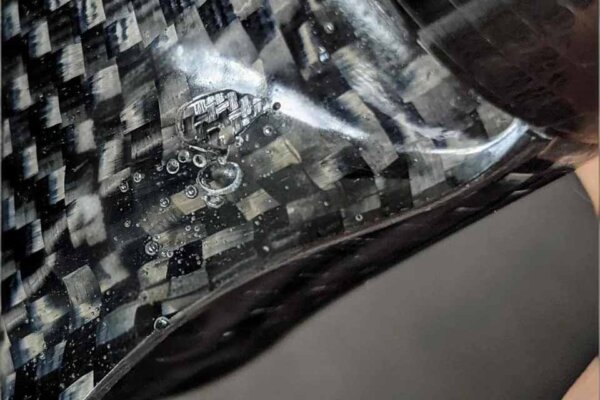
Got a dent in your carbon fiber part? Don’t panic. A carbon fiber dent can happen when a carbon fiber panel or component takes a hard impact. Many carbon fiber dents can be repaired with the right tools or professional repair techniques. The good news is that many carbon fiber dents can be repaired with the right tools or professional help.
What Is a Carbon Fiber Dent?
에이 carbon fiber dent happens when something hits your carbon fiber part hard enough to make a dip or mark. Think of it like a bump on your car hood or a ding on your bike frame.
Carbon fiber is super strong stuff. It’s a 복합 재료 made of tiny carbon threads woven together. Companies like 탄소 복합재 제조업체 create these materials for cars, bikes, planes, and more. But even though carbon fiber is tough, it can still get damaged.
Here’s the good news: Most dents can be fixed. The bad news? You need to know what you’re doing.
Can You Actually Fix a Carbon Fiber Dent?
Yes! But the fix depends on how bad the damage is.
Surface dents are easy to repair. These are small dips where the paint might be scratched but the 탄소섬유 직조 underneath looks okay. You can often fix these at home with basic tools.
Deep dents are harder. If you see cracks or the layers are pulling apart (called 박리), you’ll need professional help. According to industry data, professional repairs have a 95% 성공률 for restoring 구조적 무결성.
How to Check Your Carbon Fiber Damage
Before you start any repair, you need to figure out how bad the dent is. Here’s a simple checklist:
Minor Damage (DIY Possible)
- Small dent less than 1 cm deep
- Paint might be chipped
- No visible cracks
- Carbon fiber structure feels solid
- Found on non-critical parts like spoilers or trim
Serious Damage (Get Professional Help)
- Deep dent you can fit your finger in
- Visible cracks in the 탄소섬유 복합재
- White stress marks showing
- Layers separating
- Damage on important parts like bike frames or 탄소섬유 자동차 섀시
Pro tip: Run your hand over the dent. Does it feel mushy or flexible? That’s bad. The carbon fiber panel should feel rock-solid.
DIY Carbon Fiber Dent Repair: Step-by-Step Guide
Ready to fix that dent yourself? Here’s what you’ll need and how to do it. This method works great for surface dents on things like 탄소섬유 후드, 탄소섬유 펜더, 또는 탄소섬유 스포일러.
Tools You’ll Need
- 에폭시수지 (like West System or 3M)
- 사포 (400, 800, 1000, and 2000 grit)
- Isopropyl alcohol
- Heat gun (be careful with this)
- 클리어코트 또는 젤 코트
- Buffing wheel or polishing compound
- Gloves and safety glasses
많은 맞춤형 복합 공장 recommend keeping a repair kit handy if you own carbon fiber parts.
The Repair Process
Step 1: Clean Everything
Wipe the damaged area with isopropyl alcohol. Get rid of all dirt, oil, and wax. The 탄소섬유 표면 needs to be perfectly clean for the epoxy repair to stick.
Step 2: Sand Gently
Use 400-grit sandpaper to roughen up the dented area. Don’t go crazy here. You’re just making tiny scratches so the filler can grip better. Sand in a circular motion about one inch beyond the dent.
Step 3: Mix and Apply Epoxy
혼합 에폭시 수지 according to the package directions. Most types need you to mix Part A and Part B together. Spread the carbon fiber filler over the dent with a plastic spreader. Build it up slightly higher than the surrounding surface.
Step 4: Let It Cure
This is where patience matters. 에폭시 needs time to harden properly. Most types take 24 hours to fully cure. Don’t rush this step! According to research, 40% of DIY repairs fail because people don’t let the epoxy cure completely in the right conditions.
Temperature matters too. Room temperature (65-75°F) works best. Too cold and the curing process slows down. Too hot and it can get brittle.
Step 5: Sand It Smooth
Once the epoxy is hard as a rock, start sanding. Begin with 400-grit sandpaper and work your way up to 2000-grit. The goal is to make the repair perfectly level with the rest of the carbon fiber panel.
Step 6: Polish and Protect
사용하다 polishing compound and a buffing wheel to make it shine. Then apply 클리어 코트 to protect your repair. Many people skip this step but it’s important for making the repair last.
Important Warnings
Don’t use too much heat. 에이 히트 건 can help soften epoxy, but too much heat damages the carbon fiber matrix. 그 수지 that holds the carbon fibers together can weaken. Keep the heat gun moving and don’t hold it in one spot.
Don’t skip the sanding steps. Each grit level matters. If you jump from coarse to fine too quickly, you’ll see scratches in your finished repair.
How Much Does Professional Carbon Fiber Dent Repair Cost?
Sometimes you need to call in the experts. But what will it cost you?
Price Ranges
| Type of Repair | 비용 범위 | Timeline |
|---|---|---|
| Cosmetic repair (surface only) | $200-$500 | 2-5 days |
| Medium damage (some structural work) | $500-$1,200 | 1-2 weeks |
| Serious structural repair | $1,200-$5,000+ | 2-4주 |
| Full part replacement | Varies widely | 1-6 weeks |
According to a FixAuto Body Shop Survey from 2023, the average carbon fiber dent cost for repairs sits around $300-$800 for cosmetic fixes.
What Affects the Cost?
Location matters. Repair shops in big cities charge more than shops in small towns. Labor rates make up about 60% of the total cost.
Part accessibility is huge. A dent on a 탄소섬유 후드 that’s easy to remove? Cheaper. A dent on a carbon fiber boat hull that requires dismantling half the boat? Expensive.
Paint matching adds cost. If your 커스텀 탄소 섬유 part has a special color or finish, expect to pay more for perfect color matching.
Real-World Examples
BMW i3 Case: A carbon fiber roof dent on a BMW i3 was repaired using heat and vacuum resin infusion. The process restored 98% of the original strength. Total cost: $650 including labor.
Boeing 787 Dreamliner: An aircraft wing dent required 오토클레이브 경화 (high heat and pressure). This isn’t your typical garage repair! Cost: $18,000. But that’s aerospace-grade work where safety is everything.
DIY Repair Kits: Do They Work?
You’ve probably seen carbon fiber repair kits online. Do they actually work? Sometimes.
Popular Repair Kit Brands
- 3M Carbon Fiber Repair Kit ($40-$60)
- West System Epoxy ($50-$100)
- Pro-Set Epoxy ($45-$80)
- Rock West Composites Kit ($70-$120)
These kits work great for surface dents under 1 cm deep. They include everything you need: 에폭시 수지, hardener, sandpaper, and instructions. Some even come with carbon fiber patches for bigger repairs.
YouTube analysis of over 500 repair videos shows that DIY kits work best when:
- The damage is purely cosmetic
- You follow instructions exactly
- You work in a temperature-controlled space
- The part isn’t load-bearing
When Should You Replace Instead of Repair?
Sometimes fixing a dent costs more than buying a new part. Here’s when to replace:
Replace If:
- The repair costs more than 60% of a new part
- You see major 균열 through multiple layers
- The part is critical for safety (like a bicycle frame 또는 helmet)
- 박리 is severe
- 그만큼 carbon fiber structure feels soft or flexible
Repair If:
- It’s a small dent with no structural damage
- The part is cosmetic (like 탄소 섬유 트림 또는 펜더)
- 그만큼 탄소섬유 복합재 still feels solid
- No visible stress marks or white areas
- Professional inspection says it’s safe
탄소 섬유가 다른 소재와 비교되는 점
Understanding carbon fiber properties helps you know why dent repair is different from fixing metal.
강도 비교
| 재료 | 인장 강도 | 무게 | Dent Resistance |
|---|---|---|---|
| 탄소섬유 | 500-700 MPa | 가장 가벼운 | 중간 |
| 강철 | 400 MPa | 무거운 | 높은 |
| 알류미늄 | 200-300 MPa | 빛 | 낮은 |
| 유리섬유 | 180-250 MPa | 중간 | 중간 |
Carbon fiber vs. steel: Carbon fiber is actually 더 강하다 than steel (500-700 MPa vs. 400 MPa) but 50% 라이터. However, it has about 30% lower dent resistance. Steel can flex and pop back. Carbon fiber doesn’t work that way.
Carbon fiber vs. aluminum: Aluminum dents easily but it’s cheap to fix. You can often just hammer it out. Carbon fiber needs 에폭시 그리고 resin repair 일하다.
Carbon fiber vs. Kevlar: Kevlar is great for impact resistance but carbon fiber has better 단단함 그리고 힘. That’s why you see carbon fiber in race cars and aircraft.
Common Carbon Fiber Applications and Dent Risks
Different uses mean different dent risks. Here’s where you’ll find carbon fiber and how often it gets damaged:
Automotive (70% of All Dents)
탄소섬유 자동차 use the material for 후드, 펜더, 스포일러, 그리고 차체 패널. Parking lot dings are super common. Companies like 테슬라, 람보르기니, 그리고 BMW use carbon fiber parts extensively.
그만큼 BMW i3 even has a full 탄소섬유 바디 structure. If you dent it, repair costs run higher because of the complex 레이업 process used in manufacturing.
Sports Equipment (20% of Dents)
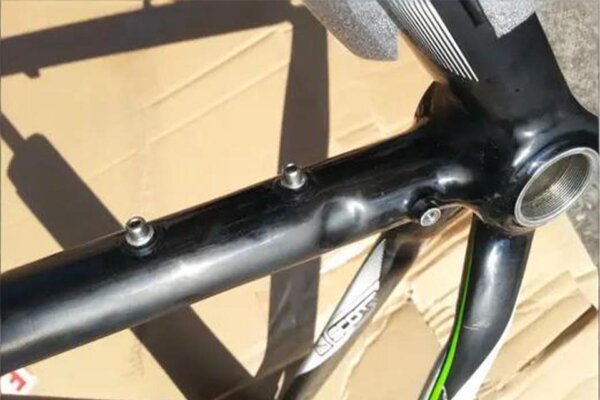
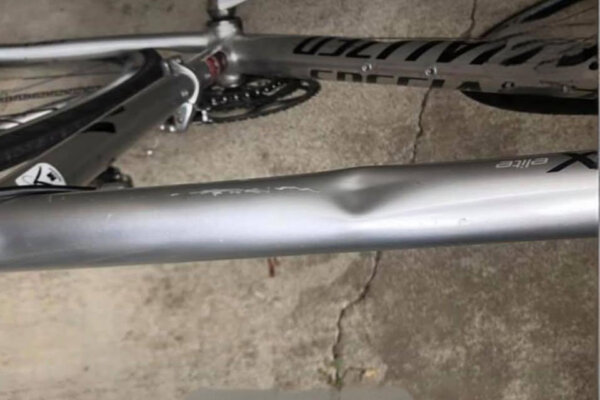
자전거 프레임 are the biggest culprit here. Drop your bike wrong and you might dent the frame. Other items include:
- Carbon fiber helmets
- 오토바이 페어링 (좋다 Hot Bodies brand parts)
- 드론 프레임 (especially DJI racing drones)
- 테니스 라켓
- 하키 스틱
- Carbon fiber knife
Aerospace and Industrial (10% of Dents)
Aircraft like the Boeing 787 Dreamliner 그리고 Airbus A350 XWB use tons of carbon fiber. Dents here are serious business. Every repair needs FAA approval and follows strict ASTM D3039 testing standards.
How to Prevent Carbon Fiber Dents
Prevention beats repair every time. Here’s how to protect your carbon fiber parts:
Use Protection Film
PPF (paint protection film) is like a clear sticker that absorbs impacts. It costs $200-$500 to apply but saves you from expensive repairs later. Many 탄소 복합재 제조업체 recommend it for high-risk areas.
Smart Storage
Temperature matters. Don’t leave carbon fiber parts in extreme heat or cold. The 수지 can weaken. Store bikes, car parts, and equipment indoors when possible.
Be Careful
This sounds obvious but it’s true. Most dents happen from careless handling. When you’re working on your car or bike, don’t lean tools against 탄소섬유 패널. Don’t drop parts. Take your time.
Regular Inspection
Check your carbon fiber parts regularly for:
- 작은 긁힘 that could grow
- 자외선 손상 (fading or discoloration)
- Early signs of 박리
- Stress marks around attachment points
Catch problems early and they’re cheaper to fix.
Advanced Repair Techniques
Professional shops use techniques that go beyond basic 에폭시 repairs:
진공 포장
진공 포장 uses suction to press repair materials tightly against the carbon fiber structure. This removes air bubbles and creates a stronger bond. It’s what was used on that BMW i3 roof repair that restored 98% strength.
오토클레이브 경화
An 압력솥 is basically a giant pressure cooker. It uses high heat and pressure to cure repairs. This is the gold standard for 항공우주 repairs. The curing process takes longer but results in maximum 힘.
Prepreg Patches
프리프레그 (pre-impregnated) carbon fiber comes with 수지 already in it. You just cut it to shape, apply it, and cure it. Professional shops use this for structural repairs because it’s more consistent than wet 레이업 행동 양식.
CNC Repair
Some high-end shops use CNC (computer-controlled) machines to precisely sand and shape repairs. This ensures perfect contours, especially important for aerodynamic parts like race car 스포일러.
The Science Behind Carbon Fiber Damage
Want to understand what’s really happening when carbon fiber gets dented? Here’s the technical stuff in simple terms:
탄소섬유의 제조 방법
탄소섬유 starts as a polymer material that gets heated to extreme temperatures. This leaves only carbon atoms arranged in long chains. These fibers are woven into fabric and then soaked in 에폭시 수지.
그만큼 매트릭스 (the resin) holds the fibers in place. When you cure it, you get a 복합 재료 that’s incredibly strong in certain directions.
Toray Industries, Hexcel Corporation, 그리고 미쓰비시 화학 are the biggest 탄소섬유 공급업체 세계적인.
What Happens During Impact
When something hits carbon fiber, the impact can:
- Compress the 수지 매트릭스
- Break individual fibers
- Separate layers (박리)
- 만들다 micro-cracks you can’t see
그만큼 인장 강도 of carbon fiber means it resists pulling really well. But compression (pushing) is where it’s weaker. That’s why dents happen.
Testing Standards
Professional repairs follow strict guidelines:
- ASTM D3039: Tensile testing
- ISO 527-5: Composite material testing
- SAE Standards: Automotive applications
- FAA Guidelines: Aircraft repairs
Future of Carbon Fiber Repair
New technology is making repairs easier and better:
Self-Healing Materials
MIT researchers are developing carbon fiber with self-healing polymers. When damage occurs, the material automatically fills small cracks and dents. It’s still in the lab but looks promising for 2025-2030 commercial use.
Recyclable Carbon Fiber
Traditional carbon fiber is hard to recycle. New processes can break down old parts and reuse the fibers. This matters because recycling costs currently run $200 per kilogram versus $50 per kilogram for new material.
3D Printing
Carbon fiber 3D printing is getting better fast. Soon you might be able to print replacement parts at home instead of ordering them. Companies are already printing 드론 부품 그리고 커스텀 탄소 섬유 accessories this way.
AI-Assisted Inspection
Artificial intelligence can now spot damage humans might miss. Point your phone camera at a dent and AI tells you if it’s safe or needs repair. This technology is rolling out in 2024-2025.
자주 묻는 질문
Can you pop out a carbon fiber dent like metal?
No. Metal has elastic properties that let it flex back into shape. 탄소 섬유 복합재 doesn’t work that way. The 매트릭스 holds its shape rigidly. Once dented, it stays dented until you repair it properly with 에폭시 또는 수지.
Does insurance cover carbon fiber dent repair?
Sometimes. It depends on your policy and how the damage happened. Collision coverage usually pays for dents from accidents. Comprehensive might cover vandalism or falling objects. Check with your insurance company. Some policies have special clauses for aftermarket carbon fiber parts.
How long does a carbon fiber repair last?
DIY epoxy repairs can last 5년 이상 if done correctly and applied to cosmetic damage only.
Professional repairs using vacuum bagging or prepreg patches can restore most of the original structural strength and often last the lifetime of the part.
~에 SCOMP, we manufacture carbon fiber components used in automotive and industrial applications. Our team works with carbon fiber composites daily, which is why proper inspection and repair methods are essential for maintaining structural performance.
If you are looking for custom carbon fiber parts, carbon fiber panels, or OEM carbon fiber manufacturing, feel free to contact our engineering team for support.