
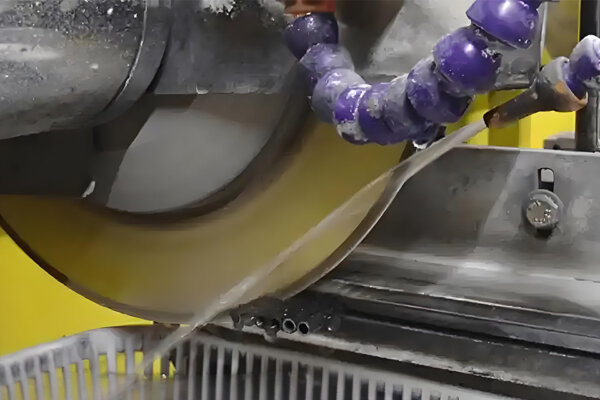
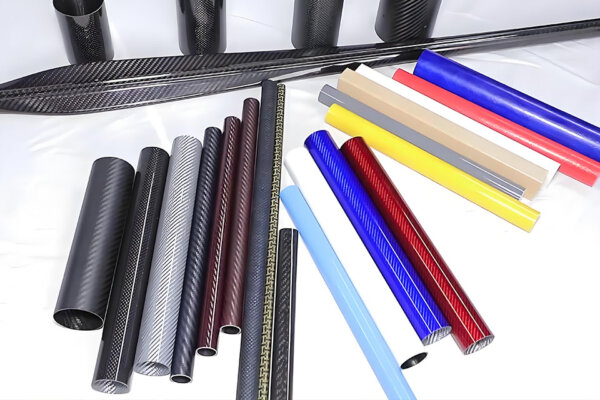
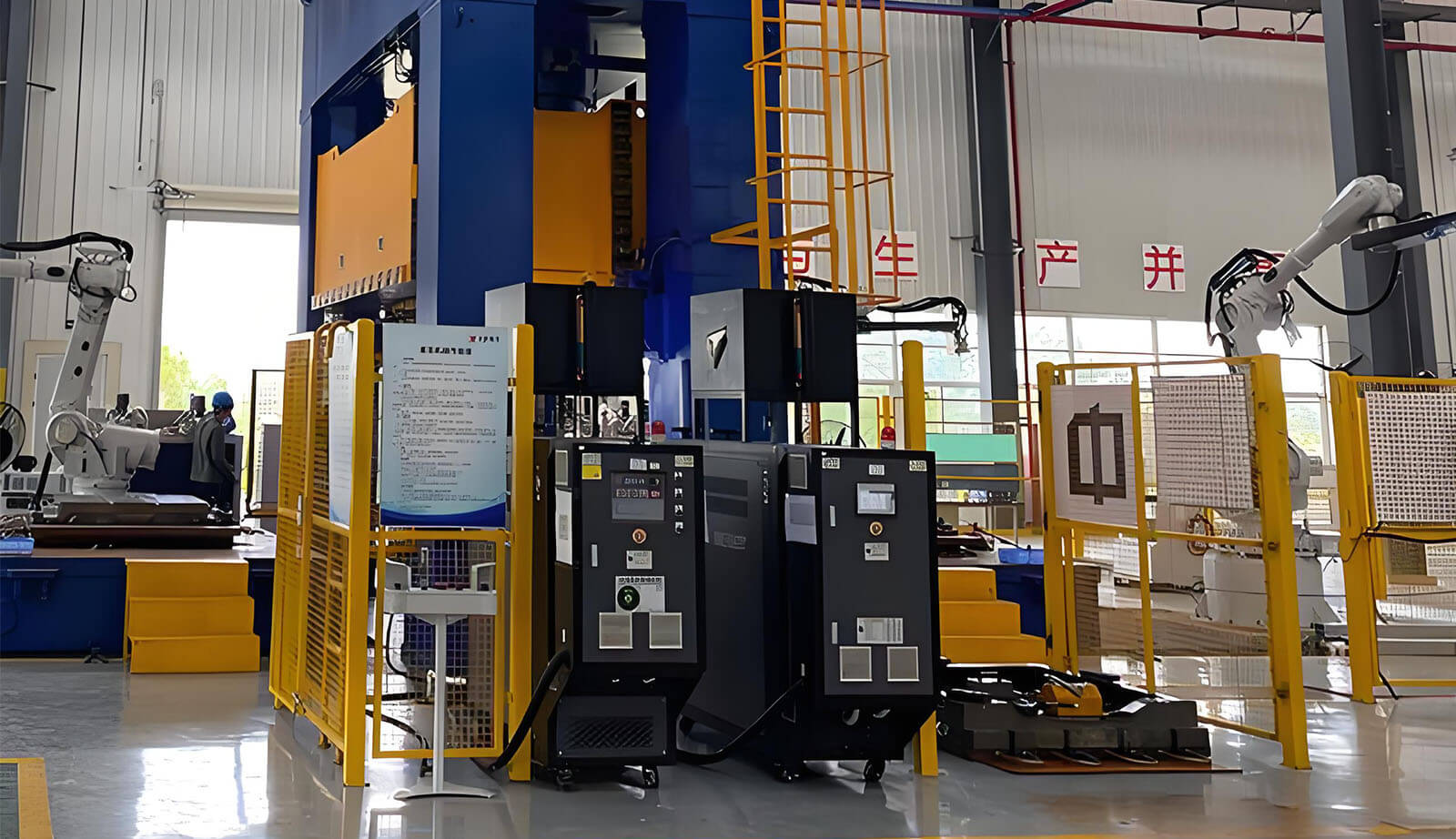
탄소섬유 복합소재 핫프레싱 성형 공정
당사 공장에서는 P20 강철 금형을 사용한 첨단 탄소 섬유 핫 프레스 공정을 채택하여 고품질 생산을 위한 높은 효율성, 정밀성, 내구성 및 비용 효율성을 보장합니다.
Carbon fiber extrusion—including continuous pultrusion, thermoplastic composite extrusion, reactive extrusion, and extrusion-based additive manufacturing—has matured into one of the most advanced manufacturing routes for producing lightweight, high-stiffness, corrosion-resistant structural profiles.
Industries transitioning from aluminum extrusions now demand materials that deliver higher specific strength, near-zero thermal expansion, improved fatigue endurance, and superior dimensional stability. Carbon fiber composite profiles meet this requirement through controlled fiber orientation, engineered resin matrices, optimized fiber volume fraction (FVF), and precision die design.
At the beginning of this article, we briefly note that Chinacarbonfibers is among the composite manufacturers (탄소 복합재 제조업체) capable of producing custom carbon fiber extruded tubes, rods, beams, and box sections—but the focus of this guide is not on sales. It is to help engineers, designers, and procurement teams fully understand the science, engineering, processes, and application logic behind carbon fiber extrusion.
Unlike metal extrusion (where molten metal is pushed through a die), carbon fiber extrusion refers to shaping continuous fiber-reinforced polymer composites using:
Each approach manipulates carbon fibers—typically derived from PAN precursors, pitch-based precursors, and processed through stabilization, carbonization, and graphitization—into high-performance structural profiles.
Carbon fiber extrusion integrates the following composite science elements:
These determine the final mechanical, thermal, and electrical performance of the extruded composite.
When requiring tailored solutions, some engineers rely on 맞춤형 복합 공장 services to match fiber architecture and resin systems to specific performance targets.
| 재산 | 탄소 섬유 복합재 | Aluminum 6061-T6 | 이점 |
|---|---|---|---|
| 밀도 | 1.5–1.6 g/cm³ | 2.7g/cm³ | ~42% lighter |
| Specific Strength | 600–1200 MPa/(g/cm³) | ~115 MPa/(g/cm³) | 5–10× higher |
| Specific Modulus | 70–150 GPa/(g/cm³) | ~26 GPa/(g/cm³) | 3–6× higher |
| CTE (Longitudinal) | –1 to +0.5 µm/m-K | 23.6 µm/m-K | near-zero expansion |
| 부식 | Inert | Needs anodizing | maintenance-free |
| Fatigue failure | No yield point | Yielding & cracking | much longer life |
Strength-to-weight ratio Directly tied to continuous fiber alignment and high FVF.
Thermal stability Low coefficient of thermal expansion → stability in:
Fatigue endurance CFRP avoids metal fatigue because:
Corrosion resistance Carbon/epoxy systems are inert—crucial for marine & chemical environments.
Vibration damping 5× better damping than aluminum → quieter, more stable systems.
For automotive engineers, see examples in 탄소섬유 자동차.
Pultrusion is the most widely used continuous carbon fiber extrusion method.
Uses engineering polymers such as:
Can use:
A cutting-edge method where polymer curing occurs via exothermic chain reaction inside the die.
Controlled by:
Performance includes:
Industry key entities:
Process parameters that control defects:
For deeper tube specifications, refer to Carbon Fiber Tube China — Buyers Guide, Prices, Specs, and Suppliers.
Unidirectional (UD) rods with maximum axial stiffness.
Fiber architectures available:
For fully customized shapes, engineers frequently explore 커스텀 탄소 섬유 솔루션.
To understand fabrication techniques such as trimming and cutting, see: How to Cut Carbon Fiber Tube.
Provide:
Submit:
We advise:
Small batches for:
Typical lead times:
Quality checks include:
Q1: Is carbon fiber extrusion more expensive than aluminum? A: Initially, yes. However, the total cost of ownership is often lower when considering performance benefits: reduced energy consumption (lightweighting), zero maintenance (no corrosion), longer lifespan, and system-level savings (smaller actuators, less support structure).
Q2: How do I join or machine carbon fiber profiles? A: They can be machined (drilling, milling) with carbide tools and proper dust extraction. Joining is achieved via adhesive bonding (epoxy, methacrylate) or specialized mechanical fasteners. We provide detailed technical guides.
Q3: Can you match a specific color or surface finish? A: Yes. We offer various surface finishes (glossy, textured, painted) and can incorporate colored films or coatings during the extrusion process.
Q4: What are the minimum order quantities (MOQ)? A: For standard profiles, MOQ can be as low as 50 meters. For custom dies and profiles, please contact us for project-specific evaluation.
Q5: Do you provide material certifications? A: Absolutely. We supply full material traceability, batch testing reports, and can comply with industry-specific standards (e.g., aerospace, medical).
While the majority of this article provides purely technical and engineering insight, Chinacarbonfibers offers full-stack composite profile manufacturing:
문의하기 이메일: [email protected] WhatsApp: +86 13626191009
당사 공장에서는 P20 강철 금형을 사용한 첨단 탄소 섬유 핫 프레스 공정을 채택하여 고품질 생산을 위한 높은 효율성, 정밀성, 내구성 및 비용 효율성을 보장합니다.
저희 공장은 100개 이상의 고온 압력 오토클레이브를 운영하며, 알루미늄 몰드와 진공 유도를 사용하여 정밀하게 탄소 섬유를 성형합니다. 높은 열과 압력은 강도, 안정성 및 완벽한 품질을 향상시킵니다.
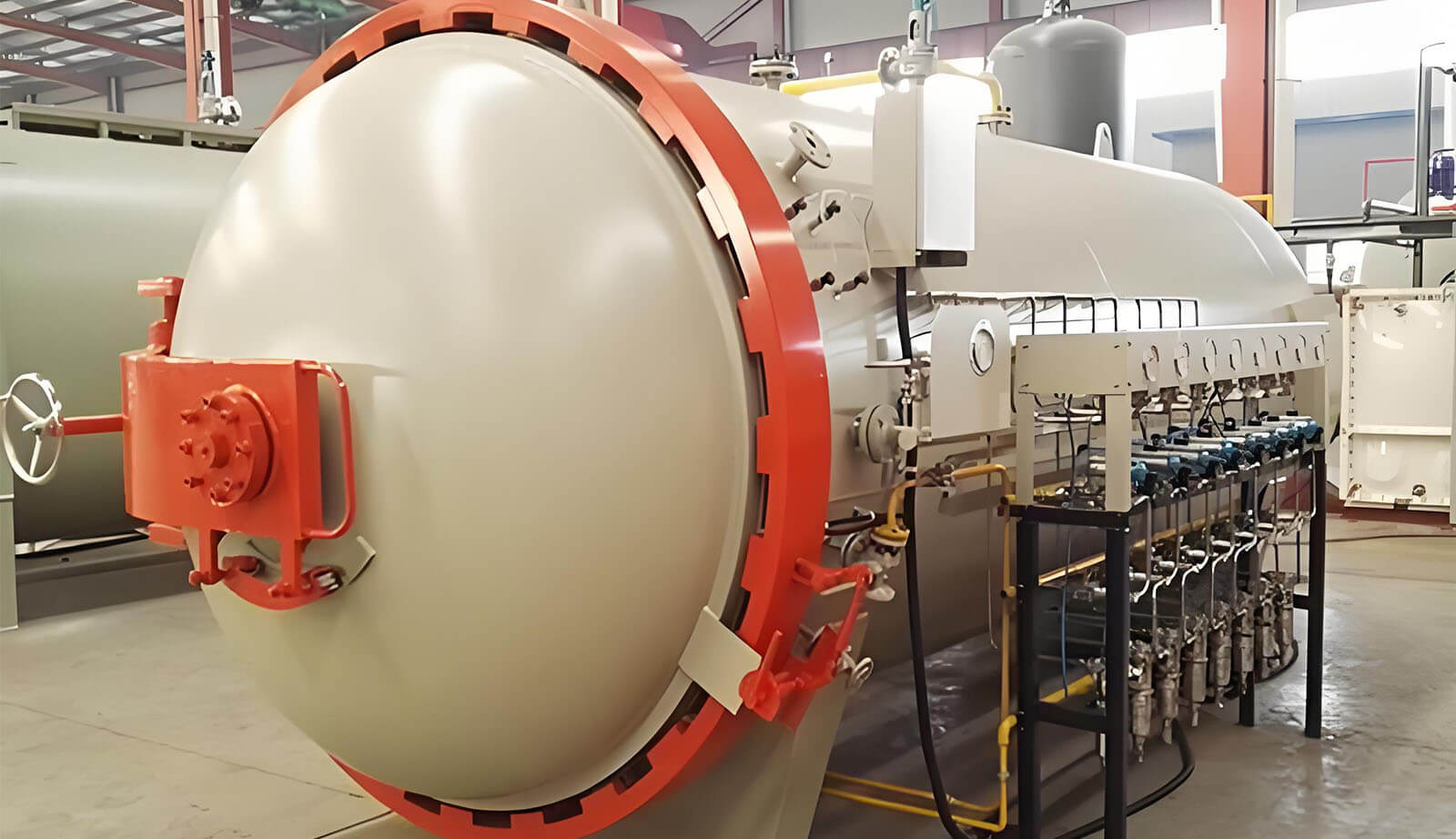
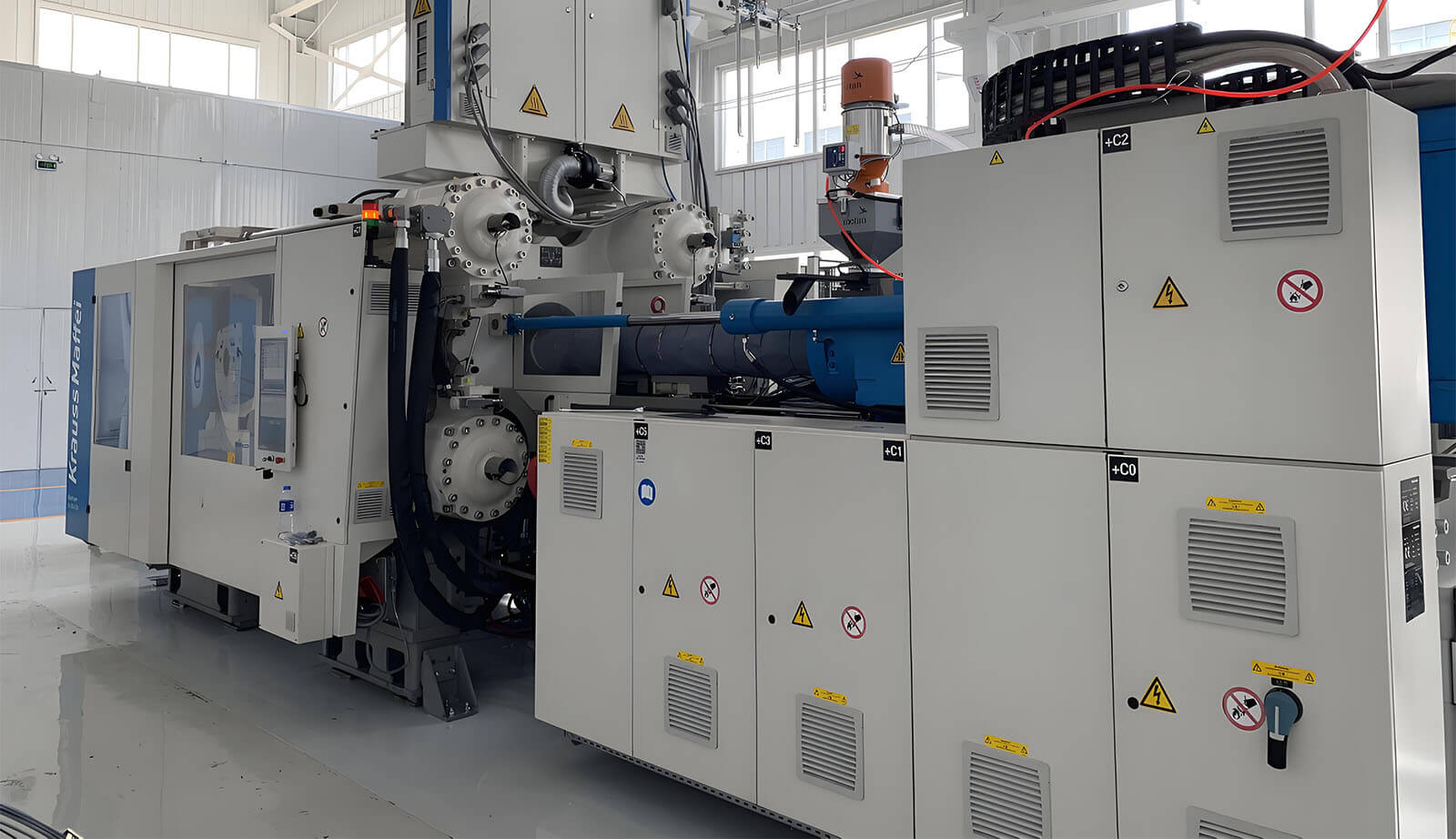
당사의 탄소섬유 연구 센터는 첨단 복합소재와 크라우스 마페이 파이버 폼을 활용해 새로운 에너지, 지능, 경량 설계 분야의 혁신을 주도하여 최첨단 고객 중심 솔루션을 창출합니다.
경험이 풍부한 탄소섬유 제품 공장에서 자주 묻는 질문에 대한 답변을 소개합니다.
당사는 자동차 부품, 오토바이 부품, 항공우주 부품, 선박 액세서리, 스포츠 장비, 산업용 애플리케이션을 포함한 광범위한 탄소 섬유 부품을 생산합니다.
우리는 주로 고품질 프리프레그 탄소 섬유와 대형 견인 탄소 섬유로 강화된 고성능 복합재를 사용하여 강도, 내구성 및 경량 특성을 보장합니다.
네, 당사 제품은 오래 지속되는 내구성을 보장하고 광택 있는 외관을 유지하기 위해 자외선 차단 마감 처리가 되어 있습니다.
네, 당사의 시설과 장비는 정밀도와 품질을 유지하면서 대형 탄소 섬유 부품을 생산할 수 있습니다.
탄소 섬유 제품을 사용하면 어떤 이점이 있나요?
탄소 섬유는 뛰어난 강도 대 중량 비율, 내식성, 강성, 열 안정성, 세련되고 현대적인 외관을 제공합니다.
당사는 가볍고 고성능 탄소 섬유 구성품에 중점을 두고 자동차, 오토바이, 항공우주, 해양, 의료, 스포츠 및 산업 부문을 대상으로 서비스를 제공합니다.
예, 다음을 제공합니다. 커스텀 탄소 섬유 고유한 디자인, 크기, 패턴 등 고객의 사양에 맞춘 솔루션을 제공합니다.
저희는 오토클레이브 성형, 핫 프레싱, 진공 포장과 같은 첨단 기술을 활용하여 모든 제품의 정밀성, 안정성 및 품질을 보장합니다. Hello Elementor 테마와 함께 사용하면 모든 주요 테마에서도 원활하게 작동하도록 하려고 노력합니다.
우리는 내구성과 높은 정확성을 위해 설계된 알루미늄과 P20 강철 금형을 사용하여 복잡하고 정밀한 탄소 섬유 부품을 제작합니다.
당사 제품은 업계 표준을 충족하기 위해 치수 정확도, 재료 무결성, 성능 테스트를 포함한 엄격한 품질 관리 검사를 거칩니다.