By the China Carbon Fibers Engineering & Sales Team — based on daily RFQ evaluation for custom carbon fiber parts, molded CFRP components, CNC carbon fiber plates, drone frames, automotive trim, and composite tooling
Yes, carbon fiber can be used in 3D printing — but most “carbon fiber 3D printed parts” are not the same thing as traditional molded carbon fiber reinforced plastic (CFRP). In most cases, the printer is extruding a thermoplastic filament (PLA, PETG, Nylon, or PC) that has been reinforced with short, chopped carbon fibers. These carbon fiber reinforced polymer filaments improve stiffness, dimensional stability, and surface finish compared to plain plastic, but they are still fundamentally plastic parts.
A separate process, continuous carbon fiber 3D printing, embeds unbroken carbon fiber strands along the print path and can approach the strength of traditionally molded carbon fiber in specific load directions. For parts that need to match the strength and finish of true woven or prepreg carbon fiber composite, molding, layup, or CNC-machined carbon fiber sheet is usually still the better choice.
This guide breaks down what carbon fiber 3D printing actually means, whether 3D printed carbon fiber is genuinely strong, when it makes sense, when it doesn’t, and how a carbon fiber parts manufacturer decides between 3D printing and traditional carbon fiber manufacturing.
What Does “Carbon Fiber 3D Printing” Actually Mean?
The term covers several different processes, and mixing them up is the most common source of confusion:
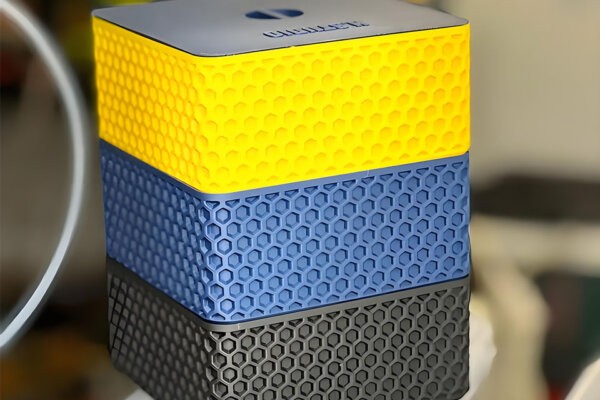
- Chopped carbon fiber filament (FDM carbon fiber 3D printing) — Short carbon fiber segments (typically under 1 mm) blended into a base plastic like PLA, PETG, Nylon (PA), or polycarbonate. Printed on standard FDM printers with an upgraded hardened nozzle.
- SLS carbon fiber 3D printing — Uses carbon-fiber-filled nylon powder in a selective laser sintering process. Because there’s no traditional extrusion bead pattern, SLS carbon fiber parts tend to be more isotropic (more uniform strength in different directions) than FDM chopped fiber parts. They are still chopped-fiber thermoplastic composites, not woven CFRP, and they share the same limitations around surface texture and directional strength once fiber orientation is considered.
- Continuous carbon fiber 3D printing — A second nozzle lays unbroken carbon fiber strand along the toolpath as the part is printed. This requires purpose-built dual-extrusion hardware.
- 3D printed molds for carbon fiber layup — The printer isn’t making the final carbon fiber part at all; it’s producing a mold, mandrel, or fixture that is then used for wet layup, vacuum bagging, or prepreg molding.
- 3D printed jigs, fixtures, and cores — Functional shop-floor tools, often made from chopped carbon fiber filament for extra rigidity and heat resistance.
Is 3D Printed Carbon Fiber Actually Strong?
“Strong” depends on which variables you’re controlling for. 3D printed carbon fiber strength is driven by several factors at once, not by the carbon fiber content alone:
- Base polymer — a PLA-CF part and a PEEK-CF part start from very different baseline strength and heat resistance, regardless of fiber percentage.
- Fiber loading — higher fiber content increases stiffness but can reduce impact toughness and surface quality past a certain threshold.
- Print orientation — layers bond well within the XY plane but are noticeably weaker across the Z-axis (between layers). A part loaded in the wrong direction can fail well below its rated strength. SLS parts reduce this weakness somewhat but don’t eliminate it.
- Infill and wall count — a thin-walled, low-infill print with carbon fiber filament can still be weaker than a solid part in plain nylon.
- Layer adhesion and chamber temperature — inconsistent nozzle/bed temperature or a missing enclosure leads to poor interlayer bonding, which shows up as strength loss that has nothing to do with the fiber itself.
- Continuous fiber path — for continuous fiber printing, strength is concentrated along the fiber route; areas without fiber reinforcement behave like the base plastic.
- Screw holes and mounting points — chopped fiber prints are prone to stress concentration and layer splitting around threaded holes unless reinforced with metal inserts or thicker bosses.
In short: 3D printed carbon fiber can be meaningfully stronger than unreinforced plastic, but “carbon fiber” on a spec sheet doesn’t guarantee isotropic strength. The design and print orientation matter as much as the material choice.
Chopped Carbon Fiber vs Continuous Carbon Fiber
| Chopped Fiber Filament | Continuous Fiber Printing | |
|---|---|---|
| Fiber length | < 1 mm segments | Unbroken strand along toolpath |
| Equipment | Standard FDM + hardened steel nozzle | Dual-nozzle, purpose-built printer |
| Strength gain vs. base plastic | Moderate — mainly stiffness and dimensional stability | Significant in the fiber direction; can approach molded CFRP in-plane |
| Strength direction | Roughly uniform, weaker between layers (Z-axis) | Highly directional — strong along fiber path, weak elsewhere |
| Surface finish | Matte, slightly textured | Similar to chopped fiber; fiber path may be visible |
| Typical cost | Low to moderate | Higher — specialized hardware and filament |
| Best for | Prototypes, jigs, fixtures, light brackets | Load-bearing brackets, drone arms, replacing small metal parts |
An important clarification: continuous fiber printing is not “uniformly strong everywhere.” It’s strong specifically along the direction the fiber was routed. Areas between fiber paths, sharp internal corners, thin walls, and screw bosses remain weak points and still need design reinforcement — the same way a molded composite part needs a proper layup schedule, not just “more carbon fiber.”
3D Printed Carbon Fiber vs Real Molded Carbon Fiber (CFRP)
| 3D Printed (FDM/SLS/Continuous) | Molded / Prepreg CFRP | |
|---|---|---|
| Reinforcement | Chopped or single-strand continuous fiber | Woven fabric or unidirectional tape, fully impregnated |
| Matrix | Thermoplastic (PLA, PETG, Nylon, PC, PEEK) | Epoxy or other thermoset resin |
| Strength direction | Print-path dependent, weaker between layers (less so for SLS) | Controlled by layup schedule, can be engineered in multiple directions |
| Surface appearance | Matte, textured | Glossy weave finish available with clear coat |
| Heat resistance | Depends mainly on base polymer (PLA lowest, PEEK highest) | Generally higher, resin-system dependent |
| Typical use | Prototypes, tooling, jigs, low-load brackets | Structural panels, automotive body parts, aerospace components |
| Batch economics | Efficient for 1–20 pieces, no tooling cost | More cost-effective at higher volumes once tooling is made |
3D Printed Carbon Fiber vs CNC Carbon Fiber Sheet
For flat or near-flat structural parts, CNC carbon fiber sheet is often a better middle ground than either 3D printing or full prepreg molding:
| 3D Printed CF | CNC Carbon Fiber Sheet | |
|---|---|---|
| Fiber continuity | Chopped or single-path continuous | Full woven fabric, continuous across the panel |
| Thickness accuracy | Moderate, layer-dependent | High, consistent laminate thickness |
| Flat plate strength | Adequate for light loads | Strong — standard choice for structural flat panels |
| Complex 3D shapes | Well suited | Limited to flat or gently curved profiles |
| Prototype cost | Low, no tooling | Moderate — material and cutting time |
| Best use | Complex brackets, housings, one-off samples | Drone plates, mounting panels, structural spacers, support brackets |
If your part is essentially a flat or lightly contoured panel, CNC carbon fiber sheet will usually outperform a 3D printed equivalent on both strength and surface consistency, while remaining faster and cheaper than a full molded part.
Which Carbon Fiber Filament Should You Use?
- PLA-CF — Easiest to print, good for display models, low-temperature fixtures, and visual prototypes. Lowest heat resistance.
- PETG-CF — Lower warping than PLA-CF, reasonable toughness, general-purpose functional parts.
- Nylon-CF / PA-CF (carbon fiber reinforced nylon) — Higher impact resistance and toughness, commonly used for carbon fiber 3D printed jigs and fixtures and drone components. Requires drying before printing and a heated, often enclosed, chamber.
- PC-CF — Better heat resistance for parts near warm engine bays or electronics enclosures.
- PEEK-CF / PEKK-CF — High-temperature, high-performance applications; requires industrial printers with heated chambers and much higher nozzle temperatures. Significantly higher material and equipment cost.
Print hardware note: chopped fiber is abrasive enough to wear through a standard brass nozzle, so a hardened steel or ruby-tipped nozzle is standard practice. Nylon-based filaments should be kept dry, and an enclosure helps reduce warping on larger parts.
Can You 3D Print a Glossy Carbon Fiber Look?
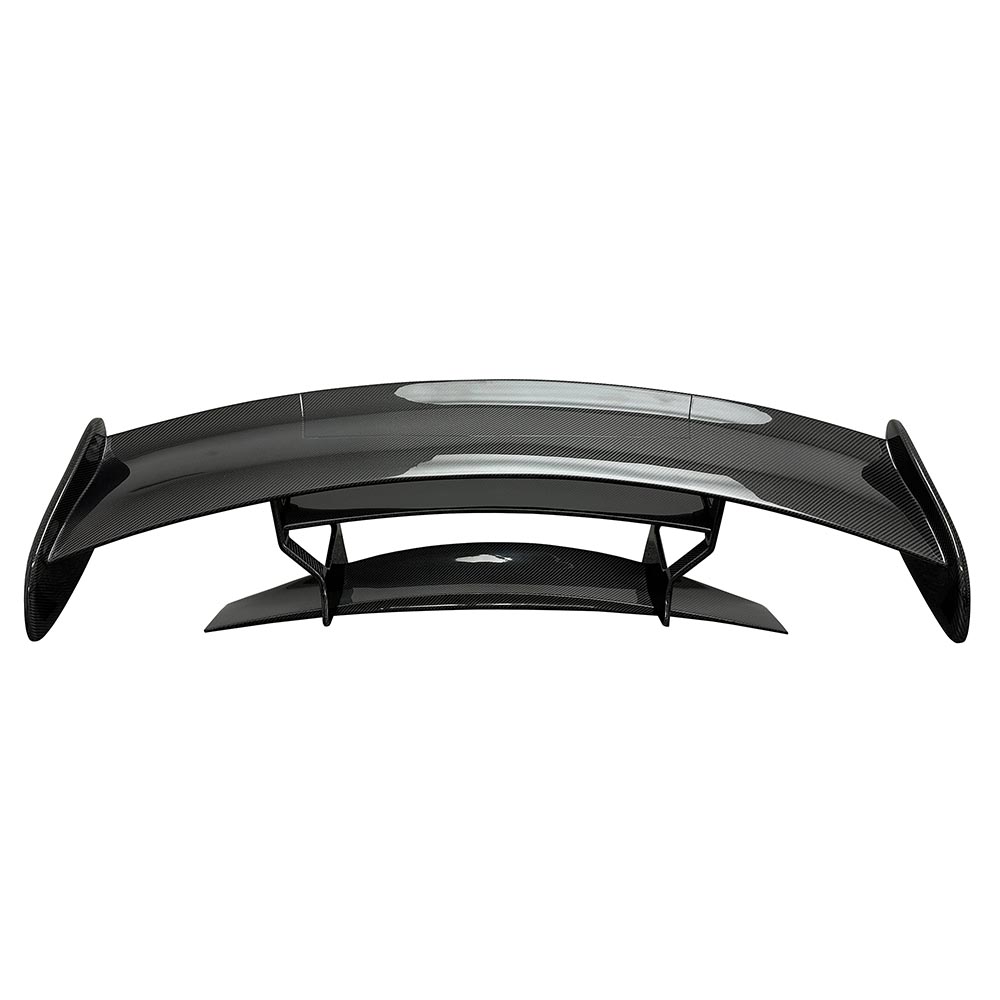
No — this is one of the most common misunderstandings we see in RFQs. The matte, slightly textured black finish on chopped carbon fiber filament parts is not the same as a glossy woven 3K twill carbon fiber surface. The visible weave pattern that most people associate with “real” carbon fiber only comes from molded or laminated woven fabric finished with a clear coat.
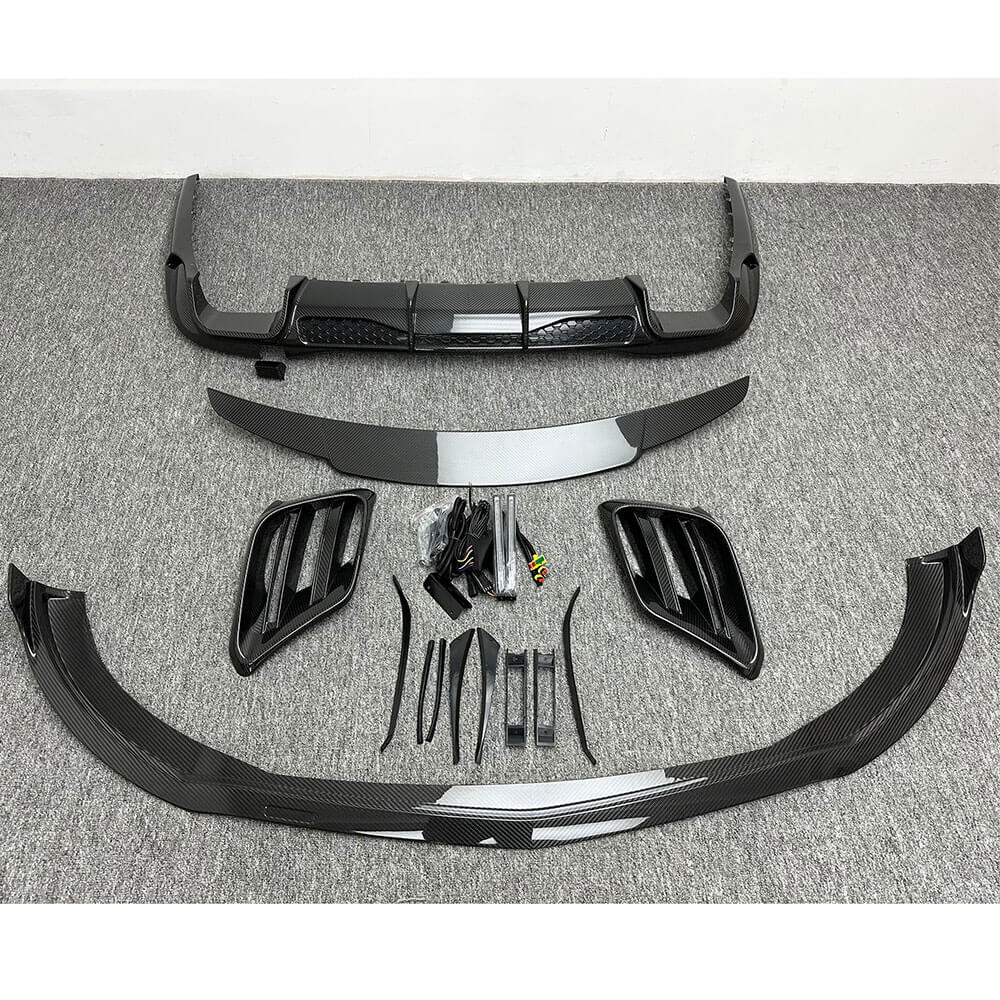
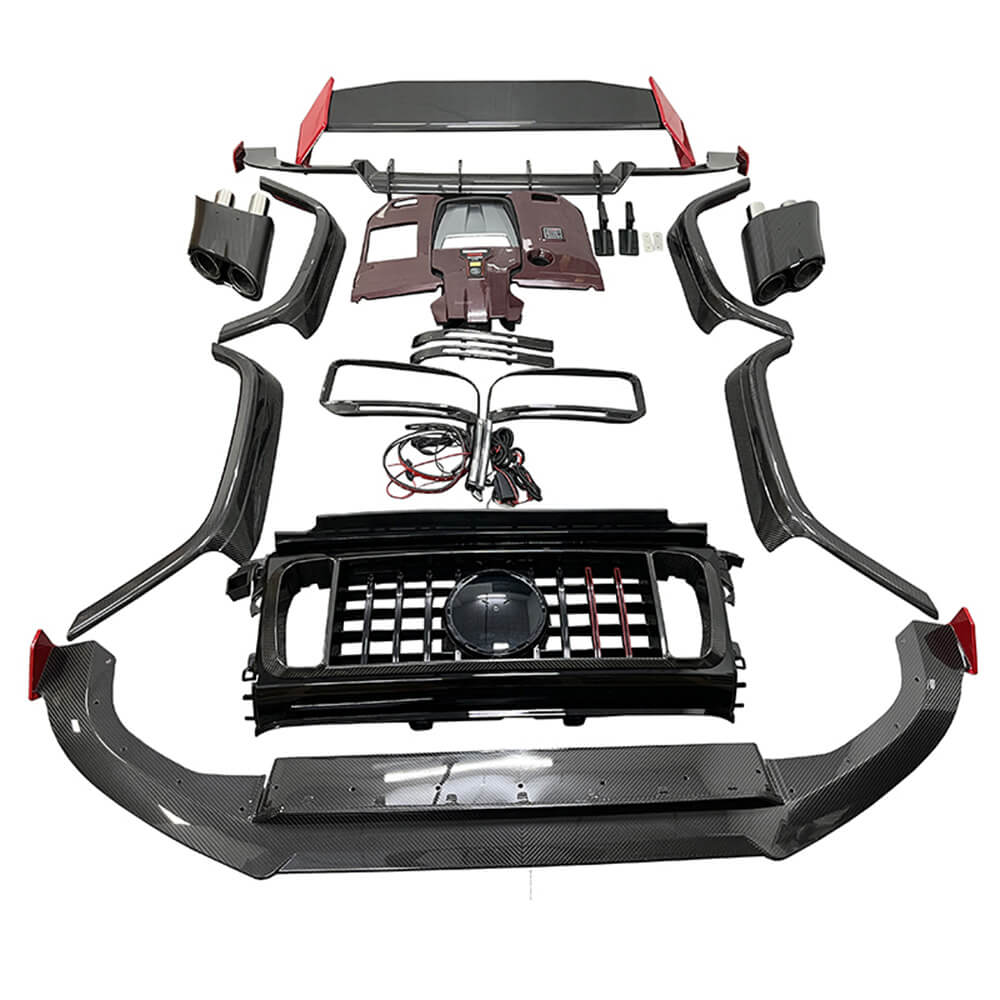
If a customer specifically wants the visible carbon weave look — for automotive trim, mirror caps, or visible panels — 3D printed carbon fiber filament will not deliver it, regardless of fiber content or print quality. This is especially true for premium performance builds, such as Lamborghini carbon fiber trim, where the woven finish is part of the expected look. For that application, prepreg molded carbon fiber is the correct process, and 3D printing is better used only to validate the shape or geometry beforehand.
When Carbon Fiber 3D Printing Is a Good Choice
- Rapid prototyping before committing to a mold
- Jigs, fixtures, and shop tooling that need extra stiffness
- Small-batch functional brackets and enclosures
- 3D printed carbon fiber drone frames and lightweight electronics housings
- Low-load interior trim prototypes
- Validating a shape before cutting a composite mold
When You Should Not Use 3D Printed Carbon Fiber
This is where a factory perspective matters more than a printer manufacturer’s marketing page:
- High-temperature areas near an engine bay — base polymer heat deflection is usually the limiting factor, not the fiber content.
- High-impact exterior body panels (hoods, spoilers, diffusers) — these need controlled fiber orientation and impact toughness that chopped fiber printing doesn’t reliably provide.
- Long-term outdoor UV exposure without coating — most 3D printing filaments need a UV-stable clear coat to avoid surface degradation.
- Large visible automotive or motorcycle body panels — customers expecting a glossy woven finish will not get it from filament printing.
- Parts needing precise, engineered fiber orientation across multiple load directions — this still belongs to layup or prepreg molding.
In our factory, we typically steer customers away from using 3D printed carbon fiber for large visible carbon fiber car parts such as hoods, spoilers, and mirror caps, or carbon fiber motorcycle fairings, and instead recommend woven prepreg or vacuum-bagged layup, which gives better surface quality, UV resistance, and long-term dimensional stability.
We do not recommend replacing safety-critical metal parts with 3D printed carbon fiber without mechanical testing, load analysis, and proper validation.
Can 3D Printed Carbon Fiber Replace Aluminum or Steel?
For lightweight brackets, jigs, and low-load structural components, yes — chopped or continuous fiber printed parts can be a reasonable substitute. For safety-critical, high-fatigue, or high-impact metal parts — such as a carbon fiber chassis or other primary structural component — no. The fiber orientation, layer adhesion, and long-term fatigue behavior of printed parts are not yet a like-for-like replacement for machined aluminum or steel in those applications without dedicated testing.
Can 3D Printed Carbon Fiber Replace Traditional Carbon Fiber?
In most cases, not directly. 3D printing is well suited to prototypes, tooling, and small functional parts. Traditional composite manufacturing — wet layup, vacuum bagging, prepreg, and compression molding — remains the better choice for thin-walled, large-surface-area, high-strength, or high-appearance parts, and it’s usually more cost-effective once you move into production volumes.
3D Printed Molds for Carbon Fiber Manufacturing, and Prototyping Before Molded CFRP
3D printing isn’t only used to make final carbon fiber parts — it’s also a useful tool inside traditional composite manufacturing and carbon fiber prototype manufacturing, mainly as a fast way to validate a shape before committing to tooling:
- A 3D printed mold or master pattern can validate a shape quickly before cutting a production mold.
- Suitable for low-temperature wet layup or vacuum bag prototypes.
- Not generally suitable for high-temperature, high-pressure autoclave prepreg processes without specialized high-temperature print materials and surface treatment.
- Surface quality from a printed mold typically needs sealing and sanding before layup — the raw printed surface will telegraph layer lines into the part.
- For production volumes, FRP, epoxy, or aluminum/steel tooling is still the standard choice.
This workflow — print to validate the shape, then mold or CNC for the final part — is common for automotive body kits, drone shells, covers, and fairings where the final part needs a molded CFRP finish but the shape needs to be confirmed first.
Design Tips for 3D Printed Carbon Fiber Parts
- Add generous fillets instead of sharp internal corners, which concentrate stress in printed layers
- Avoid thin vertical walls that rely on weak Z-axis layer adhesion
- Align the fiber or print direction with the primary load path where possible
- Use metal threaded inserts rather than printing threads directly into chopped fiber filament
- Increase wall thickness around screw bosses and mounting points
- Plan for a UV-stable coating if the part will be used outdoors long-term
- Dry Nylon-CF filament before printing to avoid porosity and weak layer bonding
- Use a hardened steel or ruby nozzle to avoid premature wear from the abrasive fiber content
How a Carbon Fiber Factory Decides Between 3D Printing and Molded CFRP
| Decision Factor | Why It Matters | Factory Recommendation |
|---|---|---|
| Quantity | 3D printing needs no tooling, but per-part time is longer | 1–10 pcs: printing is often reasonable; 50+ pcs: tooling usually pays for itself |
| Load direction | Printed parts are strongly directional | Multi-directional loads favor layup or molded CFRP over printing |
| Surface finish | Filament prints have no 3K weave texture | Visible/appearance parts should use molded or prepreg carbon fiber |
| Temperature exposure | Strength depends on the base polymer, not the fiber | Engine bay or high-heat areas need PC-CF/PEEK-CF at minimum, or molded CFRP |
| UV exposure | Many print materials degrade outdoors without coating | Outdoor parts need a UV-stable coating or should move to traditional CFRP |
| Screw mounting | Layer splitting and stress concentration around holes | Use metal inserts, thicker bosses, and rounded transitions |
| Cost structure | Tooling cost vs. per-part printing cost | Samples and validation: print; production runs: mold |
Real-World Cases: How We Decide
Drone frame prototype. A customer needed a lightweight bracket for an early drone prototype. We recommended Nylon-CF 3D printing for the first round of testing, since it’s fast and needs no tooling. Once the design was confirmed and the customer moved toward extended flight testing with vibration and fatigue requirements, we shifted the recommendation to CNC carbon fiber plate for the production version — printed continuous fiber was considered but the multi-directional loading during flight made a flat, continuous-weave plate the more reliable choice.
Automotive mirror cap with a visible weave finish. The customer specifically wanted a glossy 3K twill carbon fiber look. 3D printed carbon fiber filament cannot reproduce a woven surface, so we recommended prepreg molded carbon fiber with a clear coat for the final part. 3D printing was still useful early on, purely to validate the shape and fitment before the mold was cut.
Shop-floor jig and fixture. For an internal inspection fixture that needed rigidity, dimensional stability, and no cosmetic requirements, Nylon-CF 3D printing was the right call — no tooling cost, fast iteration, and sufficient stiffness for the application. For jigs exposed to sustained high temperature or heavy repeated clamping loads, we typically still recommend aluminum or steel.
How We Evaluate Your Part Before Recommending 3D Printing or Molded CFRP
Before recommending a process, we typically review:
- Part size and wall thickness
- Load direction and whether loading is single-axis or multi-directional
- Temperature exposure during use
- UV or outdoor exposure
- Required quantity
- Surface finish expectations (matte functional vs. glossy woven appearance)
- Installation and mounting method (screws, inserts, adhesive)
- Whether STEP/STP files, a physical sample, or a 3D scan are available
This is usually a faster way to get an accurate recommendation than starting from “can this be 3D printed” — the answer almost always depends on these factors more than on the material itself.
Frequently Asked Questions
Is carbon fiber filament real carbon fiber?
It contains real carbon fiber, but in chopped, short-strand form mixed into a plastic base — not the woven fabric or continuous tow used in traditional carbon fiber composites.
Is 3D printed carbon fiber waterproof?
The base polymer (PLA, PETG, Nylon, PC) determines water resistance, not the carbon fiber itself. PETG and Nylon-CF generally hold up better in damp environments than PLA-CF.
Is carbon fiber PLA strong?
It’s stiffer and more dimensionally stable than plain PLA, but PLA remains a relatively brittle base polymer, so it’s better suited to prototypes and display parts than high-impact applications.
Is Nylon-CF stronger than PLA-CF?
Nylon-CF generally offers better impact resistance and toughness, while PLA-CF is easier to print and dimensionally more stable at room temperature. The better choice depends on whether the part needs toughness or precision.
Do you need a special 3D printer for carbon fiber filament?
For chopped fiber filament, a standard FDM printer upgraded with a hardened steel or ruby nozzle is usually sufficient. Continuous fiber printing requires a purpose-built dual-nozzle system.
Can carbon fiber filament damage a 3D printer?
Yes, if printed with a standard brass nozzle — the fibers are abrasive enough to wear it down quickly. A hardened nozzle largely avoids this issue.
Is 3D printed carbon fiber stronger than aluminum?
Continuous fiber printed parts can approach aluminum-like stiffness in the fiber direction, but strength drops off significantly in other directions. For isotropic strength requirements, aluminum or molded CFRP is usually the safer choice.
What file format do I need to get a quote for a carbon fiber part?
STEP/STP or a 2D drawing with dimensions is preferred for manufacturing quotes; STL is acceptable for 3D printed prototypes but doesn’t carry the precise geometry needed for CNC or mold tooling.
Need Help Choosing the Right Carbon Fiber Process?
If you are not sure whether your part should be 3D printed, CNC-cut from carbon fiber sheet, or manufactured as molded CFRP, send us your STEP/STP file, 2D drawing, sample photos, expected quantity, surface finish requirement, and load/temperature conditions. As a carbon fiber 3D printing service and full custom carbon fiber parts manufacturer, our team can review the part and recommend the most suitable manufacturing route.