
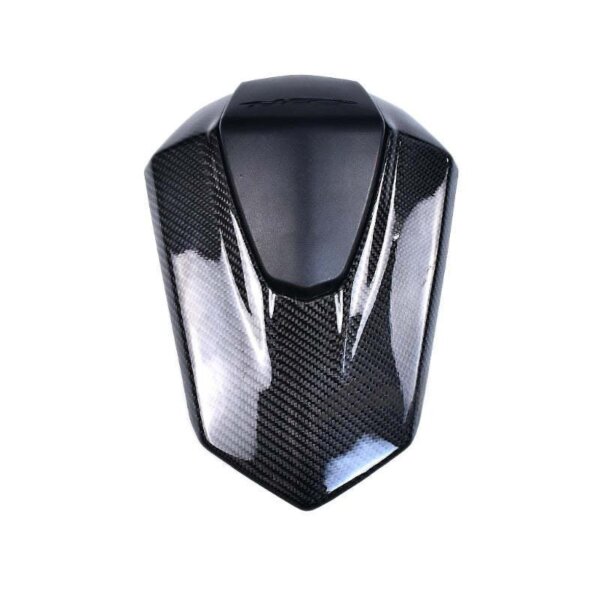
Honda Carbon Fiber Parts Manufacturer
OEM/ODM Honda carbon fiber parts for CBR1000RR, CBR1000RR-R Fireblade, CBR600RR, Africa Twin, CB, CBR650R, CBR500R and custom motorcycle projects.
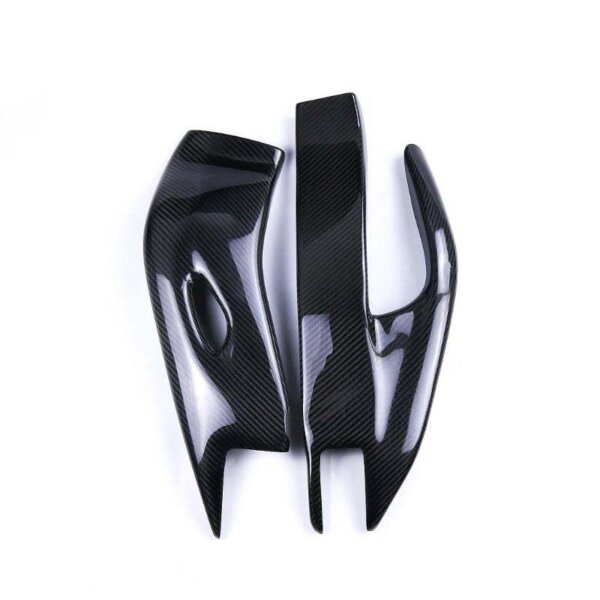
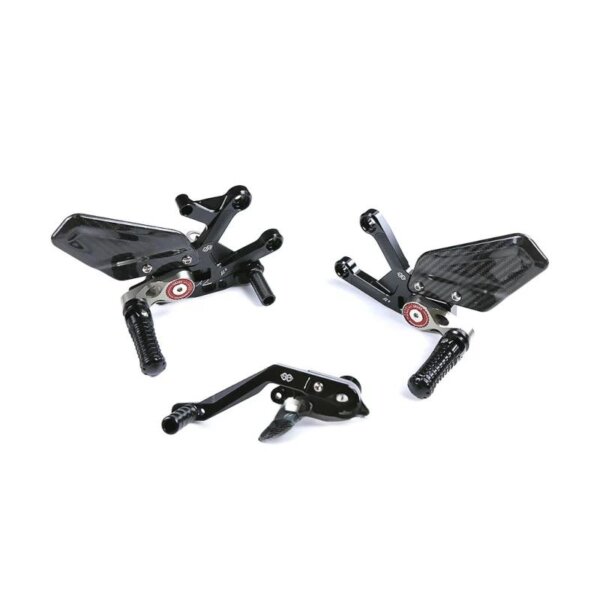
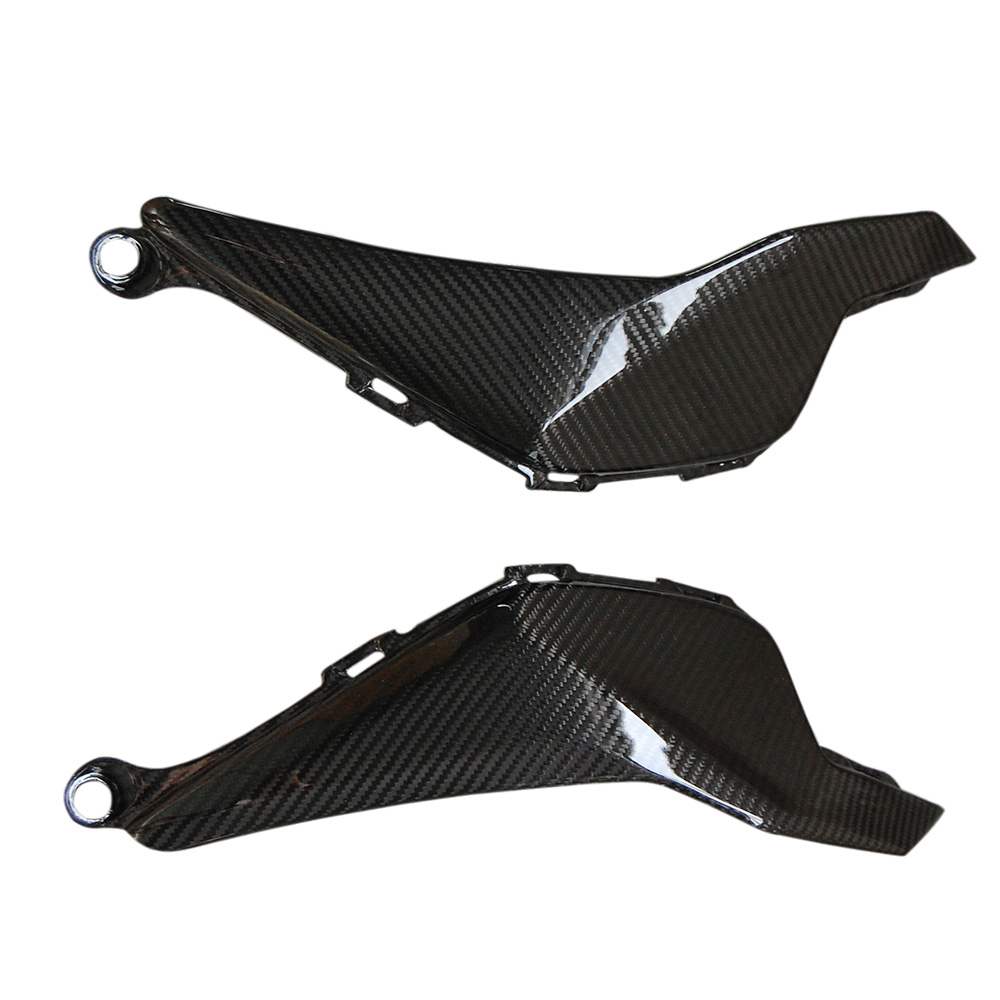
Custom Honda Carbon Fiber Motorcycle Parts — Factory Direct
As a carbon fiber motorcycle parts manufacturer in China manufacturing carbon fibre parts since 1998, we produce custom Honda carbon fibre parts for aftermarket brands, motorcycle parts distributors, tuning shops, racing teams and custom builders worldwide.
Honda sport bikes and racing platforms are well suited to carbon fibre upgrades because many non-structural bodywork parts can be replaced with lighter carbon components while maintaining a premium motorsport appearance. From the CBR600RR through to the CBR1000RR-R Fireblade SP and Africa Twin, Honda produces platforms across a wide range of riding categories — and carbon fibre parts are available for most of them.
Our Honda motorcycle carbon fibre parts cover sport bikes, superbikes, adventure motorcycles, naked bikes and custom racing projects. Applications include fairings, fenders, tank covers, seat cowls, swingarm protectors, frame covers, chain guards, heel guards, side panels, air intake ducts, engine covers, aero winglets and custom OEM/ODM components.
We support replacement-style carbon fibre parts and fully customized OEM/ODM development. Projects can start from STEP/STP files, original OEM samples, 3D scan data, engineering drawings or clear reference photos. For broader custom development, you can also view our custom carbon fiber manufacturing capabilities.
Honda Motorcycle Models We Support
We manufacture Honda carbon fibre parts for the following platforms:
Superbikes and Sport Bikes
- Honda CBR1000RR — all generations (2004–2019)
- Honda CBR1000RR-R Fireblade / Fireblade SP (2020–2025)
- Honda CBR600RR (2003–2025)
- Honda CBR650R (2019–2025)
- Honda CBR500R (2013–2025)
- Honda CBR300R / CBR250R
Naked and Street Bikes
- Honda CB1000R Neo Sports Café (2018–2025)
- Honda CB650R (2019–2025)
- Honda CB500F (2013–2025)
- Honda CB300R / CB125R
- Honda Hornet CB750 / CB1000 (2023–2025)
Adventure and Multi-Purpose
- Honda Africa Twin CRF1000L (2016–2019)
- Honda Africa Twin CRF1100L (2020–2025)
- Honda Transalp XL750 (2023–2025)
- Honda NC750X / NC750S (2014–2025)
- Honda VFR series (VFR800, VFR1200)
Custom and Specialty Projects
- Honda Monkey Z125 (custom / café racer applications)
- Honda custom racing and track-day motorcycle projects
- Honda RC213V-S (homologation and replica bodywork)
For model-specific projects, please supply the exact model, year, chassis version (standard vs SP vs HRC) and reference photos. Honda parts often vary between model years, regional versions and race/street configurations — precise fitment data is essential before mold development. Year ranges listed below reflect common production periods; regional availability varies by market.
Chassis code quick reference:
| Model | Chassis Code | Years |
|---|---|---|
| CBR1000RR Gen 1 | SC57 | 2004–2007 |
| CBR1000RR Gen 2 | SC59 | 2008–2016 |
| CBR1000RR Gen 3 | SC77 | 2017–2019 |
| CBR1000RR-R Fireblade | SC82 | 2020–2025 |
| CBR600RR Gen 1 | PC37 | 2003–2006 |
| CBR600RR Gen 2 | PC40 | 2007–2025 |
Honda Carbon Fibre Parts We Manufacture
Honda Carbon Fiber Fairing Kits, Race Bodywork and Aero Parts
We manufacture Honda carbon fibre fairing and bodywork for street, circuit and custom applications, including:
- Upper fairings and front nose sections
- Lower fairings and belly pans
- Side fairing panels
- Tail fairings and seat cowls / seat units
- Rear seat covers (solo cowl)
- Tank covers and knee grip pads
- Full race fairing kits
- Airbox covers and air intake tubes (HRC-style ducts)
- Custom aerodynamic winglets (OEM-profile and widened racing profiles)
- Screen surrounds and windscreen trim panels
- Inner fairing panels and clock / dashboard bracket supports
For CBR1000RR, CBR1000RR-R Fireblade and CBR600RR projects, full fairing kits and seat units are the highest-volume categories. Race fairing kits for the CBR1000RR-R are available with pre-drilled holes and pre-installed DZUS quarter-turn fasteners — the same hardware specification used by World Superbike and British Superbike teams for fast pit-lane bodywork changes.
Fender, Hugger and Protection Parts
- Front fenders (mudguards)
- Rear huggers / rear mudguards
- Chain guards
- Heel guards
- Swingarm protectors
- Frame covers and clutch covers
- Engine covers and cam covers
- Exhaust heat shields and silencer end caps
- Sprocket covers / chain case covers
- Radiator guards
- Fuel cap covers
- Key covers
- Number plate holders / tail tidy surrounds
Heel guards and swingarm protectors are among our highest-volume re-order SKUs for CBR1000RR distributors. We hold production tooling for all major CBR1000RR generations and can process repeat orders within 5–10 business days.
Custom Racing and OEM/ODM Components
For racing teams and bespoke projects, we develop Honda carbon fibre components from CAD files, original parts or scan data:
- Full and partial race fairing kits with DZUS fastener system
- HRC-style air intake ducts and airbox covers
- Lightweight aluminium subframe covers and race seat supports
- Custom tank extensions for improved ergonomics on circuit
- Aerodynamic winglets — OEM profile or custom race geometry
- Track-use protection covers and belly pan extensions
- Structural bracketry in forged carbon
- Private label motorcycle accessories
- Custom weave, custom branding or woven-logo layup
If the part has structural, heat-resistant or aerodynamic requirements, our engineering team reviews fiber layup direction, ply schedule, laminate thickness and resin system before production tooling is committed.
The Material Behind the Part: Carbon Fibre Grades Explained
This is the section most suppliers do not write, because explaining fiber grades honestly forces a conversation about quality that generic “premium carbon fiber” claims cannot survive.
Toray Fiber Grades: T300 vs T700 vs T800
The world standard for high-performance carbon fibre is the Toray T-series. The grade number reflects the quality of the polyacrylonitrile (PAN) precursor used in manufacture — a higher number means higher tensile strength and, in most cases, higher stiffness per unit weight.
| Fiber Grade | Tensile Strength | Tensile Modulus | Typical Use |
|---|---|---|---|
| Toray T300 | 3,530 MPa | 230 GPa | Entry-level structural, general aftermarket |
| Toray T700 | 4,900 MPa | 230 GPa | Premium motorcycle/sporting goods, our standard spec |
| Toray T800 | 5,490 MPa | 294 GPa | Aerospace, high-load structural parts |
T700 is 38.8% stronger in tensile strength than T300, at comparable weight and modulus. For motorcycle fairings and bodywork, where impact resistance during a slide matters as much as static strength, T700’s higher elongation at failure (2.1% vs 1.5% for T300) means parts deform before fracturing rather than shattering on first contact with asphalt.
The labelling problem: The phrase “T300 carbon fiber” appearing on an Alibaba listing does not mean Toray T300 fiber is in the tow. Fiber provenance requires a material traceability certificate, lot number and tensile verification test. When evaluating suppliers, ask for material certificates — not product photographs.
We use T700-equivalent or higher grade prepreg for all premium Honda motorcycle bodywork, with material traceability documentation available on request for OEM/ODM clients.
Carbon Fibre vs ABS Plastic vs Fibreglass: A Direct Comparison
Many Honda aftermarket parts are available in three materials. Understanding the real differences helps dealers and distributors position each product tier correctly for their customers.
| Property | ABS Plastic | Fibreglass (FRP) | Carbon Fibre (prepreg) |
|---|---|---|---|
| Density | 1.05 g/cm³ | 1.8 g/cm³ | 1.5–1.6 g/cm³ |
| Tensile Strength | 40–50 MPa | 200–400 MPa | 600–900 MPa (composite) |
| Weight (fairing panel, relative) | 100% | 85–90% | 40–50% |
| Impact Resistance | Flexible, cracks at low energy | Shatters, sharp edges | Deforms progressively |
| UV Stability | Poor without coating | Good | Excellent (with 2K PU clearcoat) |
| Surface Finish | Painted | Gelcoat or painted | Clearcoated carbon weave |
| Repairability | Easy, filler and paint | Resin and filler | Specialist carbon repair |
| Price (relative) | 1× | 2–3× | 5–8× |
ABS is the correct choice for OEM replacement where cost is the primary constraint. Fibreglass suits riders who want a visual upgrade over OEM without paying carbon prices. Carbon fibre is specified for weight-sensitive applications — race use, performance road riding, premium OEM/ODM products — and for buyers whose customers want the definitive aesthetic statement.
Estimated Weight Savings by Part Category
The following figures are representative estimates comparing OEM Honda ABS bodywork weights against 3K prepreg carbon fibre equivalents. Actual weights vary by model year, regional specification and laminate configuration. For weight-critical racing projects, we can supply first-article weighing data and laminate thickness records before production is confirmed.
| Part | OEM ABS Weight (approx.) | CF Prepreg Weight (approx.) | Typical Reduction |
|---|---|---|---|
| CBR600RR front fairing upper | 2.1–2.4 kg | 0.85–1.1 kg | ~55% |
| CBR1000RR full fairing kit | 8.5–9.5 kg | 3.8–4.5 kg | ~55% |
| CBR1000RR-R seat unit / tail | 1.8–2.2 kg | 0.75–0.95 kg | ~57% |
| CBR1000RR tank cover | 1.2–1.4 kg | 0.50–0.65 kg | ~55% |
| CBR1000RR front fender | 0.55–0.70 kg | 0.18–0.25 kg | ~65% |
| CBR1000RR rear hugger | 0.45–0.55 kg | 0.16–0.22 kg | ~62% |
| CBR1000RR heel guards (pair) | 0.30–0.40 kg | 0.11–0.16 kg | ~60% |
| CBR1000RR belly pan | 1.5–1.8 kg | 0.65–0.85 kg | ~55% |
For a full carbon fibre bodywork conversion — fairings, fenders, seat unit, tank cover and hugger — total savings of 4.5–6.0 kg are achievable on the CBR1000RR platform depending on laminate specification. Mass concentrated in high-mounted or unsprung bodywork components delivers disproportionate handling benefit relative to the same weight removed from low and central chassis locations.
Dry Carbon, Wet Carbon and Forged Carbon: Which Process for Which Part?
Different Honda motorcycle parts require different manufacturing processes. Selecting the right one depends on part geometry, required surface quality, production volume, budget and end-use environment.
Dry Carbon Prepreg / Autoclave Curing
Prepreg carbon fibre — fabric pre-impregnated with epoxy resin at precisely controlled ratios — is the industry standard for structural and cosmetically-critical motorcycle parts. Resin content is held to ±2%, producing a consistent, void-free laminate. Parts cure in our autoclaves at 120–135 °C under 6–8 bar pressure for 60–90 minutes.
The void content argument in plain numbers:
| Curing Method | Pressure | Void Content | Interlaminar Shear Strength | Surface Consistency | Typical Use |
|---|---|---|---|---|---|
| Autoclave (prepreg) | 6–8 bar | < 1% | High | Excellent | Race and OEM-grade bodywork |
| Hot press (compression mold) | 10–20 bar | 1–3% | Very good | Very good | High-volume structural parts |
| Vacuum oven bag (wet layup) | 0.8–1 bar | 3–8% | Moderate | Variable | Budget aftermarket covers |
Void content matters because each void is a stress concentrator. At 5% void content — common in low-cost wet layup parts — interlaminar shear strength can be reduced by 20–35% versus an equivalent autoclave laminate. These parts may pass a visual inspection but fail under the thermal cycling and vibration loads of normal road use within 18–24 months.
Dry carbon prepreg / autoclave is specified for: racing fairings and race fairing kits, tank covers, structural OEM/ODM projects, any application where batch-to-batch cosmetic consistency is non-negotiable.
Wet Carbon / Vacuum Infusion
Wet carbon or vacuum infusion delivers genuine carbon fibre appearance at a more flexible cost structure. It suits larger flat or gently curved panels, fenders, guards and trim parts where production volumes are modest and autoclave tooling investment would not be recovered at the expected order quantities.
For Africa Twin fenders and frame panel accessories, Transalp XL750 side covers, NC750X trim parts and CB650R/CBR650R accessories, wet carbon or infusion is frequently the economically correct choice — delivering the aesthetic the end customer wants at a price point that makes distributor margins viable.
Forged Carbon Fibre
Forged carbon — short-strand chopped carbon pressed in a closed mold under high compressive force — was originally developed by Lamborghini for load-bearing automotive structural components. It has since migrated into premium motorcycle accessories, where its distinctive swirling, organic surface pattern differentiates products visually from standard twill weave.
Pound for pound, forged carbon delivers the highest compressive strength of the three processes. It is suited to heel guards, swingarm protectors, tank side inserts, dashboard trim and custom accessories where structural integrity and visual distinctiveness are both required. It is increasingly specified by European aftermarket brands selling into the premium naked bike and adventure touring segment.
Surface Finish Options
All parts are available in:
| Finish | Appearance | Gloss Level | Notes |
|---|---|---|---|
| Gloss clearcoat | Wet, high-shine | 90+ GU | Machine-polished 2K PU; 60–65 Shore D |
| Matte clearcoat | Satin / flat | 5–15 GU | Same base chemistry, flatting agent modified |
| 3K twill weave | Diagonal hatching | Either | Classic motorsport pattern; best drapeability |
| 1×1 plain weave | Fine uniform grid | Either | More restrained; preferred by European buyers |
| Forged carbon | Swirling, organic | Either | Highest visual distinctiveness |
| Custom / woven logo | To specification | Either | For OEM/ODM clients; branding in the laminate |
Clearcoat durability: Our standard 2K polyurethane clearcoat reaches 60–65 Shore D after full cure. Softer single-stage clearcoats — found in budget parts — typically achieve 40–50 Shore D, scratching visibly in the first season of use. For buyers in high-UV markets (Australia, Middle East, Southeast Asia), we offer a ceramic-infused topcoat which adds 3–4 production days but measurably extends service life.
Both gloss and matte clearcoats use identical base chemistry. The performance difference between them is nil; the visual difference is significant. This is worth explaining to end customers who assume matte is a cost reduction.
Our Manufacturing Process: 7 Steps from Mold to Shipment
Step 1 — Mold Design and Fabrication
Molds are produced in CNC-machined aluminium (for lower-volume tooling) or P20 tool steel (for production runs expected to exceed 10,000 cycles). Every mold is digitally scanned and verified against OEM geometry data or a validated reference part before any material is cut. For CBR1000RR and CBR600RR heritage tooling, we have been refining the same base molds for multiple production generations — dimensional accuracy improves with each iteration.
Step 2 — Prepreg Cutting
Prepreg sheets are cut on CNC flatbed cutters to ±0.3 mm positional tolerance. Each panel follows a defined ply schedule — typically 2–3 plies (nominal 1.0–1.5 mm laminate thickness) for fairing panels, 4+ plies for structural protectors. Cutting files are archived permanently, making repeat orders dimensionally identical to the original batch.
Step 3 — Layup
Operators lay prepreg plies into the mold in sequence, aligning weave direction to specification. For visible surfaces, the outermost cosmetic ply is laid face-down against the polished mold surface — this face becomes the show surface after demolding, achieving the finest possible finish without high-build primer or post-process filling.
Step 4 — Autoclave or Hot Press Curing
Parts cure at 120–135 °C under controlled pressure. Our autoclaves are calibrated quarterly and data-logged during every production cycle. Cure data is retained for 24 months as part of batch traceability records, available to OEM clients on request.
Step 5 — Demolding and CNC Trimming
After cooling, parts are demolded and trimmed on CNC routers. Mounting holes, DZUS fastener positions and bolt holes are machined at this stage — eliminating the ±1–2 mm positional variance that accumulates in hand-drilled or drill-jig-located parts across a production batch.
Step 6 — Surface Preparation and Clearcoat
Parts are sanded progressively from 400 to 2000 grit, cleaned in an ultrasonic bath and clearcoated in a climate-controlled spray booth. Gloss parts receive a final machine polish. Matte parts skip the polish stage; no additional process steps are involved.
Step 7 — Inspection and Pre-Shipment Documentation
Each part is visually inspected under raking light and dimensionally verified at key reference points. For wholesale and OEM orders, we provide pre-shipment inspection photos and, on request, batch material certificates and autoclave data logs. Parts with visible surface defects, incorrect trimming or fitment issues are reworked or rejected before packing.
How to Identify Genuine Quality Carbon Fibre Parts
Whether evaluating our parts or any other supplier, these six questions separate technical capability from marketing language. No credible manufacturer will refuse to answer them.
1. What is the fiber areal weight (FAW) of the prepreg? For standard 3K twill fairing parts, 200–240 g/m² is the appropriate range. FAW below 160 g/m² indicates ultra-light race construction requiring more plies for structural thickness. FAW significantly above 300 g/m² suggests the part is over-heavy for a bodywork application.
2. What fiber grade and resin system are used, and can you provide material certificates? Epoxy prepreg on T700-equivalent or higher fiber is the baseline for durable motorcycle bodywork. Room-temperature-curing epoxy is weaker under sustained heat — relevant for parts near exhausts or in high-ambient climates. Material certificates with lot numbers allow grade verification rather than relying on a label.
3. Can you supply a cross-section sample or destructive test piece? A polished cross-section shows void content, fiber consolidation and ply count clearly. A supplier who hesitates has something to hide. Request this before committing to a bulk order with any new supplier.
4. What is the Shore D hardness of the cured clearcoat? 2K PU clearcoat at full cure should reach 60–65 Shore D. Values below 50 Shore D indicate a single-stage or diluted clearcoat that will scratch in the first season of use. This single number is a fast proxy for finish durability without laboratory testing.
5. Are mounting holes and DZUS positions CNC-machined or hand-drilled? CNC machining holds hole positions to ±0.3 mm across every unit in a batch. Hand-drilling introduces ±1–2 mm positional variance that compounds across multi-piece installations — particularly visible on race fairing kits with 20+ fastener positions.
6. Do you retain autoclave data logs and batch traceability records? Retained cure logs, ply schedules and inspection records per batch indicate a manufacturing system operating to production standards. Their absence suggests parts are being produced without documented process control.
Carbon Fibre Part Care and Maintenance
This section addresses the questions that distributors’ end customers most frequently ask — and that almost no supplier documents anywhere.
Cleaning: Use mild pH-neutral soap and a microfibre cloth. Rinse with clean water. Avoid petroleum-based solvents (acetone, brake cleaner, fuel) directly on clearcoated surfaces — these can soften or craze the clearcoat.
Waxing and protection: Standard automotive carnauba wax or a ceramic spray coating applied to the clearcoat surface extends UV protection and makes the part easier to clean. Apply every 3–6 months for gloss parts; matte clearcoat should not be waxed with gloss products as this changes the surface sheen.
UV protection: The clearcoat protects the underlying epoxy resin from UV degradation. If the clearcoat is scratched or chipped and the repair is not attended to, UV exposure begins degrading the epoxy — manifesting as yellowing visible through the weave within 12–24 months. For this reason, minor clearcoat chips should be touched up promptly with a compatible 2K clearcoat pen.
Impact damage assessment: Carbon fibre does not dent — it either survives a low-energy impact intact or shows visible fibre fracture (white stress marks in the weave) at higher energies. White stress marks that do not penetrate through the laminate are surface-layer failures and can be stabilised with penetrating epoxy before re-clearcoating. Through-laminate fractures require panel replacement or professional carbon repair.
Matte finish maintenance: Matte clearcoat should be cleaned with matte-specific detailing products. Standard polish or wax compounds will fill the micro-surface texture and locally restore gloss — permanently changing the panel’s appearance in that area.
Our Experience with Honda Carbon Fiber Motorcycle Projects
Honda motorcycle parts require more than a good-looking carbon surface. CBR fairings demand accurate edge trimming, precise mounting hole positions and consistent panel alignment lap after lap. Fireblade race bodywork must manage airflow around integrated winglets and maintain panel-to-panel alignment under aerodynamic load at race speeds. Africa Twin and Transalp accessories face road grit, temperature cycling and UV exposure that pure race parts are not designed to survive.
As a factory, we review each project according to part function, installation method, heat exposure, required stiffness, surface finish and expected production volume — not just appearance:
- Racing fairings and aerodynamic parts → dry carbon prepreg, autoclave curing, DZUS hardware, CNC-trimmed mounting holes
- Tank covers, seat units and visual upgrade parts → prepreg for premium OEM/ODM, wet carbon for cost-effective distributor stock
- Fenders, huggers, guards and frame covers → wet carbon or forged carbon where the aesthetic goal is met at a viable price point for the end market
- Custom Honda motorcycle accessories → process recommendation after reviewing part geometry, volume and target retail price
This project-based process matching — not just “we make carbon fiber” — is why distributors and aftermarket brands return to us for repeat programs. The right process for the part, not the most expensive process for every part.
Honda Carbon Fiber Accessories for Street and Racing Use
Street riders, track-day enthusiasts and full racing teams have different requirements from the same part category. A rear hugger for a street CBR650R needs UV stability, rattle-free fitment and a finish that stays presentable after 10,000 miles of road use. The same part for a BSB-prepared CBR1000RR needs precise DZUS positions, minimal weight and fast changeability.
We produce both. Specifying which application your end customer uses allows us to recommend the correct laminate, hardware and finish — and avoid overselling a racing specification to a street buyer who will not benefit from the premium.
Custom Honda Motorcycle Parts for OEM/ODM Brands
For aftermarket brands developing private label Honda carbon fibre product lines, we support the full development cycle: initial feasibility review, mold design consultation, first-article sample, fit verification, production approval and batch manufacture. OEM clients receive batch material certificates, autoclave data logs and pre-shipment inspection photos as standard documentation.
Why Work Directly with a Carbon Fibre Factory?
Many online retailers stock finished Honda carbon fibre accessories, but aftermarket brands, distributors and racing teams consistently find that retail-sourced stock does not meet B2B requirements for specification control, MOQ flexibility or brand differentiation. Working directly with a manufacturer provides:
- OEM/ODM development — your design, your brand, your specification. Parts that do not exist in the aftermarket yet.
- Custom mold making — we invest in tooling for your program; you are not dependent on another brand’s product decisions.
- Process selection — dry carbon, wet carbon or forged carbon matched to the budget and performance requirement of your end market segment.
- Batch consistency — every unit in a 500-piece order is produced from the same mold, same ply schedule, same cure cycle. Not sourced from multiple sub-suppliers.
- Scalable production — prototype samples to FCL container orders without changing supplier.
- Private label packaging — branded boxes, hang tags, installation instruction inserts in your language.
- No intermediary margin — the difference between factory pricing and distributor pricing is your margin to keep.
- Technical support — material recommendations, fitment review, ply schedule consultation before mold commitment.
Fitment and Quality Control
Motorcycle carbon fibre parts require precise dimensional control — small errors affect installation and, in the case of race fairing kits, affect the time it takes to change bodywork in a pit lane. Our fitment QC programme:
- Mold geometry verified against OEM reference before first production shot
- Ply schedule adherence verified by layup supervisor sign-off per batch
- Nominal laminate thickness ± 0.2 mm on fairing panels
- Mounting hole position ± 0.3 mm (CNC machined)
- Edge trimming to part outline ± 0.5 mm
- Clearcoat inspected under raking light; orange peel, fisheye and contamination rejection
- DZUS fastener pull-out tested on race fairing samples
- Trial fitment on reference motorcycle where tooling dictates
- Pre-shipment inspection photos supplied for all wholesale orders
For parts with strict fitment requirements — particularly full race fairing kits and model-specific seat units — we strongly recommend supplying an original OEM sample or verified STEP/STP file before mold deposit. This eliminates the risk of mold rework after first-article inspection.
Information Required for a Quotation
To quote Honda carbon fibre motorcycle parts accurately, please send:
- Exact motorcycle model, year and chassis version (standard / SP / HRC / racing)
- Part name and annual quantity estimate
- Reference photos or engineering drawings
- STEP/STP files if available
- Availability of an original OEM sample
- Required process: dry carbon (autoclave), wet carbon or forged carbon
- Surface finish: gloss or matte, weave pattern
- Application: street, circuit, track day, display or OEM replacement
- DZUS fastener hardware required: yes/no
- Fitment criticality: cosmetic only vs. precision-fit installation
- Destination country (for shipping estimate and any certification requirements)
For new custom parts, tooling cost and unit price depend on part size, structural complexity, surface requirements, production volume and manufacturing process. We provide a detailed quotation — including mold amortization cost, first-article sample cost and production unit price — within 3–5 business days of receiving complete reference information.
FAQ: Honda Carbon Fibre Motorcycle Parts
Can you manufacture Honda CBR1000RR-R Fireblade carbon fibre parts?
Yes. We produce full fairing kits, seat units, tank covers, belly pans, rear huggers, heel guards, chain guards, air intake tubes and frame covers for the SC82 Fireblade (2020–2025). Race fairing kits are available with DZUS quarter-turn fasteners pre-installed and all holes pre-drilled, including two winglet options — OEM-profile and widened racing geometry.
Can you make carbon fibre fairings for the older CBR1000RR (SC57, SC59, SC77)?
Yes. We hold established tooling for all CBR1000RR generations. Older-generation parts have fully amortized mold costs, which typically translates to more competitive per-unit pricing for distributors building heritage-model product lines.
Can you make Honda CBR600RR carbon fibre fairings?
Yes. We cover the CBR600RR across all generations (PC37: 2003–2006; PC40: 2007–2025) including upper fairings, lower fairings, seat cowls, belly pans, front fenders and rear huggers.
Do you support the Honda Africa Twin and Transalp XL750 in carbon fibre?
Yes. For the Africa Twin (CRF1000L and CRF1100L) and Transalp XL750, we manufacture fenders, side panel trims, tank protectors, frame guards and engine covers. These models typically use wet carbon or forged carbon to balance cost and aesthetic — the riding profiles prioritise protection and weight saving over pure cosmetic consistency.
Do you support Honda naked bikes — CB1000R, CB650R, Hornet?
Yes. For the CB1000R Neo Sports Café and CB650R, carbon fibre accent parts (tank covers, rear huggers, frame inserts, engine covers) in plain weave matte finish are the most requested specifications — complementing the bikes’ monochrome styling language. For the CB750 and CB1000 Hornet (2023+), we are actively developing tooling for fenders, tank side panels and underseat covers.
What is the real difference between your dry carbon and wet carbon Honda parts?
Autoclave-cured prepreg (dry carbon) achieves void content below 1%, controlled laminate thickness and the highest batch-to-batch surface consistency. It is specified for parts where cosmetic uniformity across 50–500 units must be guaranteed. Wet carbon or vacuum infusion produces genuine carbon fibre appearance at lower unit cost — but void content of 3–8% means reduced long-term interlaminar strength and greater surface variability across a production batch.
What fiber grade do you use?
We use T700-equivalent or higher grade prepreg for all premium Honda motorcycle bodywork. T700 is 38.8% stronger in tensile strength than T300 (4,900 MPa vs 3,530 MPa) — the grade commonly used in budget aftermarket parts. Material certificates with lot numbers are available for OEM/ODM clients.
Can you produce Honda carbon fibre parts with DZUS fasteners pre-installed?
Yes. For race fairing kits requiring rapid bodywork changes, we install DZUS quarter-turn fasteners and pre-drill all mounting positions during the CNC trimming stage. This is standard specification for BSB, WSBK and club-racing teams.
Can you produce private label Honda carbon fibre parts?
Yes. We support OEM/ODM production for aftermarket brands, distributors, racing teams and tuning shops. Custom packaging, woven-logo laminates, branded clearcoat finishes and installation instruction inserts in your language are all available.
What is your MOQ for Honda carbon fibre parts?
For catalogue parts with existing tooling: from 1 piece (sample order) up to full production runs. For new custom mold development, we recommend agreeing on expected production volume before committing to tooling, as the mold investment is amortized against the first production batch. There is no minimum on re-orders from existing tooling.
How long does production and shipping take?
In-stock catalogue parts: 5–10 business days. Made-to-order or first-production-run parts: 2–4 weeks after sample approval. Air freight to Europe, the UK, North America or Australia: 3–7 business days. Sea freight LCL and FCL is available for container orders at significantly lower per-unit landed cost.
Are your carbon fibre parts road-legal?
Carbon fibre bodywork — fairings, fenders, seat cowls, covers — is cosmetic aftermarket replacement parts that do not affect a vehicle’s type approval in most markets. Regulations vary by country; buyers are responsible for confirming compliance with local road regulations. Structural components such as subframe reinforcements or bracket replacements may require engineering sign-off depending on jurisdiction. For display or track-use-only applications, no road certification is required.
Do you hold any quality certifications?
Our production facility operates under ISO 9001 quality management system standards. Material traceability records, autoclave data logs and batch inspection records are retained and available to OEM clients for supply chain audit purposes.
About ChinaCarbonFibers
Since 1998, we have manufactured carbon fibre composite parts across automotive, motorcycle, aerospace, marine and industrial applications. Our facility is equipped with autoclave curing, CNC-machined aluminium and P20 tool steel mold tooling, CNC flatbed prepreg cutting systems, CNC trimming, climate-controlled clearcoat spray booths and dedicated inspection stations. Learn more about our factory background on the About ChinaCarbonFibers page.
Our carbon fibre motorcycle parts are suitable for professional racing teams, track-day projects, aftermarket brands, regional racing series and custom motorcycle builds. Our client base includes aftermarket accessory brands, motorcycle distributors and parts wholesalers across Europe, the UK, North America, Australia, the Middle East and Southeast Asia. In addition to motorcycle projects, we also manufacture carbon fiber car parts for automotive aftermarket brands, tuning shops and OEM/ODM programs.
Working directly with the factory eliminates intermediary margin and connects you to the production documentation — material certificates, cure logs, batch inspection records — that tells you whether a part meets specification rather than assuming it does.
Contact ChinaCarbonFibers with your Honda carbon fibre parts requirement. We respond to all wholesale and OEM/ODM enquiries within 24 hours.