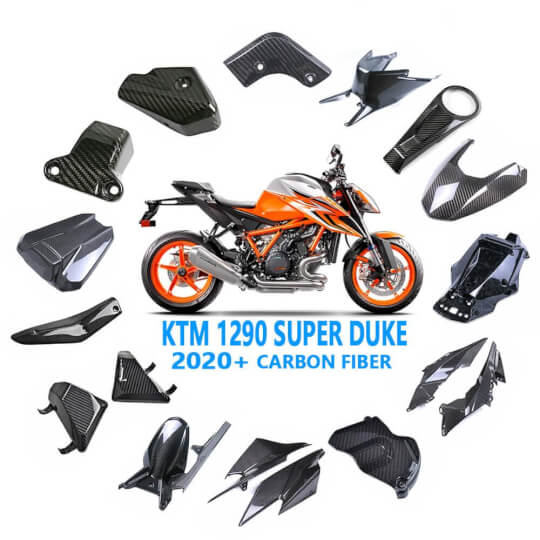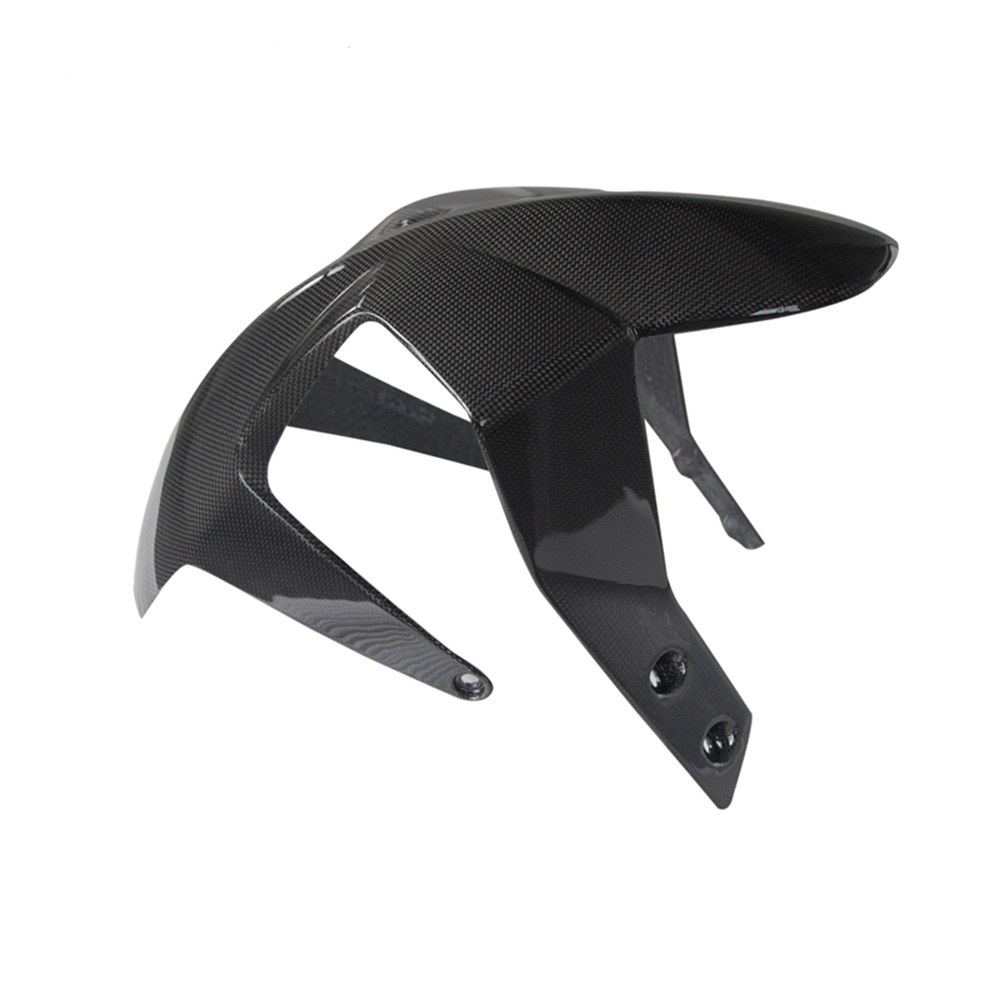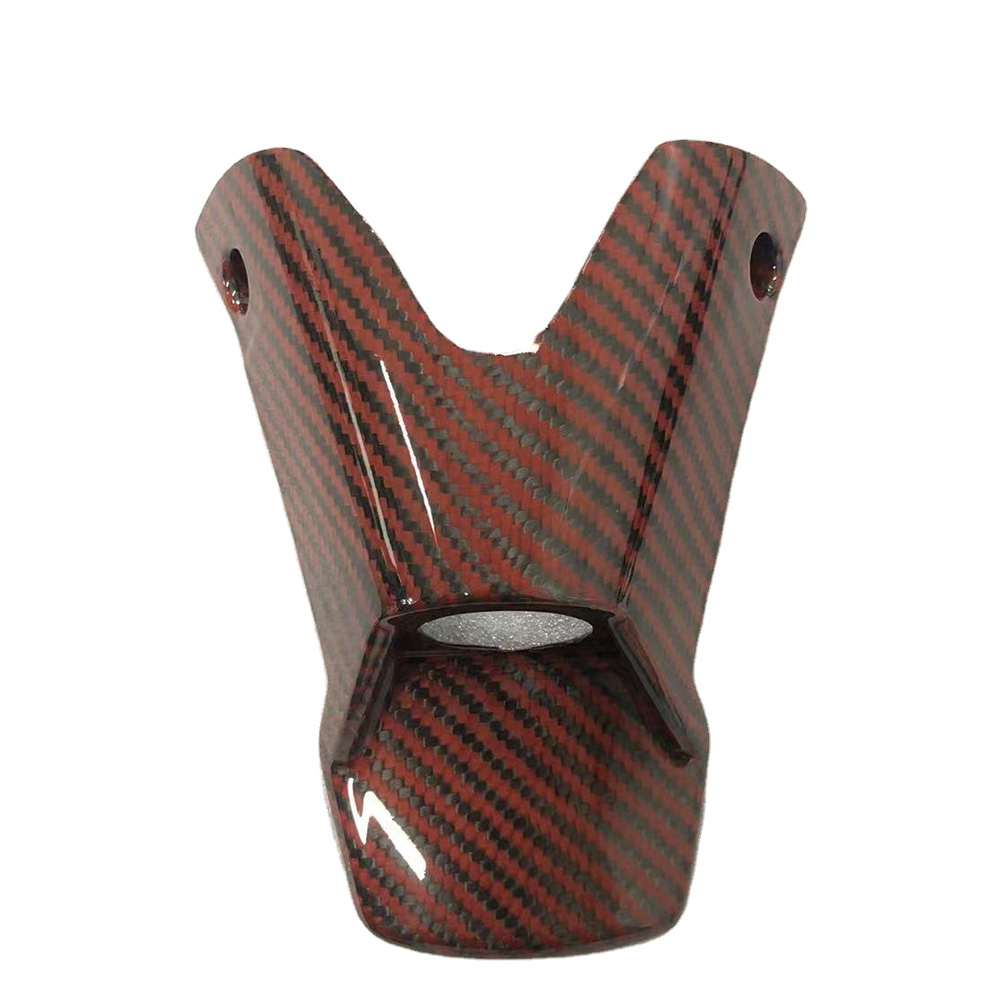
Reviewed by the Chinacarbonfibers Co., Ltd. engineering team — manufacturers of custom CFRP components for automotive, motorcycle, UAV, sports equipment, and industrial applications using prepreg autoclave, compression molding, wet layup, vacuum bagging, bladder molding, and CNC trimming.
Quick answer: Carbon fiber is usually stronger than steel by weight, but not automatically stronger in every direction or every load case. CFRP (carbon fiber reinforced polymer) delivers its advantage when the load direction, fiber orientation, and laminate design are engineered correctly. Steel remains the better choice for low-cost brackets, high-impact structures, weldable frames, and parts that need to survive rough field repair.
The rest of this guide breaks down exactly what “stronger” means, where each material wins, what it actually costs, and how a manufacturer decides between them on a real project. For a primer on what carbon fiber is actually made of, see our carbon fiber background guide.
Comparison Table: Carbon Fiber vs Steel
| Property | CFRP Composite | Steel | What It Means in Practice |
|---|---|---|---|
| Density | 1.5–1.9 g/cm³ | ~7.8–7.9 g/cm³ | CFRP is roughly 4–5x lighter by volume |
| Tensile strength | 600–3,500 MPa (layup-dependent) | 400–1,200 MPa (mild to high-strength alloy) | CFRP is strongest along the fiber direction; steel is more uniform |
| Specific strength (strength ÷ density) | 5–10x higher than high-strength steel | Baseline | The real reason CFRP wins in weight-sensitive parts |
| Elastic modulus (stiffness) | 50–150+ GPa, tunable by layup | ~200 GPa, fixed | Steel stiffness is predictable everywhere; CFRP stiffness can be tailored but drops sharply off-axis |
| Compressive strength | Moderate, layup-dependent | High | Steel handles crushing/impact loads more forgivingly |
| Behavior at failure | Brittle — fails suddenly, can hide internal damage | Ductile — bends and yields before breaking | Steel gives visible warning before failure; CFRP often doesn’t |
| Fatigue resistance | Excellent under proper load direction | Good, but subject to metal fatigue over cycles | CFRP can outperform steel in cyclic tensile loading |
| Corrosion | Does not rust | Rusts unless coated/treated | CFRP suits wet, outdoor, or marine environments |
| Thermal expansion | Very low, near-zero in fiber direction | Moderate | CFRP holds dimensional tolerance better across temperature swings |
| Repairability | Requires bonding/patch repair, harder in the field | Weldable, easy field repair | Steel wins for equipment needing quick on-site fixes |
| Manufacturing cost | Higher — tooling, layup labor, cure cycle | Lower — stamping, welding, widely available | Steel wins on unit cost, especially low volume |
| Directionality | Anisotropic — properties change with fiber angle | Isotropic — same in all directions | This is the single most misunderstood difference between the two materials |
Values vary by resin system, fiber grade (standard modulus vs high modulus), weave, and steel alloy. Typical values above are based on commonly used CFRP laminates and commercial steel grades; actual performance should always be confirmed against material datasheets, the specific laminate design, and part-level testing. Treat this table as a planning reference, not a substitute for testing your specific part.
What Does “Stronger Than Steel” Actually Mean?
This is the part most comparison articles skip, and it’s the part that actually matters for a real design decision.
- By weight: carbon fiber wins decisively. This is the strength-to-weight (specific strength) comparison, and it’s the number most marketing claims are quietly based on.
- By volume: not guaranteed. A thick steel section can still out-resist a thin CFRP laminate under the same load.
- Along the fiber direction: CFRP is extremely strong — this is where those 3,000+ MPa numbers come from.
- Across the fiber direction (90° to the fibers): CFRP strength drops dramatically, sometimes to a fraction of the in-line value. This is the anisotropy problem, and it’s why a laminate schedule is not optional — it’s the whole engineering exercise.
- Under impact or compression: steel usually still wins. It deforms and absorbs energy; CFRP tends to crack or delaminate.
- Around bolt holes, inserts, and edges: steel tolerates local stress concentration far better unless the CFRP part has been specifically reinforced there.
So the honest, engineering-accurate statement is: carbon fiber is stronger than steel when the load case, fiber orientation, and laminate design are matched to the application — not automatically, and not in every direction.
Manufacturer’s note: We do not recommend copying a steel part’s thickness directly into a CFRP design. A 2 mm steel bracket may need a different wall thickness, added local reinforcement, or metal inserts depending on load direction and how the part is fastened. Thickness matching is one of the most common mistakes in a steel-to-composite conversion.
Weight Difference: A Practical Calculation
To make the density difference concrete:
- 1 m² of 1 mm steel sheet weighs approximately 7.8 kg
- 1 m² of 1 mm CFRP laminate weighs approximately 1.4–1.9 kg
That’s roughly a 70–80% weight reduction for the same panel area and thickness — before any redesign for stiffness matching. In real parts, the final weight saving is usually lower than this raw number because a CFRP replacement is rarely built at the same thickness as the steel original.
Strength and Stiffness: Why Fiber Direction Is the Whole Story
Steel is isotropic — pull it, push it, or twist it from any angle and it behaves the same way. That predictability is why engineers have relied on it for over a century.
Carbon fiber composites don’t work that way. Performance depends entirely on how the layup is engineered:
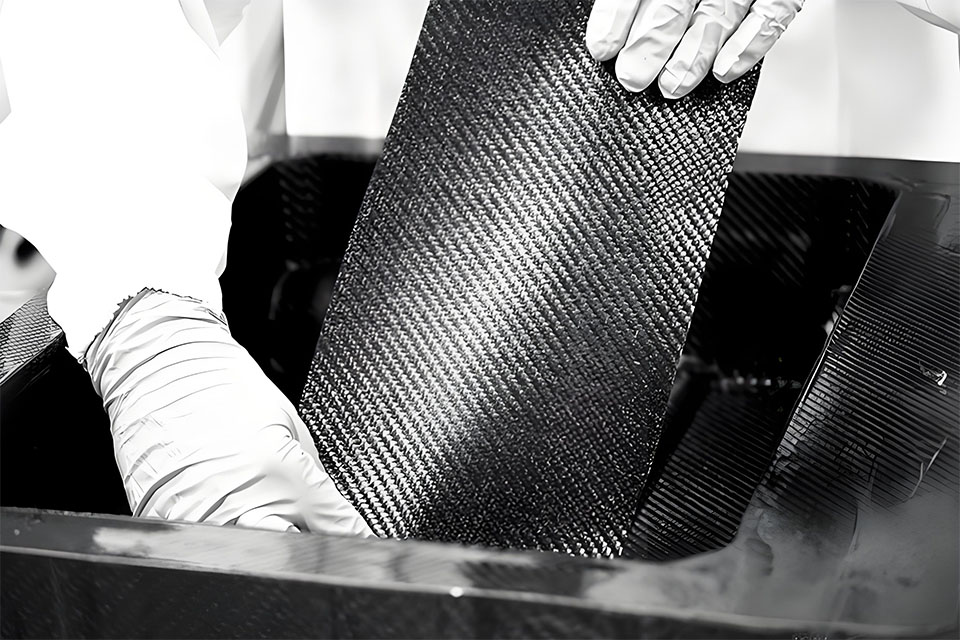
- Unidirectional (UD) layers — maximum strength and stiffness along one axis, weak across it. Used where load direction is well known and constant.
- 0°/90° woven fabric — balanced strength in two perpendicular directions, good for flat panels under mixed loading.
- ±45° layers — added specifically to resist torsion and shear, common in tubes and structural sections.
- Quasi-isotropic layups (combining 0°, 90°, ±45°) — approximate steel-like uniform behavior, at the cost of some peak strength in any single direction.
A visible 3K twill weave on a cosmetic panel is not the same engineering product as a structural laminate built with UD plies and a defined stacking sequence. This distinction is one of the most common points of confusion for buyers moving from steel to composites.
Failure Mode: Steel Bends, Carbon Fiber Cracks
This difference has real consequences for design and safety margins.
Steel yields before it breaks — it visibly bends, giving a warning sign of overload. CFRP typically stores elastic energy right up to its failure point, then fails abruptly with little or no visible warning. Impact damage can also be internal and invisible from the surface (delamination between plies), which is why aerospace and motorsport programs use non-destructive inspection methods rather than relying on visual checks alone.
Practical implications for parts like skid plates, splitters, drone frames, or protective covers:
- Add local reinforcement (extra plies, ribs, or hybrid layers) at high-risk impact zones
- Avoid placing load-bearing holes or fasteners too close to a laminate edge without reinforcement
- Inspect CFRP parts after any hard impact, even if there’s no visible surface damage
- For safety-critical impact zones, a carbon/aramid hybrid layup is sometimes a better choice than pure carbon fiber

Cost Difference: Why Carbon Fiber Costs More Than Steel
Carbon fiber’s higher cost isn’t a single line item — it comes from several factors stacking together:
- Raw material cost — carbon fiber tow and prepreg are far more expensive per kilogram than steel sheet or bar stock.
- Labor-intensive layup — hand layup or prepreg placement takes significantly more skilled labor time than stamping or cutting steel.
- Tooling cost — a composite mold (and often an autoclave or press cycle) represents a real upfront investment that steel fabrication rarely requires.
- Cure cycle time — autoclave and oven cure cycles add hours per part, compared to the near-instant forming of stamped steel.
- Low-volume penalty — mold and setup costs are amortized over the run size, so small batches of CFRP parts carry a much higher cost per piece than the equivalent steel part.
Carbon fiber becomes cost-justified when weight reduction, corrosion resistance, fatigue life, or premium appearance has measurable value to the end application — for example, a lighter UAV frame extending flight time, or a corrosion-free panel eliminating recurring maintenance. For simple, high-volume, low-load brackets, steel usually remains the more economical choice.
Carbon Fiber vs Stainless Steel
Buyers comparing materials for outdoor or corrosive environments often mean stainless steel, not mild steel — the comparison is slightly different:
- Stainless steel has significantly better corrosion resistance than mild steel, but CFRP does not rust the way steel does — although outdoor cosmetic parts may still benefit from a UV-resistant clear coat, since resin and surface finish can degrade under prolonged UV exposure even though the fiber itself does not corrode.
- CFRP remains roughly 4–5x lighter than stainless steel by volume, so the weight advantage holds.
- Stainless steel is still the better choice for threaded, welded, or high-temperature structures where CFRP’s resin system would exceed its thermal limit.
- CFRP is generally the better choice for lightweight covers, panels, tubes, and outdoor components that don’t need welding or high-temperature exposure.
- One detail worth noting: carbon fiber in direct contact with certain metals (particularly aluminum) in a wet environment can cause galvanic corrosion of the metal. This should be considered in fastener and insert material selection, not just in the composite design itself.
Carbon Fiber Tubes vs Steel Tubes
Tubular structures are one of the clearest use cases for carbon fiber, and the comparison depends heavily on load type:
- CFRP tubes are widely used for robotic arm links, camera rig booms, UAV structural members, sports equipment shafts, and lightweight support structures.
- Steel tubes remain preferable where welding, crush resistance, or very low unit cost are the priority — for example, simple frame structures or high-impact guards.
- For bending stiffness, 0° fiber layers and wall thickness are the dominant factors in a CFRP tube’s performance.
- For torsional loading, ±45° fiber layers are essential — a tube without them will twist far more than expected under torque.
- Because a CFRP tube’s performance is driven by layup, not just diameter and wall thickness, two tubes that look identical from the outside can have very different stiffness and strength depending on their internal fiber schedule.
Carbon Fiber vs Steel by Application
| Application | Carbon Fiber Advantage | Steel Advantage | Typical Recommendation |
|---|---|---|---|
| Automotive body panels | Lightweight, premium finish, corrosion resistance | Lower cost, easier repair | CFRP suits hoods, fenders, splitters, diffusers |
| Motorcycle fairings & covers | Weight reduction, heat-resistant resin options | Better impact ductility | CFRP for fairings/covers; steel or aluminum for load-bearing frames |
| Drone / UAV frames | High stiffness-to-weight ratio, extends flight time | Lower material cost | CFRP is usually the better choice |
| Industrial brackets | Tailored stiffness, corrosion resistance | Weldable, cheaper, easier to modify | Depends on load, quantity, and budget |
| Structural tubes / rods | High specific stiffness, low weight | Easy welding and field repair | CFRP for lightweight moving structures |
| Protective plates / guards | Low weight | Impact absorption, ductile deformation | Carbon/aramid hybrid may outperform pure carbon fiber |
When Carbon Fiber Is the Better Choice
- Automotive body panels, hoods, splitters, and diffusers where weight reduction improves handling or fuel efficiency — including cosmetic upgrades like carbon fiber car wrap finishes
- Motorcycle fairings, belly pans, and heat shields where both weight and heat resistance matter
- Drone and UAV frames, where stiffness-to-weight ratio directly determines flight performance
- Robotic arms and moving industrial components, where lower inertia improves speed and reduces motor load
- Marine and outdoor equipment, where corrosion resistance eliminates a major steel maintenance cost
- Sports equipment and medical support devices, where both weight and fatigue resistance are relevant over the product’s lifespan
When Steel Is Still the Better Choice
- Low-cost brackets and parts produced in high volume with no tooling budget for composites
- Welded frames and structures that need to be modified or repaired on-site
- High-impact tools and structural members where sudden brittle failure isn’t acceptable
- High-temperature environments beyond the resin system’s thermal limit
- Small production runs where composite tooling costs don’t amortize
- Load-bearing threaded joints that need to tolerate repeated disassembly without added inserts
Neither material is universally “better.” The right answer depends on load direction, environment, budget, and production volume — which is exactly why a straight swap between the two rarely works without redesign.
Can Carbon Fiber Directly Replace a Steel Part?
Not by simply copying the thickness. A 2 mm steel bracket cannot be assumed to perform the same way as a 2 mm CFRP part — the two materials don’t fail, flex, or distribute load the same way. A proper steel-to-carbon-fiber conversion typically requires re-evaluating:
- Fiber orientation relative to the actual load path, not the original steel geometry
- Wall thickness and rib structure, since CFRP stiffness is tuned through layup rather than raw material thickness
- Bonding and joint area, since adhesive bond strength depends on surface area, not fastener count alone
- Insert design, because threads cut directly into a laminate will fail — metal inserts (bonded, molded-in, or press-fit) are usually required
- Edge and hole reinforcement, to prevent stress concentration at cutouts and fastener points
- Surface finish and tolerance control, particularly for parts that mate with existing metal assemblies
Treating a CFRP replacement as a “material swap” rather than a redesign is the most common reason composite parts underperform or fail early in service.
Checklist Before Replacing Steel with Carbon Fiber
Before requesting a carbon fiber replacement for an existing steel part, it helps to have the following ready:
- STEP/STP file or original 3D CAD model
- Original part sample, or clear photos with dimensions
- Target weight for the new part
- Load direction and real-world use environment (temperature, moisture, UV exposure)
- Mounting method — bolted, welded, bonded, press-fit
- Required surface finish (structural only, or visible cosmetic finish)
- Expected order quantity
- Whether the part is cosmetic, semi-structural, or fully load-bearing
Having these details upfront significantly shortens the evaluation and quoting process and reduces the risk of a mismatched first sample.
How a Manufacturer Actually Evaluates a Steel-to-Carbon-Fiber Conversion
For OEM and custom parts, the decision isn’t made from a comparison table alone. A typical evaluation sequence looks like this:
- Review the original part — CAD file, physical sample, or reverse-engineered geometry
- Confirm the real load direction, mounting points, and operating environment (temperature, moisture, UV exposure)
- Select a process: dry carbon prepreg with autoclave cure, wet layup with vacuum bagging, compression molding, bladder molding, or filament winding for tube-shaped parts
- Define the layup schedule — ply count, fiber orientation (0°, 90°, ±45°), and where local reinforcement is needed
- Design insert and bonding areas for any fastening points, using bonded, molded-in, or press-fit metal inserts as appropriate
- Build tooling and produce a trial sample, followed by CNC trimming to final dimensions
- Inspect fitment, weight, surface quality, and stiffness against the original part’s performance target
- Adjust layup, resin system (including high-Tg resin for elevated temperature areas), or thickness based on trial results before committing to production tooling
This process — not a strength-per-kilogram number — is what actually determines whether a carbon fiber replacement will work for a given steel part.
Our Manufacturing Experience with Carbon Fiber Replacements
In real steel-to-carbon-fiber projects, our engineering team typically starts by reviewing the original CAD file or a physical sample, along with the load direction, mounting method, surface requirement, production quantity, and tooling budget for the part.
For visible components such as hoods, splitters, fairings, and covers, CFRP is usually selected for its weight reduction and premium finish. For brackets, tubes, and semi-structural parts, more attention goes into layup direction, local reinforcement at high-stress points, insert design for fastening, and resin temperature resistance for the operating environment. This is the same evaluation process applied across our custom carbon fiber manufacturing projects, from cosmetic panels to structural brackets — not a single strength or weight number, but a project-by-project review of what the part actually needs to do.
Need to Replace a Steel Part with Carbon Fiber?
For custom steel-to-carbon-fiber replacement projects, send over your STEP/STP file (or photos and dimensions if no CAD file is available), target weight, expected quantity, and application environment. Our engineering team can review the part and suggest a suitable CFRP process, layup direction, insert method, and tooling plan — get in touch with Chinacarbonfibers Co., Ltd. to start the conversation.
Frequently Asked Questions
Is carbon fiber stronger than steel?
By weight, yes — carbon fiber composites typically have a much higher strength-to-weight ratio than steel. By raw volume or in directions across the fiber orientation, steel can still be equal or stronger, depending on the laminate design.
Is carbon fiber lighter than steel?
Yes. Carbon fiber composites have a density of roughly 1.5–1.9 g/cm³, compared to about 7.8 g/cm³ for steel — a difference of roughly 4 to 5 times for the same volume.
Does carbon fiber rust?
No. Carbon fiber does not corrode the way steel does, which makes it well suited to wet, outdoor, or marine environments where steel would need coating or ongoing maintenance.
Is carbon fiber more expensive than steel?
Generally yes, due to raw material cost, tooling, skilled layup labor, and cure cycle time. The cost gap narrows in applications where weight savings translate into performance or efficiency gains that offset the higher upfront cost, and widens further for low-volume custom parts.
Can carbon fiber replace steel parts directly?
Not without redesign. Fiber orientation, wall thickness, insert design, and edge reinforcement all need to be re-engineered for the part to perform as intended — a like-for-like thickness swap is not reliable.
Is carbon fiber better than steel for cars?
For weight-sensitive components like body panels, splitters, and hoods, carbon fiber often improves handling and efficiency. For structural crash-critical zones, steel’s ductile failure behavior is often still preferred or required by safety standards.
Is carbon fiber better than steel for motorcycles?
Yes, for fairings, belly pans, and heat shields where reducing overall weight and improving appearance are important. Load-bearing frame sections still commonly use steel or aluminum for their predictable failure behavior.
Why does carbon fiber break differently from steel?
Steel is ductile and yields before failure, giving a visible warning sign. Carbon fiber composites are typically brittle and can fail suddenly, sometimes with internal damage that isn’t visible from the outside.
What is the density difference between carbon fiber and steel?
Carbon fiber composites are approximately 1.5–1.9 g/cm³, while steel is approximately 7.8–7.9 g/cm³ — carbon fiber is roughly 4 to 5 times lighter by volume.
Is carbon fiber good for structural parts?
It can be, but only with proper engineering — correct fiber orientation, adequate ply count, reinforced insert points, and validated testing. Cosmetic-grade carbon fiber panels (a visible weave layer over a different core) should not be treated as load-bearing structural parts.
Is carbon fiber stronger than stainless steel?
By weight, usually yes. But stainless steel still has advantages in toughness, high-temperature performance, threaded connections, welding, and resistance to localized impact.
Can carbon fiber be used instead of steel?
In many applications, yes — but it typically requires redesigning the part rather than substituting the material directly at the same thickness and geometry.
Is carbon fiber more impact resistant than steel?
Generally no. Steel is more ductile and absorbs impact energy by deforming, while carbon fiber is stiffer but can crack or delaminate under sharp impact, sometimes without visible surface damage.
What is stronger, carbon fiber or steel tubing?
It depends on tube diameter, wall thickness, fiber orientation, and loading mode. For bending stiffness relative to weight, a well-engineered CFRP tube can outperform steel; for crushing loads, welding, or field repair, steel tubing is usually the better choice.
Why not use carbon fiber for everything?
Cost, brittle failure behavior, difficulty of field repair, resin temperature limits, tooling investment, and joint/insert design complexity all limit where carbon fiber makes sense compared to steel.