

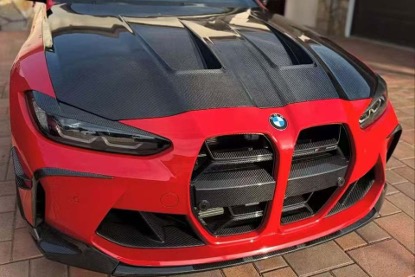
Carbon Fiber Composite Material Hot Pressing Molding Process
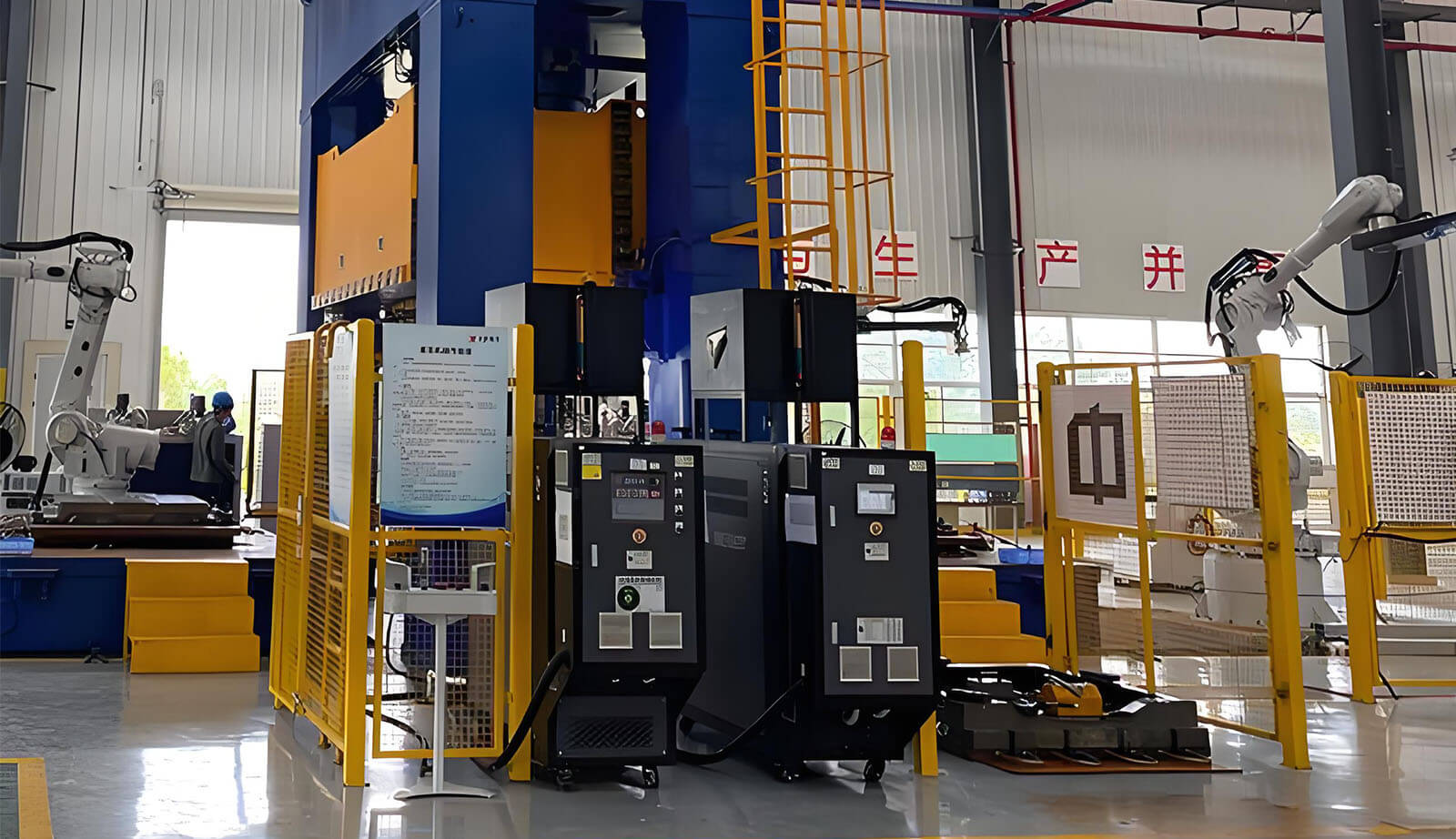
Our factory employs an advanced carbon fiber hot press process with a P20 steel mold, ensuring high efficiency, precision, durability, and cost-effectiveness for quality production.
Carbon fiber automotive wheels are structural, safety-critical components — not a decorative composite panel. A wheel has to carry the full weight of the vehicle, survive repeated impact, cornering and braking loads, and hold up for years of real-world driving. That’s a very different engineering problem from a carbon fiber hood, splitter or mirror cover, where a failure mostly affects appearance rather than safety.
This page is written for engineers, buyers and brand owners evaluating a carbon fiber wheel project — whether that’s a full OEM program, a low-volume aftermarket product, or a first prototype. It covers what carbon fiber wheels actually are, why they’re difficult to manufacture correctly, how material and process choices affect performance and cost, what testing is required, and what typically goes wrong when sourcing them.
What we can support: a single prototype set for initial validation, small-batch production, and a structured development process from design review through to testing and pilot production. What we don’t claim: we do not hold in-house road-legal certification. Testing and certification against standards such as SAE J3204, JWL, VIA, TÜV or ECE are arranged through independent third-party laboratories, based on the requirements of the target market.
Send us your vehicle model, wheel size, PCD, offset, centre bore, target load and required testing standard, and our engineering team will review technical feasibility.
A carbon fiber automotive wheel uses carbon fiber reinforced polymer (CFRP) in the wheel’s load-bearing structure — the barrel, the spokes, or both — rather than only as a surface decoration. The fiber orientation, resin system, laminate schedule and cure process all directly affect how the wheel handles radial load, cornering load, impact and heat near the braking system.
Because a wheel failure has immediate safety consequences, carbon fiber wheels intended for road or track use are developed against recognized test protocols, not just described in terms of “strength and weight.”
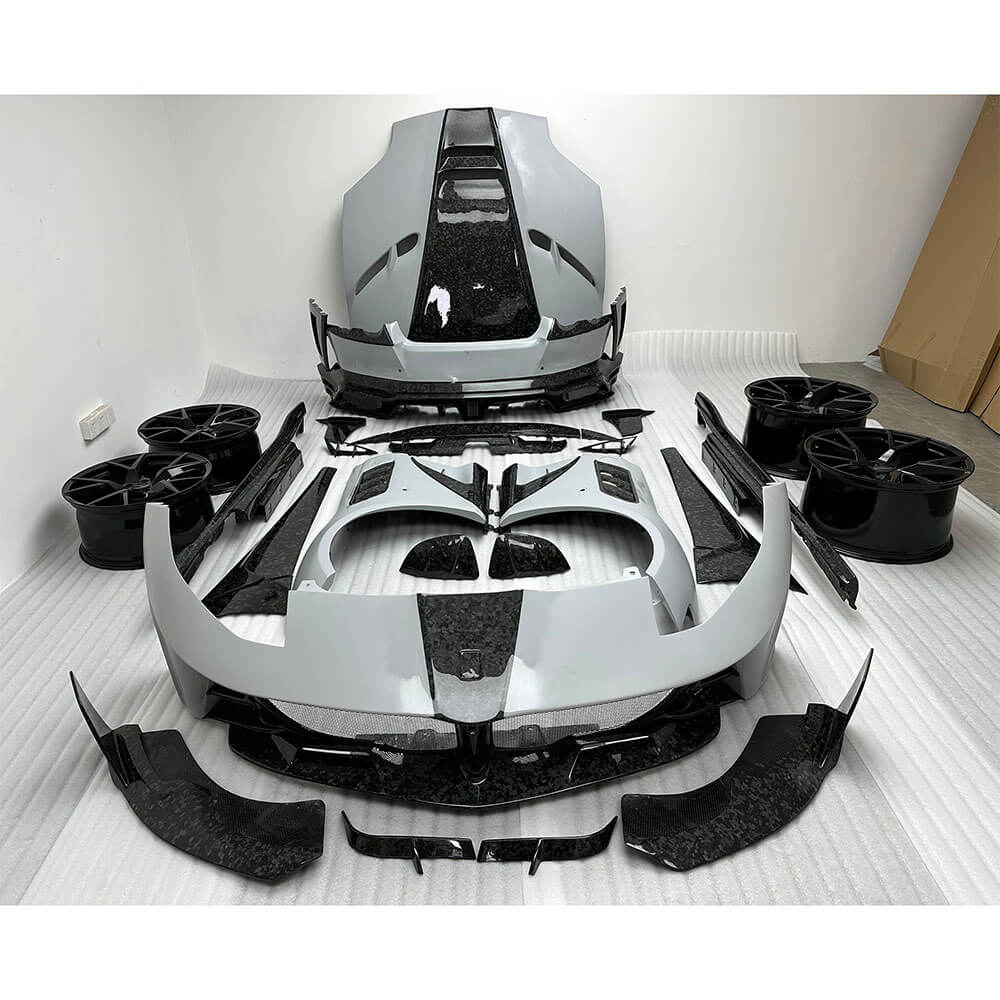
Most automotive carbon fiber parts — hoods, spoilers, mirror caps, interior trim — are non-structural or semi-structural. If one of these parts is slightly under-engineered, the worst case is usually a cosmetic issue or a part that needs reinforcement.
A wheel is different for several reasons:
This is why not every carbon fiber fabricator that produces body kits or interior trim is set up to develop wheels. Wheel development requires structural design (FEA), fatigue-rated material systems, precision tooling and a testing program — it’s a different discipline from decorative composite manufacturing, even though both use “carbon fiber.”
There isn’t one single “carbon fiber wheel” — the construction method determines the weight savings, cost, and development complexity.
The barrel and spokes are a single composite structure. This offers the highest weight-reduction potential but requires the most extensive structural design, tooling and validation work — generally suited to OEM programs or low-volume, high-performance projects with a longer development timeline.
A carbon fiber barrel is joined to a forged aluminum center section. This construction is more common in the aftermarket and performance-upgrade space because it allows more design flexibility in offset, bolt pattern and fitment, with a shorter development cycle than a full one-piece wheel.
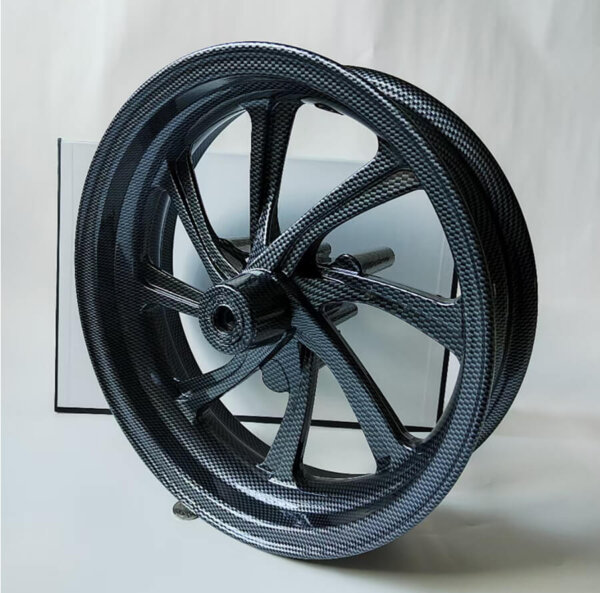
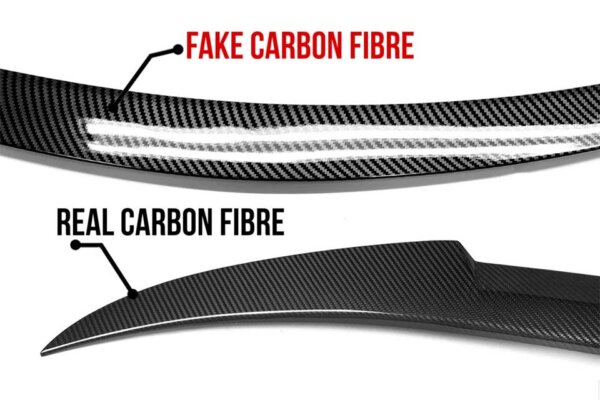
A metal wheel structure with a carbon fiber surface layer for appearance. This does not meaningfully reduce structural weight and should not be marketed using the same performance claims as a structural carbon fiber wheel.
| Construction | Load-bearing structure | Weight-reduction potential | Design flexibility | Development complexity | Typical use case |
|---|---|---|---|---|---|
| One-piece full carbon | Fully composite | Highest | Moderate | Highest | OEM programs, low-volume high-performance builds |
| Carbon barrel + forged aluminum center | Hybrid | High | High | High | Aftermarket, supercar/performance upgrades |
| Carbon fiber overlay | Metal (unchanged) | Minimal | High | Low | Cosmetic upgrade only |
This is where a carbon fiber wheel project succeeds or fails — and where most generic “carbon fiber is light and strong” content stops short.
A wheel isn’t built from a uniform stack of fabric. Different regions of the wheel see different load types, and the laminate has to be designed accordingly:
Getting fiber orientation wrong in any of these zones doesn’t just reduce performance marginally — it can create a stress concentration that leads to premature fatigue failure.
A common misconception is that wheel performance is mainly about which carbon fiber fabric is used. In practice, the resin system, cure temperature and laminate design are just as important as fiber selection. The resin determines:
A wheel needs tight control of runout, roundness and balance — far tighter than a body panel. Tooling design has to account for trimming allowance, insert bonding location, and how the part will be balanced after cure, from the earliest design stage — not corrected after the fact.
Carbon fiber wheel performance depends on the combination of fiber grade, resin system and laminate design — not on picking the single “strongest” fiber. A higher-grade fiber does not automatically make a better wheel if the laminate design, resin system or manufacturing process aren’t matched to it.
| Fiber type | General characteristics | Typical application |
|---|---|---|
| T300-class | Balanced cost and mechanical performance | Prototyping, general composite structures |
| T700-class | Higher tensile strength | Performance-oriented structural parts |
| T800-class | Higher mechanical performance, typically higher cost | Advanced structural applications |
| High-modulus carbon | Stiffness-focused | Weight- and stiffness-sensitive designs |
[The table above reflects common industry material classifications, similar to what other carbon fiber wheel manufacturers reference publicly. Specific grade selection for a given project is confirmed during the engineering review, based on load case and performance requirements — not stated here as a fixed claim about materials always used.]
| Process | Advantage | Limitation | Best suited for |
|---|---|---|---|
| Autoclave prepreg | Highest laminate quality and control | Higher cost, longer cycle time | Prototypes, low-volume, high-performance parts |
| Compression molding | Faster cycle time, more repeatable for volume production | Higher upfront tooling investment | Production-volume programs |
| RTM (resin transfer molding) | Good repeatability, controlled resin content | Tooling complexity, process development time | Higher-volume programs once the design is finalized |
[This table reflects general industry practice for composite wheel manufacturing. The process used for a specific project depends on its volume, structure and validation requirements, and is confirmed during the engineering review.]
Chinacarbonfibers Co., Ltd. specializes in custom carbon fiber composite manufacturing, supporting engineering review, tooling development, prototype manufacturing and low-volume production for automotive and industrial applications. You can see more of our facilities below.
[Specific equipment and process details can be added here once confirmed — for now, this section focuses on the scope of services rather than listing individual machines.]
[This section should reflect genuine industry experience — use real, explainable observations from your team, without referencing specific brand-name clients. A reference sentence is provided below:]
In composite manufacturing, many wheel projects run into trouble not because carbon fiber lacks strength, but because tooling access, trimming allowance, insert bonding and inspection requirements weren’t considered early enough in the design stage.
Before requesting a quotation or feasibility review, it helps to have the following information ready — this is also what most manufacturers will ask for first.
Vehicle information
Wheel data
Performance requirement
Business requirement
Having this information ready at the first inquiry significantly shortens the feasibility review and quotation process.
Wheel testing requirements depend on the target market, vehicle application and customer specification. Relevant test types include:
Recognized reference standards in this space include SAE J3204 (aftermarket composite wheels for highway use) along with JWL, VIA, TÜV or ECE requirements depending on the destination market.
We do not currently hold in-house certification against these standards. Where a project requires formal certification or test reports, testing is arranged through an independent, accredited third-party laboratory, selected based on the target market and the customer’s required standard.
Carbon fiber isn’t automatically the lightest or best option for every application — the right material depends on the project’s priorities.
| Factor | Carbon Fiber | Forged Aluminum | Forged Magnesium |
|---|---|---|---|
| Weight-reduction potential | High (construction-dependent) | Moderate | High |
| Manufacturing cost | High | Moderate | High |
| Design freedom | Depends on layup/tooling | High | High |
| Repairability | Generally lower | Higher | Depends on damage |
| Production maturity | Lower volume, higher dev. cost | Very mature | Moderate |
| Validation complexity | Highest | Established | High |
Buyers researching “carbon fiber wheel price” are usually trying to understand why quotes vary so widely between suppliers. The main cost drivers are:
Wheel size — A 22″ wheel uses significantly more material and requires larger tooling than an 18″ wheel; size alone can shift cost meaningfully.
Structure type — Full one-piece carbon construction generally costs the most to develop and produce; a carbon barrel with a forged aluminum center is typically mid-range; a carbon overlay is the lowest cost but offers minimal structural benefit.
Tooling — Prototype tooling and production tooling are different investments. A one-off prototype tool is not built to the same durability or cycle-time requirements as a production tool, and the cost difference should be discussed upfront.
Testing requirements — For OEM or certification-driven programs, the cost of the required fatigue, impact and dimensional testing program — arranged through a third-party laboratory — can be significant relative to manufacturing cost, especially for the first validated design.
Production volume — Development and tooling costs are largely fixed; a single prototype set absorbs the full cost, while a production run of hundreds or thousands of sets amortizes it. This is why “price per wheel” isn’t meaningful without knowing the target volume.
Confusing appearance with structure. Many products marketed as “carbon fiber wheels” are actually a metal wheel with a carbon fiber surface layer — a cosmetic overlay, not a structural component. Ask directly whether the load-bearing structure is composite or metal.
Choosing by weight alone. A lighter wheel isn’t automatically a safer or better-engineered one. Weight should be evaluated together with the fatigue, impact and load data for the specific design — not as a standalone selling point.
Ignoring testing requirements by market. Road-legal requirements differ between the US, Europe and Japan, and between OEM and aftermarket channels. A wheel validated for one market’s requirements isn’t automatically compliant elsewhere.
Not providing complete vehicle fitment data. Wheel diameter and width alone aren’t enough for a feasibility review. PCD, offset, center bore, brake caliper clearance and target load are all required to assess whether a design is viable for a specific vehicle.
For more engineering-focused articles on carbon fiber manufacturing, see our blog.
For other automotive composite components across these vehicle categories, see our carbon fiber car parts category.
Motorcycle wheels are a different structural application with their own set of requirements and are covered on our carbon fiber motorcycle wheels page.
Development cost and timeline depend on wheel size, structure type, tooling method and validation requirements. In general, a project moves through:
Safety depends on the specific design, material system, manufacturing process, and the testing and certification completed for the target market — not simply on the fact that carbon fiber is used.
This depends on wheel diameter, width, target load, structure type and testing requirements. We can provide project-specific figures once we have your specifications.
Many mature carbon fiber constructions offer meaningful weight savings, but the actual result depends on the structure and performance requirements of the specific wheel.
It depends on the goal. For track-focused or weight-sensitive applications where the budget supports full engineering and validation, the performance case can be strong. For a purely cosmetic upgrade, a carbon overlay or a lighter forged aluminum wheel may be a more cost-effective choice.
Cost is driven by material, tooling (prototype and production), the engineering and testing program required for a safety-critical part, and production volume.
This should be assessed by the manufacturer or a qualified specialist. Structural damage cannot be repaired using the same methods used for aluminum wheels.
Vehicle model and year, wheel size, PCD, offset, center bore, brake clearance, target load, quantity and target testing standard.
Yes. We can produce a single prototype set for initial validation before moving to small-batch or production tooling.
Relevant references include SAE J3204, along with JWL, VIA, TÜV or ECE requirements specified by the customer or destination market. We do not hold in-house certification against these standards; where certification or formal test reports are required, testing is arranged through an independent third-party laboratory based on the target market.
A single prototype typically takes around 30–60 days from design confirmation to delivery, depending on wheel complexity, structure type and revision cycles. Timelines for small-batch or production tooling are discussed once the project scope is confirmed.
Contact us with your vehicle model, wheel size, PCD, offset, center bore, target wheel load, brake clearance data, annual quantity and required testing standard. Our engineering team will review the project and advise on structural feasibility.
Inquiry form fields:
Our factory employs an advanced carbon fiber hot press process with a P20 steel mold, ensuring high efficiency, precision, durability, and cost-effectiveness for quality production.
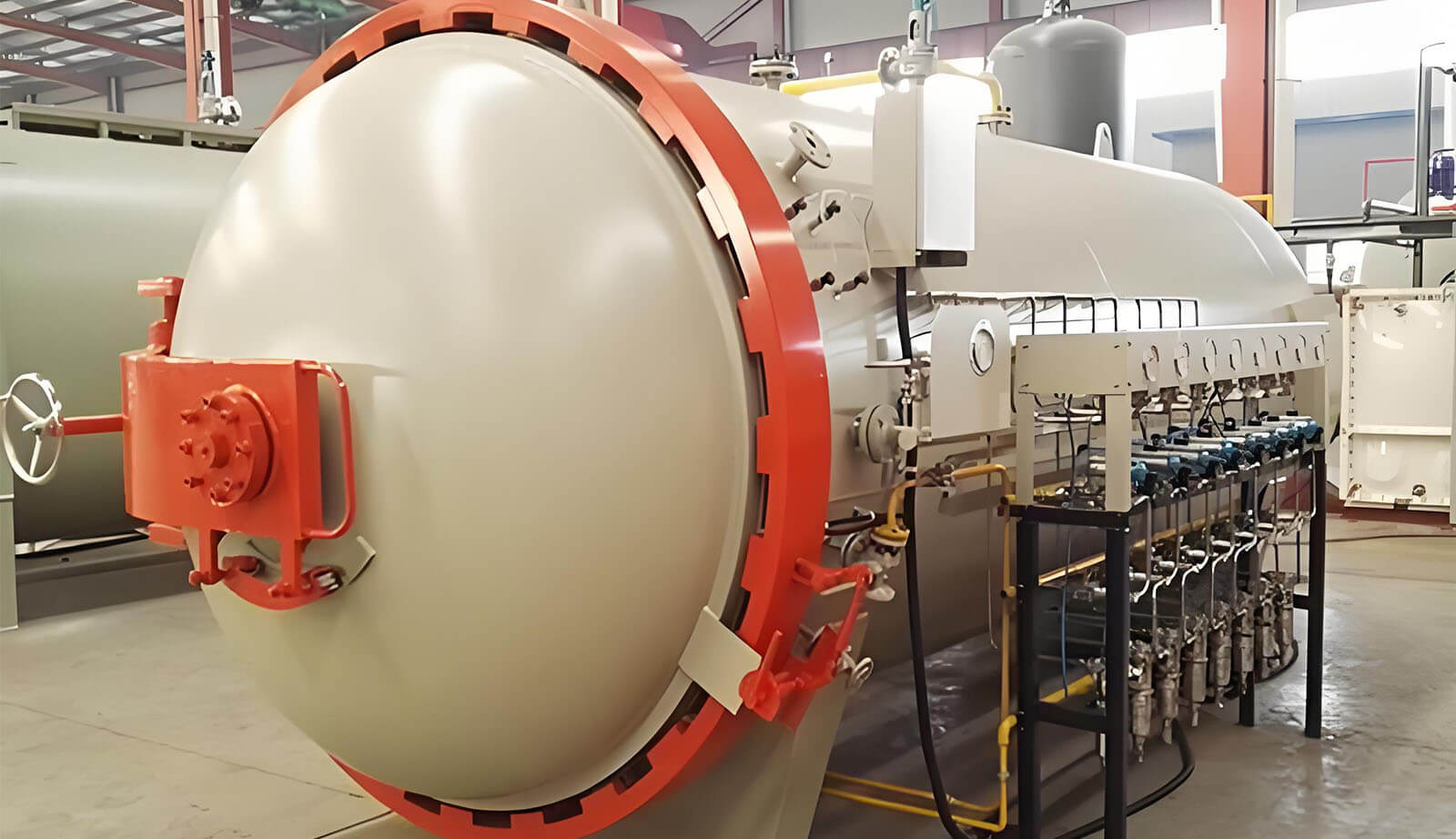
Our factory runs 100+ hot pressure autoclaves, using aluminum molds and vacuum induction to shape carbon fiber with precision. High heat and pressure enhance strength, stability, and flawless quality.
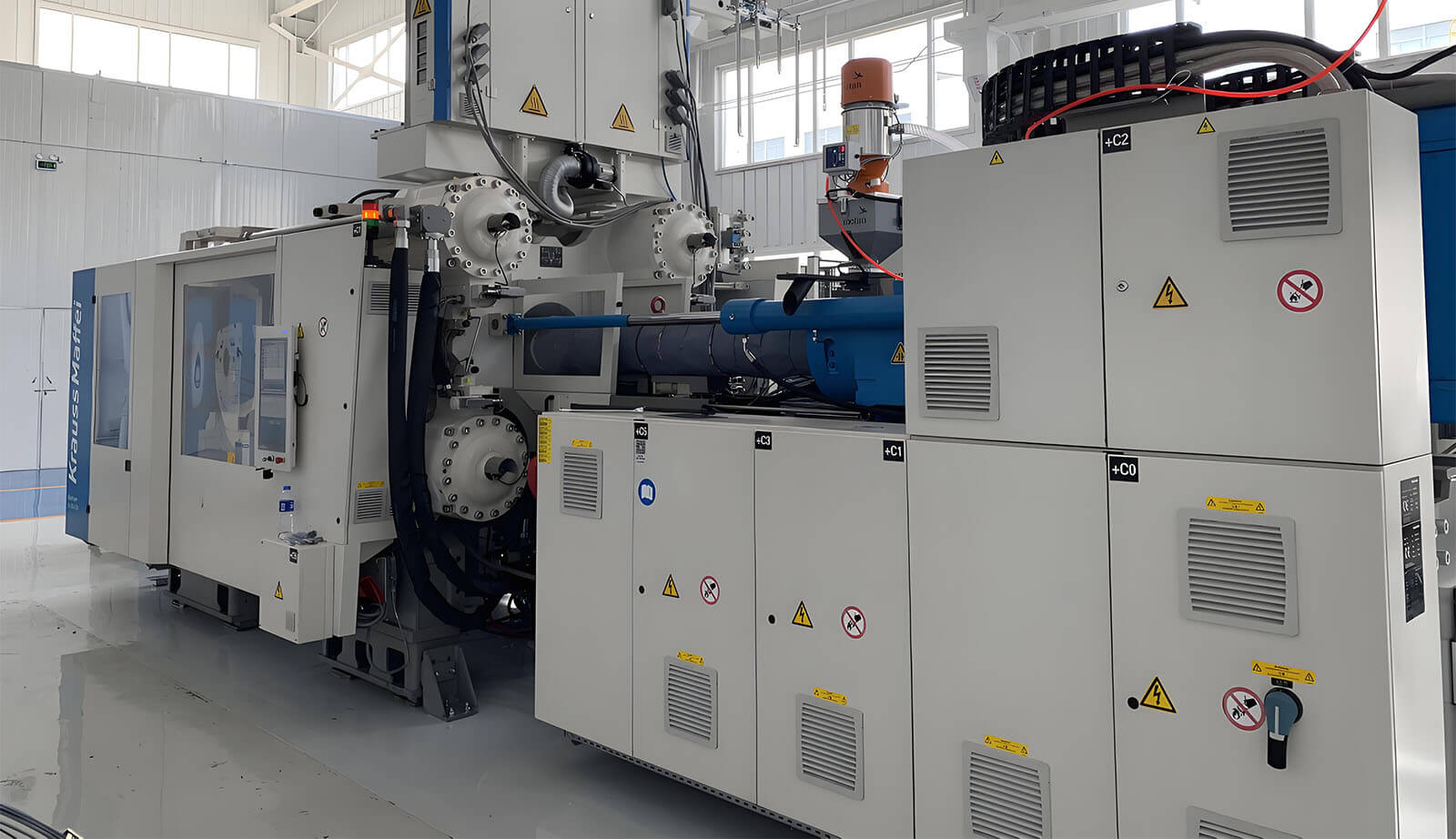
Our Carbon Fiber Research Center drives innovation in new energy, intelligence, and lightweight design, using advanced composites and Krauss Maffei Fiber Form to create cutting-edge, customer-focused solutions.
Here are the answers to the frequently asked questions from the experienced carbon fiber products factory
We produce a wide range of carbon fiber components, including automotive parts, motorcycle parts, aerospace components, marine accessories, sports equipment, and industrial applications.
We primarily use high-quality prepreg carbon fiber and large-tow carbon fiber reinforced high-performance composites to ensure strength, durability, and lightweight characteristics.
Yes, our products are coated with UV-protective finishes to ensure long-lasting durability and maintain their polished appearance.
Yes, our facilities and equipment are capable of producing large-size carbon fiber components while maintaining precision and quality.
What are the benefits of using carbon fiber products?
Carbon fiber offers exceptional strength-to-weight ratio, corrosion resistance, stiffness, thermal stability, and a sleek, modern appearance.
We cater to automotive, motorcycle, aerospace, marine, medical, sports, and industrial sectors with a focus on lightweight and high-performance carbon fiber components.
Yes, we provide custom carbon fiber solutions tailored to your specifications, including unique designs, sizes, and patterns.
We utilize advanced technologies such as autoclave molding, hot pressing, and vacuum bagging, ensuring precision, stability, and quality in every product. wonders with the Hello Elementor Theme, we’re trying to make sure that it works great with all the major themes as well.
We use aluminum and P20 steel molds, designed for durability and high accuracy, to create complex and precise carbon fiber components.
Our products undergo rigorous quality control checks, including dimensional accuracy, material integrity, and performance testing, to meet industry standards.