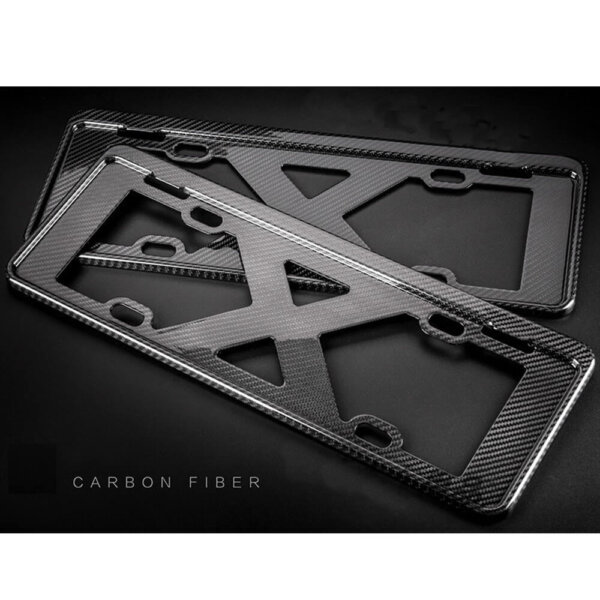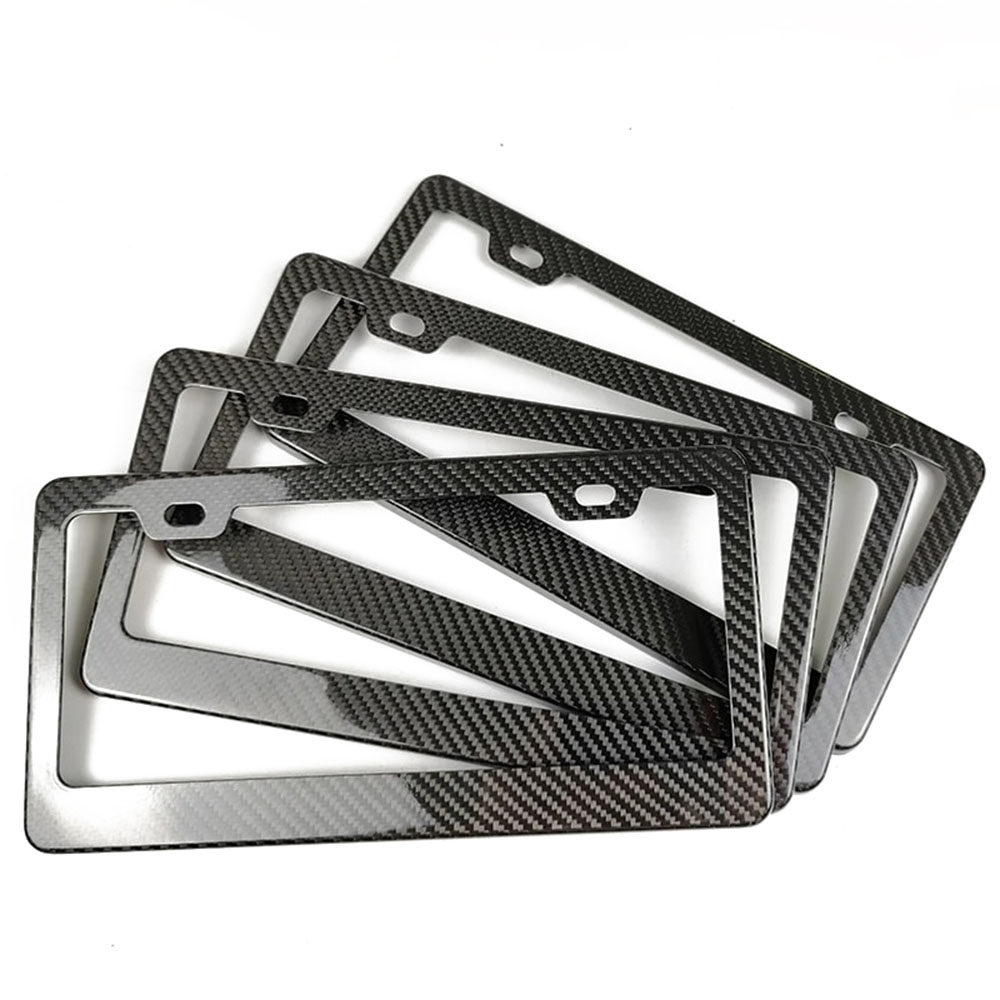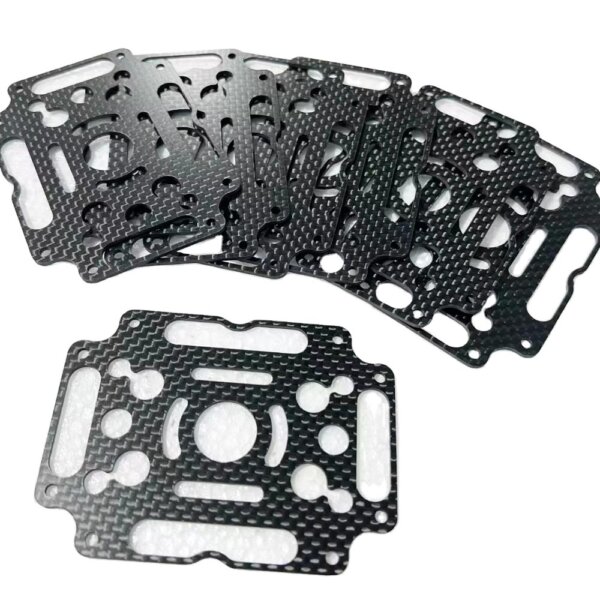
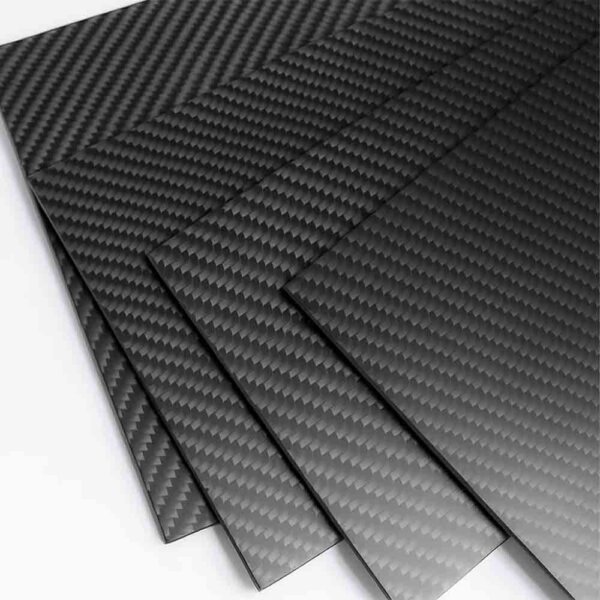
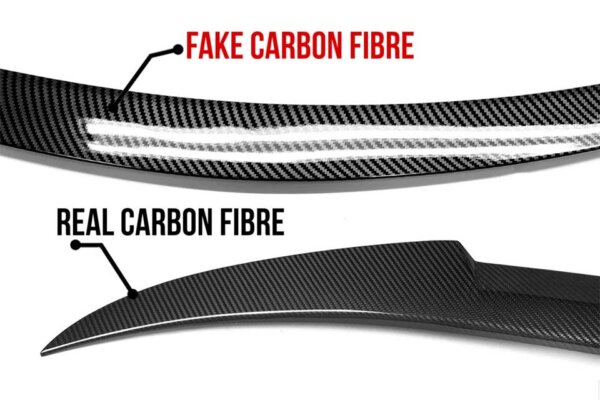
Real carbon fiber is made from actual carbon fiber fabric and resin, while fake carbon fiber usually refers to vinyl wrap, hydro-dipped plastic, printed carbon-look surfaces, fiberglass with a carbon pattern, or thin carbon veneer over ABS or fiberglass.
For automotive parts, the difference is not only visual. Genuine carbon fiber parts are usually lighter, stiffer, and more durable, while fake carbon-look parts may only copy the appearance without the same structure, strength, or weight reduction.
9 Ways to Tell Real Carbon Fiber from Fake Carbon Fiber
Here are the nine most reliable ways to check whether a carbon fiber part is genuine or fake:
- Check the weave depth and light reflection
- Look for natural weave distortion on curves and edges
- Inspect the backside and edge cross-section
- Compare the weight with the original part
- Tap the surface and listen to the sound
- Press the part gently to test stiffness and flex
- Use a multimeter to check electrical conductivity
- Check the heat resistance or flame response only on scrap material
- Verify the price, process, material details, and seller documentation
1. Why It Matters
Carbon fiber isn’t just a fashion statement; it’s a structural revolution. In the aerospace and motorsport worlds, every gram shaved from a part translates to speed, efficiency, and endurance. A single carbon-fiber hood can drop 8 kg from the nose of a car — a difference that changes balance, braking, and cornering feel.
Fake parts mimic the appearance but not the physics. Most are resin-rich fiberglass shells or ABS plastic coated in printed weave. They may look right on day one, but under real-world stress they tell a different story:
- Heat from an engine bay warps the resin.
- UV exposure yellows the clear coat.
- Structural weakness turns a cosmetic mod into a safety risk.
This isn’t paranoia. In 2024, a European tuning shop documented three separate diffuser failures traced to fake “dry-carbon” panels. The cars lost aerodynamic stability at highway speed — a costly lesson in why authenticity matters.
2. What Real Carbon Fiber Is Made Of
True carbon fiber starts life not as fabric, but as chemistry. A polymer called polyacrylonitrile (PAN) is spun into filaments thinner than a human hair, then carbonized in a 1,000 °C furnace until only carbon atoms remain. Those filaments are woven into carbon fiber cloth, which becomes the skeleton of the composite.
2.1 From Filament to Fabric
Each bundle — called a tow — contains 3,000 to 12,000 filaments aligned in perfect tension. The tighter and more consistent the weave, the stronger and lighter the finished part.
2.2 Prepreg, Resin, and the Art of Balance
Real manufacturers use pre-impregnated (prepreg) carbon sheets where every fiber strand is uniformly coated with aerospace-grade epoxy resin. This precision matters: too much resin adds weight; too little causes voids and delamination.
2.3 The Cure That Defines Quality
Once layered, the sheets are vacuum-bagged and autoclave-cured — a process using both pressure and heat to compress every micro-air pocket out of the laminate. That’s why a genuine Lamborghini Huracán spoiler or a Chinacarbonfibers diffuser feels like sculpted marble — perfectly smooth, feather-light, and impossibly stiff.
Fake versions simply cannot replicate that molecular density. Their resin cures at ambient pressure, trapping micro-bubbles that weaken the structure.
3. The Most Common Fake “Carbon Fiber” Methods
Every counterfeiter exploits one truth: most people buy with their eyes. Here are the tricks behind the fakes:
| Fake Type | Description | Hidden Problem |
|---|---|---|
| Vinyl Wraps | Printed weave film on metal or ABS | No structural benefit; bubbles and peeling inevitable |
| Hydro-Dipped Plastic | Pattern floated on water, transferred like paint | Zero carbon content; fades fast under UV |
| Fiberglass with Printed Layer | Fiberglass sheet coated with printed pattern | Heavier, weaker, often yellows |
| Carbon-Coated ABS | Paper-thin carbon veneer glued on plastic | Backside reveals molded ABS |
| Colored “Carbon” | Blue/red/gold threads for “style” | Usually dyed fiberglass; more fashion than function |
These products sell on looks. But when used in load-bearing parts — a hood, splitter, or rear wing — they can turn dangerous.
4. Real vs. Fake Carbon Fiber: Complete Comparison Table
Use this table as a quick-reference guide before buying any carbon fiber part. Each test can be performed without tools in under five minutes.
| Test | ✅ Real Carbon Fiber | ❌ Fake Carbon Fiber | 🔍 How to Perform It | Reliability |
|---|---|---|---|---|
| Weave depth (visual) | Deep 3D pattern; individual fiber threads visible under clear coat; subtle parallax shift as you tilt the part | Flat, printed-looking surface; pattern appears like a photograph with no depth; perfectly uniform repeat | Hold under natural light and tilt slowly — real weave “moves” like a hologram | ★★★★★ |
| Light & iridescence test | Shimmering rainbow or holographic “pop” as light refracts off individual carbon filaments | Flat, uniform reflection; no depth or iridescence; plastic sheen stays constant at all angles | Take outside in sunlight and rotate the part through 90° — fake patterns stay static | ★★★★★ |
| Weave at seams & curves | Pattern distorts naturally around curves and edges because the woven fabric bends; seam joins show slight misalignment | Perfectly seamless and uniform even at curves — a dead giveaway for printed film or hydro-dip | Inspect corners, lip edges, and mounting holes where a real woven sheet must be cut or folded | ★★★★★ |
| Touch texture | Subtle micro-texture you can feel with fingertips — the fabric threads create gentle ridges under the resin | Smooth as glass or plastic; no texture because the pattern is printed, not woven | Run a fingernail gently across the surface — real fiber has tactile definition | ★★★★☆ |
| Tap / sound test | Crisp, high-pitched “ping” — carbon transmits vibration sharply due to high stiffness | Dull thud, hollow knock, or metallic clang depending on the substrate (plastic, fiberglass, or metal) | Knuckle-tap firmly in the center; compare against a known real part if possible | ★★★★☆ |
| Weight test | Remarkably light for size: ~1.5–1.8 g/cm³ density; a real CF hood weighs ~6 kg; full door panel ~3–4 kg | Noticeably heavier: fiberglass ~2.0 g/cm³; ABS plastic ~1.05 g/cm³ but often thicker to compensate | Lift the part with one hand — if it surprises you with its weight, that’s a red flag | ★★★★☆ |
| Rigidity / flex test | Almost zero flex at edges; high modulus means it resists deformation even under strong thumb pressure | Vinyl over plastic bends easily; fiberglass hybrids flex more than pure CF; ABS plastic is obviously soft | Press firmly with both thumbs at the unsupported center — real CF barely moves | ★★★★☆ |
| Backside inspection | Clean, finished underside showing consistent fiber-and-resin texture; may show raw woven carbon or a smooth gel coat | Rough, unfinished back exposing white fiberglass, grey ABS plastic ribs, or an adhesive layer | Flip the part over — no legitimate manufacturer of real CF leaves the back untreated | ★★★★★ |
| Edge / cut inspection | Edges reveal multiple distinct laminate layers of woven fiber; tiny frayed carbon tows may be visible at cut lines | Edges expose a single thin carbon layer on top of fiberglass, metal, or plastic substrate | Examine mounting holes or trimmed edges with a flashlight — the cross-section tells the whole story | ★★★★★ |
| Conductivity test | Conducts electricity — carbon fiber is inherently conductive; a multimeter set to continuity mode will beep across the weave | Non-conductive — vinyl, hydro-dip film, painted fiberglass, and ABS plastic do not conduct | Touch both probes of a multimeter to two points ~5 cm apart on the surface; beep = real CF | ★★★★★ |
| Heat resistance test | Does not melt or deform; epoxy resin may char or blush at extreme heat but fibers remain structurally intact up to ~200–250°C | Plastic fakes warp and melt quickly; vinyl film peels and bubbles; fiberglass yellows and softens | ⚠ Destructive test — perform only on a scrap or offcut, never on a finished part | ★★★★☆ |
| UV / sun exposure | Quality CF with UV-stable clear coat holds colour and gloss for years; may gradually yellow without proper coating | Vinyl wraps and hydro-dip films fade, bubble, or peel within 12–18 months of sun exposure | Ask the seller about UV-stable clear coat specification — legitimate suppliers will know instantly | ★★★☆☆ |
| Price check | Real CF hoods: $800–$3,500+; spoilers: $300–$1,500+; interior trim sets: $200–$800+. Raw prepreg material alone costs $50–$100/m² | Prices that are 60–80% below the market norm almost always signal fiberglass, plastic, or veneer construction | Cross-reference price against at least three established CF suppliers — outliers in either direction are worth questioning | ★★★★☆ |
| Seller documentation | Reputable manufacturers provide: fiber spec (T300/T700/T800), weave type (2×2 twill, 1×1 plain), resin system, cure method (autoclave/vacuum), and weight per m² | Vague descriptions using terms like “carbon fiber style,” “carbon finish,” “carbon look,” or “carbon fiber pattern” — these are legally safe ways to sell fakes | Request a material data sheet or certificate of conformity before ordering high-value parts | ★★★★★ |
| Professional lab test | Microscopy, FTIR analysis, resistivity mapping, or CT scanning can confirm fiber orientation, resin system, and laminate layer count | N/A — destructive testing is definitive; a fake cannot pass microscopy or resistivity checks | Recommended for structural or safety-critical parts: aerospace components, crash structures, bike frames | ★★★★★ |
Scoring guide: If a part fails 2 or more of the top five tests (weave depth, light test, weave at seams, tap test, backside inspection), treat it as a fake regardless of what the seller claims.
5. The 4 Types of Fake Carbon Fiber — And How to Expose Each One
Not all fake carbon fiber is created equal. Some fakes are harmless cosmetic choices sold at honest prices. Others are structurally dangerous materials passed off as genuine composites at genuine prices. Knowing which type you’re looking at changes both how you test it and how much it matters.
Here are the four counterfeit categories you’ll encounter in the market, ranked from most to least convincing.
Type 1: Hydro-Dip (Water Transfer Printing)
Also called: hydrographics, water transfer printing, immersion printing
What it is: A printed film carrying a carbon fiber pattern is floated on a water tank. The part — usually ABS plastic or metal — is dipped through the film. The ink transfers onto the surface, is then clear-coated, and the result looks, from a metre away, remarkably like real carbon fiber.
Where you’ll see it: Cheap interior trim kits, steering wheel covers, gear shift surrounds, phone cases, helmet shells, and any part where the seller uses language like “carbon fiber finish” or “carbon fiber style.”
Why it fools people: At first glance, a quality hydro-dip job has the right color, the right weave grid, and a glassy clear coat. It’s the most visually convincing fake for a casual buyer.
Why it fails on inspection:
- No depth. Real carbon fiber has a 3D parallax effect — the weave appears to sit below the surface and shifts as you tilt the part. Hydro-dip is ink printed on a surface; it looks flat and static at any angle, like a photograph of carbon fiber rather than carbon fiber itself.
- Perfectly uniform repeat. Real woven cloth has subtle imperfections, slight variations in tow spacing, and natural distortion at curves. Hydro-dip film tiles a repeating digital pattern. Inspect any corner or curved section and you’ll see the same grid square repeating with machine-perfect regularity.
- Non-conductive. Touch a multimeter to two points on a hydro-dipped surface: no continuity. Real carbon fiber conducts electricity.
- Peels or chips under stress. The ink film has no mechanical bond to the substrate — a sharp edge, a key scratch, or prolonged UV exposure reveals the base material beneath.
- No structural benefit. Hydro-dip adds zero stiffness and zero weight reduction. The base part weighs exactly what it always weighed.
The one-second test: Tilt the part slowly under a single light source. If the weave pattern stays completely static — no shimmer, no depth shift — it is hydro-dip.
Type 2: Carbon Fiber Vinyl Wrap (Di-NOC / Adhesive Film)
Also called: CF wrap, carbon look wrap, carbon vinyl, Di-NOC (3M’s brand name)
What it is: A self-adhesive film with a carbon fiber texture printed or embossed on its surface, applied directly to an existing part. Unlike hydro-dip (which is sprayed into the substrate), vinyl wrap sits on top as a removable layer.
Where you’ll see it: Interior door panels, dashboard trim, roof panels, mirror caps, and laptop or phone covers. Also used legitimately as a protective wrap over real carbon fiber parts — context matters.
Why it fools people: Premium vinyl wraps like 3M Di-NOC have a micro-textured surface that mimics the feel of real carbon fiber to a degree, and they look convincing in photographs. They’re also widely sold at car accessories shops without any disclaimer.
Why it fails on inspection:
- Edges lift and reveal themselves. Press firmly at any edge or seam: real carbon fiber is laminated through its full thickness. Vinyl has an adhesive backing — you can feel the edge separate if pressed, and at mounting holes or trims, the film’s backing is often visible.
- The texture is stamped, not woven. Running a fingernail slowly across real CF, you feel actual fiber ridges in two axis directions. Vinyl has a moulded emboss in one consistent direction — it feels like textured plastic because that’s exactly what it is.
- Bubbles and lifting over time. In heat cycles (a parked car in summer routinely reaches 80°C+ inside), vinyl adhesive softens and air pockets develop. Real carbon fiber is unaffected.
- Non-conductive. Same multimeter test as hydro-dip: no continuity.
- Zero weight change. Wrapping a part adds grams, never removes them.
The one-second test: Press and release a corner firmly. Vinyl flexes slightly and springs back differently from the substrate beneath it. Real carbon fiber laminate has no such separation — it is the substrate.
Type 3: Carbon Fiber Veneer (Thin Skin Over ABS or Fiberglass)
Also called: carbon veneer, dual-laminate CF, CF-faced fiberglass, carbon overlay, “top-layer carbon fiber”
What it is: A thin layer of genuine woven carbon fiber — typically 1–2 plies, around 0.3–0.5 mm — is bonded to the surface of an ABS plastic or fiberglass structural core. The result is real carbon fiber on the outside, just not all the way through.
Where you’ll see it: This is the most deceptive fake category because the surface layer genuinely is carbon fiber. It appears in mid-range aftermarket hoods, spoilers, splitters, and body kits, often listed as “carbon fiber” with no disclosure of the fiberglass or ABS core. It’s also common in motorcycle fairings and interior panels from budget suppliers.
Why it fools people: The surface weave looks right because it is real woven carbon. The light reflection, the texture, and the tap sound at the top surface all pass a quick check. Only edge inspection or destructive testing reveals the substrate.
Why it matters beyond looks:
- Weight is not reduced. The fiberglass core carries the part’s mass. A genuine full-carbon hood might weigh 5–6 kg; a CF-veneer hood on a fiberglass core will weigh 8–11 kg — comparable to a standard fiberglass part.
- Structural strength is false. The carbon skin contributes bending stiffness only if it’s thick enough and bonded correctly. A 0.3 mm carbon face over 4 mm of fiberglass behaves structurally like fiberglass, not like carbon fiber. Under crash or high-speed aerodynamic load, it fails the same way fiberglass does.
- Delamination risk. ABS and carbon fiber have very different thermal expansion rates. After repeated heat cycles — engine heat, sunlight, winter cold — the bond between carbon skin and ABS core can fail. Bubbling, cracking, and peeling at stress concentrations (mounting holes, edges) are common after 2–3 years.
How to expose it:
- Edge and cut-line inspection. At any mounting hole, trimmed edge, or fastener point, look at the cross-section. Real full-carbon has consistent dark fiber layers from surface to surface. A veneer part shows a thin dark layer on top, then transitions to white/cream fiberglass or grey ABS underneath.
- Weight check. Weigh the part against the manufacturer’s spec. Genuine autoclave-cured carbon hoods are publicly documented at 5–7 kg. If a claimed CF hood weighs 10 kg, the spec doesn’t match.
- Flex at unsupported edges. Full carbon fiber has a very high flexural modulus — it resists deflection strongly. A fiberglass core with a carbon face feels noticeably more “giving” when you press firmly at an unsupported edge. It won’t flex like plastic, but it won’t be as rigid as full carbon either.
- Conductivity at the edge. The carbon surface layer will conduct. But probe deeper at a screw hole — if the core material is exposed and non-conductive, you’re looking at a veneer.
The honest middle ground: Carbon veneers aren’t inherently fraudulent for cosmetic applications. A CF-faced fiberglass dashboard trim carries no safety risk. The problem is when veneer parts are sold at full-carbon prices, or used in structural applications (hoods, spoilers, bumpers) where buyers expect full-carbon performance.
Type 4: Fiberglass with Carbon Fiber Paint / Printed Film
Also called: carbon fiber look, carbon fiber print, FRP with CF finish, carbon fiber pattern fiberglass
What it is: A standard fiberglass (FRP) part with a carbon fiber pattern either painted on, printed via a UV-stable film, or produced using a mould with a CF-textured gel coat. No carbon fiber is present anywhere in the construction.
Where you’ll see it: The lowest tier of the aftermarket: budget hoods, splitters, and side skirts priced at a fraction of genuine CF parts. Also ubiquitous in non-automotive consumer products — phone cases, laptop sleeves, and accessories labeled “carbon fiber” that are pure injection-moulded plastic.
Why it fools people: From ten feet away, or in a product photo, a well-finished fiberglass part with a CF pattern can look superficially similar to the real thing. Sellers rely on buyers not inspecting before purchase.
Why it fails immediately on inspection:
- No depth at any angle. The pattern is part of the surface paint or gel coat — it has exactly zero dimensional depth. Tilt it, angle it, shine light on it: it looks like a flat photograph of carbon fiber.
- Wrong sound. Fiberglass has a lower resonant frequency than carbon fiber and significantly more internal damping. Tap it: you get a dull, slightly hollow knock rather than carbon’s crisp, high-pitched ping.
- Heavier. Fiberglass density is ~2.0 g/cm³ versus carbon fiber’s ~1.6 g/cm³. A fiberglass hood will be noticeably heavier than a genuine CF equivalent — typically 30–50% more.
- Non-conductive surface. Fiberglass and paint are both electrical insulators. The multimeter test gives no reading.
- Yellows and degrades. Unpainted or poorly clear-coated fiberglass yellows under UV exposure within 2–3 years. Real carbon fiber with a quality UV-stable resin system holds colour far longer.
- Wrong failure mode. When dropped or impacted, fiberglass shatters into large shards. Real carbon fiber delaminates and fractures in a distinctly different pattern (fibrous, not glassy).
Price is the best indicator here. Genuine autoclave-cured carbon fiber hoods require $50–$100/m² of prepreg material, plus tooling, autoclave time, and hand finishing. A fiberglass-with-CF-print hood that costs $150–$250 is simply not made of carbon fiber — the raw materials alone would cost more than the selling price.
Quick Identification Summary
| Type | Contains Real CF? | Weight Savings? | Structural Benefit? | Easiest Giveaway |
|---|---|---|---|---|
| Hydro-dip | No | No | No | Static flat pattern under light |
| Vinyl wrap | No | No | No | Edge lifts, non-conductive |
| Carbon veneer | Surface only | Minimal | No | White/grey core at edges |
| Fiberglass + print | No | No | No | Wrong sound, wrong weight |
| Genuine full CF | Yes, throughout | Yes — 40–60% vs FRP | Yes | Deep 3D weave, crisp tap, light weight |
The most dangerous fake is Type 3 (carbon veneer) — because the surface layer is real carbon fiber, it can fool quick visual inspection, pass the light test, and even partially pass the conductivity test. Always check the edge cross-section on any structural part before buying.
6. How to Perform the Main Carbon Fiber Authenticity Tests
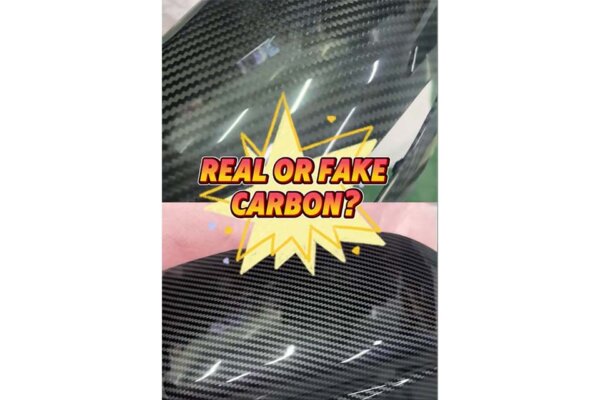
📹 Pro Tip: For the best results, combine these tests. A short video or high-resolution images comparing real vs. fake parts would make these differences instantly clear.
🔊 (1) The Knock or Tap Test
Engineers love this one because your ears rarely lie. Tap the surface with your knuckle or a coin:
- Real carbon fiber resonates — a crisp, hollow “ping.”
- Fake parts sound dull and muted, like tapping on solid plastic.
That sound difference comes from stiffness and internal damping. Carbon-fiber composites transmit vibration sharply; plastics absorb it.
👆 (2) The 3D Feel Test
Run your fingertips across the weave. Real carbon fiber has micro-contours; you can feel the fabric threads under the clear coat. Hydro-dipped parts feel like smooth plastic film because that’s exactly what they are.
✨ (3) Pattern Consistency & Depth
Hold it under sunlight or a bright light. Real weave shows depth — like a hologram that shifts as you move. Printed patterns stay flat, with no parallax effect. Also check alignment at corners or joins: high-end makers like Chinacarbonfibers mirror the weave symmetrically — a detail fakes ignore.
⬇️ (4) Look Beneath the Skin
Flip the piece. Real carbon is carbon through-and-through, not just a surface layer. If you see white fiberglass, injection-molded ribs, or primer gray, you’re looking at imitation. This is one of the most reliable quick checks for any buyer.
⚖️ (5) The Weight and Balance Test
A genuine autoclave-cured panel can cut 50% of the mass of its fiberglass twin. Take a carbon fiber hood for instance: a real one weighs ~6 kg; a fake, up to 12 kg. That difference isn’t subtle — it changes how the car drives and how the suspension loads.
⚡ (6) The Conductivity Test — The Most Definitive DIY Check
This is the one test that no fake can pass. It takes thirty seconds, requires a tool most people already own, and produces a binary result with no ambiguity.
Why it works: Carbon fiber is electrically conductive. The carbon atoms in each filament are arranged in graphite-like sheets that allow electrons to flow freely along the fiber axis. This is an intrinsic property of the material itself — not the resin, not the clear coat, but the fiber. Every fake carbon fiber product — vinyl wrap, hydro-dip film, fiberglass, ABS plastic — is a non-conductor. There is no way to fake conductivity without using real carbon fiber.
What you need: Any digital multimeter with a continuity or resistance setting. These cost $10–$20 and are available at any hardware store. You do not need a lab-grade instrument.
How to perform the test:
- Set your multimeter to continuity mode (the symbol that looks like a sound wave, often paired with a diode symbol). On a basic meter, resistance mode (Ω) works equally well — you’re looking for a reading rather than an open circuit.
- Scratch a small area of the clear coat at two points, roughly 3–5 cm apart, using a pin or sharp edge. The clear coat is non-conductive, so you need direct contact with the fiber layer beneath. On parts with exposed weave texture and no thick clear coat, this step may not be necessary.
- Touch one probe to each scratch point and read the result.
Reading the result:
| Result | What it means |
|---|---|
| Continuity beep / resistance reading of 5–50 Ω | Real carbon fiber. Conductivity confirmed. |
| Resistance of 50–500 Ω | May be real CF with a thick resin coat or minor contact issues. Re-test with deeper scratch. |
| No reading / OL (open loop) | Not carbon fiber. Surface is non-conductive — vinyl, fiberglass, plastic, or paint. |
The typical surface resistance of real carbon fiber composite is in the range of 10–100 Ω across a 5 cm span, depending on fiber orientation, resin content, and weave type. The exact number matters less than whether you get any reading at all.
What this test catches:
- Hydro-dip: fails (non-conductive film over plastic)
- Vinyl wrap: fails (non-conductive adhesive film)
- Fiberglass + carbon print: fails (fiberglass is an insulator)
- Carbon veneer: passes on the surface, but if you test at an exposed edge where the fiberglass core is visible, that section will fail — a dead giveaway of the veneer construction
One important note: The clear coat on most finished parts is non-conductive. If you get no reading without scratching, that does not automatically mean the part is fake — try the scratch step first. On raw or lightly finished carbon fiber (common on structural parts or inner surfaces), contact is direct and no scratch is needed.
This test is particularly valuable for remote or online purchases. If you’re buying from a supplier you haven’t worked with before, ask them to photograph or video a multimeter continuity test on the specific part you’re ordering. A legitimate carbon fiber manufacturer will do this without hesitation. A supplier who refuses or deflects has something to hide.
🔥(7) The Heat Test — For When You Need Certainty on a Sample
This test is definitive, but it is also destructive. It should only be performed on a scrap piece, an offcut, or a small hidden area of a part you already own and are trying to authenticate. Never apply a flame to an installed part or to a part you haven’t purchased yet.
Why it works: Real carbon fiber and its fakes behave completely differently under heat, because they are made of completely different materials.
Carbon fiber itself does not melt — it begins to oxidize above approximately 400°C in air, and it does not produce a burning-plastic smell. The epoxy resin that holds the fibers together does begin to degrade at around 200–250°C, turning from clear to milky to tan, and eventually charring black. But the fibers themselves remain intact and structural even as the resin degrades. You are left with a char, not a melt.
Fakes fail far sooner and in far more obvious ways:
What you need: A lighter, a butane torch, or a heat gun. A non-flammable surface to work on. A well-ventilated space.
How to perform the test:
- Take a small sample or offcut — a piece no larger than 2–3 cm is sufficient.
- Apply a lighter flame to the edge or surface for 5–10 seconds.
- Observe the response: the smell, the visual change, and what remains after you remove the flame.
Reading the results:
| Material | Flame response | Smell | What remains |
|---|---|---|---|
| Genuine carbon fiber | Surface resin may blush white or tan, then char dark. Fibers remain intact. No dripping. | Mild resin/epoxy odour — not sharp or plastic | Dark char over intact black fibers. Structure holds. |
| Hydro-dip / vinyl over ABS | ABS plastic melts and drips within 2–5 seconds. Film peels and curls immediately. | Sharp burning plastic smell | Melted, deformed substrate. No fiber structure. |
| Vinyl wrap (Di-NOC) | Film bubbles, peels, and ignites quickly. Substrate may or may not melt depending on material. | Acrid burning vinyl smell | Bare plastic or metal substrate, charred film residue |
| Carbon fiber veneer over fiberglass | Surface carbon layer may char correctly, but at the edge where fiberglass is exposed, the glass mat yellows and the resin smokes at a lower temperature | Mixed: light epoxy from surface, then sharper polyester resin smell from core | Carbon char over visible glass fiber mat |
| Fiberglass + carbon print | Paint or gel coat chars quickly. Glass mat and polyester resin yellow and smoke. No carbon fiber behavior. | Sharper polyester or styrene smell — distinctly different from epoxy | Yellowed glass mat, no structural carbon fiber |
The key indicators in plain language:
- If it melts or drips: it’s plastic. Genuine carbon fiber does not melt under a lighter.
- If it smells sharply of burning plastic or PVC: it’s a vinyl or ABS product. Genuine carbon fiber resin has a milder, distinctly different epoxy odour.
- If the structure collapses: it’s not genuine CF. Real carbon fiber holds its shape even as the resin degrades.
- If you see glass fibers (cream/white strands) exposed: it’s fiberglass, not carbon fiber. Carbon fibers remain black throughout.
Temperature reference points (for context):
| Material | Starts degrading at | Melts/collapses at |
|---|---|---|
| ABS plastic | ~105°C | ~200°C |
| Vinyl / PVC film | ~80°C | ~160°C |
| Polyester resin (fiberglass) | ~150°C | Chars, doesn’t melt |
| Epoxy resin (real CF) | ~200–250°C | Chars, does not melt |
| Carbon fiber filaments | Oxidizes above ~400°C in air | Does not melt below 3,600°C |
A standard butane lighter produces a flame of approximately 1,000°C at the tip but only around 200–300°C at the surface it contacts. This is enough to immediately reveal ABS and vinyl fakes, and enough to begin distinguishing epoxy from polyester resin in fiberglass hybrids.
⚠ Safety notes:
- Perform this test outdoors or in a well-ventilated area. Burning plastics and vinyl release toxic fumes.
- Keep the test sample small — a 2 cm piece is enough.
- Have water or a non-flammable surface nearby.
- Do not perform this test on a carbon veneer part near the carbon surface alone — test the edge where the substrate is exposed for a meaningful result.
- This test is not appropriate for large finished parts, structural components, or parts you have not yet purchased.
When to use this test:
The heat test is most useful when you’ve purchased a part and want to confirm authenticity before installation, or when you have access to an offcut or sample from a supplier. It’s also the best way to distinguish a carbon veneer part from genuine full-carbon, since the veneer surface will pass the visual and conductivity tests but the fiberglass core will be exposed by heat at the edge.
Where These Two Tests Sit in the Identification Sequence
These tests are not your starting point — they come after the quick visual and physical checks have left you uncertain. Here is the recommended sequence:
- Visual (light/depth/weave) — rules out hydro-dip and vinyl in 5 seconds
- Tap test — confirms or questions the substrate material
- Weight check — catches fiberglass cores and heavy substrates
- Edge/backside inspection — exposes veneers and composite fakes
- Flex test — differentiates carbon from plastic and thin fiberglass
- Conductivity test ← add here — definitively confirms or rules out real carbon fiber in 30 seconds, no damage required
- Heat test ← add here — used when conductivity is inconclusive or you have an offcut/sample to test destructively
If a part passes tests 1–6, it is almost certainly genuine carbon fiber. The heat test (7) is reserved for when you need absolute certainty or when testing a veneer part’s core material.
7. Real vs Fake Carbon Fiber — Technical Comparison
| Property | Real Carbon Fiber | Fake Imitations |
|---|---|---|
| Core Material | PAN-based carbon filament + epoxy | ABS / fiberglass / hydro film |
| Manufacture | Autoclave-cured laminate | Room-temp coating or print |
| Density | 1.6 g/cm³ | 2.0–2.3 g/cm³ |
| Elastic Modulus | 230 GPa | 20–40 GPa |
| Thermal Resistance | 180–200 °C | 60–90 °C |
| Electrical Conductivity | Conductive | Insulating |
| Typical Lifespan | 10 + years | 1–3 years before yellowing |
| Price Range | Higher (due to raw fibre + cure) | Lower (aesthetic only) |
Numbers don’t lie — fakes weigh more, flex more, and fail sooner.
8. Fake Carbon Fiber in Cars: A Part-by-Part Guide
The tests in the sections above work universally. But in practice, buyers rarely hold an anonymous piece of carbon fiber — they’re looking at a specific part on a specific car. The risks, the telltale signs, and the stakes are different depending on whether you’re buying a hood, a spoiler, an interior trim kit, or a set of mirror caps.
This section breaks the problem down by part type, because a fake hood is a safety issue while a fake gear surround is just a bad purchase — and knowing which is which changes how hard you need to look.
Carbon Fiber Hoods: Where Fake Parts Become a Safety Risk
The hood is the single most commonly faked structural carbon fiber part in the aftermarket. It’s large, expensive when genuine, and buyers often can’t inspect it until after delivery.
What a real carbon fiber hood does: A genuine autoclave-cured CF hood weighs 5–7 kg on most sports cars — roughly half the weight of the steel equivalent and 30–40% lighter than an aluminium hood. That weight reduction is high on the car, directly above the front axle, so it meaningfully affects front-end balance, turn-in response, and braking stability.
What a fake hood does: Nothing a real hood does, at a lower price. A fiberglass hood with a carbon veneer or hydro-dip finish typically weighs 10–14 kg — comparable to a steel hood. You gain the look and lose everything else.
The specific danger: Hoods are aerodynamic surfaces. At motorway speed, a poorly bonded CF veneer can delaminate from the fiberglass core. The panel lifts, loses grip at the hinges or latches, and in extreme cases opens partially at speed — a direct obstruction to forward vision and a hazard to traffic behind.
How to check a hood specifically:
- Weigh it before installation. Ask the seller for the published weight. A genuine full-carbon hood for a BMW M3 is approximately 6.5 kg; for a Porsche 911 around 7 kg. If the seller can’t state the weight, that alone is disqualifying. If it arrives heavier than specified by more than 500 g, the construction is not what was advertised.
- Check both the inner skin and the edges. A real carbon fiber hood has carbon fiber on the inner surface as well — often a plain weave or matte finish. Flip it open and look at the underside. White fiberglass mat, grey primer, or a ribbed plastic structure means the carbon is a surface layer only.
- Look at the hinge and latch cutouts. The cross-section at any hole or cut reveals the laminate stack. Multiple dark fiber layers all the way through = genuine. A thin dark band over a pale core = veneer.
- Check the latch pin area for flex. Press firmly at the nose of the hood, midway between the latch pins. Genuine carbon fiber gives almost nothing. A fiberglass core with a carbon face has noticeably more compliance.
Price reference: Genuine autoclave-cured CF hoods for common sports cars range from $900–$3,500+ depending on brand and cure method. If a hood is listed for $200–$400 and described as “full carbon fiber,” it is not full carbon fiber. The prepreg material alone costs more than that wholesale.
Carbon Fiber Spoilers and Wings: Aerodynamic Parts That Must Be Structural
A spoiler or wing mounted at the rear of a car experiences real aerodynamic load — at 120 km/h, a full-width wing can exert 10–30 kg of downforce depending on its angle and profile. It is bolted to the boot lid or chassis. It must be structural. A fake cannot do this job safely.
The most common fake in this category: Hydro-dipped ABS plastic spoilers sold as “dry carbon” or “carbon fiber” on marketplaces. They are identified almost immediately by weight — a genuine CF spoiler for a typical sports car weighs 1.5–4 kg; an ABS equivalent is 4–8 kg. The difference is obvious when you pick it up.
The more deceptive fake: A carbon veneer spoiler — real carbon on the surface, fiberglass or ABS underneath. These pass the visual test. They fail the edge test and the weight test.
Specific checks for spoilers:
- Tap the underside of the endplates — the vertical fins at each end. On a genuine full-carbon wing, the tap resonates crisply throughout. On a veneer, you’ll hear the carbon surface and then a slightly different note from the substrate beneath.
- Check the mounting hardware holes. The bolts that attach the wing to the car go through the full laminate. Look inside the hole with a torch: dark fiber all the way through, or a pale core?
- Flex the lip edge. The trailing edge of a spoiler is often only a few millimetres thick. On genuine carbon, it is almost impossible to deflect even slightly. A fiberglass core with carbon face flexes noticeably — you can feel it give under two-finger pressure.
- Look for UV yellowing on any exposed surfaces. Genuine carbon fiber with quality UV-stable clear coat holds colour for years. Fiberglass and ABS substrates yellow within 1–2 seasons of outdoor use, particularly on painted or lightly clear-coated undersides.
What failure looks like: In 2024, a European tuning shop documented three diffuser failures traced to fake “dry-carbon” panels. At motorway speed, the panels delaminated from their ABS cores and partially separated from their mountings, causing visible instability at the rear of the car. No injuries, but the parts were scrapped. Real dry carbon doesn’t delaminate because there’s no bond between a carbon face and an ABS core — there’s only carbon, throughout.
Carbon Fiber Front Splitters and Diffusers: Ground-Level Parts with a Hard Life
Splitters and diffusers are the most physically abused carbon fiber parts on a car. They sit low, they get scraped, they take road debris, and they flex under aerodynamic load at speed. They also need to survive the road speed bumps, parking lot entries, and the occasional kerb touch.
Why fakes fail faster here than anywhere else: A vinyl-over-ABS or hydro-dip splitter has no structural integrity in bending. The moment it catches a high point in a road or a car park ramp at a slight angle, it cracks along the printed pattern rather than absorbing the load. Genuine carbon fiber with an autoclave layup will flex under impact and return to shape, or crack cleanly rather than shattering.
Specific checks:
- Flex the overhanging nose section. A real carbon splitter will resist firmly. Lift it from the front lip and press down: if it bends more than a few degrees without significant force, it’s not full carbon.
- Check the upper mounting surface. Splitters are usually bolted or bonded to the front bumper. The mounting surface on a genuine part is clean, consistent woven carbon, sometimes with a painted or clearcoated finish. On a fake, this non-visible surface is often raw fiberglass or unfinished ABS — manufacturers of fakes save cost where it won’t be seen.
- Weight per unit area. A full-carbon front splitter for a typical sports car should weigh 1–2.5 kg. A fiberglass equivalent is 2.5–5 kg. Genuine parts from reputable suppliers list weights — if there’s no published weight, ask directly before buying.
Carbon Fiber Interior Trim: Different Rules, Lower Stakes — But Still Worth Knowing
Interior trim — dashboard surrounds, door sill plates, centre console panels, gear surround, A-pillar trim — operates in a completely different risk category from exterior aero. A fake interior trim piece doesn’t become a safety hazard. But it does tell you exactly who you’re buying from, and at what quality level.
The reality of interior trim fakes: The vast majority of “carbon fiber” interior trim kits sold online are one of two things: vinyl wrap applied to a plastic substrate, or a single-ply carbon veneer bonded to an ABS backing. Very few budget interior trim kits are genuine full-carbon construction, and most don’t need to be — interior trim carries no structural load.
Where it matters:
- Steering wheel inserts and paddle shifters. These are touched thousands of times a day, they flex as you grip, and they’re exposed to hand oils, temperature cycles, and UV from the windscreen. A vinyl wrap will peel within 6–12 months of daily use. A carbon veneer over ABS will delaminate at the edges, particularly around the paddle shifter pivot point. Genuine full-carbon or quality veneer with proper UV-stable adhesive lasts years without issue.
- Dashboard trim in high-sun environments. Parked cars in summer sun reach 80°C+ inside. Vinyl adhesives soften at around 60–70°C — bubbles form, edges lift, and the trim warps. Genuine carbon fiber and quality bonded veneer are unaffected at these temperatures.
- Resale value. On a high-value car, incorrect interior trim — obvious fakes, misaligned weave, peeling edges — visibly reduces perceived quality during a pre-purchase inspection. For a car you plan to sell, this matters.
How to check interior trim specifically:
- Check weave alignment across panel joins. On a quality interior trim kit, the weave pattern at joins and seams should align continuously — the textile pattern runs in the same direction across mating panels. On a vinyl wrap or hydro-dip, the pattern repeats identically on each panel with no attempt to match at seams because there’s no actual weave to align.
- Press a corner edge. On a genuine carbon trim panel, the edge is hard and completely unyielding. On a vinyl-wrapped piece, the edge has a slight softness — you can feel the vinyl film over the plastic substrate. On a veneer, the edge is harder but often shows the pale backing material at the very corner.
- Check the back of a removable piece. Pull out a panel that clips in (many interior trims are clip-fit without permanent adhesive). The back of a genuine carbon piece is raw carbon fiber, smooth woven texture. The back of a vinyl-wrapped piece is plain plastic. The back of a veneer is usually the beige or grey ABS substrate with a thin dark border visible where the veneer wraps around.
The honest verdict on interior trim: For purely cosmetic interior upgrades, a quality carbon veneer over ABS is a perfectly reasonable product — provided it’s sold honestly at a price that reflects what it is. The problem is when single-ply overlay trim is sold at full-carbon prices. If you’re paying $50–$150 for a dashboard trim set, you’re not getting full autoclave-cured carbon fiber, and you shouldn’t expect to. If you’re paying $400–$800, you should be.
Quick Reference: What to Check on Each Part Type
| Part | Primary risk if fake | Weight to expect (genuine CF) | Most reliable check |
|---|---|---|---|
| Hood | Safety — delamination at speed | 5–7 kg | Weigh it; check inner skin |
| Spoiler / wing | Safety — aerodynamic failure | 1.5–4 kg | Tap endplates; check mount holes |
| Front splitter | Structural — cracks on impact | 1–2.5 kg | Flex nose section |
| Rear diffuser | Structural — delamination | 0.8–2 kg | Check back surface; UV condition |
| Side skirts | Cosmetic — peeling, cracking | 0.5–1.5 kg each | Edge inspection; flex midpoint |
| Mirror caps | Cosmetic — peeling | 80–200 g each | Edge cross-section; light test |
| Dashboard trim | Cosmetic — peeling, bubbling | varies | Weave alignment at joins |
| Steering wheel insert | Cosmetic/tactile — peeling | varies | Corner edge feel; back surface |
One rule for all of them: A genuine carbon fiber part feels cold and rigid when you first touch it — like holding a piece of stiff, dense ceramic. Plastic warms quickly in your hand. The thermal feel difference is immediate and unmistakable once you’ve held both.
9. Pre-Purchase Carbon Fiber Checklist
Work through this checklist in order before committing to any carbon fiber purchase. Print it out or screenshot it before you visit a shop or check out online.
🔍 Step 1 — Visual Inspection (Do This First)
- Weave depth: Tilt the part under natural light — the weave shifts and shimmers as you move (not static like a printed pattern)
- Holographic pop: There is a rainbow-like iridescence visible in direct sunlight or under a bright lamp
- Curve distortion: The weave pattern distorts naturally at curved edges and corners (not a seamless repeat like wallpaper)
- Seam alignment: At joining seams, the weave is slightly misaligned (a sign real fabric pieces were layered, not printed)
- Tactile texture: Running a finger across the surface, you can feel subtle ridges from the woven fiber under the resin
👂 Step 2 — Physical Tests (Takes 60 Seconds)
- Tap test: Knuckle-tap the center — result is a crisp, high-pitched “ping” (not a dull thud or hollow knock)
- Flex test: Press firmly with both thumbs at an unsupported area — the part offers strong resistance with almost no deflection
- Weight check: The part feels noticeably lighter than you would expect for its size — lighter than a comparable steel or aluminum part of the same dimensions
🔬 Step 3 — Structural Inspection
- Backside finish: The underside is cleanly finished — no rough fiberglass, no plastic ribs, no adhesive layers visible
- Edge cross-section: At mounting holes or cut edges, multiple laminate layers of woven carbon are visible (not a thin carbon skin over a white or grey core)
- Conductivity (if you have a multimeter): Touching both probes ~5 cm apart on the surface registers continuity — the material conducts electricity
💰 Step 4 — Price & Seller Verification
- Price is in range: The price is consistent with genuine CF market rates (see table above for reference figures)
- No misleading language: The listing does not use phrases like “carbon fiber style,” “carbon look,” “carbon finish,” or “carbon fiber pattern”
- Fiber specification disclosed: The seller can state the fiber grade (e.g., Toray T300, T700), weave type (2×2 twill or 3K plain), and resin cure method
- Cure process stated: The seller specifies autoclave curing, vacuum infusion, or prepreg layup — not just “compression moulded” with no further detail
- Weight per part listed: A legitimate supplier knows and publishes the finished part weight (e.g., “hood: 5.8 kg”)
📄 Step 5 — Documentation (For High-Value or Structural Parts)
- Material data sheet available: Supplier can provide a material test report (MTR) or certificate of conformity on request
- Manufacturing certifications: Supplier holds ISO 9001 or equivalent; aerospace-grade parts should reference AS9100
- Traceability: The supplier can identify the fiber roll lot and resin batch used in your part
- Return/warranty policy: A legitimate CF manufacturer stands behind their parts with a clear warranty against delamination and structural defects
🛒 Step 6 — Red Flags That Should Stop the Purchase
- Price is more than 50% below comparable parts from established suppliers
- Product photos show no backside or edge cross-section views
- Seller cannot name the fiber grade or resin system when asked directly
- Reviews mention bubbling, peeling, cracking, or unexpected weight within 12 months
- Listing describes the part as “carbon fiber wrapped,” “carbon fiber coated,” or “real carbon fiber look”
Bottom line: Genuine carbon fiber is not cheap to make. Autoclave-cured prepreg parts require aerospace-grade raw materials, precision layup, and controlled cure cycles. If a price seems impossible, the material almost certainly is.
10. When to Seek Professional Verification
If you’ve spent thousands on body kits or motorcycle parts, confirmation is cheap insurance.
- Microscopic fibre analysis reveals if it’s carbon or glass.
- Ultrasonic lamination check detects air voids and delamination.
- Resistivity test verifies the electrical signature of true carbon.
Labs across Europe and Asia now offer composite authenticity certificates — an emerging standard for high-value aftermarket components.
11. Where to Buy Authentic Carbon Fiber Parts
Buy from builders, not brokers. Look for companies with a documented manufacturing process, such as:
- Chinacarbonfibers.com — 28 years of composite R&D, serving OEMs and supercar tuners.
- Vorsteiner — pioneers of structural carbon aero.
- Novitec — Ferrari and Lamborghini specialists.
- 1016 Industries — American innovator using aerospace prepreg.
Explore authentic carbon fiber car kits or motorcycle carbon components. They cost more, but you’re buying engineering, not illusion.
12. Related FAQs
Is hydro-dipped carbon fiber real? No. It’s ink on plastic — beautiful, but not structural.
Why does real carbon fiber yellow? Epoxy resin oxidizes under UV. Professional shops re-clear using UV-stable coatings every few years.
Can fake parts harm my car? Yes. Poor adhesion can cause detachment at high speed — especially spoilers or diffusers.
Why is real carbon fiber so expensive? Because you’re paying for temperature-controlled curing, precision lay-up, and aerospace-grade fibre — not a sticker. The raw materials and process, as defined by organizations like the American Composites Manufacturers Association, are inherently costly.
How do I maintain genuine carbon fiber? Keep it waxed, out of prolonged UV exposure, and avoid harsh or abrasive chemical solvents to preserve the clear coat.
13. Final Thoughts — Authenticity You Can Feel
Real carbon fiber has a soul. Pick it up, and you’ll feel the density of thousands of aligned filaments — a material born from fire, pressure, and intention. Fake versions only imitate the surface; they can’t replicate the discipline behind the weave.
In the end, this isn’t about vanity. It’s about respect — for craftsmanship, for science, and for the machines that carry us faster than ever.
When in doubt, trust your senses… and trusted makers like Chinacarbonfibers. Because real carbon fiber doesn’t just look different — it behaves different.