When buyers search for “carbon fiber steering wheels,” they are often looking for one of two different products: a complete custom carbon fiber steering wheel or a carbon fiber steering wheel cover, trim, or overlay. These are different products with different structures, costs, installation requirements, and safety considerations. This guide explains the difference so you can source the right product for your project — whether you’re a tuning shop, interior parts distributor, or brand sourcing for private label.
chinacarbonfibers.com is a Suzhou-based manufacturer producing a full range of carbon fiber car parts and custom carbon fiber components; you can read more about our background on our about page.
Quick Comparison Table
| Item | Custom Carbon Fiber Steering Wheel | Carbon Fiber Steering Wheel Cover / Trim |
|---|---|---|
| Product Type | Complete modified steering wheel | Decorative cover or overlay |
| Base Structure | Built on an OEM core or replacement core | Fitted over the existing steering wheel |
| Carbon Fiber Use | Real carbon fiber integrated into the wheel structure | Real (or forged) carbon fiber trim piece |
| Airbag / Buttons | Compatibility must be confirmed per vehicle | Should stay clear of the airbag cover/center emblem area; fit around buttons still needs checking |
| Installation | Professional installation recommended | Generally simpler, though still model-dependent |
| Relative Cost | Higher | Lower |
| Best Suited For | Premium interior upgrades, tuning brands, full custom projects | Appearance upgrades, accessory kits, wholesale trim products |
| Typical B2B Use | Custom steering wheel programs, OEM/ODM projects | Interior carbon trim kits, retrofit accessory lines |
What Is a Custom Carbon Fiber Steering Wheel?
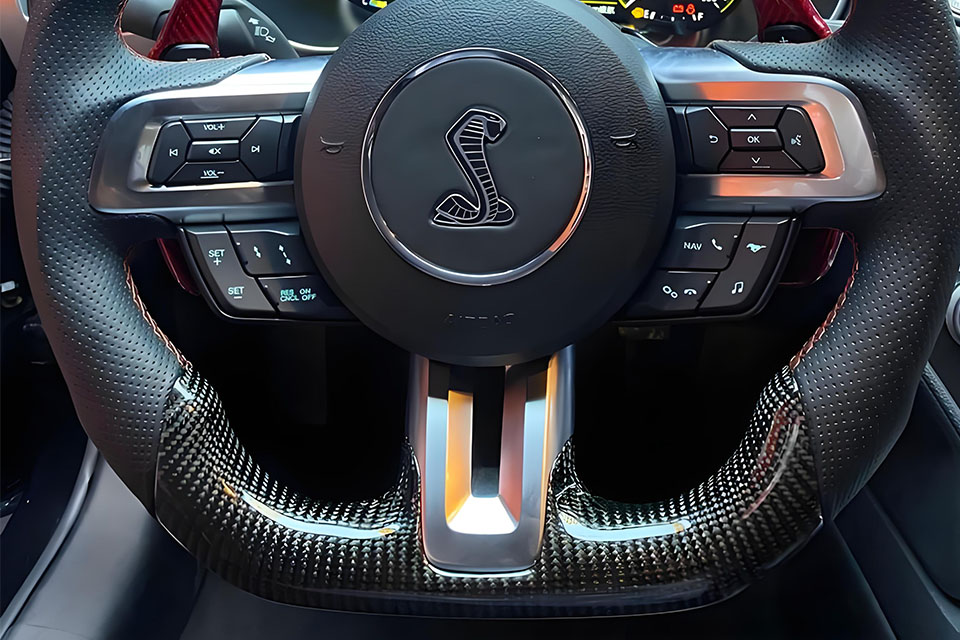
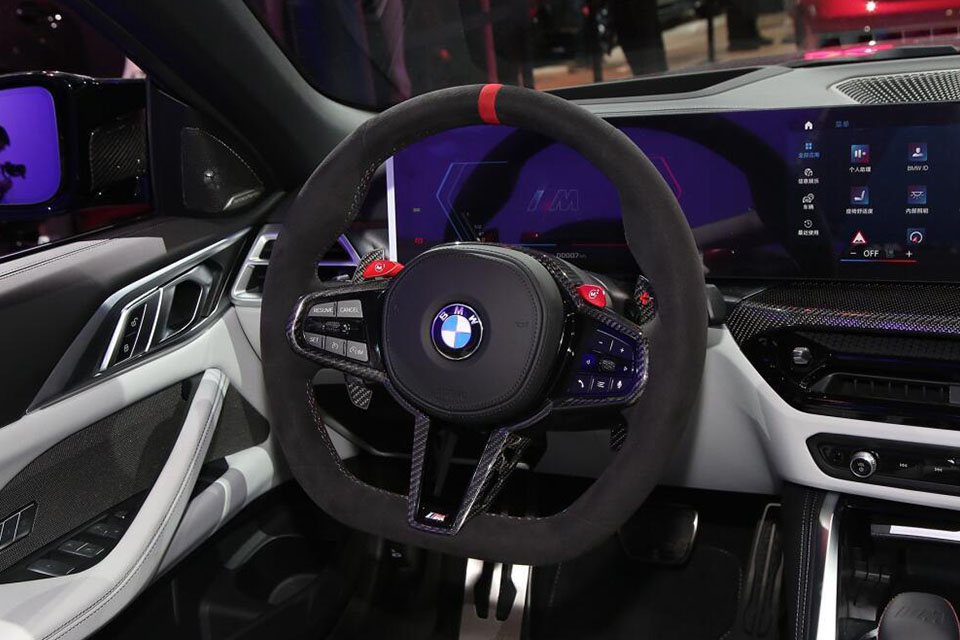
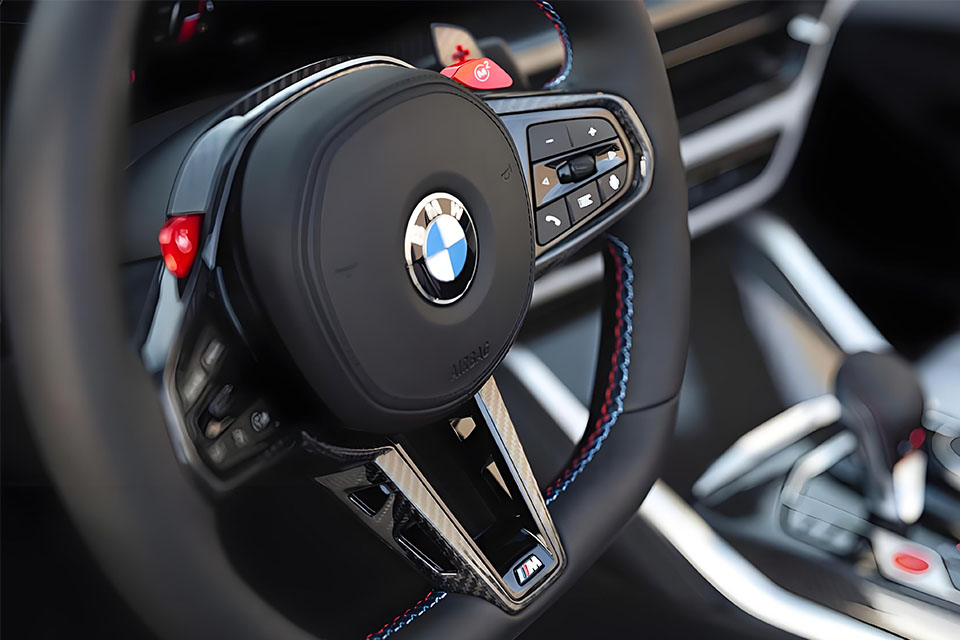
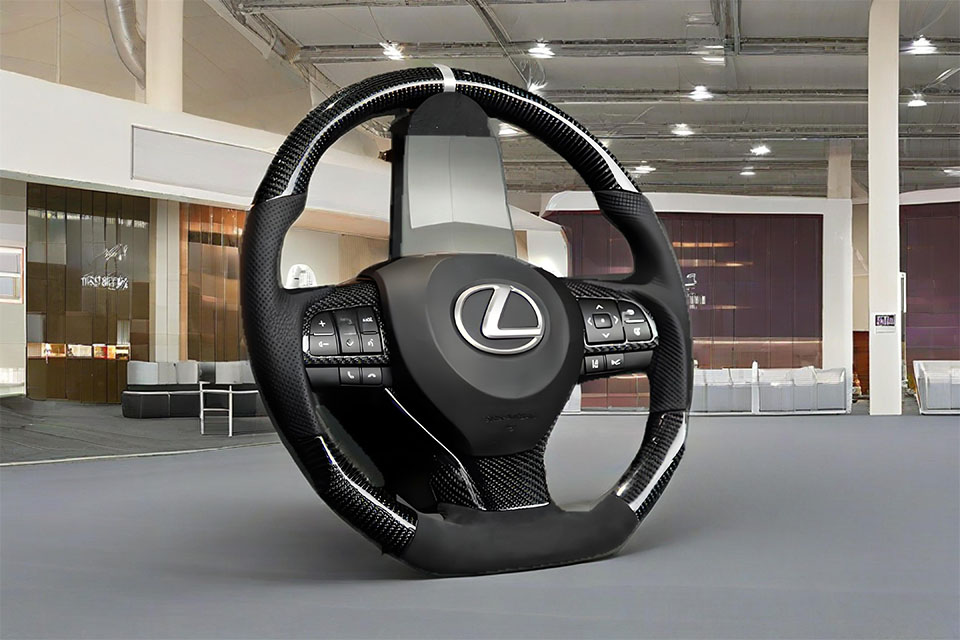
A custom carbon fiber steering wheel is a complete steering wheel assembly, typically built on the customer’s original OEM core (or a matched replacement core) and finished in real carbon fiber, leather, or Alcantara. Because it replaces the whole wheel, compatibility with the airbag housing, buttons, paddle shifters, heating elements, and connectors has to be confirmed against the specific vehicle model, year, and trim.
This option suits tuning shops and brands running full custom or OEM/ODM programs where the interior finish, grip shape, and retained functions are all part of the specification. For example, see our completed Nissan Sentra steering wheel project for a full-wheel build.
For OEM/ODM production of complete wheels, see our Custom Carbon Fiber Steering Wheel Manufacturer page.
What Is a Carbon Fiber Steering Wheel Cover?
A carbon fiber steering wheel cover (also called a trim, shell, or overlay) is not a replacement wheel — it’s a decorative piece that fits over or onto the existing steering wheel to change its appearance. It’s generally lower cost, simpler to fit, and doesn’t require modifying the wheel’s internal structure, though fitment around buttons and stitching seams still needs to be checked per vehicle.
This option suits distributors selling interior accessory kits or appearance upgrades, and buyers who want a carbon fiber look without replacing the whole wheel.
For cover and trim supply, see our Carbon Fiber Steering Wheel Cover Manufacturer page.
Key Differences Between a Full Steering Wheel and a Cover
Structure
A full steering wheel involves the OEM core, grip section, airbag housing, and button modules. A cover is a surface-level piece added over the existing wheel — it doesn’t touch the core structure.
Installation
A full wheel replacement is best handled by a professional installer, particularly where airbag or wiring connections are involved. A cover is usually simpler to fit, but exact difficulty still depends on the vehicle’s button layout and wheel shape.
Cost
A full wheel costs more because it involves core preparation, carbon layup, leather/Alcantara wrapping, clear coat finishing, and button/paddle-shifter fitment. A cover is priced lower and suits higher-volume sales.
Safety and Compatibility
A full wheel replacement directly involves the airbag, SRS system, horn contact, and wiring, so fitment must be confirmed per vehicle before production. A cover installed only on non-airbag trim areas normally should not interfere with these systems — but it must be kept clear of the airbag cover and center emblem area, and installers should still confirm it doesn’t interfere with button access or stitching seams.
Best B2B Use Case
Full wheels suit premium, project-based custom orders. Covers suit higher-volume accessory and trim-kit sales through distributors.
Which Option Is Better for Your Project?
- Running a tuning shop doing full interior upgrades? A custom steering wheel is usually the better fit.
- Sourcing accessory kits as a distributor? A cover or trim product is easier to stock and sell at volume.
- Need to keep every original function on a limited budget? A cover is typically the lower-cost, lower-complexity option.
- Want forged carbon, Alcantara wrapping, LED display, or a flat-bottom shape? That level of customization is only available on a full wheel.
- Concerned about airbag compatibility or installation risk? Starting with a cover project can reduce complexity if the cover is limited to non-airbag trim areas — but fitment around buttons and airbag cover panels still needs to be checked per vehicle.
Real Carbon Fiber vs. Carbon Look Film
This distinction applies to both products, since “carbon fiber look” items are common in the aftermarket:
- Real carbon fiber is woven carbon fabric bonded with resin (commonly epoxy) and finished with a clear coat, with visible weave depth and directional reflectivity.
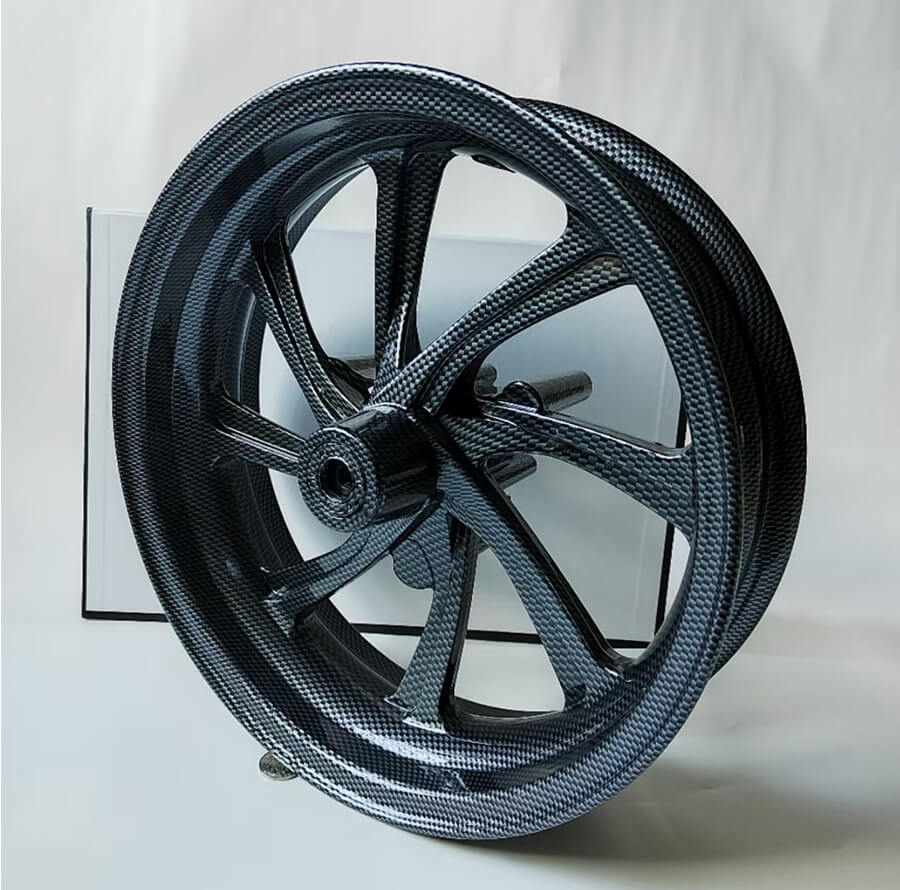
- Hydro dipping / carbon wrap film is a printed pattern over a plastic or fiberglass base — it can look similar in photos but lacks the weight, rigidity, and heat resistance of genuine woven carbon.
- Forged carbon fiber uses chopped carbon strands pressed under heat and pressure, giving a marbled (rather than woven) pattern — often used for curved surfaces where a woven layup is impractical.
Ask your supplier for close-up sample photos of the weave and clear coat before ordering either product, so you can verify the material before committing to a bulk order.
For steering wheel covers specifically, many lower-cost products on the market use carbon-look vinyl wrap, hydro-dipped patterns, or molded plastic imitation finishes rather than real carbon fiber. Ask your supplier to confirm in writing whether the part is real woven carbon fiber, forged carbon fiber, or a printed carbon-look pattern before ordering.
When Not to Use a Steering Wheel Cover
A cover is not the right choice for every project. It’s a surface-level product, so it can’t change:
- Grip shape — if you want a flat-bottom (D-shape) wheel or a different grip profile, a cover can’t reshape the underlying wheel.
- LED displays — integrated LED shift indicators or displays require a full wheel build, not a surface cover.
- Grip material changes — switching to Alcantara or leather wrapping on the grip itself requires modifying the wheel, not adding a cover.
- Structural wear — if the original wheel is cracked, warped, or structurally worn, a cover will hide the appearance but won’t restore the underlying structure.
- Any position over the airbag cover or center emblem — as noted above, this is a genuine safety concern and should be avoided regardless of the product type.
If any of these apply to your project, a full custom steering wheel is the more appropriate option.
Common Mistakes When Sourcing These Products
B2B buyers most often run into these issues:
- Ordering a cover when a full wheel was needed (or the reverse) — confirm which product actually matches the project scope before ordering.
- Sending only the vehicle model, without photos of the original steering wheel — trim level, button layout, and wheel generation can differ significantly within the same model.
- Overlooking LHD/RHD and market-specific trim differences — button placement and wiring can vary by region even for the “same” model.
- Checking only the carbon weave pattern, without confirming installation fit — a good-looking sample doesn’t guarantee correct fitment on your specific wheel.
- Specifying a cover that would sit over the airbag cover or center emblem area — always confirm the cover design stays clear of this zone.
- Not confirming real carbon fiber vs. carbon-look film in writing before placing a bulk order.
Our Recommendation for B2B Buyers
- Premium custom programs → full custom carbon fiber steering wheels
- High-volume accessory lines → steering wheel covers / trims
- First-time distributors → consider starting with covers, then adding full wheels once you’ve validated demand
- Private label brands → prepare both product lines, but list and market them separately so customers don’t confuse the two products
If you’re sourcing across multiple product lines, we also produce carbon fiber motorcycle parts for buyers who need both automotive and motorcycle carbon fiber components from the same supplier.
What Information Should Buyers Provide?
For a Custom Steering Wheel
- Vehicle make, model, and year
- Left-hand drive or right-hand drive
- Photos of the original steering wheel (front, back, connector)
- Carbon style: 3K twill / forged carbon / plain weave
- Retained functions needed: buttons, paddle shifters, heating, LED
- Leather / Alcantara color and stitching preference
- Order quantity
For a Steering Wheel Cover
- Vehicle make, model, and year
- Photos of the original steering wheel
- Cover coverage area (full wrap vs. partial panels)
- Carbon style: real woven carbon / forged carbon
- Finish: gloss or matte
- Order quantity
Frequently Asked Questions
Is a carbon fiber steering wheel cover the same as a carbon fiber steering wheel?
No. A cover is a decorative piece fitted over the existing wheel; a full steering wheel is a complete replacement assembly built on an OEM or matched core.
Does a steering wheel cover affect the airbag?
A cover installed only on non-airbag trim areas normally should not interfere with the airbag. However, any cover, badge, or decorative piece placed on or over the airbag cover or center emblem area is a genuine safety concern: US regulators (NHTSA) have warned that decorative attachments on the airbag cover can become dangerous projectiles when the airbag deploys in a crash. Confirm with your supplier that any cover product is designed to sit clear of the airbag cover panel.
Is a full carbon fiber steering wheel more expensive than a cover?
Yes, generally. A full wheel involves core preparation, carbon layup, wrapping, and button/paddle-shifter fitment, which adds cost compared to a surface-level cover.
Can both products use real carbon fiber?
Yes — both a full steering wheel and a cover can be finished in real woven carbon fiber or forged carbon, as opposed to printed carbon-look film.
Which option is better for wholesale buyers?
It depends on your customer base: full wheels suit premium, project-based orders, while covers suit higher-volume accessory and trim-kit sales.
Can you provide private label packaging for both options?
Yes, private label badging and custom packaging are available for both product lines — contact us with your specifications.
About This Guide
This guide was reviewed by the SCOMP carbon fiber production team, based on our experience manufacturing custom carbon fiber automotive interior parts, steering wheel components, covers, trims, and OEM/ODM carbon fiber projects for B2B buyers.