

Carbon Fiber Composite Material Hot Pressing Molding Process
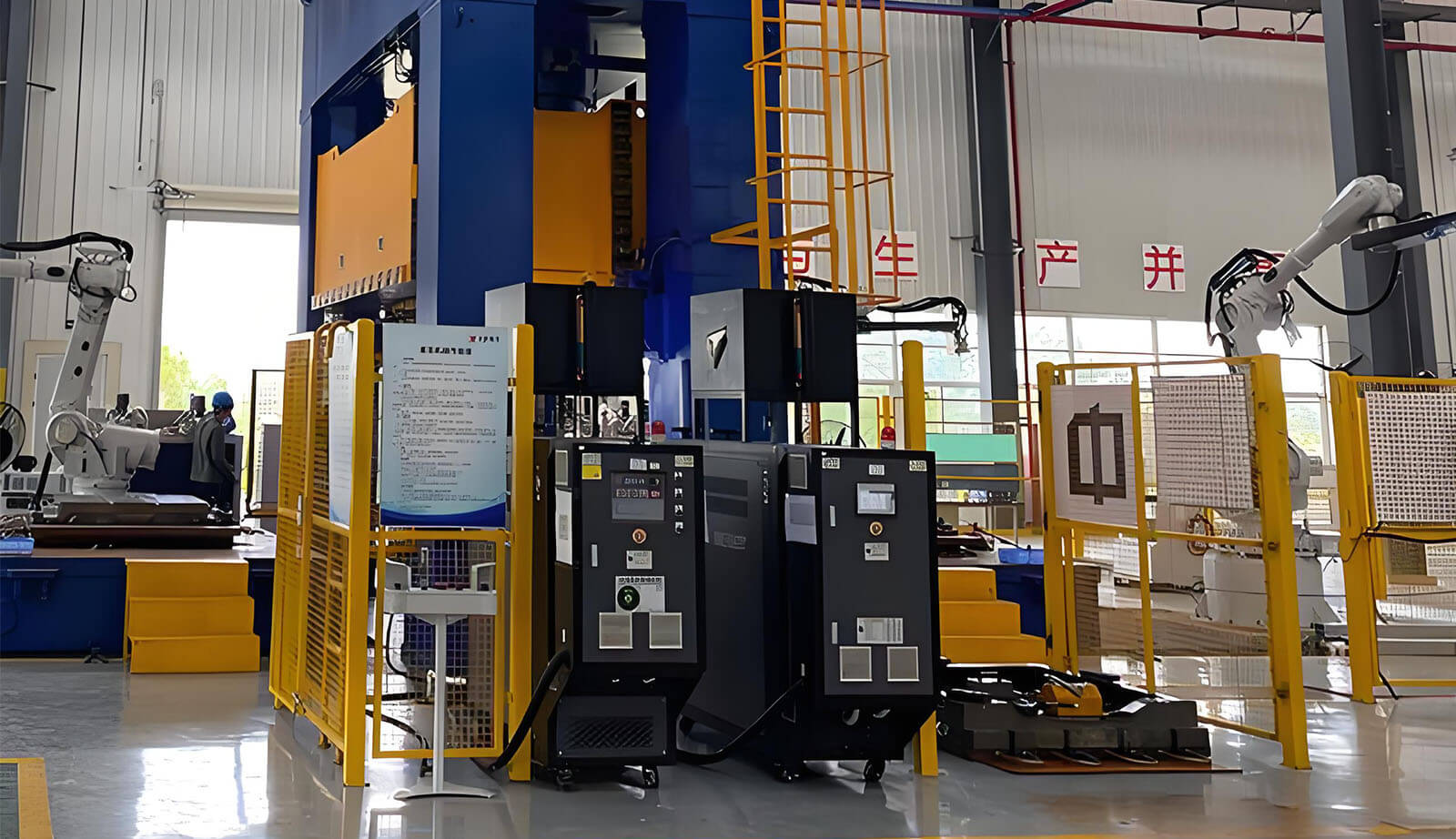
Our factory employs an advanced carbon fiber hot press process with a P20 steel mold, ensuring high efficiency, precision, durability, and cost-effectiveness for quality production.
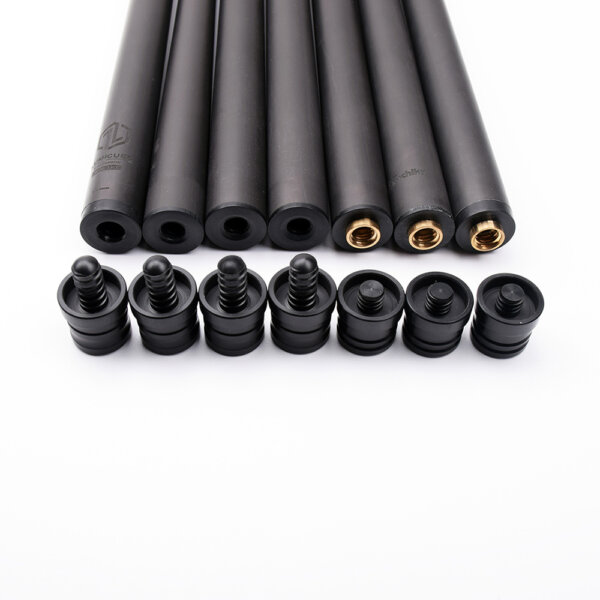
We manufacture custom carbon fiber cue shaft tubes and shaft blanks for billiard brands, cue makers, and wholesale buyers worldwide. Whether you need fully finished cue shafts or semi-finished tube blanks for your own workshop, our factory supports both with precise tolerances, flexible specifications, and private label options.
Our production facility specializes in custom carbon fiber manufacturing for automotive, sports equipment, UAV, and industrial applications. Cue shaft tubes benefit from this wider composite experience — particularly in layup consistency, curing control, and straightness tolerance management.
If you are sourcing carbon fiber pool cue shaft tubes, break cue tubes, jump cue tubes, or cue butt tubes for your product line, this page covers what we offer, how we manufacture, and how to place an order.
A carbon fiber cue shaft tube is the hollow composite tube that forms the structural core of a pool cue shaft. It differs from a finished cue shaft in that it may not yet have:
Cue makers and billiard brands often source shaft blanks or shaft tubes directly from a composite factory, then complete the final machining, fitting, and branding in their own facility. This gives them full control over taper geometry, feel, and branding while benefiting from the structural consistency of a factory-made carbon fiber tube.
We supply both:
| Finished Cue Shaft | Shaft Blank / Shaft Tube | |
|---|---|---|
| Who it’s for | Distributors, retailers, end users | Cue makers, OEM brands, private label buyers |
| Taper | Complete and sanded | Raw or partially tapered |
| Ferrule | Installed | Not installed |
| Joint | Installed or machined | Dimension spec provided, not installed |
| Logo | Available | Applied by buyer or by factory |
| MOQ | Lower | Varies by spec |
| Lead time | 7–15 days | 10–20 days for new spec |
If you are a cue maker who wants to finish and brand the shaft yourself, a shaft tube or shaft blank is the right choice. If you are sourcing ready-to-sell shafts for a retail product line, we can produce a more finished shaft to your drawing.
We accept custom orders based on buyer drawings, sample shafts, or detailed spec sheets. Below are the main parameters we can customize.
Diameter and Wall
Length
Taper Design
Joint End
Tip and Ferrule Area
Surface Finish
Logo and Branding
The table below shows the common range for our cue shaft tube production. All parameters can be adjusted to your specification.
| Item | Common Range | Custom Options |
|---|---|---|
| Tip-end outer diameter | 11.5–14.0 mm (11.8 / 12.4 / 12.5 / 13.0 / 13.3 / 13.9 mm are common sizes) | Custom OD by drawing |
| Joint-end outer diameter | 21.0–22.0 mm / approx. 0.842 in | Custom joint-end OD |
| Length | 28–31 in / 710–790 mm (30 in and 31 in most common) | Cut to buyer drawing |
| Wall thickness | 1.0–3.0 mm (.035 in is a common reference for playing shaft blanks) | Adjusted by stiffness and impact target |
| Core | Hollow / hard closed-cell foam filled | Custom foam density or hybrid structure |
| Taper | Pro taper / conical taper | Buyer drawing or sample shaft |
| Cross-section | Round (standard) / Hex (available) | Custom profile on request |
| Surface | Matte / satin / glossy / raw sanded | Custom logo and coating |
| Weight | Approx. 3.4–3.8 oz for standard playing shaft blanks; varies by OD, wall and core | Controlled by hollow / foam-filled structure and layup |
| MOQ | Sample batch 10–50 pcs | Depends on tooling and specification |
The structural and playing characteristics of a carbon fiber cue shaft tube depend largely on how the carbon fiber layers are arranged. We work with buyers to select the right layup for their target feel and stiffness.
Fiber orientation
Core construction
Material options
We can share our standard layup schedules or work from your existing shaft design if you supply a cross-section drawing or material specification.
Understanding the physical properties of carbon fiber composite helps buyers make better specification decisions.
Density and weight. Carbon fiber composite materials typically have a density of 1.6–1.8 g/cm³ depending on fiber volume fraction and resin system. This is significantly lower than aluminum (2.7 g/cm³) or steel (7.8 g/cm³), which is why carbon fiber shaft blanks can achieve the same structural performance at much lower weight than metal alternatives.
Dimensional stability. Compared with wood, carbon fiber composite is far less sensitive to humidity changes. It does not swell, shrink, or warp in the same way as natural wood grain, which helps brands achieve more consistent shaft straightness and batch repeatability across different storage and playing environments.
UV and corrosion resistance. Carbon fiber does not corrode, and the composite structure is suitable for long-term indoor sports equipment use. For visible shaft surfaces, matte, satin, or glossy clear coatings help protect the resin surface and maintain appearance over time.
Temperature resistance. Epoxy-based carbon fiber composites maintain structural integrity at temperatures well above normal use conditions. Our curing process reaches temperatures sufficient to ensure full resin cross-linking, which also means the finished shaft is stable under heat exposure from sunlight or storage in warm environments.
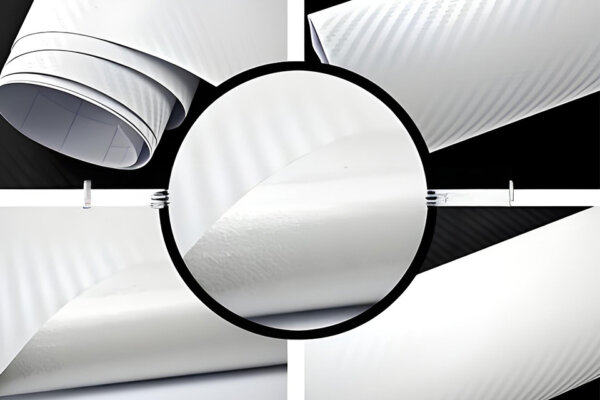
Surface weave options. The visible surface of the shaft blank depends on the outer cosmetic layer selected. 3K twill weave gives the classic diagonal crosshatch pattern. 3K plain weave gives a tighter, more uniform grid pattern. A UD surface layer shows no visible fiber pattern and appears as a smooth, solid color. All three options are available in matte, satin, or glossy finish.
A carbon fiber cue shaft tube is not only a cosmetic carbon tube. Its playing performance depends on the relationship between fiber orientation, wall thickness, tip-end mass, core structure, and taper geometry. Understanding these factors helps buyers specify the right tube for their product.
Axial stiffness is mainly controlled by unidirectional carbon fiber layers, fiber modulus, and wall thickness. A stiffer axial structure improves power transfer and creates a more stable hit, but too much stiffness in the wrong layup can make the shaft feel harsh or unforgiving on mis-hits.
Torsional stiffness is affected by off-axis layers such as ±30° or ±45°. These layers help the shaft resist twisting during off-center hits and improve structural stability, particularly around the joint area and tip end where contact forces are concentrated.
Tip-end mass plays an important role in low-deflection shaft design. A lower front-end mass reduces cue ball deviation on off-center hits. However, this must be balanced against impact strength, ferrule support area, and long-term durability. Removing too much mass from the front end can compromise structural reliability under repeated break shots.
Vibration damping is influenced by the resin system, core filling, wall thickness, and layup sequence. Hollow shafts are typically lighter but may produce a higher-frequency resonance on contact. Foam-filled shafts tend to dampen this and provide a more solid feedback character. Neither is universally better — it depends on the player feel the buyer is targeting.
Impact resistance is especially important for break cue shafts and jump cue shafts. For these applications, we recommend a stronger layup, thicker wall, or foam-filled construction rather than an ultra-light hollow tube. We do not recommend using a very thin hollow tube for break cue shaft applications, because break shots create significantly higher impact loads than normal playing shots.
Different brands target different playing characteristics. Some buyers want a stiff, direct hit for a break shaft product line. Others want a softer, more forgiving feedback for a playing shaft aimed at recreational players. Most premium shaft brands land somewhere specific on this spectrum and want their product to be consistent across batches.
We help OEM buyers adjust shaft feel through several variables that can be modified within the same tube format:
This approach means OEM buyers are not limited to buying the same standard blank used by every other seller. If your brand has a specific shaft feel you are trying to achieve or replicate, contact us with your target specifications and we will discuss the layup and construction options that are most likely to get there.
Different manufacturing processes produce different results in cost, consistency, stiffness, and surface quality. We select the appropriate process based on the buyer’s performance target and volume requirements.
| Process | Best For | Advantages | Limitations |
|---|---|---|---|
| Roll-wrapped prepreg tube | High-end cue shaft blanks | Accurate layup control, good strength-to-weight ratio, customizable stiffness | Higher cost than basic tube production |
| Pressure-wrapped tube | OEM shaft tubes, small to medium batch | Good layer compaction, flexible specs | Requires OD sanding or coating after curing |
| Hollow construction | Lightweight playing shafts | Lower weight, fast feedback feel | May produce hollow resonance if layup is not optimized |
| Foam-filled construction | Playing, break, and jump shafts | More solid hit, better damping, improved impact feel | Slightly heavier than hollow construction |
| Pultruded carbon tube | Simple straight tube applications | Lower cost, stable long-length production | Not suitable for custom taper, joint-end design, or cue-specific feel requirements |
For most OEM cue shaft tube projects, we use roll-wrapped or pressure-wrapped prepreg construction. Pultrusion is available for basic tube supply where cue-specific performance is not the main requirement. For a broader overview of tube types and specifications, see our custom carbon fiber tubes page.
Our production facility uses hot presses, curing ovens, vacuum systems, CNC trimming equipment, and composite finishing tools. For appropriate projects, prepreg curing under controlled pressure is used to ensure consistent fiber compaction and dimensional stability.
Straightness is the most critical quality dimension for a cue shaft tube. A shaft that is not straight will affect aim, tip contact, and playability regardless of how well the layup is designed.
Our straightness control process:
On deflection: Deflection (cue ball deviation on off-center hits) is influenced by shaft stiffness, tip-end mass, outer diameter at the tip, and taper geometry. We do not publish specific deflection reduction percentages, because these figures depend on how the shaft is tested and what reference shaft is used for comparison. What we can do is match your layup, outer diameter, wall thickness, and tip-end geometry to an existing shaft you are trying to replicate or improve. If you send us a sample shaft, we can reverse-engineer the key dimensions and discuss the layup options.
Our carbon fiber cue shaft tube manufacturing follows a consistent, documented sequence.
Each production batch goes through the following checks before shipment:
We can provide dimension reports and batch records on request. For larger production orders, third-party inspection before shipment can be arranged.
For buyers who are developing a new cue shaft product, we follow a structured development sequence:
This process ensures that production shafts are consistent with the approved specification, and gives buyers a clear reference point for quality control in subsequent orders.
| Finish | Description | Best for |
|---|---|---|
| Matte | Low sheen, smooth feel, non-reflective | Players who prefer a natural, low-friction grip |
| Satin | Mid-sheen, balanced look and feel | Most retail cue shafts |
| Glossy | High gloss clear coat | Premium appearance, display products |
| Raw sanded | No coating, 400–600 grit finish | Cue makers who apply their own finish or branding |
| Custom | Custom tint, colored coating, or two-tone | Private label or brand-specific visual requirements |
Our carbon fiber cue shaft tubes are used in the following applications:
Beyond standard pool cue shaft tubes, we can also manufacture carbon fiber tubes for related billiard and cue-making applications:
If your application is not listed here, contact us with your requirements and we will advise whether it falls within our manufacturing capability.
Many cue brands transitioning from wood to carbon fiber for their OEM production have questions about how the two materials compare at the blank or tube level. The differences matter both for product development and for buyer communication.
Dimensional stability. Wood shafts expand and contract with changes in humidity and temperature. A maple shaft straight in winter may develop slight warp in a humid summer environment. Carbon fiber composite is far less sensitive to these changes and does not swell, shrink, or warp in the same way as natural wood grain, making it much more consistent for production and for end users who play in different environments.
Batch consistency. Wood blanks vary in grain density, stiffness, and weight even within the same batch. Carbon fiber shaft tubes are produced from a repeatable manufacturing process — same layup, same mandrel, same cure cycle — which means batch-to-batch consistency is significantly higher. For brands that need their product to feel the same across every unit sold, this is a major advantage.
Maintenance requirements. Wood shafts typically require regular sanding, conditioning, and careful storage to maintain performance. Carbon fiber shaft tubes require none of this. The surface finish is stable and does not need re-treatment.
Weight control. Carbon fiber composite has a higher material density than wood, but it can be engineered as a hollow or foam-filled thin-wall tube. This allows brands to control shaft weight, front-end mass, stiffness, and balance more precisely than natural wood blanks. Instead of relying on wood grain variation, the final weight can be adjusted through wall thickness, layup, core structure, and taper design.
Feel character. Carbon fiber shafts transmit feedback differently from wood. The hit feel is generally described as more direct and solid, with less vibration absorption than wood. Whether this is an advantage depends on the player segment the brand is targeting. We can adjust the feel character through layup and core construction choices as described in the tuning section above.
Not every carbon fiber tube design is suitable for cue shaft use. Based on our composite manufacturing experience, we generally do not recommend:
If you are unsure which design is appropriate for your product, we are happy to review your application and advise before sampling.
We mainly work with:
To provide an accurate quote quickly, please prepare the following information:
1. Shaft type required: finished cue shaft / shaft blank / raw tube only
2. Outer diameter — tip end and joint end if tapered
3. Inner diameter or wall thickness
4. Length
5. Taper type: pro taper / conical / custom drawing
6. Joint end: blank end / dimensioned to specific joint pin type
7. Surface finish: matte / satin / glossy / raw sanded
8. Logo and packaging requirement, if any
9. Target quantity: sample / small batch / production volume
10. Target weight per shaft, if specified
11. Feel notes or reference shaft, if available
If you have a sample shaft you want us to match, sending it to our facility is the most efficient way to begin. We will measure the key dimensions and discuss layup options before quoting.
Sourcing directly from a composite manufacturer — rather than a cue-specific supplier or a trading company — gives OEM buyers several practical advantages.
Control over material and construction. You can specify layup schedule, wall thickness, fiber grade, and core structure. You are not limited to a fixed catalogue item designed for general retail.
Private label capability. We produce under your brand with your packaging and specifications. There is no requirement to use our name or branding on the product.
Scalable production. From sample runs of 10–20 shafts through to production volumes of several thousand pieces per batch. We can support a growing product line without changing suppliers.
Factory traceability. Material batch records, production records, and dimension reports are available for quality-sensitive buyers and those who need documentation for import compliance.
Composite manufacturing depth. We produce carbon fiber components across multiple industries. The process knowledge gained in automotive, UAV, and industrial composite work — particularly in curing control, layup consistency, and dimensional stability — is applied directly to cue shaft tube production. Learn more about our facility and capabilities on our carbon fiber composite factory page.
For standard specifications, samples start at 10–20 pieces. For fully custom specifications with new mandrel tooling, we recommend a sample run of 20–50 pieces before committing to full production.
Yes. If you send us a sample shaft, we can measure the key dimensions and produce a matching tube. We will confirm the specification with you before production begins, as some adjustments for manufacturing tolerances may be needed.
We can supply the tube only, or we can dimension the joint end and ferrule area as part of the manufacturing process. If you use a proprietary joint system, we will need dimensions or a joint pin sample to work from.
Sample lead time is typically 10–15 business days for a new specification. Production lead time varies by quantity and current schedule, generally 15–25 business days. We will confirm lead time at order placement.
Yes. Laser engraving, pad printing, and heat transfer are all available. Please provide your logo file in vector format (AI, EPS, or high-resolution PNG) when requesting a quote.
The standard cosmetic layer is 3K twill weave, which gives the classic crosshatch carbon fiber appearance. We can also produce plain weave, UD surface (no visible weave pattern), or matte-finish versions that minimize surface glare.
We inspect every shaft tube for straightness to a tolerance of ≤ 0.3 mm over the full shaft length. Shafts that fall outside this tolerance are rejected before packing.
Factory visits can be arranged in advance. For production orders, we can coordinate with a third-party inspection service before shipment if required.
Yes. Some buyers source shaft blanks for their own workshop production while also ordering a quantity of finished shafts for direct retail. We can fulfill both from the same factory and combine them in one shipment if the timing aligns. Contact us to discuss split order arrangements.
A cue shaft tube is usually a raw or semi-finished carbon fiber tube used as the structural base of a shaft. It may have no taper, no ferrule area preparation, and no joint-end dimensioning. A shaft blank is typically closer to the final shaft shape and may already include tapering, OD sanding, or prepared tip and joint areas. The exact boundary between the two depends on the buyer’s own production process — some cue makers prefer a completely raw tube, while others want a blank that only needs final sanding and fitting.
A hollow tube is lighter and typically provides faster feedback on contact. A foam-filled tube is slightly heavier but dampens the internal resonance sound and can provide a more solid feel. The right choice depends on the shaft type and the player feel you are targeting. For break cue and jump cue applications, foam-filled or thicker-wall construction is generally more appropriate than a lightweight hollow design.
We work with billiard brands, cue makers, wholesale distributors, and private label buyers. If you are also sourcing complete carbon fiber pool cue shafts, we can supply both finished shafts and raw shaft tubes from the same facility. Send us your specifications and we will respond within one business day.
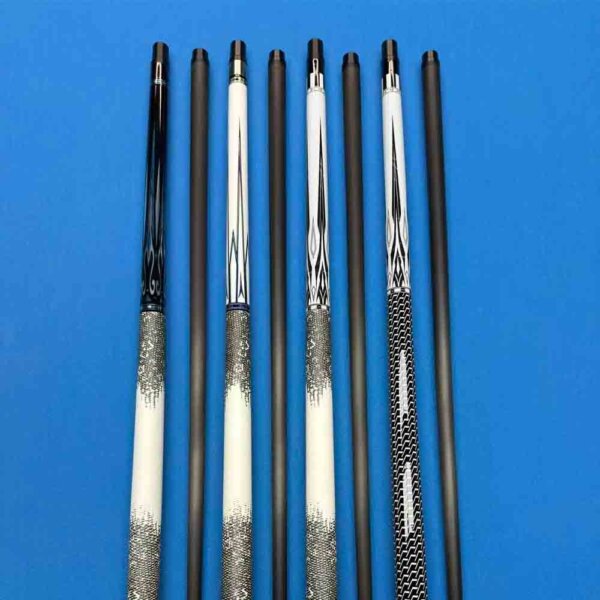

Our factory employs an advanced carbon fiber hot press process with a P20 steel mold, ensuring high efficiency, precision, durability, and cost-effectiveness for quality production.
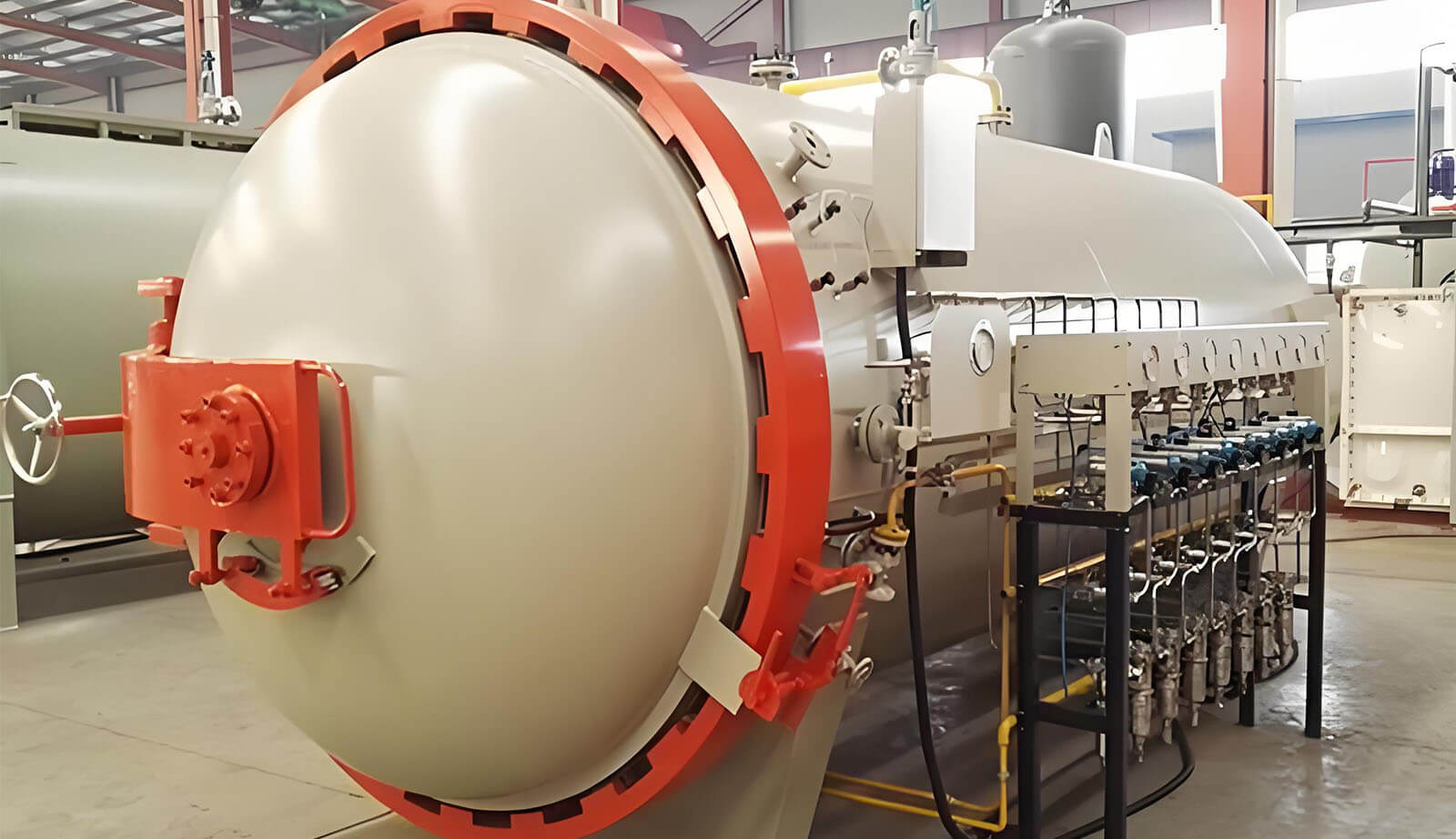
Our factory runs 100+ hot pressure autoclaves, using aluminum molds and vacuum induction to shape carbon fiber with precision. High heat and pressure enhance strength, stability, and flawless quality.
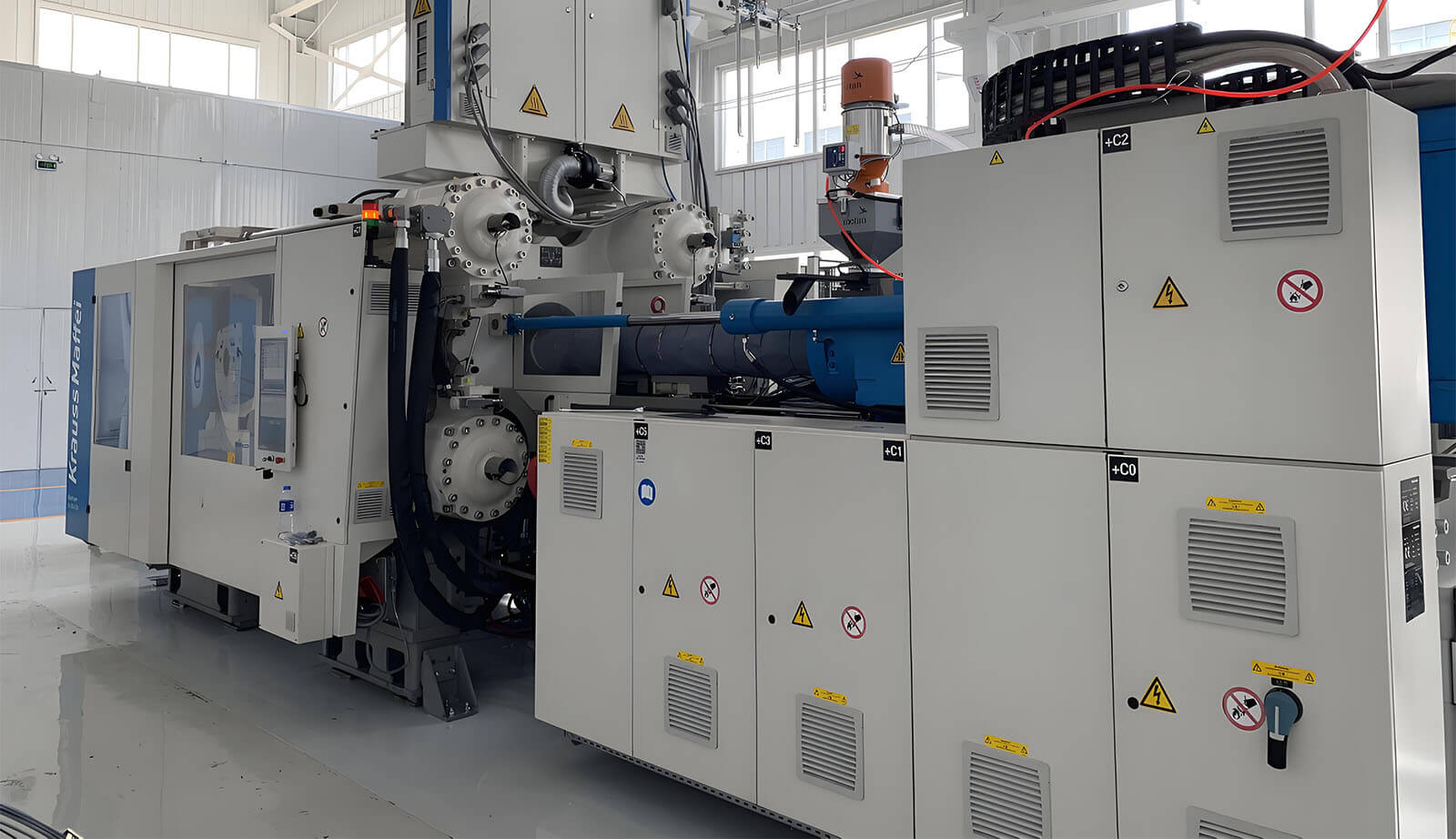
Our Carbon Fiber Research Center drives innovation in new energy, intelligence, and lightweight design, using advanced composites and Krauss Maffei Fiber Form to create cutting-edge, customer-focused solutions.
Here are the answers to the frequently asked questions from the experienced carbon fiber products factory
We produce a wide range of carbon fiber components, including automotive parts, motorcycle parts, aerospace components, marine accessories, sports equipment, and industrial applications.
We primarily use high-quality prepreg carbon fiber and large-tow carbon fiber reinforced high-performance composites to ensure strength, durability, and lightweight characteristics.
Yes, our products are coated with UV-protective finishes to ensure long-lasting durability and maintain their polished appearance.
Yes, our facilities and equipment are capable of producing large-size carbon fiber components while maintaining precision and quality.
What are the benefits of using carbon fiber products?
Carbon fiber offers exceptional strength-to-weight ratio, corrosion resistance, stiffness, thermal stability, and a sleek, modern appearance.
We cater to automotive, motorcycle, aerospace, marine, medical, sports, and industrial sectors with a focus on lightweight and high-performance carbon fiber components.
Yes, we provide custom carbon fiber solutions tailored to your specifications, including unique designs, sizes, and patterns.
We utilize advanced technologies such as autoclave molding, hot pressing, and vacuum bagging, ensuring precision, stability, and quality in every product. wonders with the Hello Elementor Theme, we’re trying to make sure that it works great with all the major themes as well.
We use aluminum and P20 steel molds, designed for durability and high accuracy, to create complex and precise carbon fiber components.
Our products undergo rigorous quality control checks, including dimensional accuracy, material integrity, and performance testing, to meet industry standards.