Carbon fiber pickleball paddles are popular for their light weight, stiffness, and spin performance. This guide covers how to clean a pickleball paddle in general, and goes deeper on carbon fiber models specifically — since their textured, raw surface collects ball residue, sweat, and dust faster than a smooth or coated face, and reacts differently to cleaning products.
We manufacture raw carbon fiber composite parts, including paddle faces, so this guide covers not just how to clean a carbon fiber paddle, but why the surface behaves the way it does — and which cleaning habits actually affect it.
Quick Answer
To clean a carbon fiber pickleball paddle:
- Remove loose dirt and ball fiber with a dry microfiber cloth.
- Wipe the face with a lightly damp microfiber cloth — don’t soak it.
- Use a carbon fiber cleaning block for embedded residue or ball marks.
- Avoid glass cleaners, alcohol, acetone, and abrasive scrubbing.
- Dry completely before storing in a padded cover.
Table of Contents
- Why Carbon Fiber Paddles Need Different Care
- Carbon Fiber vs. Fiberglass Paddle Cleaning
- How Cleaning Affects Surface Texture
- What You Need
- Step-by-Step Cleaning Guide
- Removing Ball Marks
- Magic Eraser and Alcohol: What’s Safe
- Common Cleaning Mistakes
- How Often to Clean
- Storage Tips
- A Manufacturer’s Perspective
- FAQ
Why Carbon Fiber Paddles Need Different Care Than Other Paddles
Most fiberglass or composite paddles have a smooth, painted, or clear-coated face. Raw carbon fiber paddles are different: the weave itself is the hitting surface, with no paint or clear coat over it. That’s intentional — the exposed weave creates the texture that grips the ball and produces spin.
The downside is that an exposed weave has more surface area to trap:
- Ball residue — pickleballs shed a thin layer of plastic fiber on contact, which builds up in the weave over time
- Sweat and skin oils — transferred from hands and, on some designs, from the paddle face during play
- Court dust and dirt
Because there’s no coating acting as a barrier, this buildup sits directly on the fibers and resin surface — which is also why the wrong cleaning method can affect a carbon face faster than it would a coated one.

Carbon Fiber vs. Fiberglass Paddle Cleaning: What’s Different
| Carbon Fiber (raw) | Fiberglass / Coated | |
|---|---|---|
| Surface | Exposed textured weave | Smooth, painted or clear-coated |
| What you’re protecting | The texture itself, which generates spin | The coating layer over the composite |
| Tolerance for soap/water | Lower — keep it brief and light | Generally more forgiving |
| Best tool for residue | Carbon fiber cleaning block | Microfiber cloth is usually enough |
| Main risk | Wearing down the texture with abrasive or harsh products | Scratching or dulling the coating |
If your paddle has a painted, textured-paint, or clear-coated face over the carbon layer, treat it more like the fiberglass column — the coating is your first line of contact, not the raw fiber. For a deeper look at how the two materials compare beyond cleaning, see our guide on raw carbon fiber vs. fiberglass paddles.
How Cleaning Affects Carbon Fiber Paddle Surface Texture
The texture on a raw carbon fiber face isn’t decorative — it’s what creates the friction that generates spin. That texture comes from the weave pattern and how the resin was cured around it, and it’s also the part of the paddle that cleaning affects most directly.
- Residue sitting on top of the texture is what proper cleaning removes — this is the “restore the grip” effect players notice after a good clean.
- Abrasive cleaning (harsh scrubbing, melamine erasers used too often, sandpaper) doesn’t just remove residue — it removes tiny amounts of the texture itself, permanently, a little at a time.
- The goal of correct cleaning is to clear what’s sitting on the surface without grinding down what’s built into it.
This is the practical difference between “cleaning” and “sanding,” even though both can look similar from the outside.
What Happens If You Don’t Clean It
| Problem | Effect on the Paddle |
|---|---|
| Residue buildup in the weave | Surface friction drops, spin becomes inconsistent |
| Sweat left on the face or handle | Grip material degrades faster |
| Dust ground in during play | Fine surface abrasion over time |
| Cleaning with the wrong product | Resin surface can dull or the texture can wear down permanently |
That last row matters most. Many manufacturers warn that the fastest way to damage a raw carbon face isn’t normal play — it’s a cleaning product that was never meant for a resin composite surface.
Know Your Surface Before You Clean
Raw carbon fiber surface
- Visible weave texture, slightly rough to the touch
- No clear coat — this is the surface directly generating spin
- More sensitive to solvents and abrasive cleaning
Coated or textured-paint carbon surface
- Carbon fiber layer underneath, but the hitting surface is a painted or clear-coated texture layer
- More forgiving of mild cleaning products, since the coating is the first line of contact, not the raw fiber
If you’re not sure which one you have, check the manufacturer’s spec sheet — “raw carbon face” or “unpainted carbon face” means treat it as the first category.
What You Need
| Item | Recommended |
|---|---|
| Microfiber cloth | Yes |
| Lukewarm water | Yes |
| Mild soap (small amount, occasional use) | Yes, sparingly |
| Carbon fiber paddle cleaning block | Yes, for raw carbon faces |
| Paper towel or rough cloth | No |
| Household glass cleaner, alcohol, or acetone | No |
Step-by-Step: How to Clean a Carbon Fiber Pickleball Paddle
1. Wipe off loose debris first. Before adding any moisture, use a dry microfiber cloth to brush off loose dust and ball fiber. This prevents you from grinding grit into the surface once it’s damp.
2. Dampen a microfiber cloth — don’t soak the paddle. Lightly dampen the cloth with lukewarm water. Wipe the face in straight or circular motions. Avoid running water directly over the paddle or submerging it — moisture that reaches the edge seam can work into the core over time.
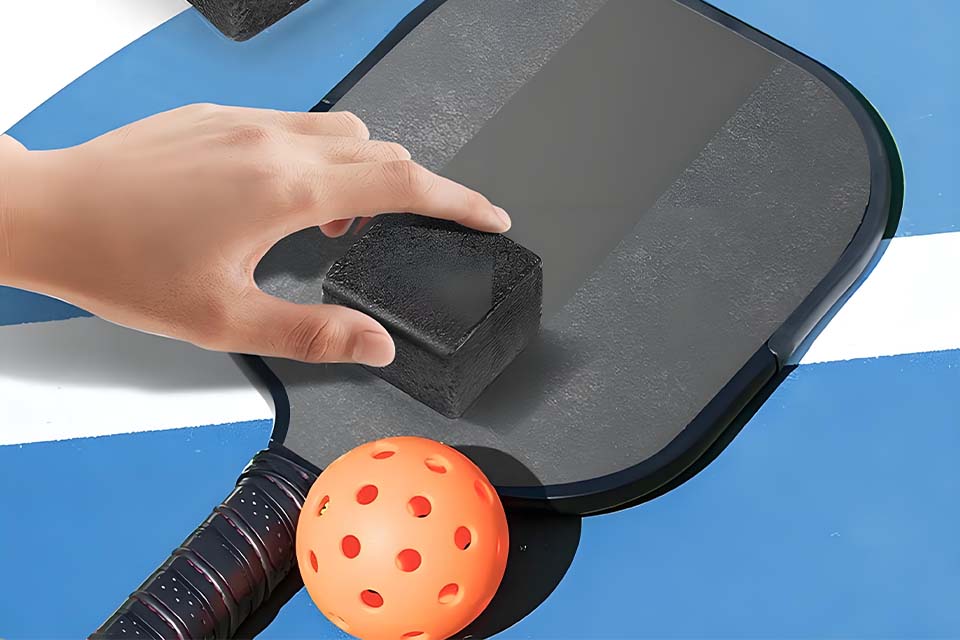
3. Use a carbon fiber cleaning block for embedded residue. For ball residue worked into the weave, a rubber cleaning block made for raw carbon surfaces is the safer tool, because it’s designed to lift debris out of a textured composite surface with less abrasive wear than general household products. Use light pressure and short strokes; over-scrubbing wears the texture down just like over-cleaning does.
4. Clean the handle and grip separately. Wipe the grip with a damp cloth to remove sweat buildup. If the grip feels permanently tacky or is visibly worn, replacing it is usually more effective than continued cleaning.
5. Dry completely before storing. Wipe the face dry with a clean microfiber cloth and let it air-dry fully before putting it in a bag or cover. Trapped moisture near the edge is one of the more common causes of long-term core damage in honeycomb-core paddles (the lightweight internal support structure most paddles are built around).
How to Remove Ball Marks From a Carbon Fiber Pickleball Paddle
Dark marks left by repeated ball contact are usually residue sitting on top of the texture, not damage to it. Work through this order before assuming the mark is permanent:
- A dry microfiber wipe to remove loose material
- A lightly damp microfiber cloth, focusing on the marked area
- A carbon fiber cleaning block, using light circular strokes on just that spot
Most surface marks lift with this sequence. If a mark doesn’t fade after a proper cleaning pass, it’s more likely a scuff or a change in the surface itself — from an off-center hit or a hard impact — rather than residue, and no amount of cleaning will remove it.
Can You Use a Magic Eraser on a Carbon Fiber Paddle?
This comes up often, and the honest answer is: it depends on the surface, and it’s not the first choice.
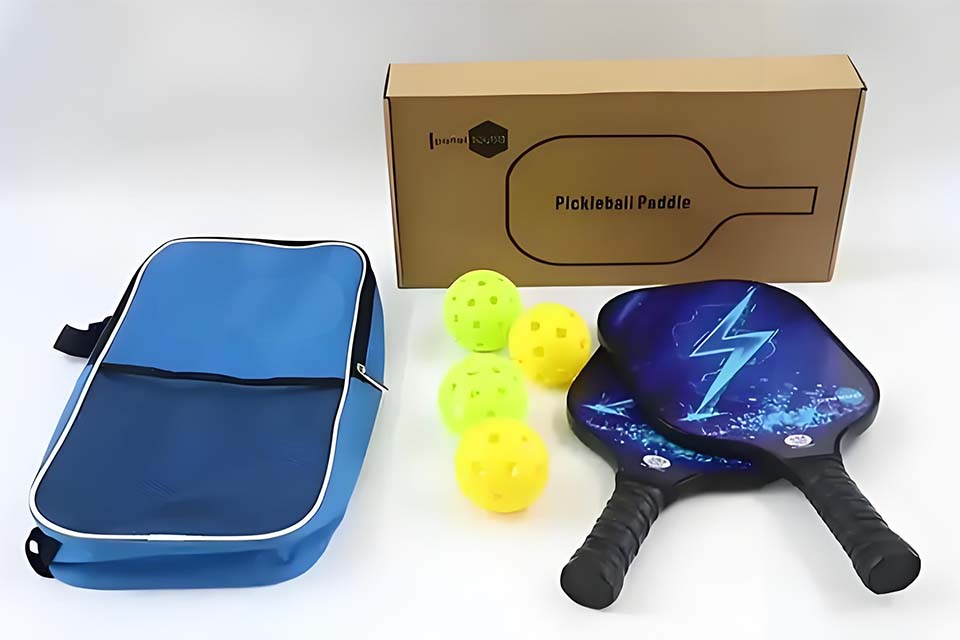
A household melamine eraser works by micro-abrasion — very fine sanding. On a raw carbon face, that will lift residue, but it’s also mechanically wearing down the same texture that produces your spin, and it removes material every time. A paddle-specific carbon fiber cleaning block is designed to lift residue with a gentler wear pattern, which is why it’s the better default for regular cleaning. If you do use a melamine eraser occasionally, use light pressure and don’t make it part of your weekly routine.
Can You Use Alcohol to Clean a Carbon Fiber Paddle?
Isopropyl alcohol can help with a stubborn spot occasionally, applied lightly on a cloth rather than sprayed directly. It’s not something to use as a routine cleaner — repeated exposure may affect certain resin systems or surface finishes over time, which is also why we don’t recommend acetone or nail polish remover at all; those are solvents that actively dissolve resin.
Common Cleaning Mistakes
Most damage to a carbon fiber paddle face traces back to one of these habits rather than to normal play:
- Using household chemicals — bleach, glass cleaner, acetone, or nail polish remover are solvents or degreasers not formulated for a resin composite surface.
- Scrubbing too hard — pressing hard with any tool, including a cleaning block, wears the texture faster than it needs to.
- Overusing a Magic Eraser — fine, but only occasionally; using it as a weekly routine tool accelerates texture wear.
- Soaking the paddle or running water over the edge — moisture that reaches the edge seam can work into the core over time.
- Skipping the dry-wipe step — cleaning a dirty surface while it’s already damp grinds grit into the weave instead of lifting it off.
- Storing it while still damp — trapped moisture near the edge is a common cause of long-term core issues.
- Using rough towels or paper towels — anything less than microfiber can add fine scratches over repeated use.
- Pressure washing or high-pressure water — unnecessary for a paddle and risks forcing water into the core.
How Often Should You Clean It
| Play frequency | Suggested cleaning |
|---|---|
| Casual (1–2x/month) | Every few weeks |
| Regular (weekly play) | Weekly, or after noticeable residue buildup |
| Competitive/tournament | After each match day |
Storing Your Paddle to Reduce Buildup
Cleaning less often starts with storing the paddle well between sessions:
- Use a padded cover or sleeve — avoid loose storage with balls, shoes, or water bottles that can scuff the face
- Keep it out of direct sunlight and out of hot cars; sustained heat can soften resin over time
- Store somewhere dry — humidity and moisture exposure are harder on the core than on the face itself
A Manufacturer’s Perspective on Paddle Care
Paddle performance isn’t determined by the carbon fiber alone — the resin system, the weave pattern, and how the surface is finished all affect how it holds up to cleaning and play. In our experience working with composite surfaces, a raw 3K carbon weave with a well-cured resin layer tolerates a cleaning block and occasional soap-and-water cleaning well. A poorly cured or thinly resined surface tends to wear down faster under the exact same care routine — which is why “how do I clean it” and “how was it actually built” aren’t separate questions.
| Manufacturing factor | Why it matters for cleaning and care |
|---|---|
| Carbon fiber weave (e.g. 3K) | Determines the texture that generates spin, and how much surface area is exposed to residue |
| Resin system | Determines how well the surface tolerates moisture, mild soap, and repeated cleaning |
| Surface finish (raw vs. coated) | Determines whether you’re protecting the fiber directly or a coating layer over it |
| Cure process | Determines how quickly the texture wears down under normal cleaning and play |
Frequently Asked Questions
Can I wash my carbon fiber pickleball paddle with water?
Yes, a lightly damp cloth is fine. Avoid submerging the paddle or running water directly over the edge seam.
Can I use soap on a carbon fiber paddle?
A small amount of mild soap on a damp cloth is fine occasionally. Rinse the residue off with a clean damp cloth afterward and dry fully.
How do I remove dark marks or scuffs from my paddle?
Light marks usually lift with a carbon fiber cleaning block. Deep scuffs or gouges in the surface are physical damage, not residue, and cleaning won’t reverse them. See the section above for the full removal sequence.
Does cleaning improve spin?
Yes — most spin loss reported by players is residue buildup dulling the surface texture, not the paddle wearing out. Regular cleaning restores most of that grip, though it won’t reverse texture that has genuinely worn down from heavy play or over-abrasive cleaning.
How long does a carbon fiber paddle face last?
With regular cleaning and proper storage, a well-made raw carbon face typically holds its texture and performance well beyond a season of regular play; heavy tournament use will wear it faster than casual play.
Can carbon fiber crack from cleaning?
Not from normal cleaning. Cracking is caused by impact damage or manufacturing defects, not from a damp cloth or a cleaning block.
Should I clean my paddle after every game?
Not necessary for casual players. A quick wipe-down after each session and a fuller clean weekly is enough for most people.
Can I use a Magic Eraser?
Occasionally, and lightly — but a carbon fiber cleaning block is the better default for regular use, since it’s designed for the surface rather than for general household cleaning.
Can I use Windex or another glass cleaner on a carbon fiber pickleball paddle?
No. Glass and household cleaners often contain ammonia or other chemicals that aren’t formulated for a composite resin surface, and can affect the finish over repeated use. Stick to lukewarm water, a small amount of mild soap, and a carbon fiber cleaning block.
Why is my carbon fiber paddle losing spin?
Most of the time this is residue buildup dulling the surface texture, not the paddle failing — a proper clean with a cleaning block usually restores most of the lost spin. If spin doesn’t come back after cleaning, the texture itself may have genuinely worn down from heavy use or overly abrasive cleaning in the past, which cleaning can’t reverse.
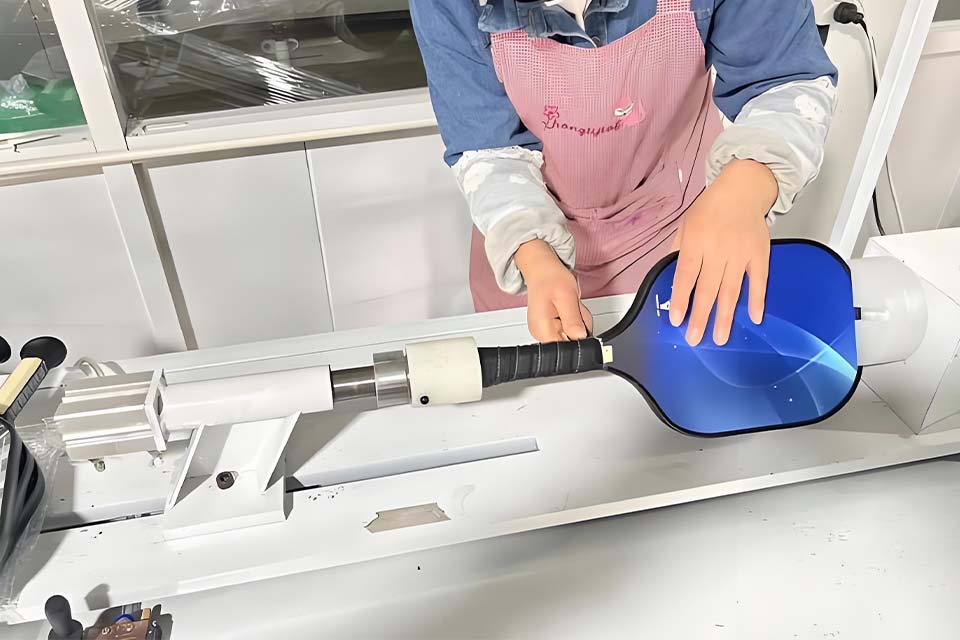
At China Carbon Fibers, we manufacture custom carbon fiber components for automotive, sports, and industrial applications, including raw carbon fiber pickleball paddle faces. Working with the material at the manufacturing level — weave selection, resin systems, surface finishing — is what shapes the care recommendations above.
See our carbon fiber pickleball paddle line, or read more on raw carbon fiber vs. fiberglass paddles.