
Carbon Fiber Composite Material Hot Pressing Molding Process
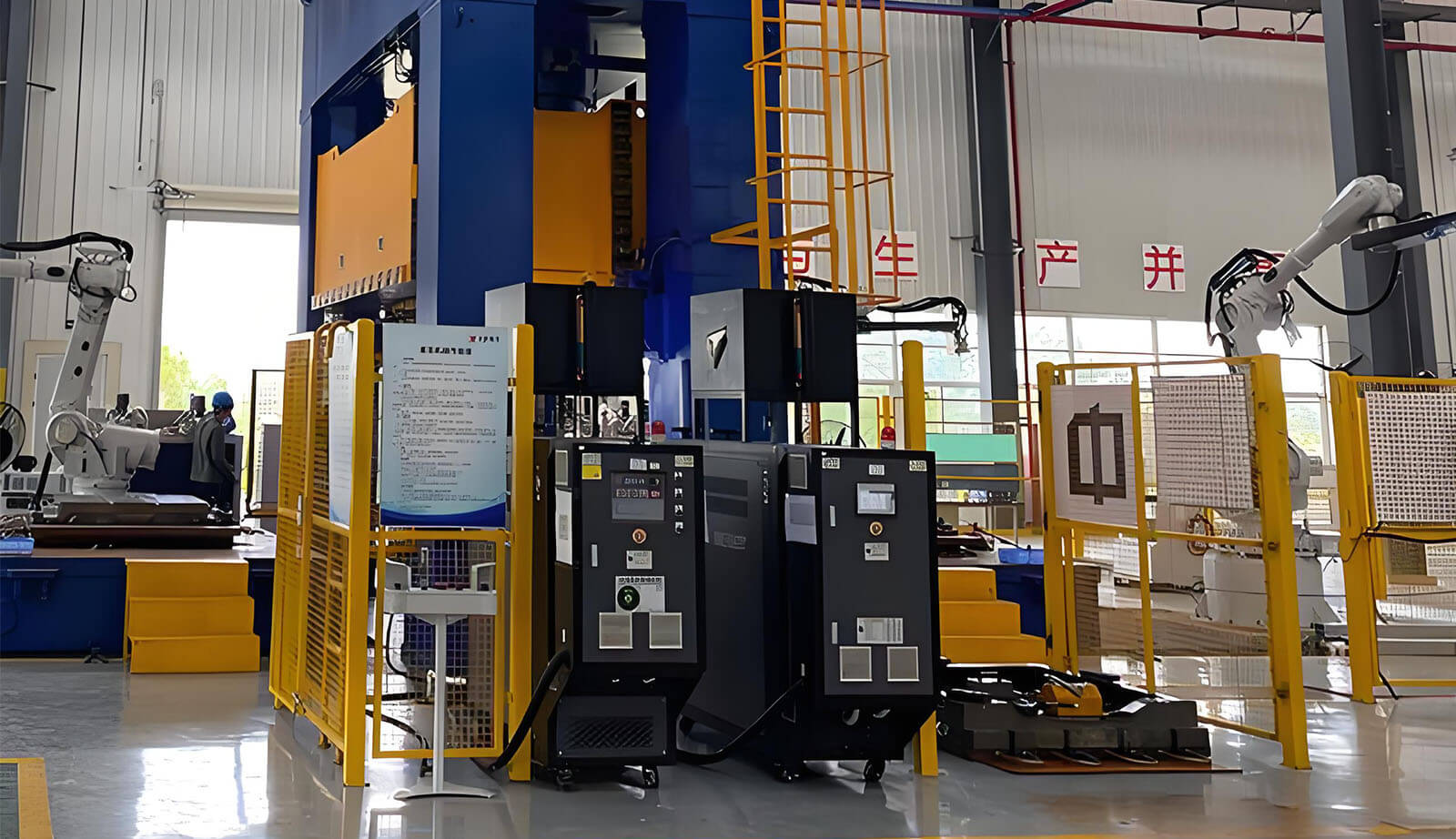
Our factory employs an advanced carbon fiber hot press process with a P20 steel mold, ensuring high efficiency, precision, durability, and cost-effectiveness for quality production.
(Intro — do NOT open with a sales pitch. Open with positioning.)
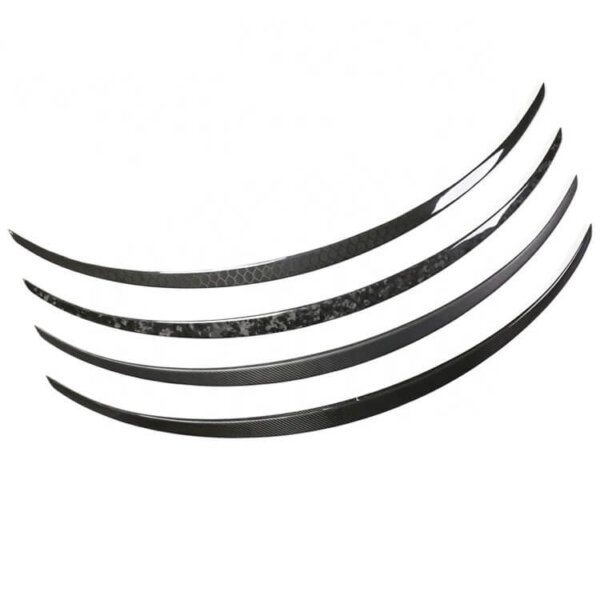
Tesla’s Model 3 and Model Y are among the most modified electric vehicles in the aftermarket world, and carbon fiber rear spoilers are one of the most requested upgrade parts among tuning brands, dealers, and vehicle customization shops. Behind every retail-branded Tesla carbon fiber spoiler — whether sold under a performance brand name or a dealer’s own label — there is a manufacturer producing the actual part.
Chinacarbonfibers is a China-based carbon fiber composite manufacturer specializing in OEM and custom composite components. We support automotive aftermarket brands, engineering companies, and distributors with prototype development, mold production, and low-to-medium volume carbon fiber manufacturing, including dry carbon fiber spoilers for Tesla Model 3 and Model Y.
Rather than selling single retail units, we work upstream: mold development, prepreg layup, autoclave curing, and small-to-large batch production — so that our clients can bring their own Tesla spoiler products to market under their own brand.
This page covers our Tesla Model 3 and Model Y carbon fiber spoiler manufacturing capability, our production process, technical specifications, and how OEM/ODM sourcing works with our factory.
Our Tesla spoiler production capability sits within a broader base of carbon fiber automotive component manufacturing, covering exterior aerodynamic parts, motorcycle fairings, body panels, interior trim, and customized composite structures developed for aftermarket and engineering applications. Tesla spoiler production is one project category within that broader manufacturing base, not our sole capability.
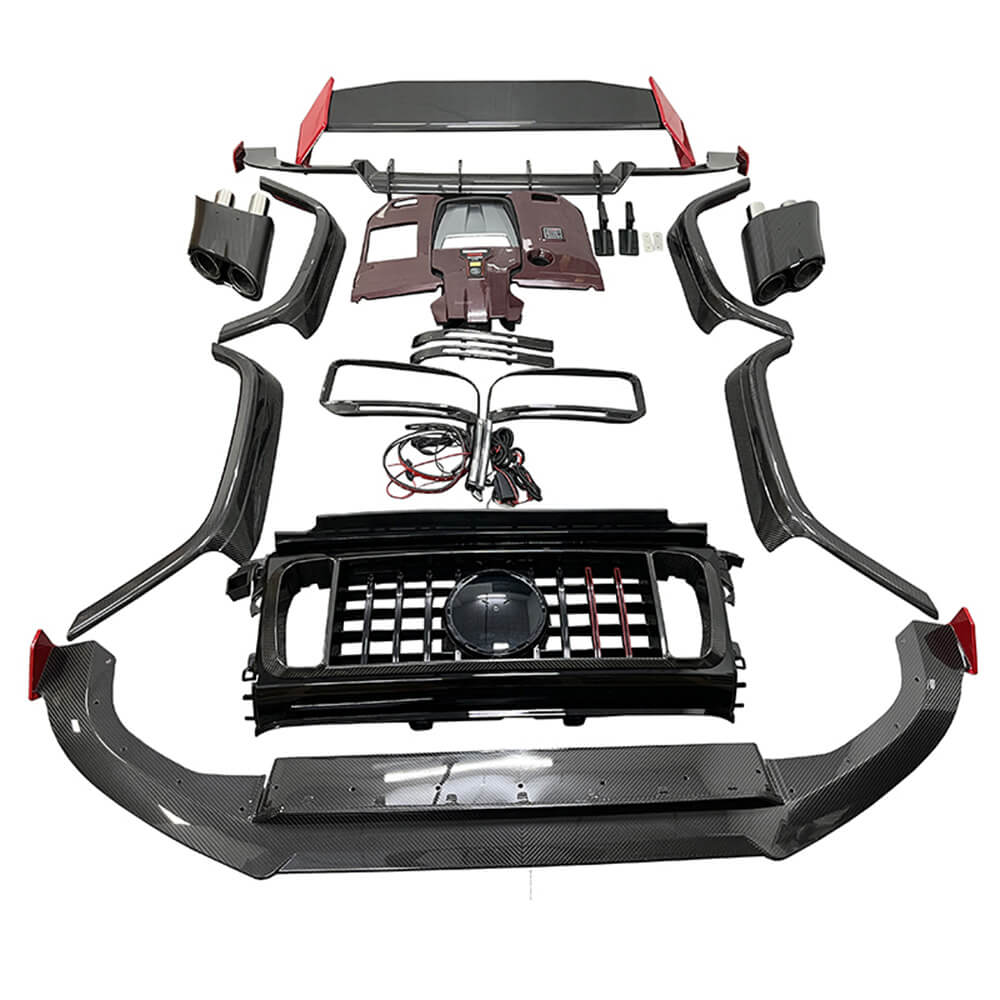
We manufacture carbon fiber exterior and performance components for a range of vehicle platforms, including sedans, performance coupes, and EV models, supplying tuning brands and OEM/ODM customers worldwide.
We tool and produce spoilers matched to each Tesla body generation. Because Tesla has changed trunk lid geometry across model years (notably the Model 3 “Highland” refresh and the Model Y “Juniper” update), spoiler molds are not interchangeable across generations — a detail many lower-tier suppliers gloss over, and a common cause of fitment complaints in the aftermarket.
Model S carbon fiber spoilers are available on a semi-custom, quote basis — lower search volume and production demand means we don’t tool standard SKUs in advance, but reverse-engineered fitment is supported on request.
Most low-cost “carbon fiber” spoilers on the market are ABS plastic with a printed or vinyl-wrapped carbon pattern. We manufacture actual carbon fiber composite parts using prepreg autoclave or vacuum-bag wet layup, depending on the product tier ordered.
| Property | Dry Carbon Fiber (our process) | Carbon-Look ABS |
|---|---|---|
| Material | Woven carbon fiber cloth + epoxy resin | Injection-molded plastic + printed/wrapped film |
| Typical density | ~1.5–1.6 g/cm³ (cured laminate) | ~1.05 g/cm³ (but thicker wall, often heavier as a finished part) |
| Surface | True woven weave under clear coat | Printed pattern, wears/peels over time |
| UV/heat resistance | High (epoxy resin, clear coat UV additive) | Lower — printed layer fades and lifts |
| Rigidity | High stiffness-to-weight ratio | Flexes more, prone to warping in heat |
| Typical use case | Performance/OEM-replacement parts | Budget aesthetic upgrades |
We are transparent that ABS carbon-look parts have a legitimate lower-cost use case — we manufacture both — but we do not market ABS parts as “real carbon fiber,” and we specify material type clearly on every quote and packing list.
This is the part of our business most aftermarket brands never see, because they buy finished units from a middleman rather than a factory. We’re publishing it because our production process is our actual differentiator.
For Tesla-specific fitment, we either work from OEM CAD reference data or 3D-scan a donor trunk lid to build an accurate surface model. Tooling is then developed to match production requirements — composite molds for prototype/low-volume runs, and aluminum or P20 steel tooling for higher-volume production.
Depending on the ordered grade:
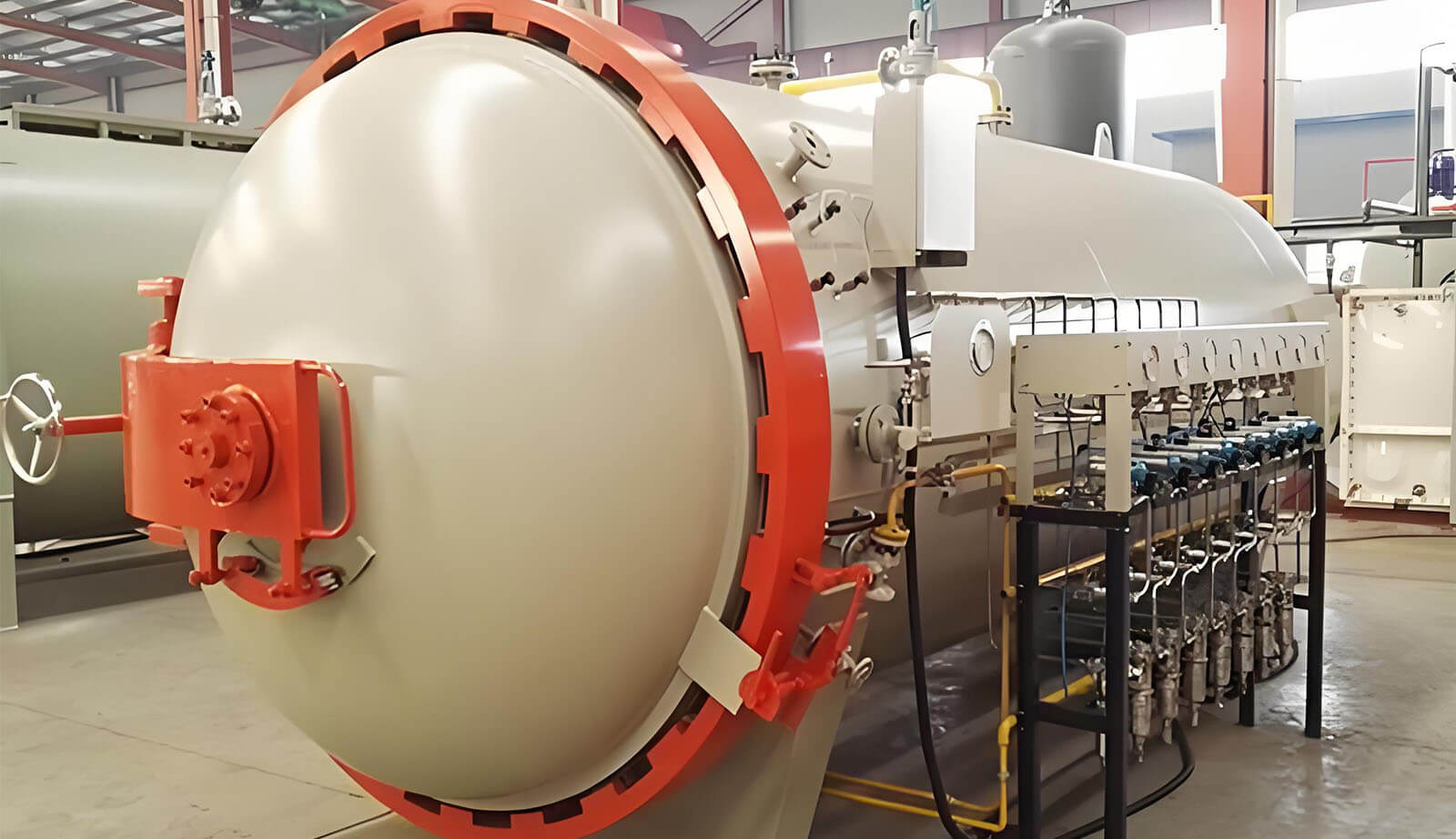
Depending on the laminate design, prepreg parts are cured in an autoclave process under controlled temperature, pressure, and vacuum conditions to achieve consistent fiber consolidation, void-free resin cross-linking, and surface quality — producing a stronger and lighter finished laminate than wet-layup alone.
CNC trimming to final profile, hardware mounting holes drilled to spec, then clear-coated in gloss or matte UV-resistant finish.
Every part goes through dimensional and cosmetic inspection before shipment:
We keep this section factual rather than promotional, because overstated performance claims are a common credibility problem in this niche.
A rear spoiler’s function is to manage airflow separation off the trunk lid, which can improve rear-end stability at highway speeds by reducing lift. The effect is real but modest on a passenger EV like the Model 3/Y — it will not measurably change acceleration or top speed, and any supplier claiming otherwise is overselling. What a well-fitted carbon fiber spoiler reliably delivers is: a visual upgrade, a small reduction in rear-axle lift at highway speed, and — because of the material’s low weight versus OEM ABS — no meaningful weight penalty to trunk lid actuation.
| Production Tier | Typical Quantity | Use Case |
|---|---|---|
| Prototype | 1–10 pcs | Design validation, sample approval, fitment testing |
| Small Batch | 10–100 pcs | Boutique tuning brands, limited-run product lines |
| Wholesale / Mass Production | 100–1,000+ pcs | Established aftermarket brands, distributors |
We support private label / white-label packaging, allowing buyers to sell finished spoilers under their own brand.
Unlike large-volume automotive suppliers that require high MOQ commitments, we support low-volume aftermarket development — which is typically what a new tuning brand, racing team, or independent shop actually needs when validating a product before committing to a full production run.
| Item | Specification |
|---|---|
| Material | 3K carbon fiber twill/plain weave, epoxy resin matrix |
| Fiber grade | Toray T300 / T700 equivalent (grade confirmed per order) |
| Process | Prepreg autoclave or vacuum-infusion wet layup |
| Finish options | Gloss clear coat, matte clear coat, forged carbon (on request) |
| Mounting | 3M VHB adhesive, adhesive + hardware, or drilled (model-dependent) |
| Compatible models | Model 3 (2017–2023 / Highland 2024+), Model Y (2020–2025 / Juniper 2025+), Model S (on request) |
| MOQ | Prototype from 1 pc; production MOQ depends on tooling |
| Lead time | 1–4 weeks |
Buyers evaluating suppliers in this category run into the same three problems repeatedly:
Poor fitment. Carbon fiber spoiler production depends entirely on tooling accuracy. A mold built from imprecise reference data produces visible panel gaps at the trunk lid line — this is the single most common complaint in Tesla aftermarket parts, and it’s a tooling problem, not a material problem.
Mislabeled material. A meaningful share of parts marketed as “carbon fiber spoiler” are ABS plastic with a printed or vinyl carbon pattern. We specify actual material composition on every quote and packing list so buyers aren’t reselling something they can’t stand behind.
Inconsistent surface quality across a production run. Weave alignment, resin distribution, and clear coat consistency all vary with process control — this is where lower-cost, lower-oversight production runs tend to show batch-to-batch variation that shows up after a few months in UV exposure, not at the time of shipping inspection.
Tesla sells a factory carbon fiber spoiler accessory for select Model 3 and Model Y configurations through its own store. This is a separate product from the independent aftermarket category we manufacture in — we are not a Tesla-affiliated supplier, and the parts described on this page are custom/OEM aftermarket components produced for tuning brands and distributors, not Tesla-branded parts.
No. The pre-facelift Model 3 and the Highland-generation Model 3 have different trunk lid geometry, so spoilers require separate molds for correct fitment.
Dry carbon fiber is a genuine woven carbon cloth and resin composite part; carbon-look ABS is molded plastic with a printed or wrapped carbon pattern. Dry carbon is lighter relative to its rigidity, more UV/heat stable, and costs more to produce.
Yes. We support reverse-engineered fitment from a donor panel or 3D scan, and can develop new molds for original designs as part of our custom carbon fiber development service, subject to tooling cost and MOQ.
Prototypes can be produced from 1 piece for validation. Production MOQ depends on whether an existing mold is used or a new mold is required.
Yes, for buyers producing under their own brand name.
Yes. We support OEM and ODM projects including design modification, tooling development, prototype approval, and production for aftermarket and tuning brands.
We are a carbon fiber manufacturer rather than a retail reseller. Our services include mold development, composite production, and private-label supply — not resale of parts sourced from a third-party factory.
We are a manufacturer — mold development, composite layup, curing, and finishing are part of our own production process, not resold parts sourced from a third-party factory.


Our factory employs an advanced carbon fiber hot press process with a P20 steel mold, ensuring high efficiency, precision, durability, and cost-effectiveness for quality production.
Our factory runs 100+ hot pressure autoclaves, using aluminum molds and vacuum induction to shape carbon fiber with precision. High heat and pressure enhance strength, stability, and flawless quality.
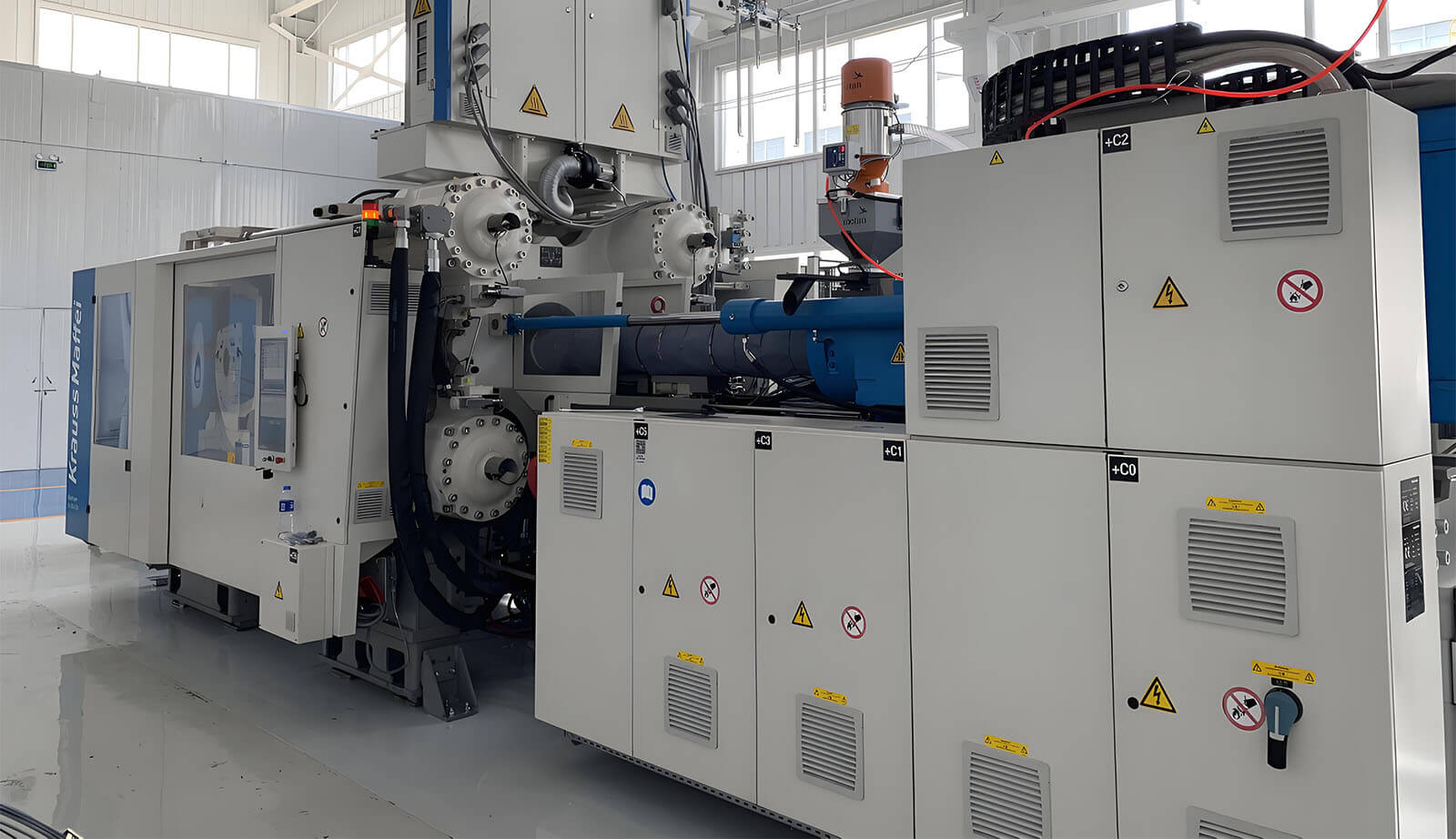
Our Carbon Fiber Research Center drives innovation in new energy, intelligence, and lightweight design, using advanced composites and Krauss Maffei Fiber Form to create cutting-edge, customer-focused solutions.
Here are the answers to the frequently asked questions from the experienced carbon fiber products factory
We produce a wide range of carbon fiber components, including automotive parts, motorcycle parts, aerospace components, marine accessories, sports equipment, and industrial applications.
We primarily use high-quality prepreg carbon fiber and large-tow carbon fiber reinforced high-performance composites to ensure strength, durability, and lightweight characteristics.
Yes, our products are coated with UV-protective finishes to ensure long-lasting durability and maintain their polished appearance.
Yes, our facilities and equipment are capable of producing large-size carbon fiber components while maintaining precision and quality.
What are the benefits of using carbon fiber products?
Carbon fiber offers exceptional strength-to-weight ratio, corrosion resistance, stiffness, thermal stability, and a sleek, modern appearance.
We cater to automotive, motorcycle, aerospace, marine, medical, sports, and industrial sectors with a focus on lightweight and high-performance carbon fiber components.
Yes, we provide custom carbon fiber solutions tailored to your specifications, including unique designs, sizes, and patterns.
We utilize advanced technologies such as autoclave molding, hot pressing, and vacuum bagging, ensuring precision, stability, and quality in every product. wonders with the Hello Elementor Theme, we’re trying to make sure that it works great with all the major themes as well.
We use aluminum and P20 steel molds, designed for durability and high accuracy, to create complex and precise carbon fiber components.
Our products undergo rigorous quality control checks, including dimensional accuracy, material integrity, and performance testing, to meet industry standards.