
This guide is based on our experience manufacturing custom carbon fiber components — evaluating tooling, prepreg layups, autoclave curing, inserts, trimming, and quality requirements for parts we produce.
Dry carbon fiber usually refers to a carbon fiber reinforced polymer (CFRP) component made from pre-impregnated carbon fiber, or prepreg. The resin is applied to the reinforcement by the material manufacturer before layup, rather than being manually brushed onto dry fabric during molding. The prepreg is cut into plies, placed in a mold, vacuum-bagged, and cured using a controlled temperature cycle, with additional external pressure applied when required by the selected process.
Despite the name, dry carbon fiber still contains resin. “Dry carbon” is an informal commercial term; prepreg carbon fiber composite is the more precise technical description.
“Dry carbon fiber” is also not a complete engineering specification on its own. Fiber grade, resin system, ply orientation, fiber volume fraction, curing cycle, tooling accuracy, and inspection standard all affect how a finished component actually performs — a buyer should not judge a component only by whether a supplier calls it “dry carbon.”
In automotive, motorsport, and aftermarket industries, dry carbon fiber normally means a finished carbon fiber reinforced polymer component made from carbon fiber prepreg.
Prepreg is carbon fiber reinforcement that has already been impregnated with a controlled amount of partially cured resin by the material manufacturer. The material may be supplied as:
The resin is already distributed throughout the reinforcement before the material reaches the component manufacturer. During production, technicians do not normally brush large amounts of liquid resin onto each layer — they cut and lay the tacky prepreg material directly into the mold, then consolidate it under vacuum and cure it with heat and, in most cases, applied pressure.
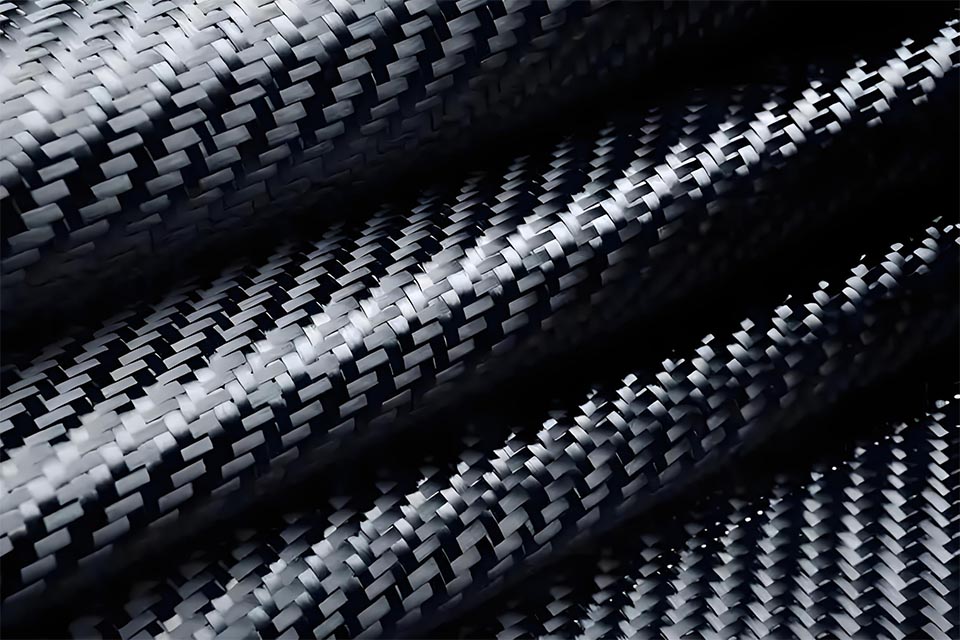
The word “dry” can be misleading. A finished dry carbon fiber component is not resin-free. Resin is essential because it:
The term “dry carbon” developed because the resin is already contained in the prepreg and is not applied as a freely flowing liquid during manual layup. Compared with a traditional wet layup process, the material feels relatively dry and controlled during handling — but technically it still contains an uncured or partially cured resin matrix.
For engineering drawings and purchase specifications, prepreg carbon fiber composite is a more precise term than simply writing “dry carbon.”
In many automotive and commercial contexts, the two terms are used interchangeably. There is, however, an important distinction — covered in more depth in our dedicated guide to prepreg carbon fiber:
A spec that just says “dry carbon part” does not identify:
For non-structural appearance parts, a general “dry carbon” spec may be sufficient. For structural, load-bearing, high-temperature, or safety-related components, the drawing and purchase order should define the actual material and process requirements — not just the marketing term.
Not always. Autoclave curing is widely associated with dry carbon fiber because it combines controlled heat, vacuum inside the bag, and external gas pressure around the bagged laminate — a combination that generally improves consolidation and reduces trapped air.
However, prepreg does not automatically mean autoclave. Prepreg components may be cured using:
Some prepreg resin systems are specifically formulated for out-of-autoclave processing and can achieve good consolidation without a pressure vessel. So the useful question is not simply “Is this dry carbon?” — a more useful question is: which prepreg system, tooling method, pressure level, and curing cycle are used for this specific component?
Prepreg has two main components.
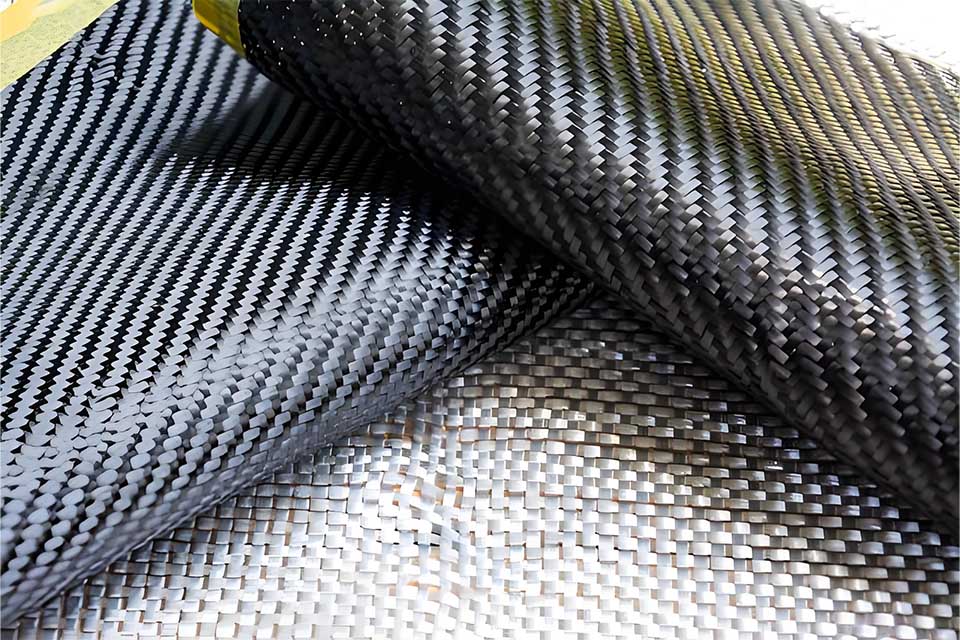
Common reinforcement formats include:
Woven carbon fiber — fiber bundles interlaced in two directions. Common patterns: 2×2 twill, plain weave, satin weave, spread-tow weave. Widely used for panels, covers, and fairings because of good handling and the recognizable carbon-fiber look.
Unidirectional carbon fiber (UD) — most fibers run in one direction, letting engineers place strength or stiffness along specific load paths. A structural laminate might combine plies at 0°, 90°, +45°, and −45°, with the stacking sequence chosen for the part’s actual loading, not appearance.
Epoxy is the most common resin in performance prepreg, though other systems exist. The resin system affects cure temperature and time, tack and handling, toughness, impact resistance, moisture and chemical resistance, flame performance, and — critically — maximum service temperature (glass transition temperature). Two parts made from the same carbon fabric can perform very differently if they use different resin systems or curing conditions.
Many thermoset prepregs use a resin that has been partially reacted but has not completed its final cure — a condition called B-stage. In this state the prepreg is flexible and tacky enough to cut into patterns, position in a mold, build up in multiple layers, and conform to curved surfaces. During the final cure cycle, the resin softens and flows before crosslinking into a rigid polymer network.
Because the resin reaction continues slowly even during storage, prepreg has defined storage and handling limits.
Uncured prepreg contains both resin and curing agent, so even at room temperature the resin system slowly reacts. Cold storage slows this reaction and extends usable life. Many thermoset prepregs are stored frozen, but the required temperature and permitted storage period vary by resin system and must follow the material supplier’s technical data sheet rather than a single universal rule. Key terms:
Poor material control can cause reduced tack, difficult layup, resin-flow changes, poor consolidation, ply-to-ply bonding problems, surface defects, and reduced mechanical performance. A capable manufacturer maintains material batch and storage records where traceability is required.
Evaluating geometry, thickness, loads, cosmetic requirements, mounting points, inserts, temperature exposure, quantity, tolerances, and trim lines. A STEP/STP file is ideal; for reverse-engineered parts, a physical sample may be scanned, though critical fit areas should be verified rather than trusted to scan data alone.
The mold must survive the chosen cure temperature and pressure. Options include high-temperature composite tooling, carbon composite tooling, aluminum, or steel, chosen based on geometry, tolerance, cure temperature, volume, and budget. The cheapest mold isn’t always the lowest-cost option if it causes repeated fit or surface problems.
Fiber grade, weave/UD format, areal weight, resin content, cure temperature, toughness, Tg, and environmental requirements are matched to the application. A cosmetic cover is chosen mainly for surface appearance; a structural part must be tied to laminate engineering and load requirements.
Each layer is converted into a cutting pattern (CAD/nesting software, CNC cutting, or manual templates for prototypes), accounting for fiber distortion over double curvature and tight corners.
Cleaning, inspection, and release-agent application. Poor prep causes demolding problems, contamination, print marks, or tool damage — and directly affects final appearance on visible parts.
Plies are placed per a defined schedule: orientation, sequence, overlap and splice locations, fiber continuity, and bridging prevention. Bridging (where prepreg spans a corner instead of fully contacting the mold) can cause resin-rich areas, voids, wrinkles, and dimensional defects. Complex geometry may need tailored plies, intermediate debulking, bladders, or caul plates. Layup quality is one of the biggest differences between a part that merely looks good and one that’s structurally reliable.
Intermediate vacuum steps that compact the ply stack, improve inter-ply contact, and reduce bridging. Debulking does not fix a badly wrinkled or bridged ply.
Depending on the prepreg system and part requirements, the bagging stack may include release film, peel ply, breather, bleeder, caul plates, sealant tape, and vacuum connectors. Bag integrity should be leak-checked before cure — a leak reduces consolidation and increases void risk.
The cycle defines heating rate, vacuum level, applied pressure, dwell temperature and time, and cooling rate. During heating, resin viscosity must drop enough to consolidate and bond the laminate without excessive resin loss or dry-fiber areas. Thermocouples may monitor tool or laminate temperature on large or thick parts. The cycle should follow the resin supplier’s recommendations and any validated process requirements.
CNC or waterjet trimming, drilling, countersinking, and edge finishing. Carbon dust requires proper extraction and PPE. Hole position and trim accuracy matter most for replacement parts and multi-component assemblies.
Raw controlled finish, sanding, polishing, clear coat, paint, gloss, satin, or matte, plus UV-resistant coating where needed. “Dry carbon” describes the material and process, not the gloss level — a dry carbon part can be matte, satin, gloss, or painted, and a glossy part is not automatically dry carbon (gloss can come from the mold, resin layer, or clear coat).
Visual inspection, weight and thickness measurement, dimensional and fitment checks, insert-position inspection, and — for structural or safety-critical parts — tap testing, ultrasonic inspection, CT scanning, mechanical testing, and Tg/cure verification. A cosmetic panel and an aerospace structural part should not share the same inspection plan.
Dry carbon fiber is not lightweight simply because it’s called “dry.” Weight depends on fiber type, fabric weight, ply count, resin content, fiber volume fraction, core materials, inserts, coating, and final geometry. The prepreg process reduces unnecessary resin variation because resin content is set at the material stage — but a thick prepreg part can still be heavier than a thinner part made a different way. Meaningful weight comparisons need the same geometry, functional requirement, stiffness/load target, and attachment hardware; comparing two materials only at equal thickness can be misleading.
“Regular carbon fiber” isn’t a precise engineering category. Performance depends on fiber grade, fiber direction, resin system, fiber volume fraction, void content, thickness, ply sequence, cure quality, and load direction — not the process label alone. A correctly manufactured prepreg laminate offers highly repeatable properties and efficient fiber use, but prepreg doesn’t guarantee every part is stronger than every wet-layup or infused part. A poorly designed prepreg laminate can fail prematurely; a well-engineered infusion laminate can outperform a low-quality prepreg part. The component has to be designed for its actual loads.
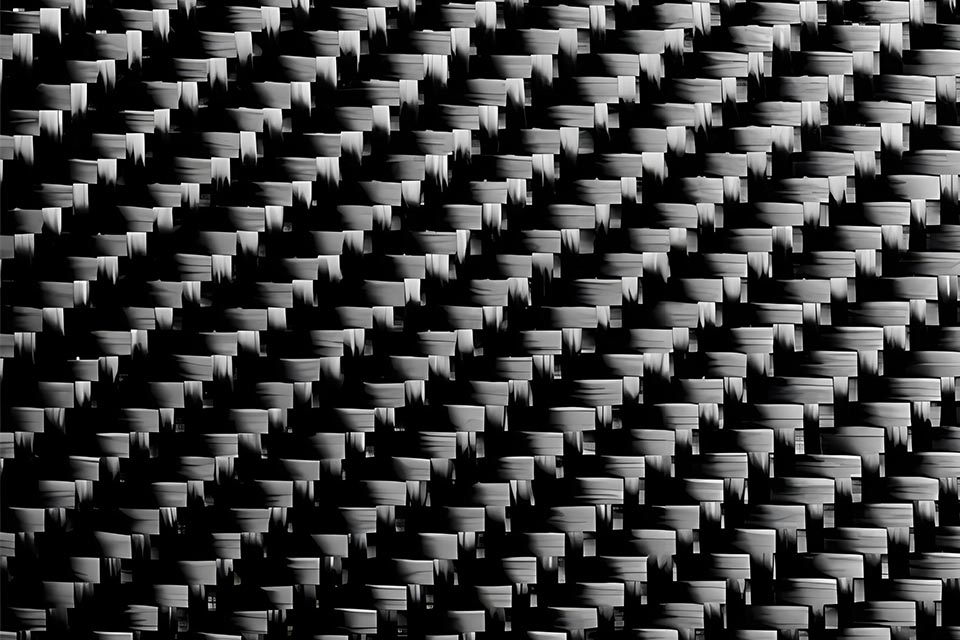
Carbon fiber is anisotropic — its mechanical properties vary by direction. A visible 2×2 twill pattern can look uniform while the underlying structural plies use entirely different orientations (0° for principal-axis loads, 90° for transverse stability, ±45° for shear and torsion). A quasi-isotropic laminate balances these orientations for more uniform in-plane behavior. For structural projects, ask for a defined layup rather than choosing a part by weave pattern alone — the visible surface ply is often chosen for looks and doesn’t necessarily represent the full internal laminate.
Fiber volume fraction (FVF) is how much of the laminate’s volume is reinforcing fiber versus resin — different from resin weight percentage. It affects stiffness, strength, thickness, weight, resin distribution, and processability. Well-consolidated prepreg laminates can achieve a relatively high and consistent fiber volume fraction, but the actual value depends on the prepreg format, resin content, compaction method, tooling, and cure process. Structural projects should rely on the material supplier’s data and validated laminate test results rather than assume a universal target. Too little fiber makes a resin-rich, inefficient laminate; too little resin causes incomplete impregnation or poor bonding. The goal isn’t removing as much resin as possible — it’s hitting the validated balance for the material system and application.
Voids are unintended air pockets or gaps in the laminate, caused by trapped air during layup, bridging, vacuum leaks, incorrect pressure, poor debulking, unsuitable resin flow, moisture, contamination, or an incorrect cure cycle. Voids can reduce interlaminar strength, fatigue behavior, compression performance, surface quality, and environmental resistance. Autoclave pressure generally helps consolidation, but it doesn’t fix every manufacturing problem — good results still need controlled materials, skilled layup, correct bagging, and a validated cure cycle.
Tg is a key property of the cured resin matrix. As the material approaches and exceeds its relevant transition region, the polymer matrix can lose stiffness and dimensional stability. This matters for parts exposed to engine-bay heat, exhaust systems, braking systems, industrial machinery, or elevated-temperature outdoor service. The fiber itself may tolerate high heat, but the resin, adhesive, paint, and bonded inserts are often the actual limiting factors. For elevated-temperature projects, specify required service temperature, resin-system Tg, whether the reported Tg is dry or moisture-conditioned, test method, and cure/post-cure requirements — “carbon fiber is heat resistant” isn’t a sufficient spec on its own.
Not every cosmetic variation is a structural defect — acceptance criteria should separate cosmetic requirements from structural ones.
It’s hard to confirm the full manufacturing process from appearance alone. A part described as “dry carbon” based only on low weight or an exposed backside doesn’t prove the full material and process route. Useful questions to ask a supplier:
For appearance parts, fit, finish, and weight may be the main concerns. For engineering components, documentation and traceability matter more than marketing terminology. And remember: a matte vs. glossy finish, by itself, doesn’t prove the manufacturing route either way.
A full dry carbon component generally uses carbon fiber reinforcement throughout the specified laminate, though it may also include foam or honeycomb core, adhesive film, metallic inserts, or local glass-fiber/aramid layers for impact protection. A carbon-skinned part uses a thin visible carbon layer over fiberglass, plastic, metal, or another substrate — suitable when the goal is purely cosmetic, but not equivalent to a full carbon laminate and shouldn’t be marketed as such. When ordering, specify whether you need full carbon construction, a carbon-fiberglass hybrid, a cosmetic skin, or a structural sandwich.
The main distinction is how resin is introduced and controlled: prepreg already contains a controlled resin system before layup, while wet layup applies liquid resin during part manufacturing. Both can produce useful components — the right choice depends on performance target, geometry, tooling budget, quantity, surface requirements, tolerance, and production rate. This article focuses on dry/prepreg carbon fiber; for a full breakdown of weight, cost, processing, and application fit, see our detailed Dry Carbon Fiber vs. Wet Carbon Fiber guide.
Automotive and motorsport: hoods, roof panels, splitters, diffusers, spoilers, air ducts, interior trim, seats, instrument panels, monocoques, aero components — see our carbon fiber car parts. A cosmetic mirror cover and a structural monocoque have very different material, tooling, and inspection requirements — both might be called “dry carbon,” but shouldn’t be treated the same.
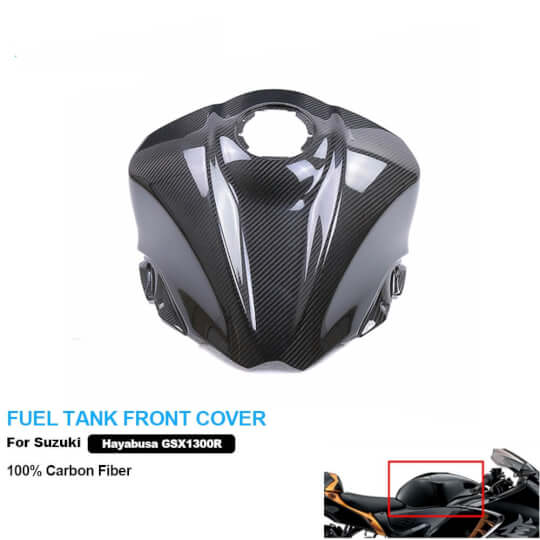
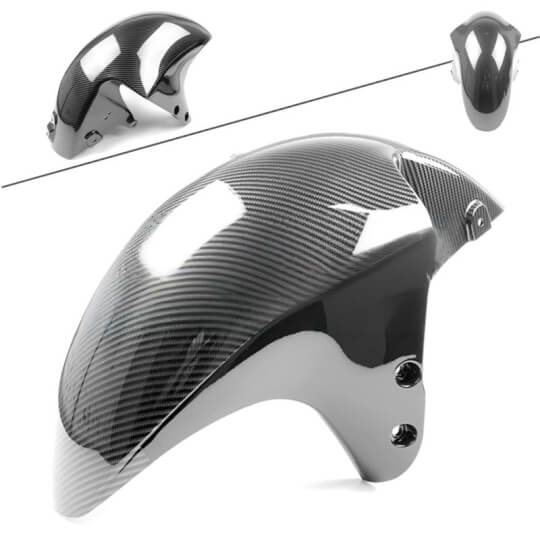
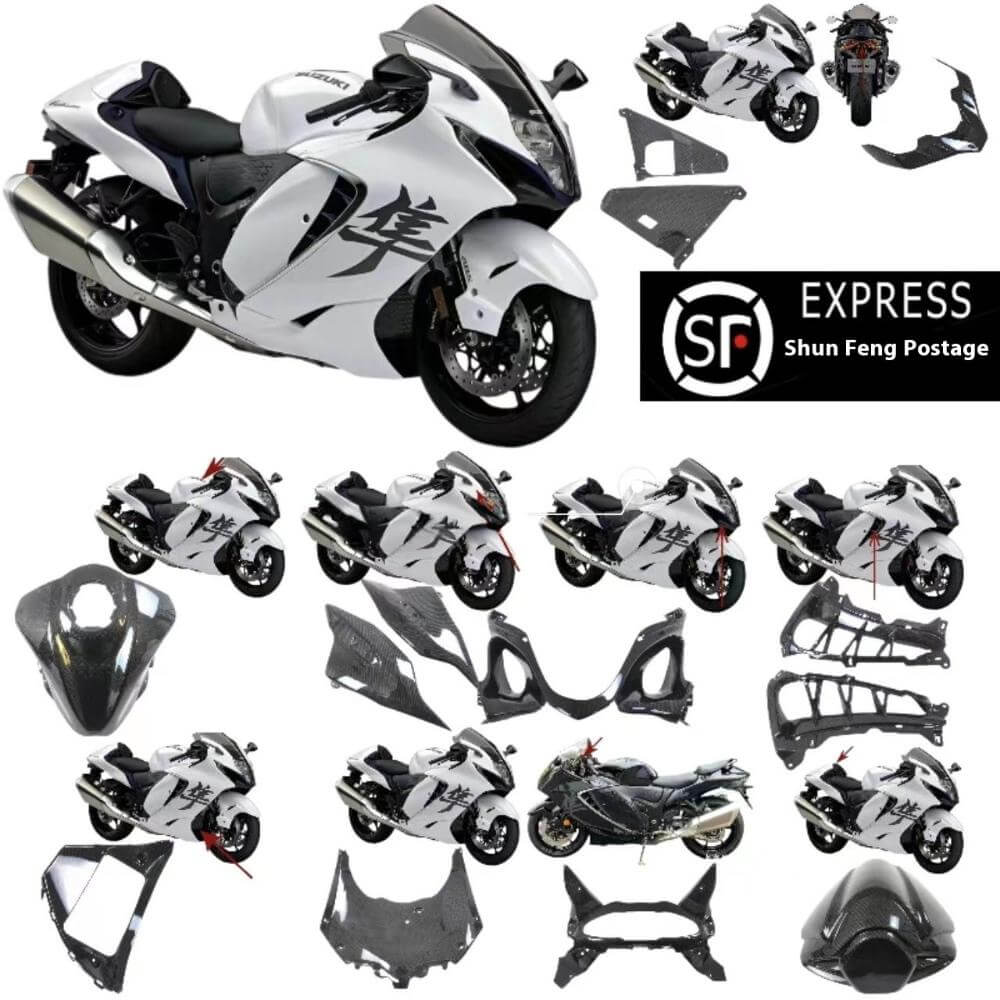
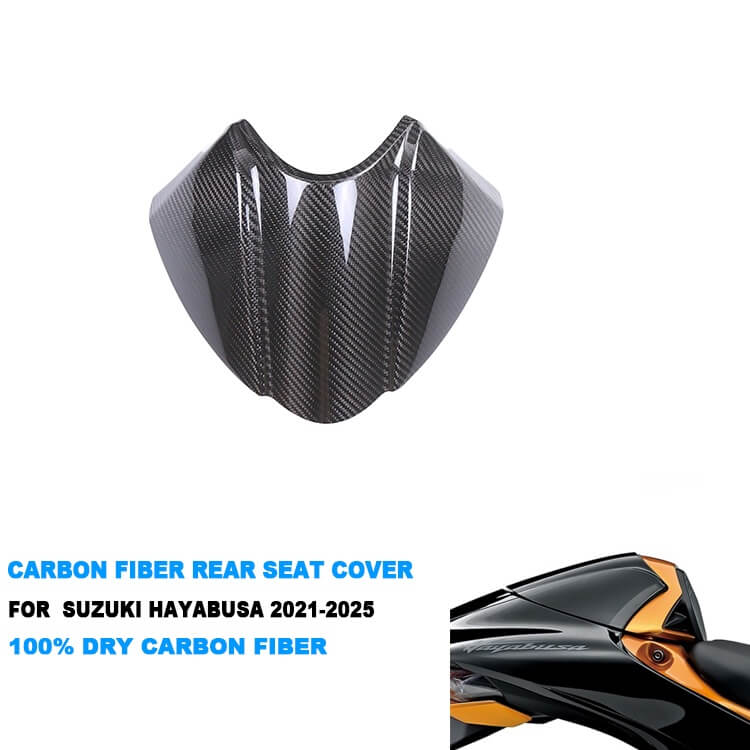
Motorcycle components: fairings, fenders, frame covers, tank covers, airboxes, chain guards, exhaust heat shields, racing subframes — see our carbon fiber motorcycle parts. Parts near engines or exhausts need careful resin and coating selection.
Aerospace and UAV components: structural panels, fairings, UAV frames, equipment housings, interior structures, control surfaces — generally requiring tighter process documentation and inspection than automotive cosmetic parts.
Industrial equipment: robotic arms, machine components, metrology structures, camera systems, automation equipment, precision beams, medical equipment — where low thermal expansion and high specific stiffness matter, but laminate design and environment still need evaluation.
Sports equipment: bicycle components, paddles/oars, rackets, hockey sticks, fishing equipment, protective gear — where impact behavior, fatigue, and joining matter alongside low weight.
There’s no standard price per finished part — cost depends on part dimensions and depth, surface area, ply count, material grade, resin system, tooling material, cure cycle, autoclave capacity, labor time, trim complexity, inserts/bonding, surface finish, inspection requirements, quantity, and scrap rate. Tooling often represents a significant share of prototype cost — a simple open mold for a cosmetic cover can cost far less than a multi-piece metal mold for a hollow structural part.
For an accurate quotation, provide: STEP/STP data, dimensions, required quantity, surface finish, thickness/structural requirements, tolerance, service temperature, insert details, and inspection/documentation requirements.
A useful RFQ covers more than “please quote dry carbon”:
If you don’t have a laminate design yet, the manufacturer needs enough load and application information to recommend one — and engineering responsibility should be clearly agreed upfront.
A professional supplier shouldn’t push one process for every component — the manufacturing route should match the project’s technical and commercial requirements.
Dry/prepreg carbon fiber tends to fit best when a project needs low weight, controlled laminate thickness, repeatable production, engineered fiber orientation, high-quality exposed surfaces, elevated-temperature resin systems, sandwich construction, tight documentation, or motorsport/aerospace-grade consistency. Another process may fit better when the part is mainly cosmetic, tooling budget is limited, quantity is extremely low, the structure is very large, moderate performance is enough, or autoclave size is a constraint. The right process is the one that actually meets the performance, quality, quantity, and budget requirements — not the one with the most familiar name.
Yes. Finished dry carbon fiber is a carbon fiber reinforced polymer composite. “Dry” doesn’t mean resin-free — it normally means the resin was already in the prepreg before layup.
No. “Dry carbon” usually refers to the use of prepreg material and a controlled curing process, while “forged carbon” describes a molded composite made with discontinuous or chopped carbon reinforcement. Most visible dry-carbon parts use woven or unidirectional continuous-fiber prepreg, but material format and manufacturing process are separate specifications — pre-impregnated chopped-fiber materials also exist and can be used in molding processes.
No fixed percentage applies. Performance depends on fiber type, resin, fiber orientation, thickness, void content, cure quality, and part design. Prepreg gives better process control, but the component still needs correct engineering and manufacturing.
Prepreg allows controlled resin content and efficient laminate construction, but final weight depends on thickness, ply count, core, inserts, coating, and design. Fair comparisons need equal functional requirements, not just equal thickness.
Not always — it may be used for gloss, appearance, and UV protection, but some parts use a mold-finished surface, matte coating, or paint instead.
Yes. “Dry carbon” describes the material and process, not the gloss level — a prepreg part can be matte, satin, gloss, painted, or raw.
Some parts can be, but the method depends on the damage and structural requirements. Cosmetic repair and structural repair are different problems, and safety-critical parts should be evaluated by a qualified composite engineer.
Its temperature capability mainly depends on the resin system, cure, adhesive, coating, and inserts — high-temperature applications should specify service temperature and Tg requirements rather than relying on “carbon fiber is heat resistant.”
No. Visible weave only confirms carbon reinforcement at the surface — it doesn’t prove prepreg, autoclave curing, or full carbon construction underneath.
No. Some prepreg systems are formulated for oven-only, vacuum-bag-only, press, or matched-tool curing without a pressure vessel.
A STEP/STP model is preferred, plus quantity, finish, thickness, application, temperature, tolerances, insert details, and inspection requirements. A physical sample can be used for reverse engineering if 3D data isn’t available.
We manufacture custom prepreg carbon fiber components for automotive, motorcycle, industrial, sports, and advanced engineering applications. Tooling and process choices are made per project rather than applying one method to everything: for prototype and low-volume work we may recommend high-temperature composite tooling, while aluminum or steel tooling tends to make more sense when dimensional stability, output volume, or mold life matter more. Hollow parts or components with internal steps may call for silicone cores, bladders, or multi-piece tooling rather than a simple open mold. Before a structural part goes into production, we review the available load information, laminate requirements, cure temperature, and insert locations together with the customer. Where formal structural validation is required, the engineering scope and responsibility are agreed before tooling and production begin.
Every project starts with a technical review of geometry, tooling, laminate, cure process, tolerance, finishing, and quantity before we prepare a quotation. To request an evaluation, contact us through chinacarbonfibers.com with STEP/STP files, required quantity, application, surface finish, thickness/load requirements, service temperature, tolerance requirements, and insert/assembly details.
Dry carbon fiber is best understood as a commercial term for components manufactured from carbon fiber prepreg. Its value doesn’t come from the word “dry” alone — it comes from a controlled combination of suitable reinforcement, correct resin system, planned fiber orientation, accurate ply placement, effective vacuum bagging, validated curing, stable tooling, controlled trimming and assembly, and appropriate inspection.
Prepreg and autoclave (or out-of-autoclave) processing can produce lightweight, consistent, high-quality carbon fiber components — but no manufacturing label automatically guarantees a good part. For buyers and engineers, the most reliable approach is to define the component’s function, material, laminate, process, and acceptance requirements before production begins.