
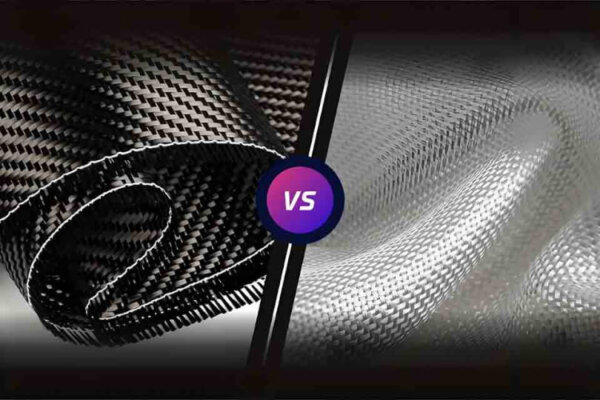
Carbon Fiber Composite Material Hot Pressing Molding Process
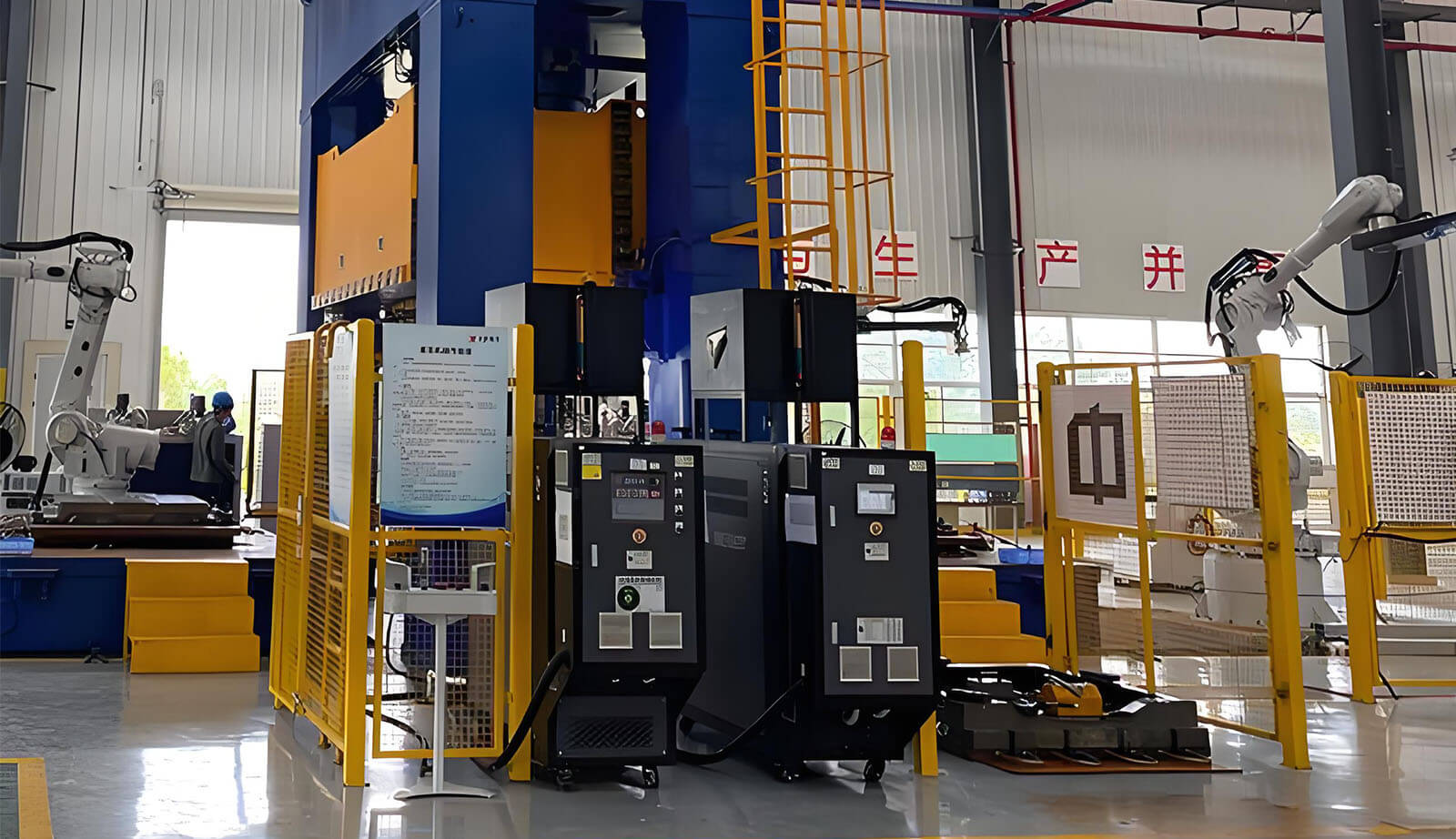
Our factory employs an advanced carbon fiber hot press process with a P20 steel mold, ensuring high efficiency, precision, durability, and cost-effectiveness for quality production.
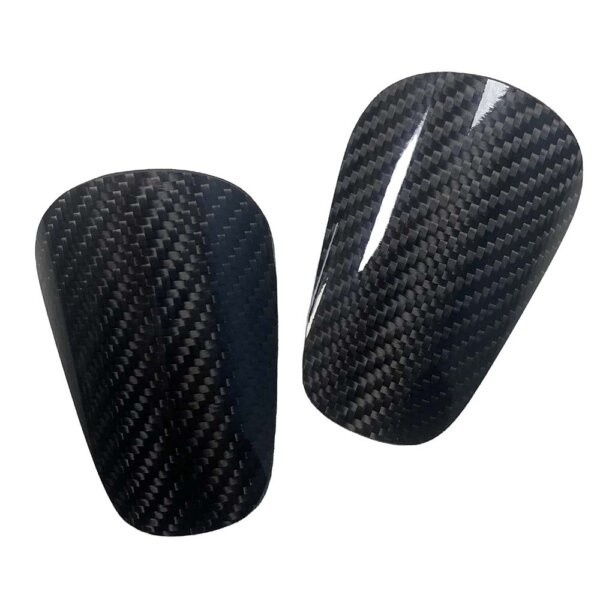
Custom carbon fiber ski racing guards for slalom and alpine ski racing, including carbon fiber shin guards and arm guards for junior, adult and XXL sizes. OEM/ODM manufacturing from drawings, samples, or CAD files. Carbon shell layup, foam lining, strap system, custom size, finish, logo and bulk production available.
In slalom and alpine ski racing, athletes drive their legs directly into slalom poles to clear gates at speed. The forces involved are not trivial — repeated gate impacts through a full training session or race run put serious stress on the lower leg and forearm. A well-built racing guard has to hold its shape under that load, stay light enough not to slow the athlete down, and fit close enough to the body that it does not shift or catch on poles.
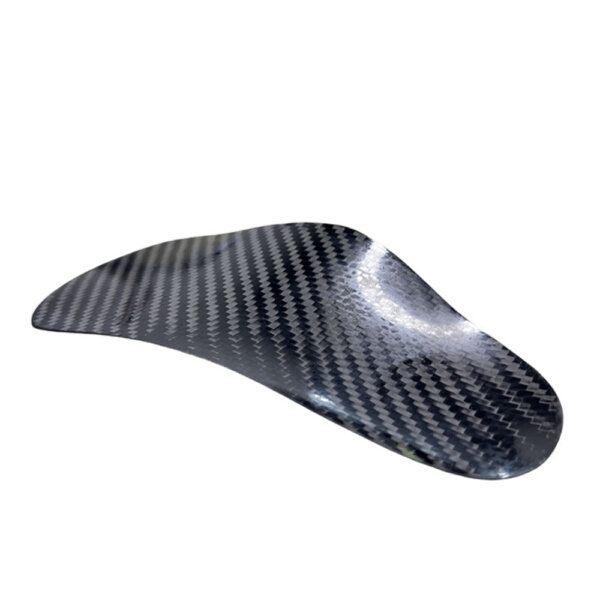
Carbon fiber ski racing guards have become a common high-performance choice for slalom and alpine racing protection, covering both carbon fiber ski shin guards and carbon fiber ski arm guards. A carbon shell can be made thin, curved to the body’s profile, and still rigid enough to resist deflection when it hits a gate.
We manufacture carbon fiber ski racing guards for ski racing brands, sports protection labels, ski clubs, and equipment distributors. As a carbon fiber manufacturer and OEM factory, products can be developed from an existing sample, 3D scan data, technical drawings, or reference photos with dimensions.
Carbon fiber’s stiffness-to-weight ratio is the main reason it works well here. A plastic shell that achieves comparable rigidity would need to be noticeably thicker and heavier. A carbon fiber shell can be made thin while still maintaining strong rigidity for gate impact protection.
When a slalom pole hits a rigid shell, the force spreads across the face of the shell rather than concentrating at a single point. The stiffer the shell, the better this distribution. Carbon fiber’s high modulus is useful here — it keeps the shell from deforming locally, which is where pressure injuries occur.
A smooth, hard outer surface helps poles deflect cleanly rather than dragging against the shin guard. This is not just a comfort issue — dragging affects line and timing. A gloss clear coat or hard painted finish over carbon fiber gives a low-friction contact surface that plastic tends to match only with additional coatings.
Race training puts equipment through hundreds of gate contacts. Properly laid carbon fiber shells — whether prepreg autoclave or compression molded — hold their shape and surface finish across that kind of repeated use. Lower-cost plastic shells may gradually deform or show fatigue under repeated hard impacts, while a well-made carbon shell is designed to maintain its shape more consistently over time.
| Item | Available Options |
|---|---|
| Product type | Ski racing shin guards, slalom shin guards, arm guards, junior / adult / XXL versions, custom profile |
| Carbon fiber material | 3K twill carbon fiber, UD carbon fiber, carbon + fiberglass hybrid |
| Manufacturing process | Prepreg autoclave, vacuum bagging, compression molding |
| Carbon shell thickness | 1.5 mm (arm guards) / 1.8 mm (shin guards) — or custom per stiffness requirement |
| Total thickness (shell + lining) | Approx. 5.7 mm (arm) / 5.9 mm (shin) with standard 4 mm foam lining |
| Length — shin guards | Junior approx. 31 cm / Adult approx. 42 cm / custom length per specification |
| Length — arm guards | Junior approx. 27.5 cm / Adult approx. 29.5 cm / custom length per specification |
| Weight reference | Junior shin guard approx. 236 g / Adult shin guard approx. 360–425 g depending on width |
| Inner lining | Custom ski-grade foam lining (standard 4 mm), EVA foam, PU foam, custom density |
| Surface color | Custom — standard options include 3-color setups (e.g. red / yellow / green); RAL / Pantone matching available |
| Strap system | Velcro strap, buckle strap, riveted strap, removable strap |
| Rivet material | Stainless steel, aluminum |
| Surface finish | Gloss clear coat, matte clear coat, painted finish, custom graphic |
| Logo application | Decal, screen printing, laser marking, embedded logo |
| MOQ | Sample, small batch, OEM bulk order |
Most product pages describe ski shin guards as “carbon fiber with foam lining.” That tells you the ingredients but not much else. Here is how the components actually work together.
The shell is the structural core of the guard. Its job is to intercept gate impact, spread the load, and return to shape. The layup — how many plies, at what fibre orientation, and in which process — determines how stiff the shell is, how it handles off-axis loads (which happen when a pole strikes at an angle), and how consistent it is across a production batch. You can learn more about our carbon fiber composite manufacturing background and factory capability on our about page.
For ski shin guards, our standard shell runs 1.8 mm of carbon fiber — thin enough to keep weight down, thick enough to distribute gate impact without flexing through. Arm guards use a slightly thinner 1.5 mm shell, which is appropriate for the lower impact forces on the forearm. UD carbon can be added in a hybrid layup to increase stiffness in the primary impact direction without adding as much weight.
The lining sits between the carbon shell and the leg. Its functions are cushioning, pressure distribution, and fit. Our standard ski-grade foam lining runs 4 mm — this gives a total guard thickness of around 5.7 mm for arm guards and 5.9 mm for shin guards, keeping the profile close to the leg without bulk. EVA foam is widely used because it has a good balance of resilience and density — it compresses under load and recovers. PU foam is softer and can be used where a snugger anatomical fit is the priority.
The lining is bonded to the shell. Bonding quality matters: a lining that separates from the shell in cold conditions or under flexing is a manufacturing defect. We check bonding adhesion as part of our QC process.
Straps hold the guard to the leg without interfering with movement. The standard setup is two adjustable straps — typically one above and one below the widest part of the calf — with either Velcro closure or a buckle. Stainless steel rivets anchor the strap hardware to the shell; rivet placement and pull strength are checked in production.
Removable strap designs are available for brands that want athletes to be able to swap out worn straps without replacing the whole guard.
The perimeter of the shell is ground smooth and chamfered after trimming. Sharp carbon fiber edges will cut through fabric and skin. Proper edge finishing is not cosmetic — it is a functional requirement. We also offer edge tape or rubber banding for brands that want a softer feel at the border.
The dimensions below reflect our current standard molds and can serve as a starting reference for OEM development. Custom sizes are available from new tooling.
| Product | Length | Width | Curved Width | Shell Thickness | Lining | Total Thickness | Weight (per piece) |
|---|---|---|---|---|---|---|---|
| Arm Guard — Junior | 27.5 cm | 8.8 cm | 11.5 cm | 1.5 mm carbon | 4 mm foam | 5.7 mm | 135 g |
| Arm Guard — Adult | 29.5 cm | 9.3 cm | 11.7 cm | 1.5 mm carbon | 4 mm foam | 5.7 mm | 170 g |
| Shin Guard — Junior | 31.2 cm | 12.3 cm | 21.2 cm | 1.8 mm carbon | 4 mm foam | 5.9 mm | 236 g |
| Shin Guard — Adult Competition | 42.0 cm | 13.0 cm | 23.0 cm | 1.8 mm carbon | 4 mm foam | 5.9 mm | 360 g |
| Shin Guard — Adult XXL | 42.0 cm | 16.5 cm | 29.5 cm | 1.8 mm carbon | 4 mm foam | 5.9 mm | 425 g |
Curved width = the actual surface width across the shell face following the curvature of the leg. This figure matters more than flat width for fit and coverage.
Standard surface colors available across all sizes: three-color options (e.g. red / yellow / green or brand color matching). Custom colors available with minimum order.
We do not sell under our own label. Every product we make carries the brand identity of our customer. Our custom carbon fiber parts and OEM manufacturing capability covers a wide range of shell geometries — ski racing protection is one application within that broader production scope. Customization options at each level:
Geometry and fit: Shell curvature, length, lining thickness, and strap placement can all be adapted per specification. If you are developing a guard for a specific athlete category — junior racers with narrower calves, for instance — the mold and lining can be designed accordingly.
Surface and finish: Matte or gloss carbon weave, full painted shell in RAL or Pantone color, two-tone paint, printed graphics. We match brand colors to standard color systems.
Logo: Decal, screen-printed logo, laser-marked logo, or logo embedded under clear coat. We work with your artwork files.
Packaging: Plain poly bag, branded inner packaging, retail box — depends on what your channel requires.
Development input we can work from:
We support private label ski racing guard production for brands, distributors, ski clubs, and racing equipment suppliers. Products are supplied under your brand identity — carbon fiber surface finish, painted color, logo application, foam lining, strap design, and packaging are all customizable to your specification.
For OEM ski racing guards, we can produce from existing molds or develop new tooling for custom carbon fiber slalom guards, ski shin guards, and carbon fiber forearm guards. This makes the product range suitable for brands building a complete ski racing protective gear line, rather than sourcing individual items from multiple suppliers.
Typical OEM customers include:
| Carbon Fiber | Injection-Molded Plastic | |
|---|---|---|
| Weight | Low weight with high stiffness | Low weight, lower stiffness |
| Shell rigidity | High — resists deformation under repeated impact | Moderate — can flex or deform under hard impact |
| Impact load distribution | Broad distribution across stiff shell | More localized depending on wall thickness |
| Durability | Holds shape through a full race season | May develop cracks or permanent deformation faster |
| Shell thickness | Thin shell possible | Needs more material to achieve comparable stiffness |
| Surface finish | Smooth hard finish from production | Requires additional coating for comparable surface |
| Unit cost | Higher | Lower |
| Best suited for | Racing, slalom, serious training, branded competition gear | Beginner / recreational / entry-level club use |
Note: the right choice depends on the product category you are developing. For racing-level gear where weight, stiffness, and durability are key requirements, carbon fiber is a common high-performance choice. For recreational or junior beginner products where cost is the primary constraint, plastic remains practical.
Carbon fiber ski racing guards — including shin guards and arm guards — are used across several contexts:
Slalom racing: The highest-demand application. Athletes hit gates at high speed with direct leg contact. Shell stiffness and surface finish matter most here.
Alpine ski racing (GS / Super-G): Shin contact with gates is less frequent but still occurs. Lightweight shell with good impact resistance.
Race training: Daily training is harder on equipment than competition. Guards used in training need durability across hundreds of cycles, not just one race day.
Ski clubs and racing schools: Clubs often buy in batch quantities, sometimes with club branding. OEM in club livery is an option we handle routinely.
Junior racers: Smaller shell geometry (junior shin guard approx. 31 cm length, arm guard approx. 27.5 cm), lighter construction, and often more colorful branding. Junior molds are developed separately from adult molds.
Arm guards as part of a complete slalom kit: Besides ski shin guards, our existing ski racing protection molds also include carbon fiber arm guards for brands developing a complete slalom protection line. Junior and adult arm guard sizes are available from current tooling.
The same carbon fiber shell manufacturing process we use for ski racing protection — layup, vacuum bagging, CNC trimming, and edge finishing — is applied across our other product lines, including carbon fiber automotive parts and carbon fiber motorcycle components. This cross-industry production experience means the tooling, process control, and QC approach behind ski shin guards draws on a broader base of composite manufacturing practice.
We check the following on every production batch:
A note on compliance: Carbon fiber ski racing guards used in formal competition may be subject to FIS regulations or national federation requirements depending on the race category. We recommend that brands confirm final product compliance with their target market’s racing regulations before committing to bulk production. We do not carry regulatory certifications specific to ski racing — product compliance review is the brand’s responsibility.
Our role is OEM manufacturing rather than athlete certification. For ski racing protection projects, we focus on carbon shell consistency, lining bonding, edge finishing, strap assembly, and batch QC, while final field testing and race compliance are confirmed by the customer brand.
For new products developed from scratch:
For reverse-engineered products:
Timeline: Mold development and first sample typically 4–6 weeks depending on geometry complexity. Mass production follows sample approval.
| Information | Example |
|---|---|
| Product type | Ski racing shin guards / slalom shin guards |
| Target size | Junior / adult / custom length in cm |
| Carbon fiber spec | 3K twill / UD / hybrid — or leave open for our recommendation |
| Stiffness requirement | Standard / reinforced / lightweight |
| Surface finish | Gloss clear coat / matte / painted — color if applicable |
| Inner lining | EVA foam / PU foam / none |
| Strap system | Velcro / buckle / custom design |
| Logo | Decal / screen print / embedded / none |
| Target quantity | Sample only / 50 pcs / 500 pcs / ongoing |
| Files available | STEP, STP, 2D drawing, photos with dimensions, physical sample |
The more detail you can share upfront, the faster we can give you a meaningful quotation. We are also happy to advise on material and process selection if you are early in your product development.
Yes. All products we produce are private label — we do not sell under our own brand. Branding options include logo application, custom surface color, and packaging to your specification.
For most racing applications, a 3K twill carbon fiber shell gives a good balance of surface appearance, stiffness, and weight. If maximum stiffness is the priority and weight is secondary, a UD carbon layer in a hybrid layup is worth considering. We can advise based on your target weight, stiffness, and cost parameters.
Yes. We have existing molds covering junior and adult sizes for both shin guards and arm guards. Junior shin guard shells run approximately 31 cm in length; adult competition shells run approximately 42 cm. For brands that need coverage beyond standard adult width, we also have an XXL shin guard mold at 16.5 cm flat width (29.5 cm curved). New custom sizes can be developed from separate tooling.
Yes. Standard 3K twill weave under clear coat is the most common finish. We can also do matte clear coat, full opaque paint, two-color paint, or printed graphics. Carbon fiber surface pattern options depend on the fabric used in the layup.
For our current standard molds, shin guards use a 1.8 mm carbon fiber shell and arm guards use a 1.5 mm shell, both with a 4 mm foam lining — giving a total thickness of around 5.9 mm and 5.7 mm respectively. For custom OEM projects, shell thickness can be adjusted to meet a specific stiffness, weight, protection level, or cost requirement.
We handle the complete guard — shell, lining, and strap assembly. You receive a finished, assembled product.
Yes, sample development before bulk production is the standard process. We do not expect customers to commit to volume before reviewing a production-representative sample.
STEP or STP files are preferred for a new mold. We can also work from 2D drawings with dimensions, reference photos with key measurements, or a physical sample. If you have none of these, we can develop geometry from scratch based on your target size range.
For competitive use, yes — the combination of lower weight, higher stiffness, and a harder surface finish is meaningful at that level. For recreational or club beginner use, the cost difference over plastic is harder to justify.
Yes. We work on a range of carbon fiber sports protection components. Contact us with your project details and we can assess feasibility. If you are sourcing carbon fiber shin guards for football or general sports use rather than ski racing, see our separate carbon fiber shin guards page which covers that product category.
Whether you are developing a new ski racing guard line, sourcing shin guards or arm guards for a racing club, or looking to move an existing product to carbon fiber construction — we can work with what you have.
Send us your drawing, sample, reference dimensions, or 3D file. We will review the specification and come back with a quotation and any questions.


Our factory employs an advanced carbon fiber hot press process with a P20 steel mold, ensuring high efficiency, precision, durability, and cost-effectiveness for quality production.
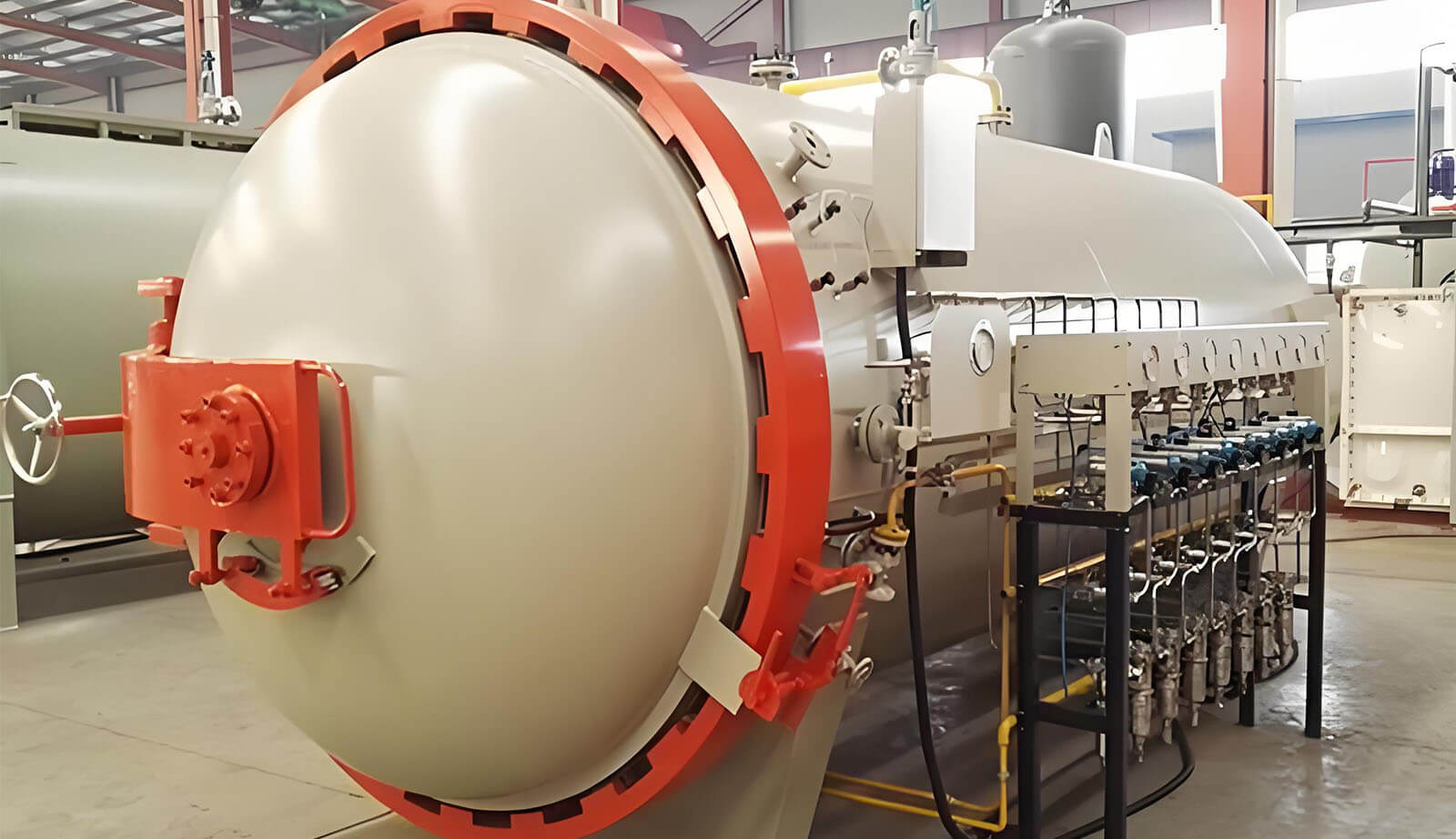
Our factory runs 100+ hot pressure autoclaves, using aluminum molds and vacuum induction to shape carbon fiber with precision. High heat and pressure enhance strength, stability, and flawless quality.

Our Carbon Fiber Research Center drives innovation in new energy, intelligence, and lightweight design, using advanced composites and Krauss Maffei Fiber Form to create cutting-edge, customer-focused solutions.
Here are the answers to the frequently asked questions from the experienced carbon fiber products factory
We produce a wide range of carbon fiber components, including automotive parts, motorcycle parts, aerospace components, marine accessories, sports equipment, and industrial applications.
We primarily use high-quality prepreg carbon fiber and large-tow carbon fiber reinforced high-performance composites to ensure strength, durability, and lightweight characteristics.
Yes, our products are coated with UV-protective finishes to ensure long-lasting durability and maintain their polished appearance.
Yes, our facilities and equipment are capable of producing large-size carbon fiber components while maintaining precision and quality.
What are the benefits of using carbon fiber products?
Carbon fiber offers exceptional strength-to-weight ratio, corrosion resistance, stiffness, thermal stability, and a sleek, modern appearance.
We cater to automotive, motorcycle, aerospace, marine, medical, sports, and industrial sectors with a focus on lightweight and high-performance carbon fiber components.
Yes, we provide custom carbon fiber solutions tailored to your specifications, including unique designs, sizes, and patterns.
We utilize advanced technologies such as autoclave molding, hot pressing, and vacuum bagging, ensuring precision, stability, and quality in every product. wonders with the Hello Elementor Theme, we’re trying to make sure that it works great with all the major themes as well.
We use aluminum and P20 steel molds, designed for durability and high accuracy, to create complex and precise carbon fiber components.
Our products undergo rigorous quality control checks, including dimensional accuracy, material integrity, and performance testing, to meet industry standards.