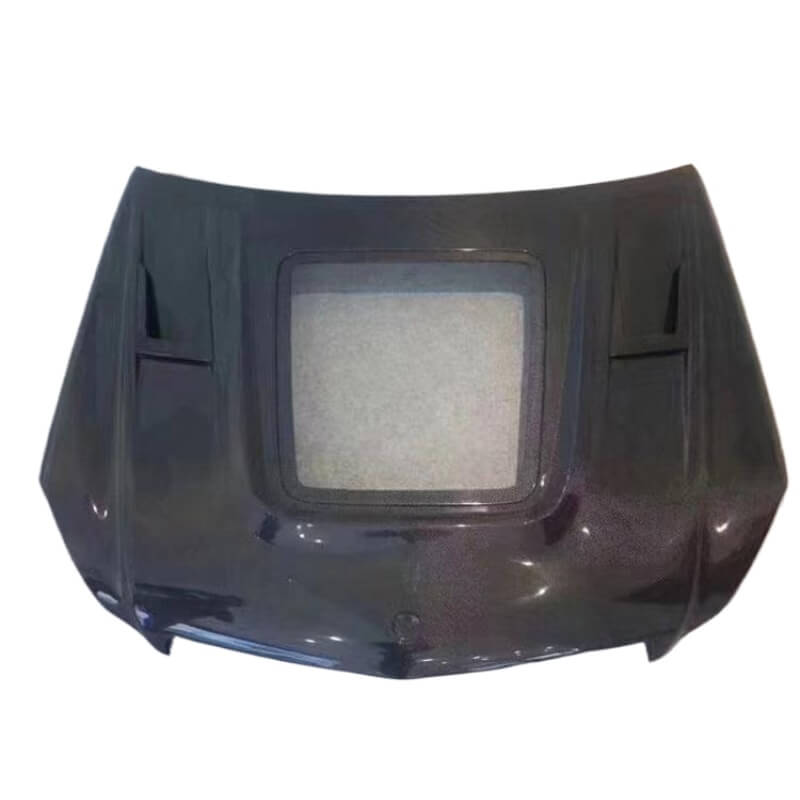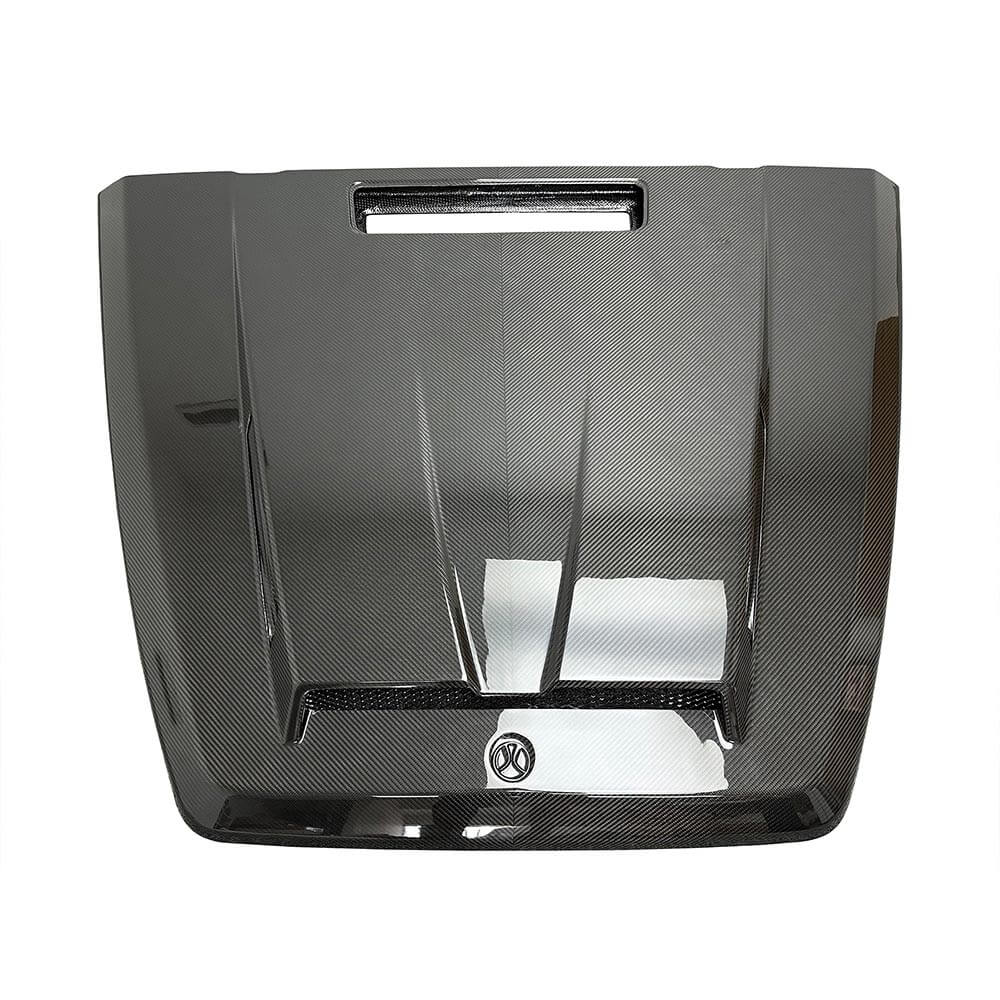
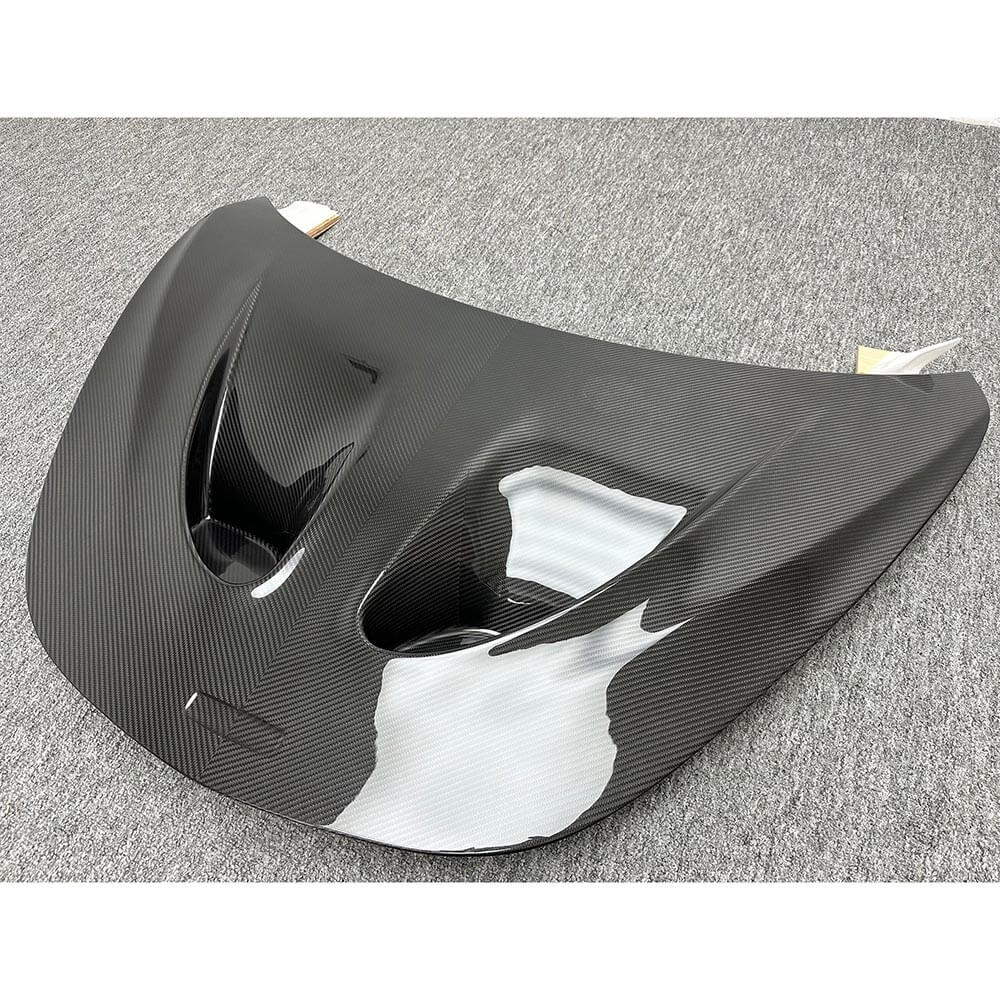
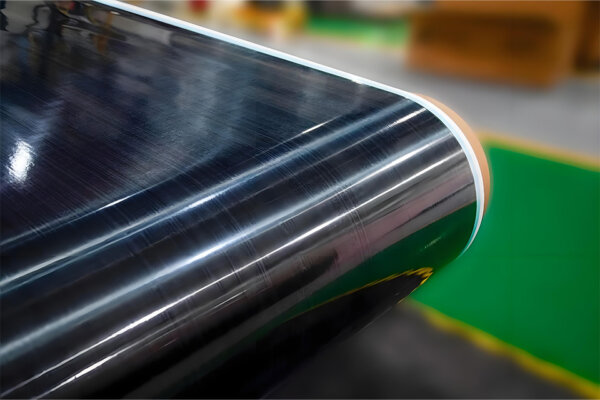
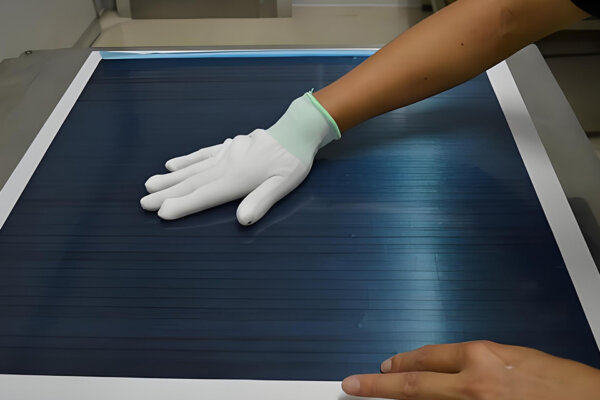
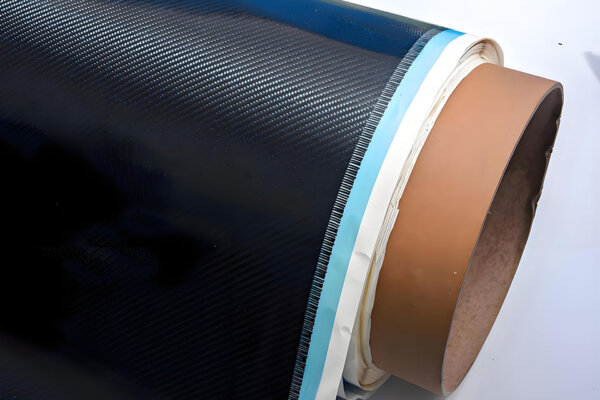
Prepreg carbon fiber is carbon fiber fabric or unidirectional reinforcement that has already been impregnated with a controlled amount of resin before it reaches the mold. Instead of brushing resin onto dry fabric by hand, the resin is added during material production — this is what makes prepreg different from wet layup, and why it typically delivers more consistent resin content, better fiber wet-out, and a cleaner surface finish.
Buyers usually choose prepreg carbon fiber when a part needs low weight, high stiffness, repeatable fitment, or a clean visible weave — think automotive body panels, motorcycle fairings, UAV shells, or aerospace-grade structural parts. It is not, however, always the right choice: prepreg requires cold storage, has a limited shelf life, and needs proper vacuum bagging and heat curing to perform as designed.
This guide explains how prepreg carbon fiber is made, how it compares with wet layup and resin infusion, and what to check before ordering custom prepreg carbon fiber parts.
What Is Prepreg Carbon Fiber?
“Prepreg” simply means pre-impregnated: the carbon fiber reinforcement is combined with resin — usually epoxy, though bismaleimide (BMI), phenolic, and cyanate ester systems are used for higher-temperature or aerospace applications — under controlled heat and pressure during manufacturing. The result is a partially cured (B-stage) material that is ready to be cut, laid into a mold, vacuum-bagged, and fully cured with heat and pressure.
Because the resin is applied under factory-controlled conditions rather than by hand, prepreg carbon fiber typically achieves:
- A tightly controlled resin content (commonly in the 32–42% range by weight, depending on the product)
- Higher fiber volume fraction than hand layup
- Fewer voids and dry spots
- A smoother, more repeatable surface finish
Prepreg is available in several forms: unidirectional (UD) tape, plain weave, 3K twill weave, and forged (chopped-fiber) prepreg — each suited to different structural and cosmetic requirements, covered in detail below.
How Prepreg Carbon Fiber Is Made
A typical custom prepreg carbon fiber part goes through the following stages in a production facility:
- Review CAD/STEP files and confirm part geometry, wall thickness, and mounting points
- Select fiber type — T300, T700, T800, UD, 3K twill, or forged, based on structural and cosmetic needs
- Select resin system and Tg (glass transition temperature) requirement based on the part’s working environment
- Build the mold — aluminum, steel, epoxy, or FRP tooling, depending on production volume
- Cut prepreg plies to pattern, tracking fiber direction for each ply
- Lay up plies according to the engineered stacking sequence
- Debulk the layup to remove trapped air between plies
- Vacuum-bag the part to apply even consolidation pressure
- Cure in an autoclave, hot press, or oven, depending on the part’s structural requirements
- CNC-trim to final dimensions
- Sand, clear-coat, and apply UV protection for exposed parts
- Inspect and pack — visual, dimensional, and (where required) fitment checks
For visible automotive or motorcycle parts, the outer ply is typically chosen for weave appearance (3K twill or forged pattern), while inner plies are engineered for strength, stiffness, and mounting-point reinforcement rather than looks.
Factory Notes From Custom Prepreg Carbon Fiber Projects
In custom carbon fiber manufacturing, the most difficult part is often not simply curing the prepreg — it’s matching the layup, mold design, insert structure, surface requirement, and tolerance target to the buyer’s actual application. Our experience manufacturing custom composite parts shapes how we approach each new project.
A visible automotive panel, for example, may use 3K twill prepreg on the outer layer purely for appearance, while the inner layers are UD or quasi-isotropic plies chosen for stiffness. A UAV shell may need lightweight sandwich construction or local reinforcement around screw holes. A motorsport splitter often needs extra reinforcement near mounting points, while a steering wheel or interior trim part focuses more on surface pattern, clear coat, and fitment than raw structural load.
This is why a professional quote normally requires CAD files, target thickness, quantity, working temperature, surface finish, and mounting method — not just a part name and photo.
Basic Layup Concepts for Prepreg Carbon Fiber Parts
A good prepreg part isn’t only about choosing T300, T700, or T800 fiber — the layup sequence matters just as much. Common design approaches include:
- 0° plies for lengthwise stiffness
- 90° plies for transverse stability
- ±45° plies for torsional strength
- Quasi-isotropic layups for balanced strength in multiple directions
- Local reinforcement around holes, inserts, brackets, and bonding areas
For cosmetic parts, the outer visible layer may be 3K twill, forged carbon, or plain weave. For structural parts, the inner laminate should be designed according to load direction, not appearance — a common mistake is treating layup as a purely visual decision.
Common Mistakes When Buying Prepreg Carbon Fiber Parts
- Choosing 3K twill purely for appearance, without considering inner structural plies
- Requesting very thin parts without confirming stiffness, mounting load, or vibration exposure
- Ignoring Tg when the part sits near engines, exhaust areas, or under direct sunlight
- Designing sharp internal corners that are difficult to lay up without bridging or wrinkles
- Adding metal inserts without local reinforcement or a bonding design
- Comparing prepreg price against wet layup price without factoring in mold cost, curing method, and QC requirements
Prepreg Carbon Fiber vs Wet Layup vs Resin Infusion
| Process | Resin Control | Void Content | Relative Cost | Best For |
|---|---|---|---|---|
| Prepreg / autoclave | High | Low | Higher | Aerospace, racing, premium structural parts |
| Wet layup | Manual | Higher risk | Lower | Cosmetic covers, low-volume parts |
| Vacuum infusion | Medium | Medium-low | Medium | Large panels, marine parts |
| Compression molding (with prepreg) | High | Low | Medium-high tooling cost | Repeated small/medium parts |
Prepreg does not always require an autoclave. Out-of-autoclave (OOA) prepreg systems can be cured with vacuum-bag-only pressure in an oven, and hot-press curing is common for smaller, high-volume parts. Autoclave curing remains the standard for high-performance structural components where void content must be minimized.
Types of Prepreg Carbon Fiber
UD Carbon Fiber Prepreg
Fibers run in a single direction with no crossover, maximizing tensile strength along that axis. Common for tubes, beams, drone arms, robotic arms, and other structural parts where load direction is predictable.
3K Twill Prepreg Carbon Fiber
The most recognizable visible weave, used for automotive exterior panels, motorcycle fairings, and interior trim where appearance matters as much as performance.
Plain Weave Prepreg
A tighter, more dimensionally stable weave, often chosen for small parts or areas where edge stability is critical.
Forged Carbon Fiber Prepreg
Chopped fiber randomly distributed in resin, producing a marbled, one-of-a-kind visual pattern. Popular for steering wheels, trim pieces, and interior accents on premium vehicles.
High-Temperature Prepreg
Formulated with resin systems rated for sustained higher operating temperatures, used near engine bays, exhaust areas, and other high-heat zones on racing and performance vehicles. Selection depends on the resin’s Tg and the part’s continuous-use temperature.
Advantages of Prepreg Carbon Fiber
- Controlled, consistent resin content across every sheet
- Higher fiber volume fraction than hand layup, improving strength-to-weight ratio
- Lower void risk, reducing the chance of delamination
- More repeatable quality from batch to batch
- Cleaner production process with less resin waste and mess
- Better surface finish, reducing post-processing work
- Better dimensional control for tight-tolerance parts
- Suited to engineered, multi-ply structural layups
When Should Buyers Choose Prepreg Carbon Fiber?
Prepreg carbon fiber is usually worth the higher cost when the part requires one or more of the following:
| Requirement | Why Prepreg Helps |
|---|---|
| Visible carbon weave | More consistent resin content and cleaner surface |
| Tight fitment | Better dimensional repeatability after curing |
| Thin-wall structure | Higher stiffness-to-weight ratio |
| High-temperature use | Resin Tg can be selected for the working environment |
| Structural load | Layup direction can be engineered around load paths |
| Repeated production | More consistent quality from part to part |
For simple cosmetic covers with low structural requirements, wet layup may still be a practical option. For premium automotive, UAV, motorsport, and industrial parts, prepreg is usually chosen when weight, fitment, surface quality, or repeatability matters.
Disadvantages and Limitations
Prepreg is not always the cheapest or best choice for every project, and being upfront about this is part of choosing the right material:
- Cold storage required — prepreg must be kept frozen (typically around -18°C) before use to prevent premature curing
- Limited shelf life, even under proper storage conditions
- Higher material cost than dry fabric for wet layup
- Higher tooling and equipment costs — autoclaves, freezers, and vacuum systems add overhead
- Post-processing is still required — trimming, clear coat, and UV protection remain necessary steps even with prepreg
- Complex mounting areas may still need inserts or local reinforcement layers
For simple cosmetic covers, wet layup may be sufficient. For very large panels with moderate structural demands, vacuum infusion can be more economical. For high-volume small parts, compression molding may offer better cost efficiency than autoclave prepreg.
Common Applications
Automotive Parts
For carbon fiber car parts, prepreg carbon fiber is usually selected for three reasons: lightweight body panels, premium visible weave, and repeatable fitment. Not every car part needs the same laminate, though. A hood or roof panel needs stiffness and dimensional stability across a large surface. A front splitter or diffuser needs better impact resistance and mounting reinforcement near contact points. A steering wheel trim or mirror cap is often more about surface weave, UV clear coat, and OEM-level fitment than raw structural load.
For exposed carbon fiber car parts, the buyer should confirm:
- whether it’s a structural replacement part or a cosmetic overlay/cover
- matte, gloss, satin, or raw finish
- 3K twill, plain weave, or forged carbon appearance
- UV-resistant clear coat
- mounting tabs, inserts, and clips
- expected tolerance and OEM fitment standard
Motorcycle Parts
Fairings, tank covers, and heat shields — thin-wall carbon fiber motorcycle parts where weight reduction and heat resistance both matter. Heat shields and parts near the exhaust need resin systems with an appropriate Tg, while fairings prioritize aerodynamic surface quality and impact tolerance during minor drops or vibration — our Kawasaki Z1000 carbon fiber parts project is one example of this fairing-and-fitment balance in practice.
UAV and Aerospace Parts
Drone frames, fuselage shells, arms, and covers — applications where high stiffness-to-weight ratio and dimensional consistency are critical. UAV shells in particular often benefit from lightweight sandwich construction (prepreg skins over a core material) or local ply reinforcement around screw holes and motor mounts, where repeated vibration can otherwise lead to fatigue cracking over time.
Industrial Components
Robotic arms, inspection tools, and machine covers — parts that benefit from high stiffness and low mass in motion-critical equipment.
Sports and Outdoor Equipment
Paddles, oars, bike components, and protective shells — where strength, low weight, and durability under repeated stress are required.
How to Choose the Right Prepreg Carbon Fiber
Match the material to the part’s actual requirements rather than defaulting to the most common option:
- Structural vs cosmetic — structural parts need engineered layup and fiber direction; cosmetic parts prioritize visible weave
- Working temperature — check resin Tg against the part’s real operating environment, not just ambient temperature
- Surface finish — matte, glossy, raw weave, or painted changes both material choice and post-processing
- Production volume — low-volume favors autoclave/hand layup tooling; higher volume may justify compression molding
Choose by Fiber Grade
T300 is often suitable for cosmetic and general-purpose parts. T700 or an equivalent standard-modulus fiber is commonly selected when higher strength is required. T800 or higher-grade fibers may be used for lightweight structural parts, but the cost is higher and not every project needs it.
Choose by Resin Tg
For parts used indoors or away from heat, standard epoxy prepreg is usually enough. For engine-bay, exhaust-adjacent, racing, or outdoor high-temperature environments, buyers should confirm dry Tg and continuous-use temperature before production.
Choose by Mold Type
FRP or epoxy molds may be suitable for low-volume prototypes. Aluminum or steel molds are better for higher-volume production, tighter tolerance, or hot-press compression molding.
For material specifications, resin systems, and pricing, see our carbon fiber prepreg supplier page.
Tolerance and Fitment Considerations
Prepreg carbon fiber can offer better dimensional repeatability than wet layup, but tolerance still depends on mold accuracy, laminate thickness, curing shrinkage, trimming method, and inspection standard.
For automotive parts, fitment depends on mounting tabs, clip positions, hole alignment, and edge shape — not only the outer surface. For UAV or industrial components, tolerance can also affect assembly, vibration, bonding gaps, and mechanical performance.
Before production, buyers should confirm:
- critical dimensions
- mounting hole tolerance
- insert position tolerance
- edge trimming requirement
- whether 3D scanning or fixture checking is needed
Prepreg Carbon Fiber Buyer Checklist
Before requesting a quote for custom prepreg carbon fiber parts, have the following ready:
- CAD or STEP file
- Surface requirement: matte, glossy, raw, or painted
- Visible weave preference: 3K twill, plain weave, or forged
- Fiber grade: T300, T700, or T800
- Part thickness
- Structural or cosmetic use case
- Working temperature range
- UV exposure conditions
- Mounting insert requirements
- Tolerance requirements
- Quantity and preferred mold type
- Testing requirements: visual inspection, fitment check, 3D scan, tensile test, or Tg test
Quality Control: How to Judge a Good Prepreg Carbon Fiber Part
When evaluating a finished prepreg carbon fiber part, check:
- Weave alignment — consistent, unbroken pattern across the surface
- Pinholes or dry spots — signs of uneven resin distribution
- Voids — visible as small bubbles or detected via ultrasonic/CT inspection on structural parts
- Delamination — separation between plies, often starting at edges
- Edge trimming quality — clean, chip-free edges
- Insert bonding — secure, void-free bonding at mounting points
- Clear coat thickness and finish — even coverage without orange peel or runs
- UV resistance — appropriate coating for outdoor/automotive exposure
- Dimensional tolerance and fitment — matches CAD within specified tolerance
Need Custom Prepreg Carbon Fiber Parts?
Send us your STEP file, target thickness, surface finish, quantity, and working environment. Our team can review the geometry, recommend the suitable prepreg material, and suggest the right manufacturing process for your project — browse our custom carbon fiber parts gallery for examples, or visit chinacarbonfibers.com for our full range of capabilities.
FAQ
Is prepreg carbon fiber the same as dry carbon fiber?
“Dry carbon” is a common industry term for parts made using prepreg and autoclave curing, as opposed to “wet carbon” made with hand layup and topcoat. In this sense, prepreg carbon fiber is what most people mean by dry carbon.
Is prepreg carbon fiber stronger than wet carbon fiber?
Prepreg generally achieves a higher fiber volume fraction and lower void content than wet layup, which typically results in better strength-to-weight performance for structural applications.
Does prepreg carbon fiber need an autoclave?
Not always. Out-of-autoclave (OOA) prepreg systems can cure with vacuum-bag-only pressure in an oven or hot press, though autoclave curing remains standard for the highest-performance structural parts.
What is the difference between prepreg and resin infusion?
Prepreg has resin pre-applied to the fabric before layup, while resin infusion draws resin into dry fabric under vacuum after the fabric is placed in the mold. Prepreg generally offers tighter resin control; infusion is often more economical for large panels.
What temperature does carbon fiber prepreg cure at?
Cure temperatures vary by resin system, but common epoxy prepregs cure in roughly the 120–180°C range. High-temperature resin systems (BMI, cyanate ester) cure or post-cure at higher temperatures for greater heat resistance.
How long can prepreg carbon fiber be stored?
Properly frozen prepreg (typically around -18°C) has a shelf life of several months to about a year, depending on the resin system. Once thawed, it must be used within a limited “out time” before resin starts curing.
Is prepreg carbon fiber waterproof?
The cured composite itself is highly resistant to moisture, but a proper clear coat or surface finish is still needed to protect against UV exposure and long-term surface wear.
Is prepreg carbon fiber good for car parts?
Yes — it’s widely used for hoods, spoilers, splitters, and trim where low weight, repeatable fitment, and a clean visible weave are priorities.
Can prepreg carbon fiber be matte or glossy?
Yes, surface finish is applied as a post-processing step (clear coat) and can be specified as matte, satin, or high-gloss regardless of the underlying weave.
What information is needed for a custom prepreg carbon fiber quote?
A CAD/STEP file, part thickness, surface and weave preference, fiber grade, working temperature, quantity, and any testing requirements — see the Buyer Checklist above for the full list.