

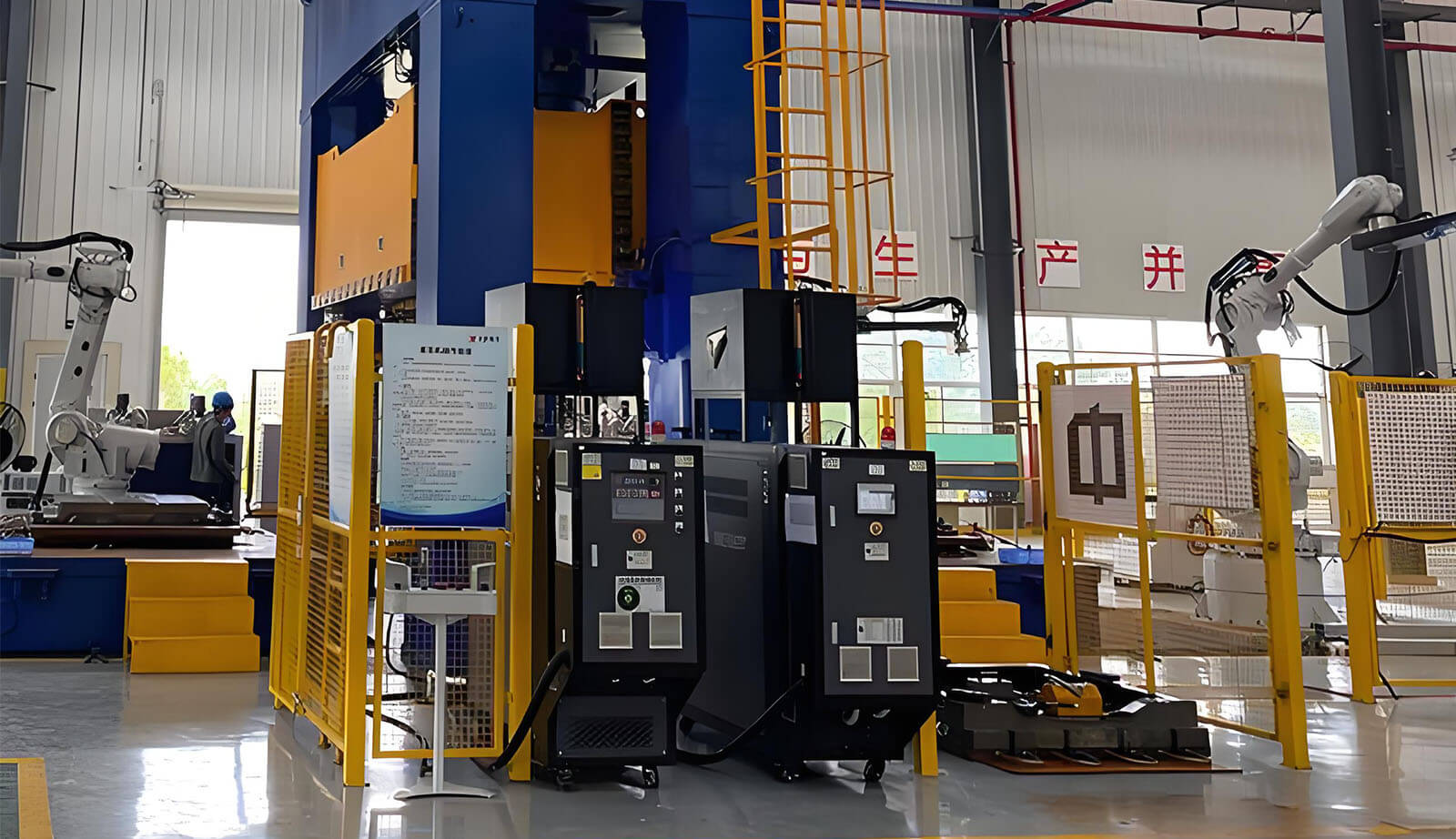
Carbon Fiber Composite Material Hot Pressing Molding Process
Our factory employs an advanced carbon fiber hot press process with a P20 steel mold, ensuring high efficiency, precision, durability, and cost-effectiveness for quality production.
If you’re researching a BMW carbon fiber spoiler, you’re probably choosing between dozens of near-identical product listings that all use the same three words — “lightweight,” “premium,” and “OEM-fit” — without telling you anything you can actually verify. This guide takes a different approach. As a carbon fiber manufacturer that builds these parts from raw prepreg material to finished autoclave-cured spoiler, we’re going to walk through exactly what separates a genuinely good BMW carbon fiber spoiler from a cosmetically similar but structurally inferior one — the weave, the resin system, the curing process, the mold tolerances, and the fitment logic behind each BMW chassis code.
BMW’s M division has built its design language around visible performance cues, and the rear spoiler is one of the most recognizable of them. But “carbon fiber spoiler” actually covers two very different buying motivations that are worth separating before you shop:
Knowing which category you fall into changes which spoiler style, material grade, and mounting method makes sense for you — which is what the rest of this guide is organized around.
| BMW Model | Chassis Code | Popular Spoiler Style |
|---|---|---|
| 3 Series | G20 | Lip spoiler |
| M3 | F80 | Duckbill spoiler |
| M3 | G80 | CSL-style high kick |
| M4 | F82 | GT-style spoiler |
| M4 | G82 | M Performance style |
| M5 | F90 | Performance rear spoiler |
Not every “carbon spoiler” serves the same purpose. Here’s how the four common styles actually differ in design intent, not just appearance.
A lip spoiler sits flush along the trunk edge and adds only a subtle lift to the rear profile. It’s the closest thing to an OEM+ upgrade — it doesn’t change the car’s silhouette dramatically, which makes it the most popular choice for daily-driven 3 Series and 4 Series models where owners want a factory-plus look rather than an aggressive one. Aerodynamically, a lip spoiler contributes almost nothing at legal speeds; its value is entirely visual.
The duckbill design traces back to BMW’s CSL heritage — the trailing edge kicks upward at the very end of the trunk lid rather than running the full width. This shape interrupts airflow separation slightly later than a flat lip, giving a small aerodynamic benefit over a standard lip while keeping a factory-integrated look. It’s a common choice for F80/F82-generation M3 and M4 owners who want a nod to CSL styling without going to a full GT wing.
Designed around the G80 M3 and G82 M4’s taller, more sculpted trunk lines, the high-kick spoiler sits noticeably higher than a duckbill and pairs well with the newer generation’s more aggressive rear fascia. It’s closer to a “true” performance spoiler in stance, and typically matches best with other G8x-specific carbon components like diffusers and side skirt extensions, since these parts are engineered around the same body lines.
A GT wing is a raised, pedestal-mounted element, built for track use where actual downforce numbers matter. On its own, a GT wing does relatively little without a matching front splitter and rear diffuser working together to balance the car’s aero platform — installing one on a purely street car is largely a styling decision, and a legitimate one, but buyers should know the aerodynamic claims made for these wings assume a full aero package, not a standalone part.
BMW’s own M Performance parts catalog offers factory-designed carbon fiber spoilers for most current M models, and it’s worth understanding how these compare to aftermarket options before deciding which route fits your build.
BMW M Performance (OEM) spoilers are designed and validated in-house, guaranteeing perfect factory fitment and warranty compatibility, but they come in a limited number of fixed designs and at a significantly higher price point, with long lead times through dealer parts networks.
Aftermarket carbon spoilers — the category this guide focuses on — open up a much wider range of styles (CSL, high-kick, duckbill, GT wing) and price points, and can be produced in dry carbon to match or exceed OEM material quality when sourced from a manufacturer with real autoclave capability. The trade-off is that fitment quality varies far more between aftermarket suppliers than it does across BMW’s own M Performance range, which is why the quality-verification steps later in this guide matter more when shopping aftermarket than when buying direct from BMW.
Custom / private-label spoilers sit between the two — built to a shop’s or distributor’s own design brief rather than replicating either BMW’s or a competitor’s existing shape, typically used by tuning brands that want a distinct product rather than a lookalike part.
The CSL name carries specific weight in the BMW community — it originates from BMW’s own limited-run M3 CSL and M4 CSL models, which used a distinctive kicked-up trunk spoiler as part of a broader weight-reduction and aerodynamics package. That styling cue has since become one of the most requested aftermarket spoiler shapes across the M3 and M4 range, independent of whether the buyer owns an actual CSL model.
A “CSL-style” spoiler is defined by its raised trailing edge and integrated duckbill profile, designed to look like a natural extension of the trunk lid rather than a bolt-on afterthought. On the G80 M3 and G82 M4 platforms, this style is currently the most commonly requested aftermarket carbon fiber spoiler shape, ahead of both flat lip spoilers and raised GT wings, largely because it reads as “factory-plus” rather than overtly modified. Buyers specifically searching for an M4 CSL carbon spoiler or M3 CSL style spoiler are typically looking for this exact silhouette rather than a literal reproduction of BMW’s limited-edition part, which is not generally available as a direct aftermarket copy.
“Spoiler” and “rear wing” are often used interchangeably, but they describe different levels of aerodynamic intent, and it’s worth being precise about which one you actually need.
A spoiler — lip, duckbill, high-kick, or CSL-style — sits close to the trunk surface and primarily disrupts airflow separation. A rear wing, by contrast, is a raised, airfoil-shaped element mounted on pedestals above the trunk line, generating active downforce through its profile rather than simply managing airflow at the body surface. GT wings (covered above) fall into this category.
For street cars, a low-profile carbon fiber rear wing can offer a middle ground between a subtle spoiler and a full track wing — enough visual presence to signal a performance build without the extreme stance of a pedestal-mounted GT wing. For track-focused BMW builds, a properly sized rear wing paired with a front splitter is the only spoiler-family option that produces aerodynamic numbers worth discussing, and buyers in this category should be evaluating wing chord length and mounting rigidity rather than styling alone.
Nearly every competitor guide stops at “real carbon fiber vs. fake carbon fiber.” That distinction matters, but it isn’t the one that actually determines the quality of a genuine carbon part. Two spoilers can both be 100% real carbon fiber and still differ enormously in weight, strength, and finish — because of how they’re processed.
| Dry Carbon (Prepreg) | Wet Carbon (Hand Layup) | |
|---|---|---|
| Base material | Pre-impregnated carbon fiber (commonly aerospace-grade fiber such as Toray T300/T700 or equivalent) | Dry carbon cloth hand-saturated with liquid resin |
| Curing process | Autoclave, controlled heat + pressure | Ambient or low-heat cure, often without pressure |
| Resin content control | Factory-set ratio (typically 38–42% resin by weight) | Depends on the technician’s hand — commonly 45–55%+ |
| Weight | Lighter, consistent part-to-part | Heavier, with noticeable batch variation |
| Surface finish | Sharp weave definition, minimal pinholing | Variable — quality depends heavily on the shop |
| Cost | Higher | Lower |
| Suitability for track/high-load parts | Yes | Limited |
This is the part most product pages never explain, and it’s the actual reason two “dry carbon” spoilers from different suppliers can weigh noticeably differently even though both are technically prepreg parts.
Resin content is the biggest variable. A well-controlled prepreg layup holds resin content in the high-30s to low-40s percent by weight. When a factory cuts corners on prepreg material quality or doesn’t control bagging pressure precisely, resin content can creep toward 50%+, which adds weight without adding strength — you end up with a heavier part that still looks like dry carbon on the surface.
Autoclave parameters matter just as much. In our production process, BMW spoiler skins are cured at approximately 120–135°C under 6–8 bar of pressure, with cure cycles typically running 90–150 minutes depending on laminate thickness and the specific resin system. Pressure this precise and this sustained is what compacts the laminate and squeezes out excess resin and trapped air — something a hand-layup process, or an autoclave run with inconsistent pressure, simply cannot replicate. Fiber orientation is the third variable: a 2×2 twill weave laid at alternating 0°/45°/90° angles across cosmetic and structural plies gives more consistent multi-directional strength than a single-direction layup, which is why the ply schedule (not just “how many layers”) is something worth asking a supplier about directly.
This is the part of the process almost no competitor content covers, because almost none of them run their own production. Here’s the actual seven-step workflow behind a properly made carbon fiber spoiler.
Step 1 — 3D Scanning and CAD Data Preparation. Surface data is captured either from OEM CAD files or from a physical scan of the trunk lid, so the finished mold surface matches the factory body line rather than an approximated shape.
Step 2 — Mold Development. For high-volume automotive production, steel tooling can be used for maximum durability across long production runs, while aluminum or composite tooling is more commonly selected for aftermarket and lower-volume BMW spoiler programs, where it offers a strong balance of dimensional accuracy and faster turnaround.
Step 3 — Carbon Fiber Layup. Cosmetic-facing plies and structural plies are laid separately, with fiber direction alternated across the layup (commonly 0°/45°/90°) to balance visual weave consistency against multi-directional stiffness.
Step 4 — Vacuum Bagging. The laid-up part is sealed and vacuum-bagged to remove trapped air before curing — a step that directly affects whether the finished surface has pinholes or a clean, glass-like weave.
Step 5 — Autoclave Curing. The part cures under controlled heat (approx. 120–135°C) and pressure (approx. 6–8 bar) for a set cycle time. This combination of heat and sustained pressure is what separates true prepreg dry carbon from anything cured at ambient conditions.
Step 6 — CNC Trimming. Edges, mounting holes, and cutouts are finished on CNC equipment rather than by hand, which is what keeps hole spacing and edge profile consistent from unit to unit — critical for a bolt-on part that has to align with factory mounting points.
Step 7 — Clear Coat Application. A UV-resistant clear coat is applied in gloss or matte finish to protect the weave from sun exposure and moisture; coating thickness and cure quality here determine how long the part resists yellowing.
Our factory specializes in low-volume prototyping and mid-to-high volume production of automotive carbon fiber components, with BMW as one of our core platforms. For BMW applications specifically, we have developed and produced:
We also manufacture other BMW carbon fiber components as a full BMW carbon fiber parts supplier, including front lip splitters, canards, and roof panels — part of our broader carbon fiber car parts range — allowing distributors and tuning shops to source a complete carbon fiber upgrade package from one factory rather than coordinating multiple vendors. Beyond automotive applications, our factory also produces carbon fiber motorcycle parts using the same prepreg and autoclave processes described in this guide.
Production capabilities include:
For B2B buyers — distributors, tuning shops, and private-label brands — the real question behind “is this a good spoiler” is usually “can I trust this factory’s QC process across a full production run.” Here’s what a proper inspection process should cover at each stage:
Visual inspection. Every part is checked for weave alignment, resin pooling, surface pinholes, and clear coat consistency before it leaves the line.
Weight measurement. Finished parts are weighed against a reference sample to catch batches with excess resin content or inconsistent ply thickness.
Mounting and dimensional test. Mounting holes and edge profiles are checked against the original 3D-scanned reference data to confirm the part matches factory tolerances, not just “close enough.”
Fitment trial. Where possible, sample parts are test-fitted to a physical vehicle or body panel jig before a full batch is approved for shipment.
Clear coat inspection. Coating thickness and cure quality are checked to confirm UV resistance will hold up over years of outdoor exposure, not just at time of shipping.
A supplier who can walk you through each of these checkpoints — rather than simply stating “we have strict QC” — is the one worth building a long-term sourcing relationship with.
| OEM | Aftermarket | |
|---|---|---|
| Price | Higher | More flexible |
| Design options | Limited to factory catalog | Wide range of styles |
| Customization | None | Fully customizable |
| Minimum order quantity | Large-batch only | Small-batch and prototype runs possible |
| Quality ceiling | Consistent, but fixed | Depends entirely on the manufacturer |
The common assumption that “aftermarket means lower quality” isn’t accurate — it just shifts the responsibility for quality control from BMW onto whichever factory you’re sourcing from. What actually determines whether an aftermarket spoiler matches or exceeds OEM quality comes down to four factors: tooling accuracy (steel vs. aluminum, and how the mold surface was derived), the grade of prepreg material used, the precision of the autoclave cure cycle, and whether the factory runs dimensional QC checks on every batch rather than spot-checking occasionally. A buyer evaluating any aftermarket supplier should ask about these four points specifically rather than relying on marketing language.
The G80 M3’s trunk profile is noticeably taller and more sculpted than its F80 predecessor, which is why CSL-style and high-kick spoiler designs suit it better than a flat lip. Because the G80 shares its rear body architecture with the G82 M4 coupe in several respects, spoiler designs built around this platform often carry over cleanly between the two, though buyers should confirm sedan vs. coupe trunk geometry before assuming interchangeability.
The G82’s coupe roofline and shorter trunk lid make it one of the most common platforms for M Performance-style spoilers. Precision here matters more than on most models, since the M4’s rear fascia is already visually busy — a poorly fitted spoiler is far more noticeable on this car than on a simpler 3 Series trunk.
This is where fitment mistakes are most common. F80 M3 and F82 M4 share the same generation but not the same trunk shape as the F30/F32 non-M 3 and 4 Series — and critically, F32 and F36 (the 4 Series coupe and Gran Coupe) use a different trunk contour from each other, meaning a spoiler designed for F82 M4 will not share mounting points with a standard F32. Always confirm chassis suffix, not just the generation letter, before ordering.
As a sedan-only platform, the F90 M5 has fewer spoiler style options than the coupe-based M3/M4 line, with most demand centered on subtle lip and low-profile performance spoiler designs that complement the car’s more understated sedan proportions.
The G20’s lip spoiler market is largely styling-driven — most buyers are non-M 330i/M340i owners looking for an M Performance-adjacent look rather than a functional aero upgrade, which makes fitment precision and finish quality (rather than aerodynamic claims) the more relevant purchase criteria here.
The G87 M2 has quickly become one of the most active aftermarket platforms in the current BMW lineup, and carbon fiber spoiler demand for it is growing accordingly. Its shorter coupe proportions and more compact trunk lid mean spoiler designs scaled down from the G82 M4 don’t always carry over directly — the M2’s trunk lid geometry is closer to, but not identical to, the M4’s, so buyers searching for a G87 M2 carbon spoiler or BMW M2 carbon fiber wing should confirm the part was tooled specifically for the G87 chassis rather than adapted from an M4 mold.
Check the weave pattern. A consistent 2×2 twill weave with no visible fiber misalignment or resin-starved patches indicates controlled prepreg processing. Uneven weave spacing or dull patches often signal a rushed or low-pressure cure.
Check the backside construction. Turn the part over if possible. A spoiler that is nothing more than a thin carbon skin over hollow space will flex and eventually crack under vibration; a properly engineered part has internal reinforcement ribbing or a structural core layer bonded to the cosmetic skin.
Check the weight. For a given spoiler style and BMW model, if two suppliers’ parts differ by more than roughly 15% in weight, one of them is very likely using excess resin or fewer/thinner structural plies than advertised. For more detail on identifying genuine vs. counterfeit carbon fiber construction, see our Real vs. Fake Carbon Fiber guide.
Check the UV clear coat. Run a fingernail lightly along an edge — a properly cured, adequately thick clear coat won’t show scratching or lift. Thin or poorly cured coatings are the leading cause of yellowing within the first one to two years of sun exposure.
Check fitment tolerances. Confirm the supplier has fitment data for your specific chassis suffix (not just “fits M3/M4”), and ask whether the mold was derived from 3D-scanned OEM data or an approximated shape — this single factor determines whether installation is a clean bolt-on or requires trimming and forcing.
Clear coat yellowing. Almost always traced back to a cheap or thin UV-inhibiting topcoat rather than the carbon fiber itself — the carbon weave doesn’t yellow, the coating over it does.
Carbon cracking. Typically caused by an incorrect resin system for the application, insufficient cure pressure leaving voids in the laminate, or a design that lacks reinforcement at high-stress mounting points.
Poor fitment. The root cause is almost always the mold — either it was built from an approximated shape rather than true OEM surface data, or steel/aluminum tooling wasn’t held to tight enough tolerance across a production run.
Fake dry carbon. A common shortcut is a thin cosmetic carbon veneer bonded over a fiberglass or ABS substrate, then clear-coated to visually pass as dry carbon. This can usually be identified by weight (fiberglass-backed parts run noticeably heavier) and by inspecting a cut edge or mounting hole, where the substrate material becomes visible.
As a carbon fiber spoiler manufacturer in China, we work directly with tuning shops, aftermarket brands, distributors, and private-label businesses that need a reliable BMW carbon fiber parts supplier rather than a one-off retail purchase. If you’re sourcing carbon fiber spoiler wholesale for a shop or distribution business, this is the section that matters most to you.
We support:
Beyond standard catalog styles, we produce BMW carbon fiber spoilers as:
Manufacturing capabilities: prepreg dry carbon layup, autoclave curing, compression molding, and vacuum resin infusion — allowing us to match the process to the part’s structural requirements and target price point rather than defaulting to one method for everything.
Typical order structure:
| Stage | Quantity |
|---|---|
| Prototype / sample development | 1–5 pcs |
| Small-batch production | 50–200 pcs |
| Full production run | 200–1,000+ pcs |
It depends on your goal. For styling purposes, a well-made carbon spoiler is a durable, long-lasting upgrade compared to painted ABS alternatives, since genuine carbon fiber doesn’t fade or warp the way plastic composites do over time. For performance purposes, a spoiler alone delivers limited aerodynamic benefit unless paired with a matching front splitter and diffuser — buyers chasing measurable downforce should think in terms of a full aero package rather than a single part.
At legal street speeds, the honest answer is: barely. Any single spoiler’s aerodynamic contribution at everyday speeds is small enough that most owners are buying for looks rather than measurable handling change, and there’s nothing wrong with that as a purchase decision. At track speeds, a properly designed spoiler or rear wing does contribute real downforce, but only as part of a balanced aero setup — pairing it with a front splitter and, ideally, a rear diffuser. A spoiler installed in isolation on a track-driven car without addressing front-end aero can even shift balance in a way that isn’t beneficial, so track-focused buyers should think in terms of a full aero package rather than a single part.
For structural, high-load, or track-oriented applications, yes — dry carbon’s controlled resin content and autoclave curing produce a lighter, more consistent part. For a purely cosmetic lip spoiler with minimal load, well-made wet carbon can be a reasonable and more affordable choice, provided the resin ratio and cure process are properly controlled rather than rushed.
Yes. We support full custom development starting from either a reference design, a competitor part for benchmarking, or 3D scan data of your specific vehicle, taking the project from prototype sampling through mold tooling and production.
Current production coverage includes G20 3 Series, F80/F82 and G80/G82 M3 and M4, F90 M5, and G22 4 Series, among others. If your chassis code isn’t listed, our engineering team can evaluate feasibility for a custom tooling project.
Yes. We work directly with distributors, body kit suppliers, tuning shops, and racing teams, with tiered pricing structures based on order volume and support for private-label production.
Prototype and sample development typically takes several weeks depending on part complexity and whether new tooling is required. Full production timelines depend on order volume and are confirmed per project once mold development is complete.
Ask the supplier directly about resin content percentage, autoclave cure temperature and pressure, and ply schedule — legitimate manufacturers can answer these specifically. Beyond that, compare weight against other listings for the same part, and inspect the weave for consistency and the backside for reinforcement rather than a hollow skin. Our Real vs. Fake Carbon Fiber guide covers additional verification methods in detail.
Whether you’re sourcing an OEM replacement project, requesting wholesale pricing for a modification shop, or developing a fully custom spoiler design, our engineering and production team can walk through material selection, tooling, and lead time for your specific requirements.
Request an OEM Project Quote · Request Wholesale Pricing · Start a Custom Development Inquiry
This guide was written by [Your Company Name], a carbon fiber composite manufacturer specializing in automotive exterior and interior components. Our production capabilities include prepreg autoclave molding, vacuum infusion, compression molding, and CNC finishing, serving OEM, aftermarket, and private-label customers across the automotive performance industry. Learn more about our company and our full production capabilities.
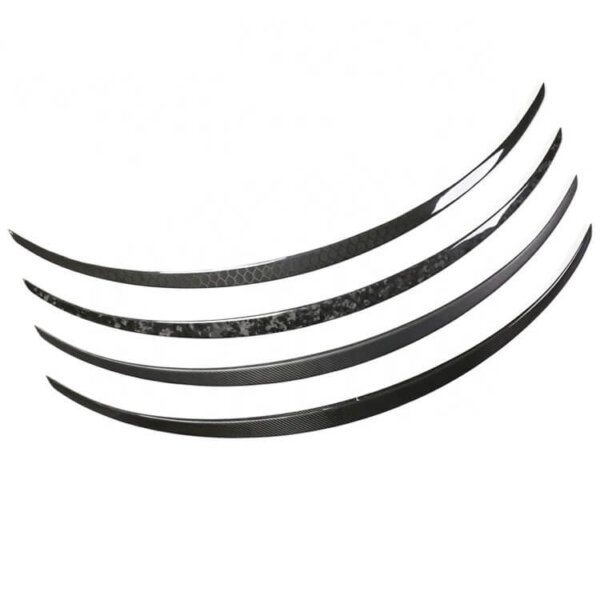
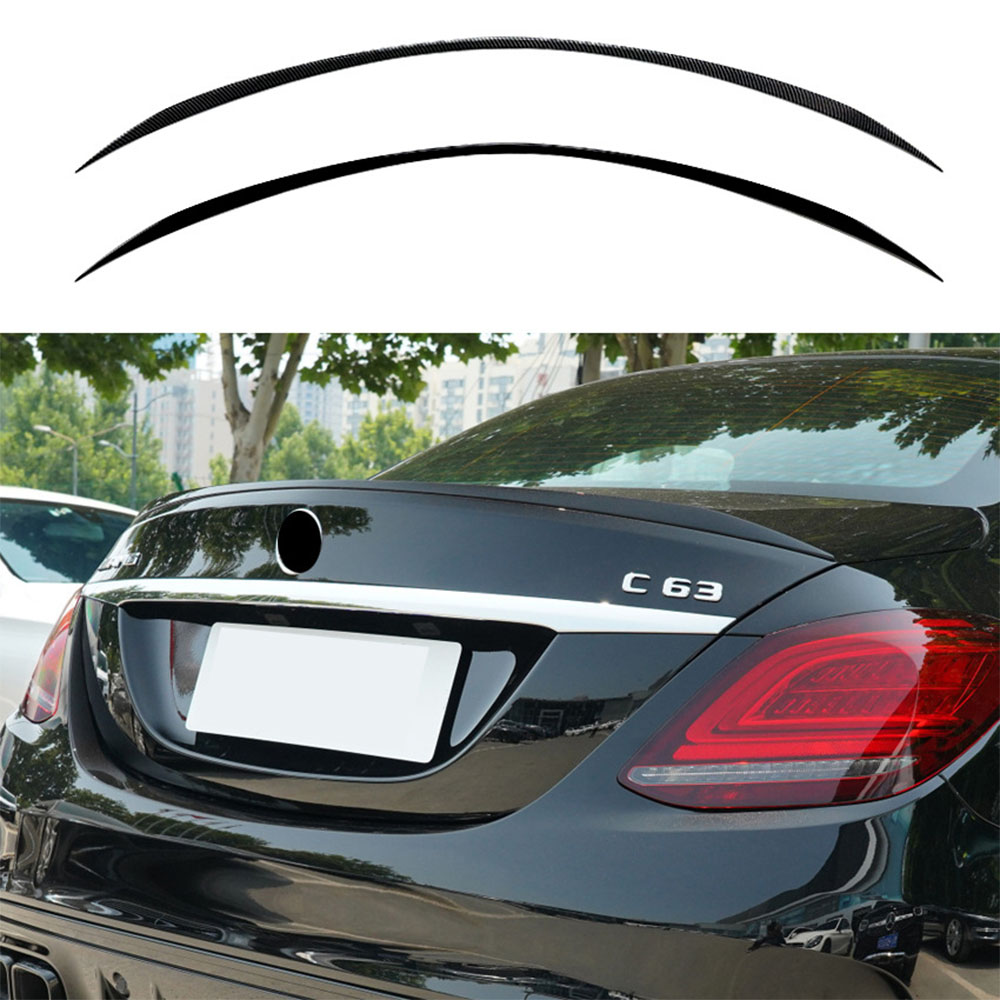
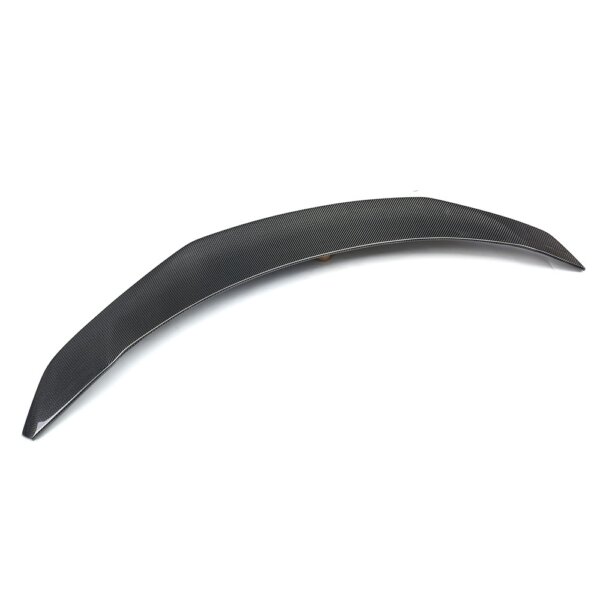
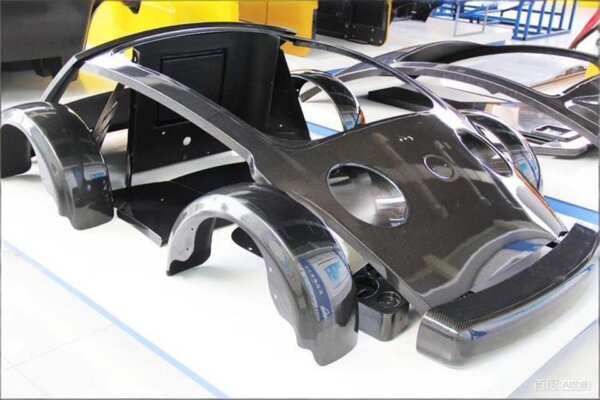
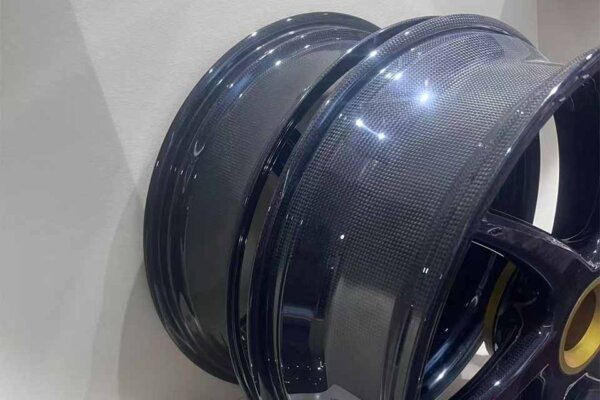
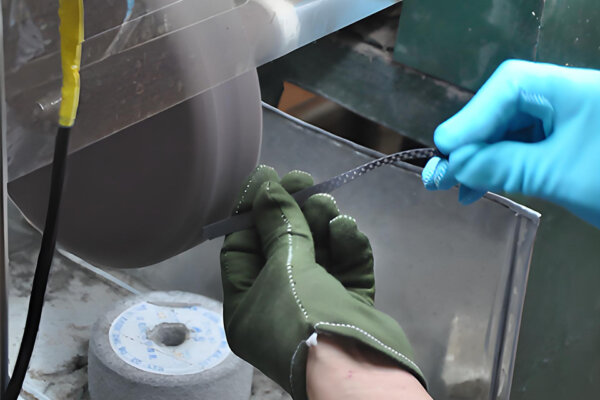
Our factory employs an advanced carbon fiber hot press process with a P20 steel mold, ensuring high efficiency, precision, durability, and cost-effectiveness for quality production.
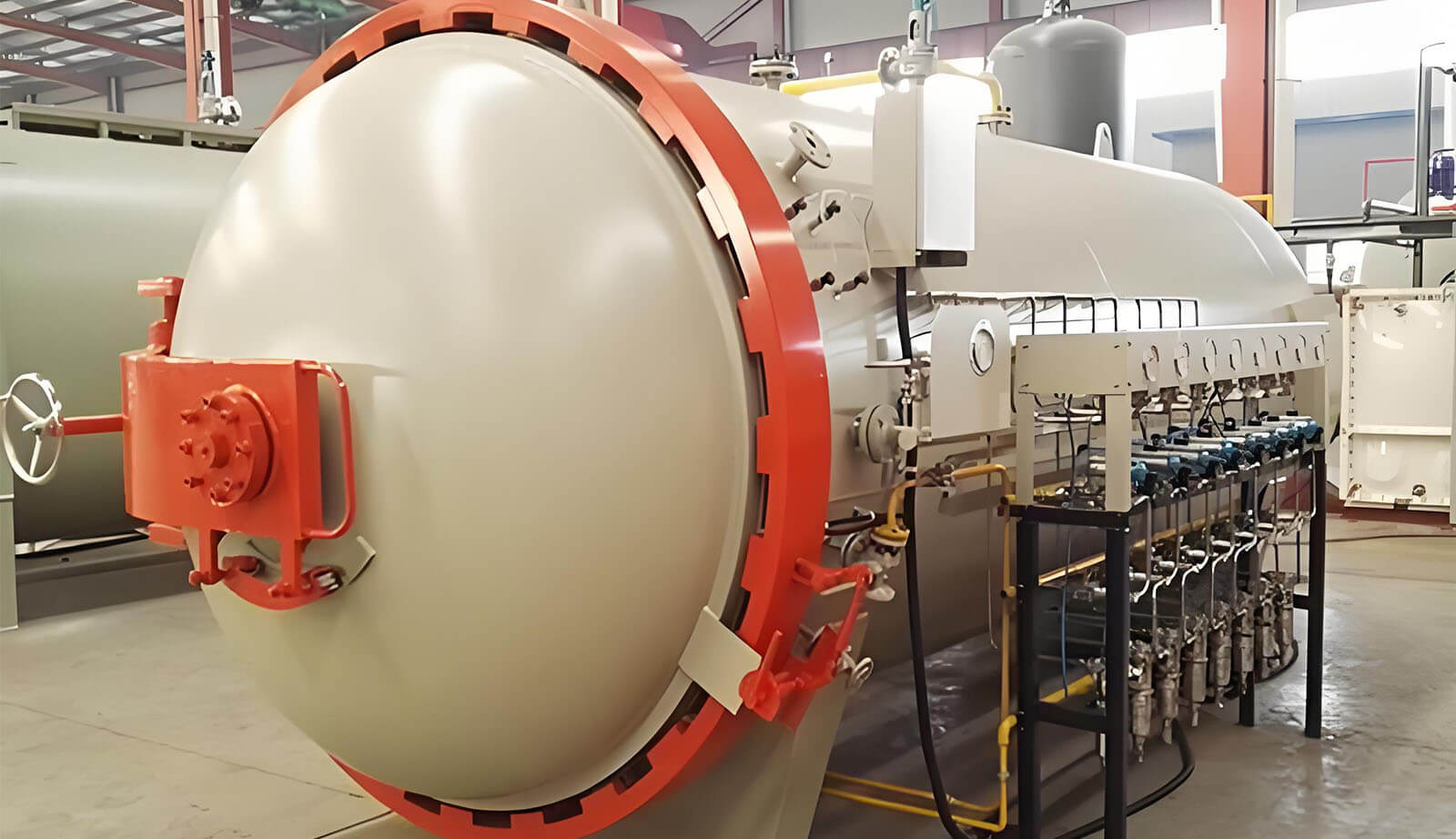
Our factory runs 100+ hot pressure autoclaves, using aluminum molds and vacuum induction to shape carbon fiber with precision. High heat and pressure enhance strength, stability, and flawless quality.
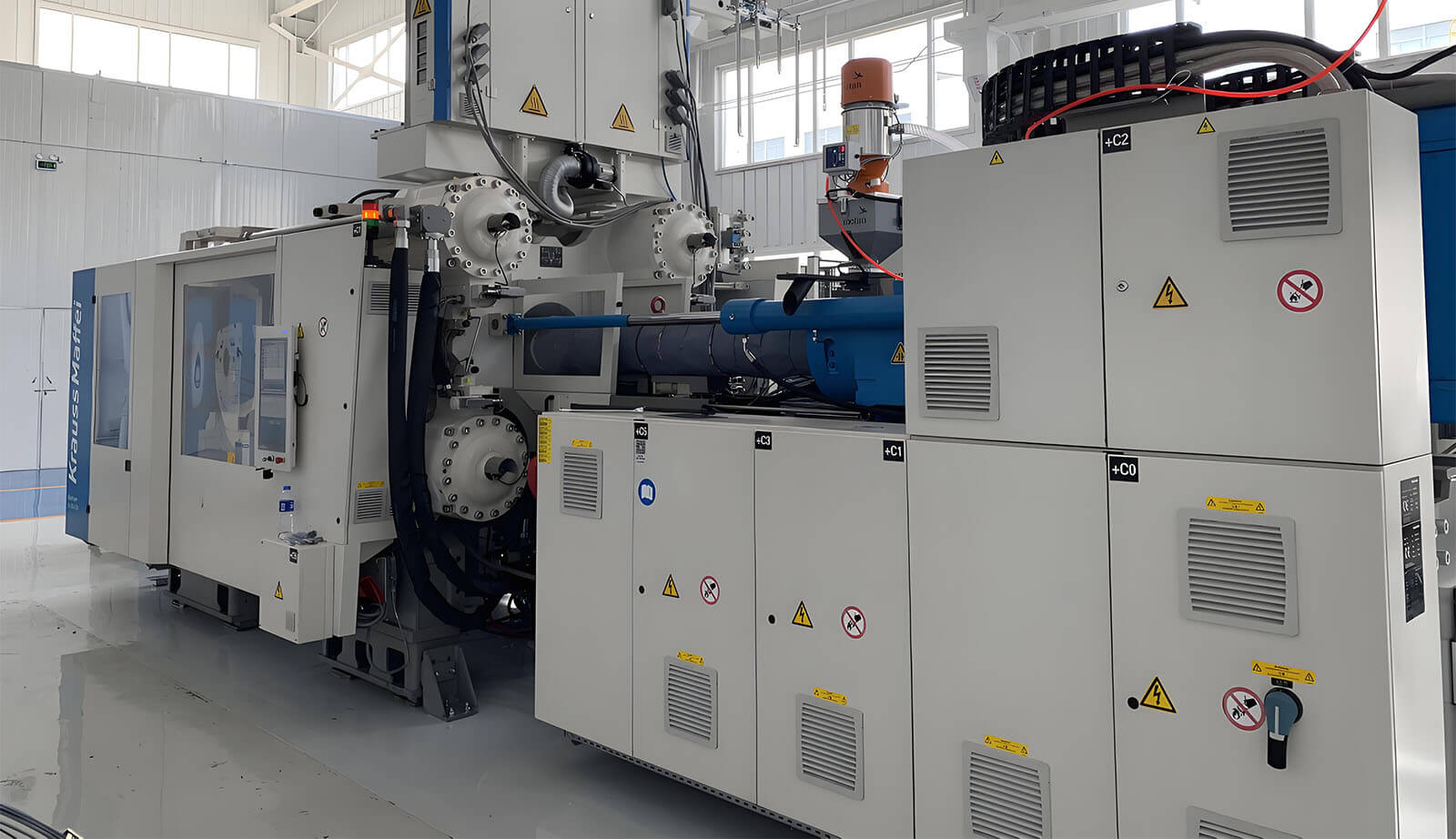
Our Carbon Fiber Research Center drives innovation in new energy, intelligence, and lightweight design, using advanced composites and Krauss Maffei FiberForm to create cutting-edge, customer-focused solutions.
Here are the answers to the frequently asked questions from the experienced carbon fiber products factory
We produce a wide range of carbon fiber components, including automotive parts, motorcycle parts, aerospace components, marine accessories, sports equipment, and industrial applications.
We primarily use high-quality prepreg carbon fiber and large-tow carbon fiber reinforced high-performance composites to ensure strength, durability, and lightweight characteristics.
Yes, our products are coated with UV-protective finishes to ensure long-lasting durability and maintain their polished appearance.
Yes, our facilities and equipment are capable of producing large-size carbon fiber components while maintaining precision and quality.
What are the benefits of using carbon fiber products?
Carbon fiber offers exceptional strength-to-weight ratio, corrosion resistance, stiffness, thermal stability, and a sleek, modern appearance.
We cater to automotive, motorcycle, aerospace, marine, medical, sports, and industrial sectors with a focus on lightweight and high-performance carbon fiber components.
Yes, we provide custom carbon fiber solutions tailored to your specifications, including unique designs, sizes, and patterns.
We utilize advanced technologies such as autoclave molding, hot pressing, and vacuum bagging, ensuring precision, stability, and quality in every product. wonders with the Hello Elementor Theme, we’re trying to make sure that it works great with all the major themes as well.
We use aluminum and P20 steel molds, designed for durability and high accuracy, to create complex and precise carbon fiber components.
Our products undergo rigorous quality control checks, including dimensional accuracy, material integrity, and performance testing, to meet industry standards.