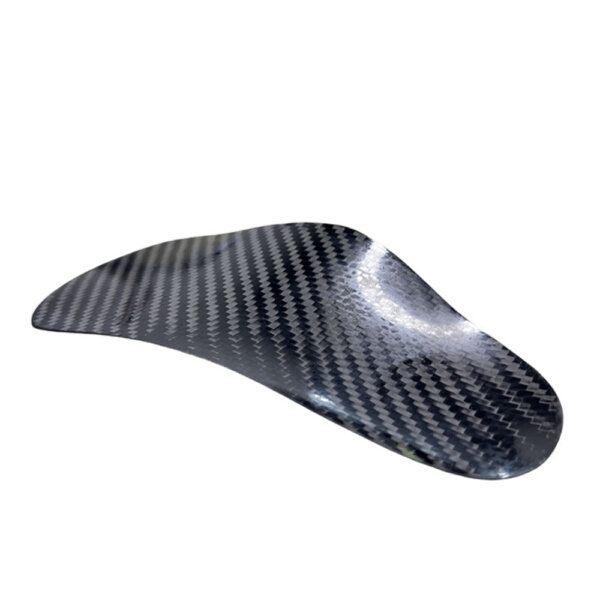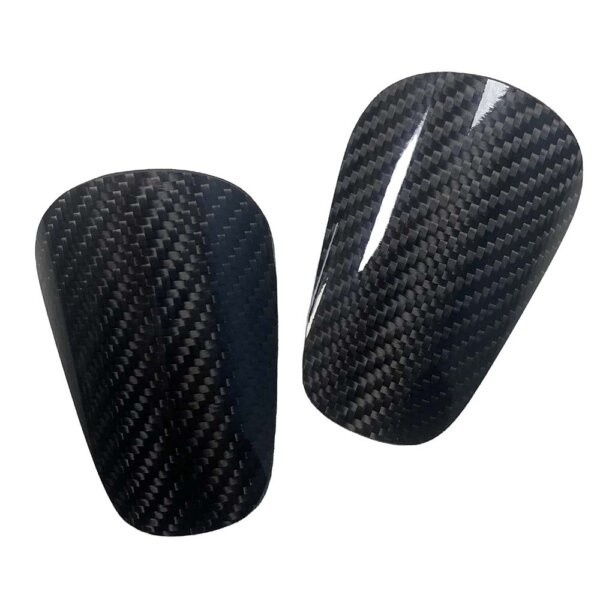
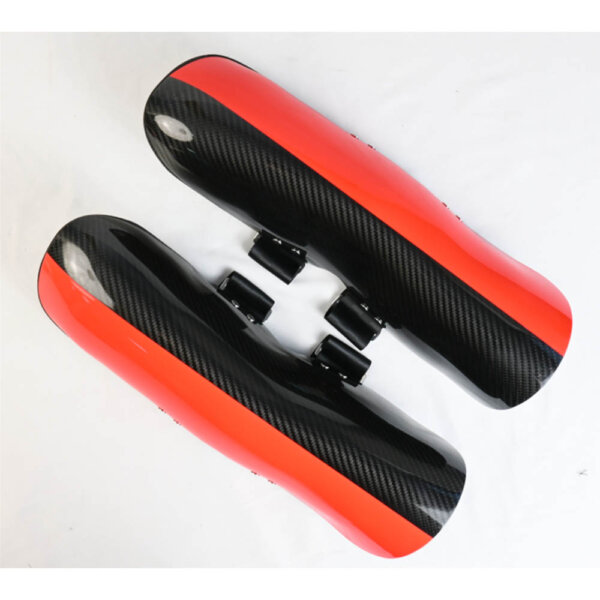
Carbon fiber shoe inserts show up in very different products — a football boot sole plate and an orthotic arch support insert are both “carbon fiber shoe inserts,” but they’re built for opposite goals. This guide covers what the material actually does inside a shoe, the main plate types, how stiffness is controlled, and how to think through a spec before you go looking for a manufacturer.
This is an educational overview, not a product listing or a medical recommendation. It’s published by chinacarbonfibers.com, where you can also browse our full range of custom carbon fiber products beyond footwear applications.
Quick Selection Guide
| If you need… | Consider… | Go to |
|---|---|---|
| A football boot or soccer cleat sole plate | Full-length or forefoot carbon sole plate, propulsion-tuned layup | Football boot carbon plate OEM page |
| Arch support or a custom orthotic shell | Carbon fiber foot insert / arch support plate, rigid or semi-rigid | Carbon fiber foot inserts page |
| Big-toe joint motion limitation (e.g. turf toe, hallux rigidus context) | Forefoot plate or Morton’s extension plate | Carbon fiber foot inserts page |
| General material and type comparison before deciding | Keep reading this guide | You’re on the right page |
What Are Carbon Fiber Shoe Inserts?
A carbon fiber shoe insert is a thin, molded composite plate placed inside a shoe — either as a standalone insert or built into an insole — to add structural stiffness, shape retention, and lightweight reinforcement that foam, EVA, or standard plastic can’t provide at the same thickness.
They show up in two broad categories that are worth separating early, because they’re specified completely differently:
- Performance sports plates — sole plates in football boots, cycling shoes, and running spikes, where the goal is propulsion efficiency and torsional control during athletic movement.
- Orthotic and support plates — arch support inserts, orthotic shells, and forefoot plates used for structural foot support, sometimes as part of a clinical orthotic device.
Both use the same base material and manufacturing process, but the layup, stiffness target, and shape are specified around a completely different goal.
How Do Carbon Fiber Shoe Inserts Work?
The underlying mechanics are the same regardless of application:
- Stiffness-to-weight ratio. Carbon fiber achieves a given bending stiffness at a fraction of the thickness and weight of plastic or fiberglass, which is why it’s used where both rigidity and low profile matter.
- Layup direction controls flex. Carbon fiber isn’t uniformly stiff in every direction — the orientation of the fiber plies (unidirectional vs. woven, and the angle of each ply) determines whether the plate flexes more along its length, resists twisting, or both. This is the main lever manufacturers use to tune “feel.”
- Thickness affects rigidity, but not independently of layup. A thicker plate is generally stiffer, but two plates of the same thickness can have very different flex behavior depending on how the fiber is laid up — thickness alone doesn’t tell you how a plate will perform.
- Plate shape supports specific zones. A curved or contoured plate (like an arch-specific profile) concentrates support where the shape demands it, rather than distributing stiffness evenly across a flat plate.
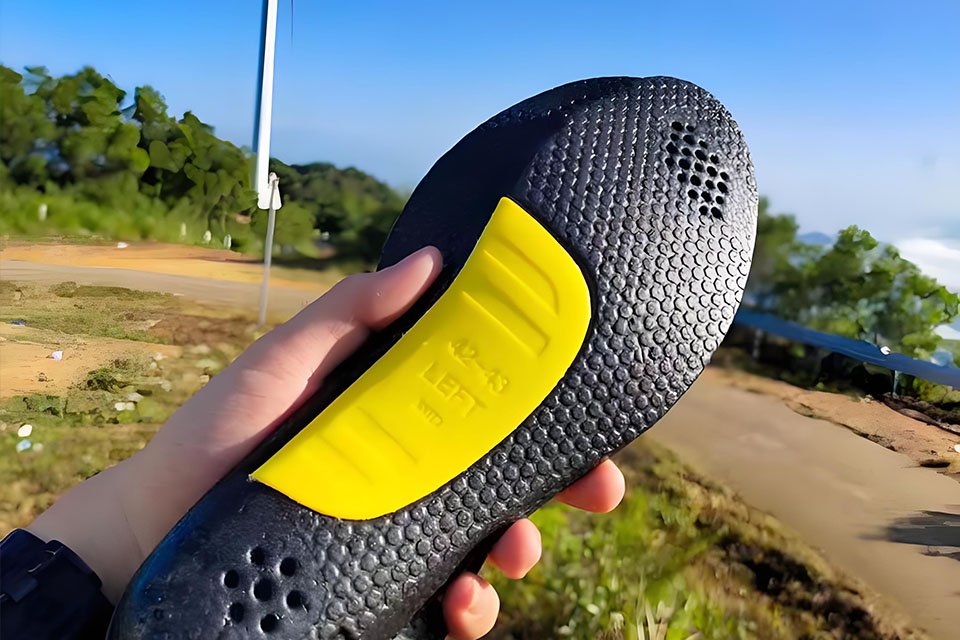
- Top cover affects comfort, not structural performance. An EVA or foam layer bonded to a carbon plate changes how it feels underfoot, but the plate itself — not the cover — is doing the structural work.
Main Types of Carbon Fiber Shoe Inserts
Full-length inserts run from heel to toe and provide consistent support and shape retention across the whole foot. Common in both performance sole plates and full orthotic devices.
3/4-length inserts cover the heel through the arch and partway into the forefoot, leaving the toe area free. Used where full-length rigidity isn’t necessary but midfoot support is the priority.
Forefoot plates are limited to the front portion of the foot, tuned either for propulsion (sports applications) or for limiting motion at the big-toe joint (orthotic applications — see hallux rigidus and turf toe management below).
Morton’s extension plates are a forefoot plate variant with an extension specifically under the first ray, used in orthotic contexts to limit motion at the first metatarsophalangeal joint.
Arch support plates concentrate structural support under the medial arch rather than the full foot, typically shaped to a specific arch height profile.
Football boot / soccer cleat sole plates are full-length or forefoot plates engineered specifically for propulsion efficiency and torsional stability during sprinting and cutting — manufacturing specs for this category are covered separately.
Orthotic foot inserts cover the broader category of arch support, forefoot, and custom orthotic shell plates used for structural foot support rather than athletic performance — manufacturing specs for this category are covered separately.
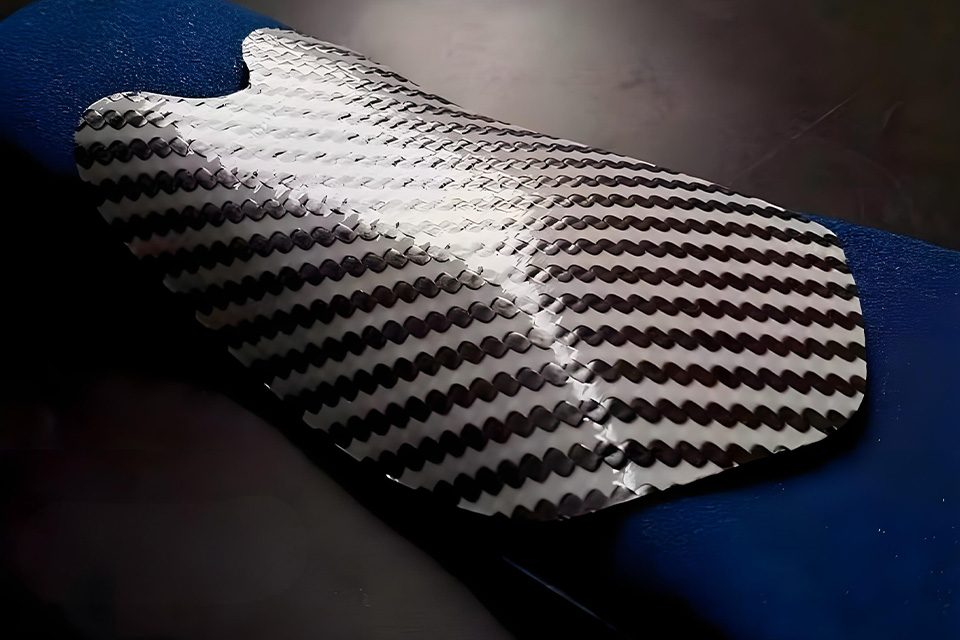
Rigid vs. Semi-Rigid Carbon Fiber Inserts
This is one of the first decisions in any spec, and it’s driven by layup, thickness, and shape together — not by material grade alone.
- Rigid inserts resist deformation more completely under load. They’re specified where firm structural control is the priority — full torsional stability in a sports plate, or maximum motion limitation in an orthotic application.
- Semi-rigid inserts retain more controlled flex. They’re used where some natural foot or plate motion needs to be preserved alongside support — a common middle ground in orthotic devices, and in sports plates where total rigidity would feel harsh or reduce natural gait mechanics.
Neither is universally “better” — the right choice depends entirely on the application, and a manufacturer should be asking about your intended use before recommending one over the other.
Carbon Fiber vs. Plastic, Fiberglass, and Foam Inserts
| Material | Main characteristic | Typical limitation |
|---|---|---|
| Carbon fiber | High stiffness-to-weight ratio, thin profile, directional stiffness control | Higher material and tooling cost |
| Plastic / nylon | Lower cost, moldable, moderately flexible | Lower stiffness at the same thickness; can take a permanent set over time |
| Fiberglass composite | Lower cost than carbon, reasonable rigidity | Heavier and generally less stiff than carbon at equal thickness |
| Steel shanks | Very high rigidity | Significantly heavier; less design flexibility in shape |
| Foam / gel / EVA | Cushioning and comfort | Provides minimal structural support on its own — usually paired with a rigid plate rather than used as a substitute for one |
The practical takeaway: carbon fiber earns its higher cost specifically in applications where thin profile and low weight matter as much as stiffness. Where profile and weight aren’t constraints, a cheaper material may be the more sensible choice.
How to Choose the Right Carbon Fiber Shoe Insert
Step 1 — Define the application. Sports footwear, orthotic product, occupational footwear, or recovery footwear each imply different priorities (propulsion vs. support vs. comfort), and that should come before any material or shape decision.
Step 2 — Choose the insert type. Full-length, 3/4-length, forefoot, arch-specific, or a custom shape based on where support is actually needed.
Step 3 — Decide the stiffness. Rigid or semi-rigid, based on how much structural control vs. natural flex the application calls for.
Step 4 — Confirm thickness and shape together. These two specs interact — don’t lock in a thickness before you’ve confirmed the layup and stiffness target, or you may end up with a plate that’s the right thickness but the wrong feel.
Step 5 — Prepare a reference file. A 3D scan, drawing, or physical sample dramatically shortens development time with any manufacturer and reduces the risk of miscommunication on shape.
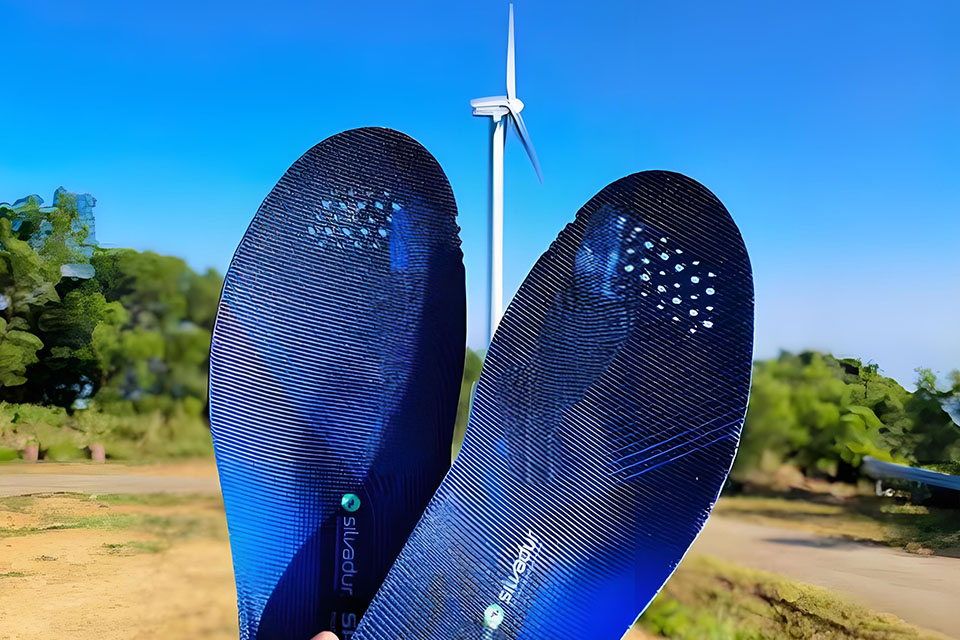
Common Mistakes When Sourcing Carbon Fiber Inserts
- Specifying thickness without specifying layup. Thickness alone doesn’t determine stiffness or flex behavior — the two need to be discussed together.
- Ignoring shoe fit and stack height. A structurally correct plate that doesn’t fit the target shoe’s volume is not usable.
- Using one stiffness spec across multiple applications. A plate tuned for sports propulsion and a plate tuned for orthotic support rarely share the same layup, even if they’re the same thickness.
- Not checking edge finishing. A carbon plate with unfinished or sharp edges is both an assembly problem and a comfort/safety issue.
- Not confirming left/right-specific shaping where the application calls for it — a mirrored single shape isn’t always appropriate, particularly for orthotic devices.
- Overclaiming medical benefit. For orthotic and arch-support applications specifically, structural specs (stiffness, arch height, shape) are a materials and manufacturing question; whether a given spec is appropriate for a specific condition or patient is a clinical question that belongs with a qualified professional.
What Information Manufacturers Need Before Quoting
Regardless of which category your project falls into, most manufacturers will need:
- Intended application (sports, orthotic, occupational, etc.)
- Insert type (full-length, 3/4, forefoot, arch, custom)
- Target size range
- Thickness and stiffness target
- Order quantity
- Surface finish preference
- Top cover requirement, if any
- A reference file — sample, drawing, or 3D scan
This checklist reflects how we scope projects ourselves as a composite manufacturer — you can read more about our factory background on our about page.
FAQ
What are carbon fiber shoe inserts used for?
Two main categories: performance sports plates (football boots, cycling shoes) for propulsion and torsional stability, and orthotic/support plates (arch support, forefoot plates) for structural foot support.
Are carbon fiber inserts rigid or flexible?
Both are made, depending on application — rigid for maximum structural control, semi-rigid where some controlled flex needs to be preserved. Stiffness is a spec decision, not a fixed property of the material.
What is the difference between full-length and 3/4-length inserts?
Full-length runs heel to toe for consistent support across the whole foot; 3/4-length covers heel through arch and partway into the forefoot, used where full rigidity isn’t needed but midfoot support is.
Are carbon fiber inserts better than plastic inserts?
Not universally — carbon fiber offers a better stiffness-to-weight ratio at a thinner profile, which matters in applications where both weight and stack height are constraints. Where those constraints don’t apply, a lower-cost plastic or fiberglass plate may be the more practical choice.
How thick should carbon fiber shoe inserts be?
There’s no single correct thickness — it depends on the stiffness target and layup together. Manufacturers typically confirm thickness alongside layup design rather than as an isolated spec.
Can carbon fiber inserts be customized?
Yes — shape, thickness, layup/stiffness, and top cover are all commonly customized based on the application.
Do carbon fiber shoe inserts need a top cover?
Not structurally — the plate itself provides the support. A top cover (EVA, foam, fabric) is added for comfort and finish when the insert ships as a wearable insole rather than a structural component for further assembly.
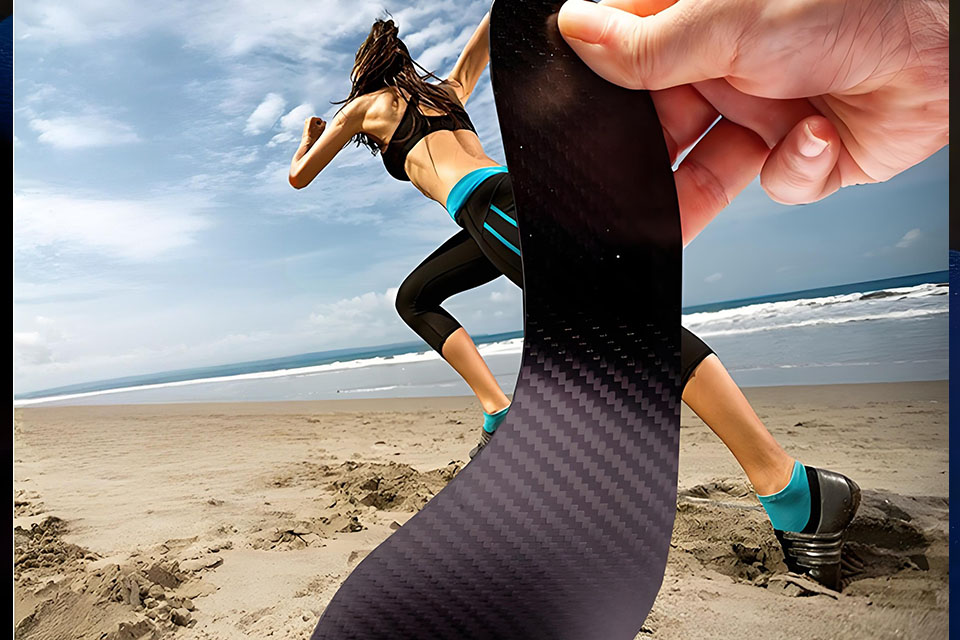
Use the Quick Selection Guide above to jump to the football boot/soccer cleat manufacturing page or the orthotic and arch support inserts page, depending on your project.